What a Conveyor Belt Support Frame Does
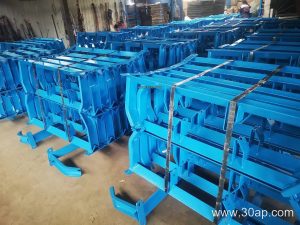
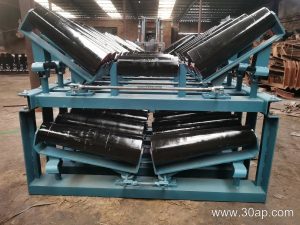
A conveyor belt support frame is the steel structure that holds the idlers in the right position under and over the belt. It carries the weight of the belt, the material and the idler roller itself, and it keeps the trough shape stable along the whole run. In a quarry, a coal handling plant or a cement kiln feed line, the frame is the part that turns a loose collection of rollers into a working conveyor.
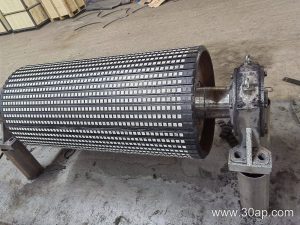
The frame is not a pulley. Drive pulleys, tail pulleys and bend pulleys transmit power and change belt direction, while the support frame only supports the carrying and return strands. Mixing these roles up leads to wrong spare parts and poor tracking.
How the Frame Is Built
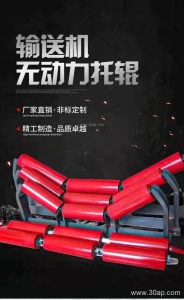
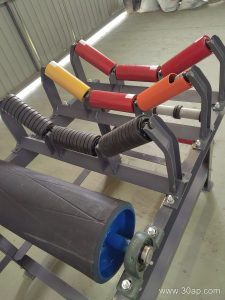
Most frames are made from angle steel, channel steel or folded steel plate. A typical troughing frame has a horizontal cross beam and two angled wings that set the side idlers at a defined trough angle. Return frames are simpler, often a straight beam carrying one or two return rollers, or a V-shaped arrangement for better belt guidance.
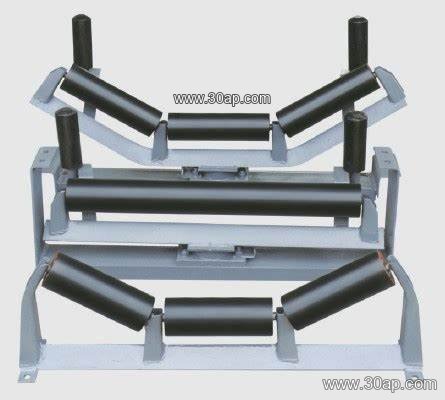
- Cross beam and mounting brackets welded or bolted together
- Slots or holes for idler shaft fixing, spaced according to belt width and trough angle
- Feet or base plates for floor mounting or hanging from the conveyor stringer
- Optional adjustment slots for trough angle and belt alignment
Frame length and hole spacing change with belt width and trough angle, so they are set by design rather than by a single universal value.
Matching the Frame to Belt Width, Trough Angle and Roller Diameter
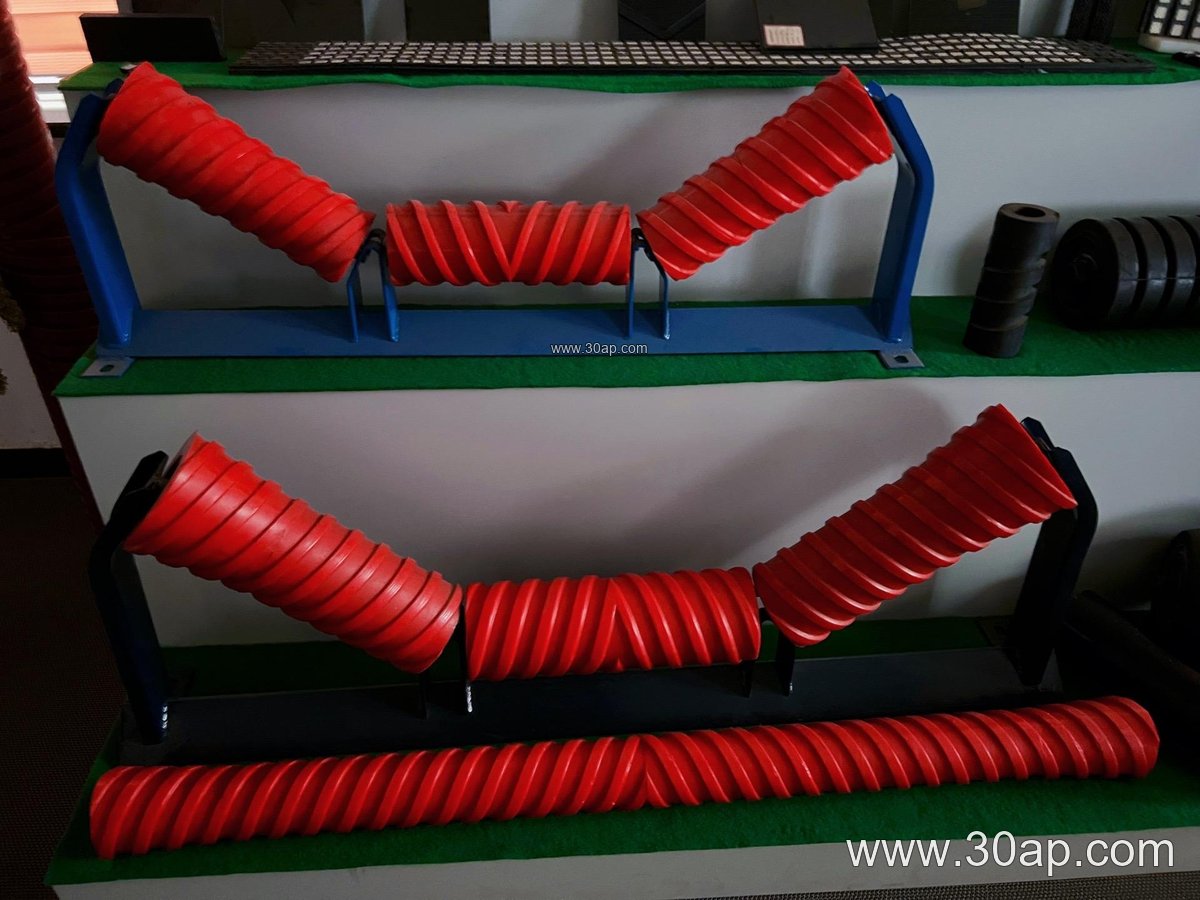
A support frame is usually described by the belt width it serves, the trough angle it forms and the roller diameter it accepts. Common belt widths run from B500 and B650 through B800, B1000, B1200 and B1400 up to B1600, B1800 and B2000. Trough angles of 20, 30, 35 and 45 degrees are widely used, and adjustable frames can move between these settings. Roller diameters such as Ø89, Ø108, Ø133, Ø159 and Ø194 appear across different duty levels.
| Frame reference | Belt width | Trough angle | Roller diameter |
|---|---|---|---|
| Troughing frame | B800 | 35 degrees | Ø108 |
| Troughing frame | B1200 | 45 degrees | Ø133 |
| Return frame | B650 | — | Ø89 |
| Impact frame | B1000 | 30 degrees | Ø159 |
These are common reference combinations, not fixed rules. A B800 belt can be paired with different roller diameters depending on load and speed, and one belt width does not lock the frame to a single trough angle. The shaft diameter should come from the idler design, never from belt width alone.
Where Support Frames Are Used
In a coal preparation plant, troughing frames carry a flame retardant conveyor belt through the washing and screening building, while return frames guide the empty strand back. In an iron ore or copper ore terminal, heavy-duty frames under a steel cord conveyor belt handle high tonnage and impact at transfer points. A stone crushing line uses impact frames below the crusher discharge, where a rock conveyor belt drops large lumps onto the belt.
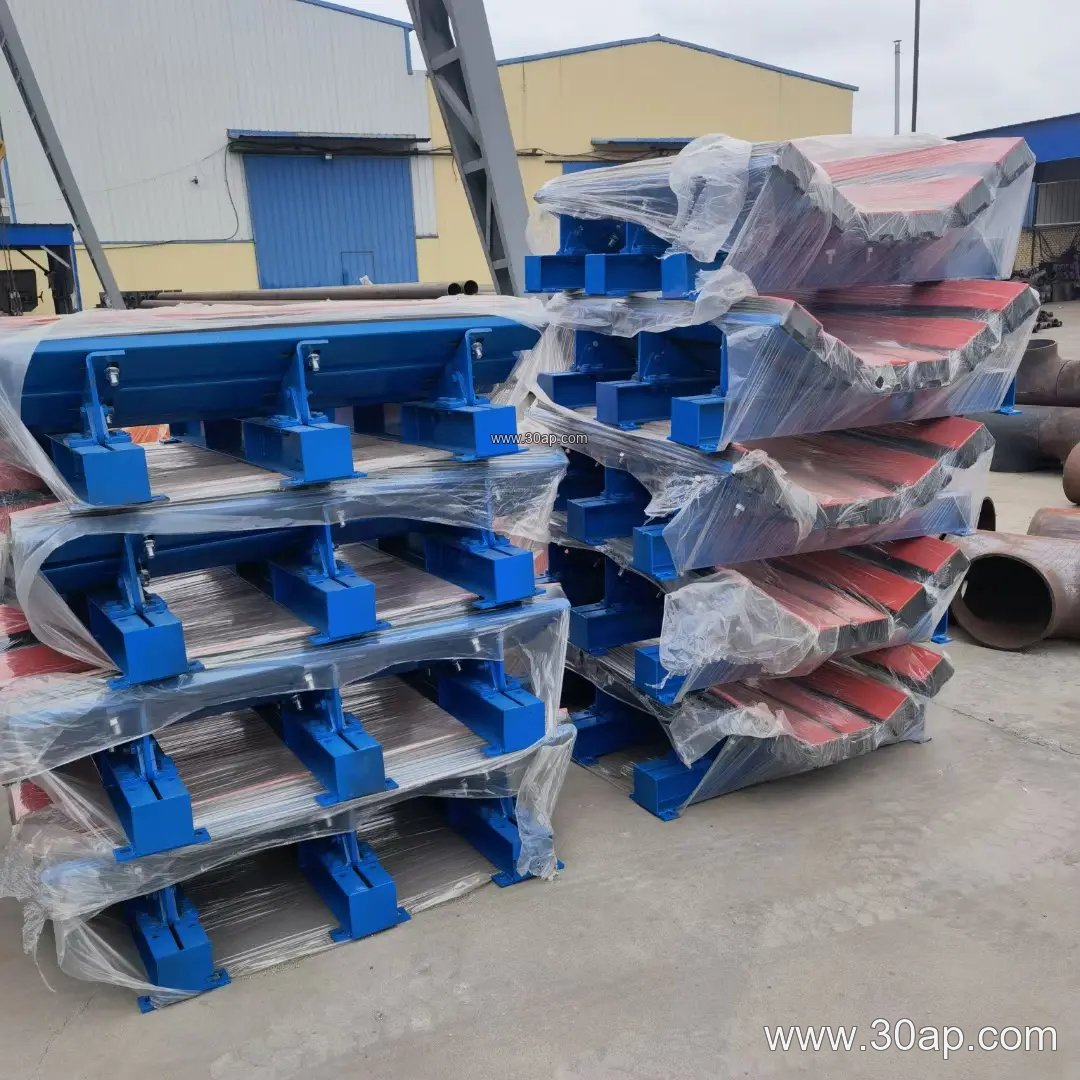
Other common sites include power plant coal yards, cement plants, port ship loading systems and aggregate yards. Frames also appear on pipe conveyor belt and corrugated sidewall conveyor belt installations, though the frame geometry there follows the specific belt profile.
Fixed or Adjustable, and What Buyers Should Check
Fixed frames are simple, rigid and economical. Adjustable frames let maintenance staff fine-tune the trough angle or correct belt misalignment after installation, which helps when a conveyor is converted or when material flow changes. Some designs add a slight forward tilt of about 1.5 to 2 degrees on the side rollers to help center the belt.
Before ordering, confirm the belt width, the required trough angle, the idler roller diameter and the mounting style. Check whether the frame bolts to the stringer or stands on the floor, and whether the conveyor bracket pattern matches the existing structure. For a retrofit, measure the old frame and compare hole spacing. Also consider environment: a heat resistant conveyor belt in a sinter plant or a cold resistant belt in a northern yard may need frames with suitable coating or clearance.
Ask for the frame drawing with dimensions, material grade and surface treatment. A well-matched conveyor belt support frame keeps the belt running straight, extends roller life and reduces spillage, which matters in any bulk material handling line.