What the Idler Shaft Does
An idler shaft is the stationary axle that carries one or more idler rollers on a belt conveyor. The roller shell and its bearings rotate around this shaft, while the shaft itself stays fixed in the conveyor bracket or frame. In a three-roll troughing set, the same shaft pattern is repeated on the centre roll and the two side rolls, each held at a different angle.
The part looks simple, but it sets the position of the roller, transfers the load from the belt to the frame, and keeps the roller spinning freely. A bent or undersized shaft shows up quickly as vibration, belt wander or a hot bearing.
How an Idler Shaft Is Built
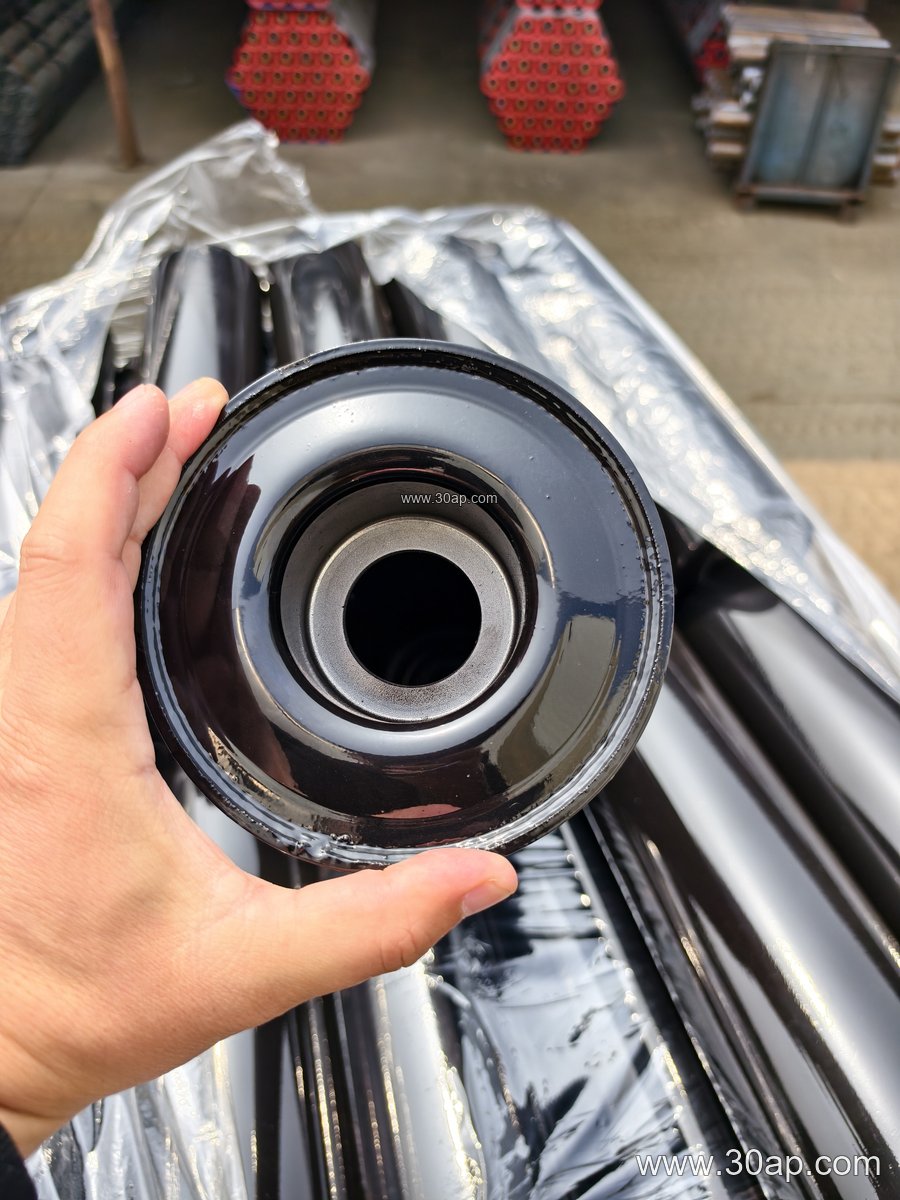
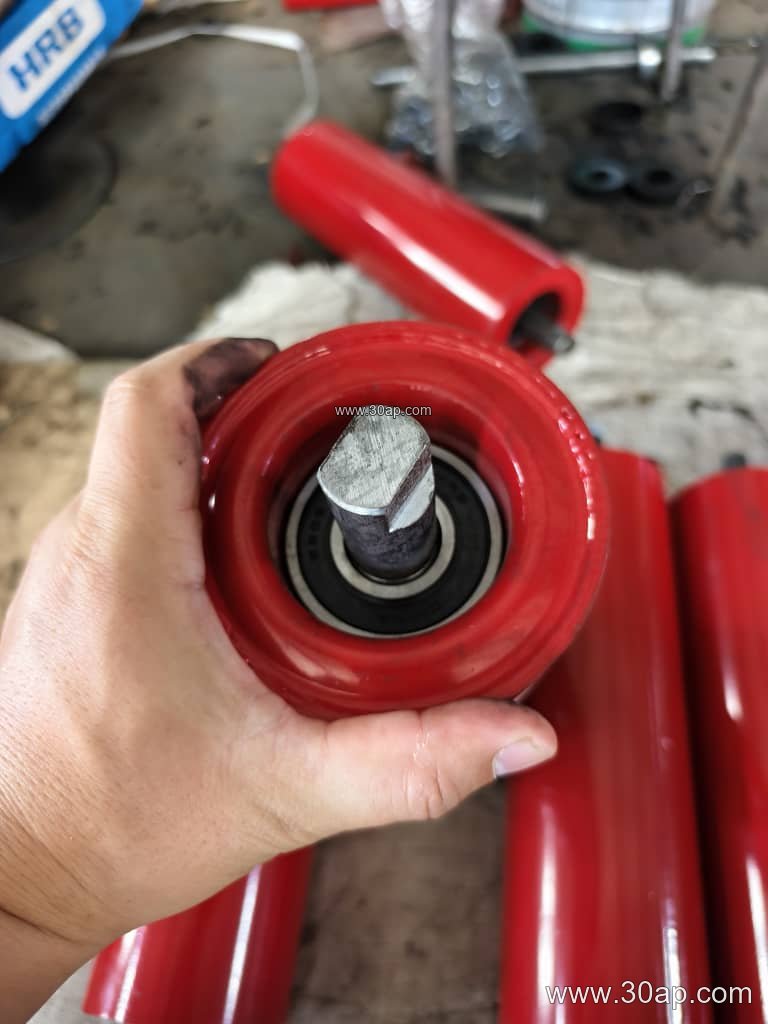
Most shafts are machined from round carbon steel bar. The ends are turned down to fit the bracket slots, and flat sections or milled slots are often added to stop the shaft from turning. Bearing seats are ground to a close tolerance so the bearing inner ring sits firmly without play.
- Material: common carbon steel, sometimes with anti-corrosion treatment for wet or coastal sites
- End forms: flattened ends, milled slots, drilled cross holes or threaded ends, depending on the bracket style
- Bearing seats: ground surfaces that locate the bearing and spacer
- Sealing area: a shoulder or groove where the labyrinth or contact seal runs
The shaft is normally paired with a steel roller shell, a bearing housing and a multi-stage seal. Roller surface options such as rubber rings or ceramic lagging are added on the shell, not on the shaft, but they increase the radial load the shaft must carry.
Where It Fits on the Conveyor
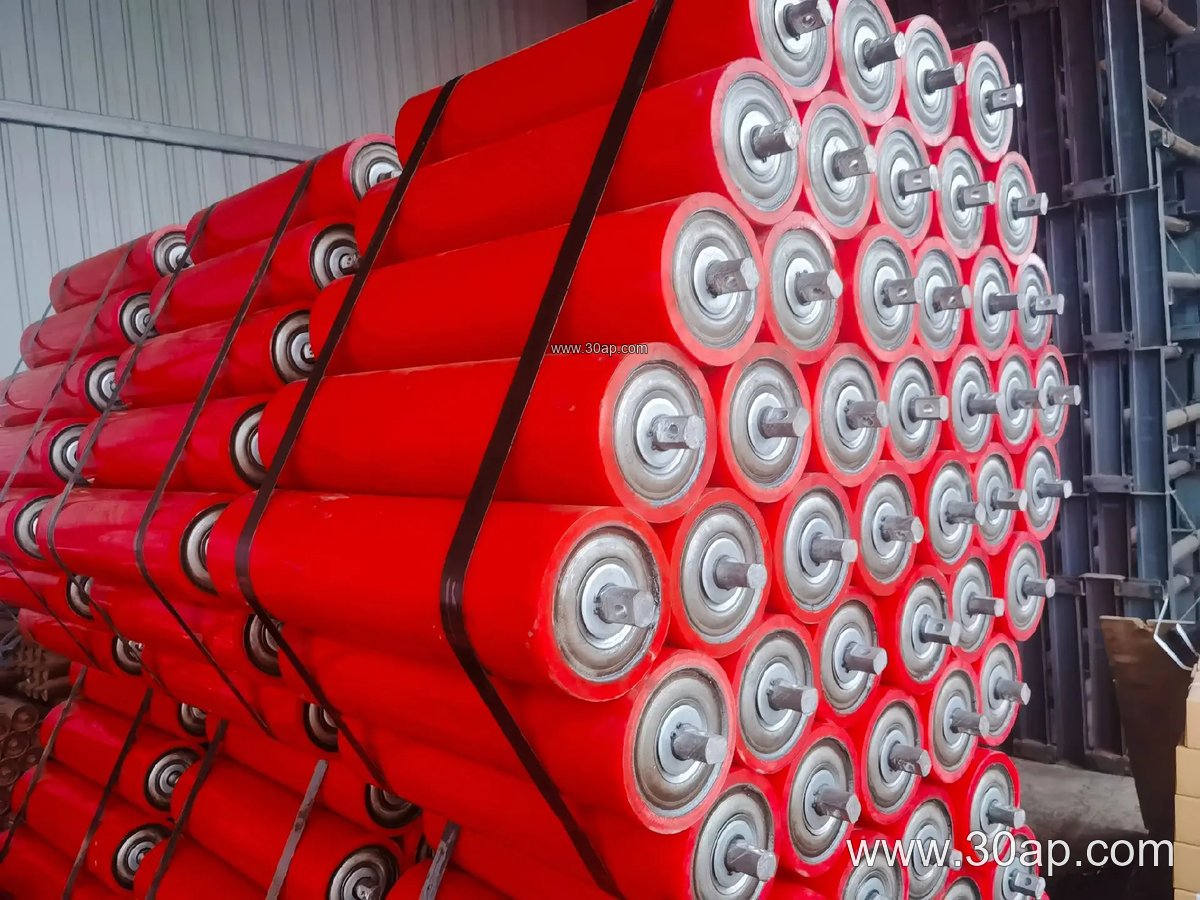
Shafts appear in troughing idlers on the carrying side, in return idlers under the belt, and in impact or transition positions near the loading point. In a limestone quarry or a sand and gravel line, the load zone is where shafts take the hardest knocks, so impact idlers with rubber rings are common there. In a coal washing plant or a power plant coal yard, corrosion and fine dust make seal quality more important than raw strength alone.
The shaft also matters on the return run. A V-return or flat return idler uses a shorter, simpler shaft, while a self-aligning idler may use a shaft mounted in a pivoting bracket so the whole set can swing. These are different duties, so a return shaft should not be swapped for a troughing shaft just because the diameter looks similar.
Matching Shaft, Roller Diameter and Belt Width
Buyers often ask for a shaft by belt width alone. That is not enough. Roller diameter, roll length, trough angle, idler group form and the load per roll all influence the shaft size. Common roller diameters include Ø89, Ø108, Ø127, Ø133, Ø159 and Ø178 mm, and common belt widths run from B500 to B2400. The table below shows typical roll lengths for three-roll troughing sets as a reference only; side rolls and centre rolls can differ, and the figures are not a fixed rule.
| Belt width | Typical centre roll length (reference) | Common trough angle |
|---|---|---|
| B500 | 200 mm | 20°, 30°, 35° |
| B650 | 250 mm | 20°, 30°, 35° |
| B800 | 315 mm | 30°, 35°, 45° |
| B1000 | 380 mm | 30°, 35°, 45° |
| B1200 | 465 mm | 30°, 35°, 45° |
| B1400 | 530 mm | 30°, 35°, 45° |
| B1600 | 600 mm | 30°, 35°, 45° |
| B1800 | 670 mm | 30°, 35°, 45° |
| B2000 | 750 mm | 30°, 35°, 45° |
Bearing numbers are also chosen by load and speed, not by shaft diameter alone. Bearings such as 6204, 6205, 6305, 6306, 6308 and 6310 are all used in conveyor idlers, and the same shaft diameter can appear with more than one bearing size across different designs.
Buyer Checklist
Before ordering, confirm the shaft drawing or sample: overall length, end form, bearing seat diameter and tolerance, seal shoulder position, and any flat or slot orientation. State the roller diameter, belt width, trough angle and idler position. On a heavy-duty mining conveyor belt or a steel cord conveyor belt installation, shock loads at the transfer point are high, so impact idler shafts deserve extra attention.
Ask how the shaft is protected against corrosion if the site is wet or dusty, and check that the bracket matches the end form. A shaft that fits the roller but not the conveyor bracket is a common and avoidable delay.
Maintenance Notes
Inspect shafts when rollers are replaced. Look for wear at the bearing seat, fretting at the bracket slot, and any bend along the length. A shaft that has lost its grip in the bracket will let the roller tilt and wear the belt edge. Keep spare shafts matched to the idler type and record the drawing number, because a visually similar shaft from another idler family may have a different shoulder position.