What a Conveyor Side Guide Roller Does
A conveyor side guide roller is a small-diameter roller mounted vertically or at a slight angle along the edges of a conveyor belt. Its main job is to keep the belt centered and prevent it from wandering off the structure. Unlike the load-carrying idler roller that supports the belt from underneath, this guide roller works at the sides, gently pushing the belt back into line. In quarry and aggregate lines, a side guide roller often sits just before the head pulley or after the loading point to correct misalignment early. The same component is used in cement plants and power plant coal handling systems where belt sway can cause spillage and edge damage.
Construction and Common Configurations
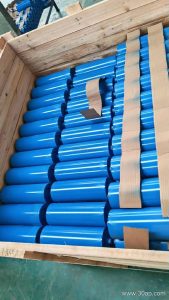
Most side guide rollers are built around a steel tube body with sealed bearings at each end. The roller surface may be plain steel, nylon, or covered with a rubber sleeve to increase friction without marking the belt. Typical roller diameters for this position range from Ø63 mm to Ø133 mm, though larger sizes are available for heavy-duty mining conveyor belts. The shaft is usually fixed to a conveyor bracket that allows adjustment in and out, so the roller can be set close to the belt edge. Bearing sizes such as 6204, 6205, or 6305 are common, but the exact bearing must match the roller diameter and load rating. The length of the roller is short compared to a troughing idler roller, often between 100 mm and 300 mm, and is selected according to the belt width and the space available at the side frame.
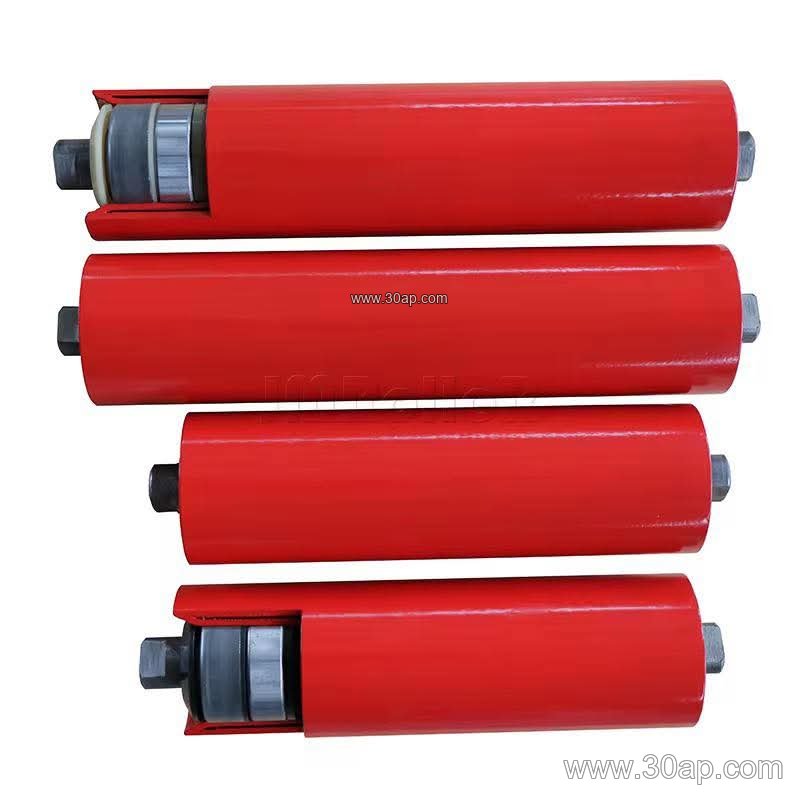
Where It Fits in the Conveyor System
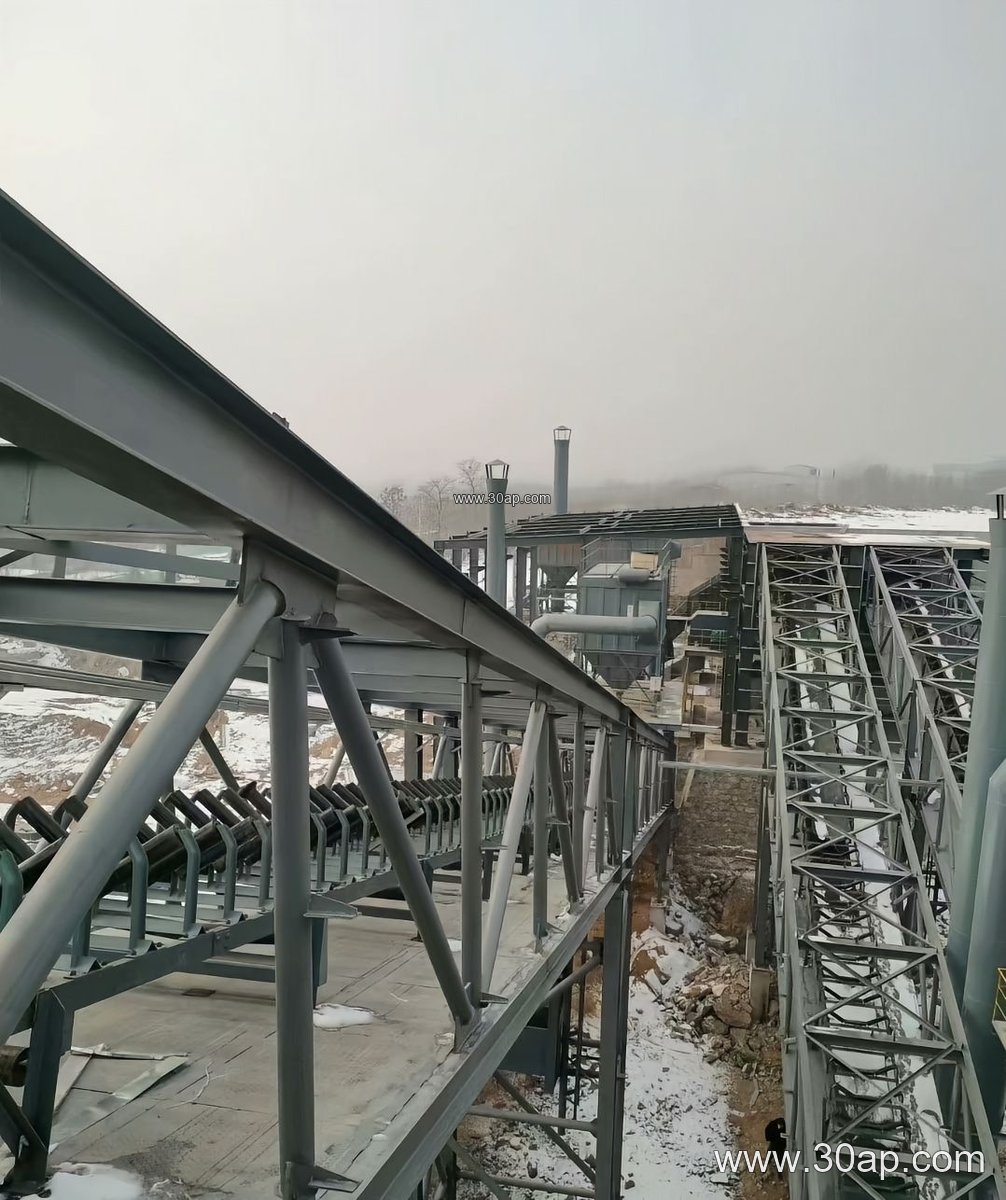
Side guide rollers are found in many industries that rely on continuous bulk material handling. In a limestone quarry, they help keep a 1200mm wide abrasion resistant conveyor belt aligned after a crusher discharge. In a coal mining operation, flame retardant conveyor belts are guided by these rollers to avoid contact with the structure in underground galleries. Cement plants use them on clinker and raw meal belts, while port facilities apply them on ship loading conveyors where long spans and wind loads can cause belt wander. The roller is not a replacement for a bend pulley or a tail pulley; those components change belt direction, while the side guide roller only controls lateral position. Similarly, it should not be confused with a training idler roller, which is a larger assembly designed to rotate the belt back on track. The side guide roller is a simpler, localized solution often used together with a self-aligning idler roller for complete belt tracking.
Key Dimensions and Selection Notes
When choosing a side guide roller, buyers should consider belt width, roller diameter, shaft diameter, bearing type, and mounting bracket. The table below gives common reference values, but these are not fixed combinations and should be confirmed with the conveyor design.
| Parameter | Common Range | Notes |
|---|---|---|
| Roller diameter | Ø63 mm to Ø133 mm | Larger sizes for high-tension belts |
| Roller length | 100 mm to 300 mm | Depends on side frame clearance |
| Bearing | 6204, 6205, 6305 | Match to load and speed |
| Belt width | B500 to B2000 | Roller position adjusted accordingly |
| Surface | Steel, nylon, rubber | Rubber for gentle contact |
For a 650mm or 800mm belt, a roller with Ø76 mm or Ø89 mm is often sufficient. On wider belts such as 1400mm or 1600mm, a Ø108 mm or Ø127 mm roller may be needed to resist side loads. The shaft diameter should be calculated from the actual belt tension and not assumed from belt width alone. A common mistake is to order a side guide roller without checking the bracket hole pattern; the mounting bracket must match the roller shaft and the conveyor frame.
Maintenance and Buyer Checklist
Side guide rollers are low-maintenance items, but they should be inspected for bearing play, surface wear, and free rotation. A seized roller can rub against the belt edge and cause rapid wear, especially on a heavy-duty mining conveyor belt or a steel cord conveyor belt carrying sharp rock. Lubrication is usually sealed for life, but in dusty environments such as a crushing and screening plant, periodic cleaning around the roller is advisable. Buyers should specify the belt width, the required roller diameter, the mounting method, and the environmental conditions (dust, moisture, temperature). For food or clean applications, a nylon or stainless roller may be preferred, while rubber-covered rollers are common in aggregate and ore handling. Always request the actual drawing or sample to verify shaft length and bracket fit before installation.