What a Motor-Driven Pulley Actually Is
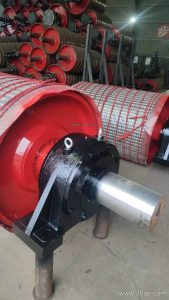
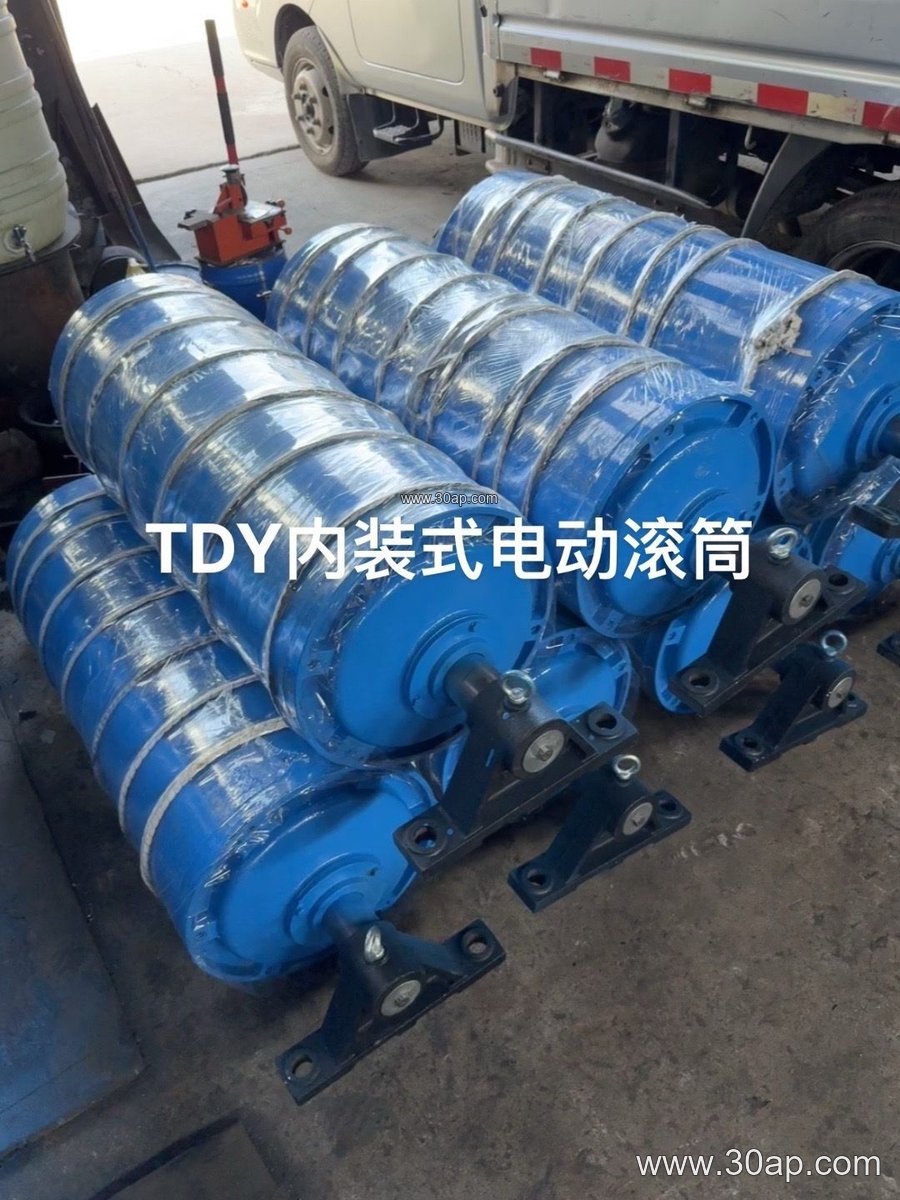
A motor-driven pulley is a conveyor pulley with the drive motor and gearbox integrated inside the drum shell. Instead of an external motor, coupling, and reducer driving the pulley shaft, the complete drive train sits within the pulley body. The shell rotates and transmits traction to the conveyor belt through friction. This makes the motor-driven pulley, also called a drum motor or motorized pulley, a compact alternative to a conventional head drive arrangement.
The working principle is straightforward. An internal electric motor turns a gear stage, which drives the pulley shell. The shell surface grips the belt, and the belt moves the load. Because the drive is enclosed, the unit suits locations where space around the conveyor head is limited or where exposed rotating parts are undesirable.
Construction and Internal Layout
Most designs share a common architecture. The stationary shaft carries the motor stator, the rotor connects to a planetary or helical gear set, and the gear output drives the shell through a flange or hub. Bearings support the shell on both ends. Sealing is critical, because dust and water ingress are the main threats to internal components.
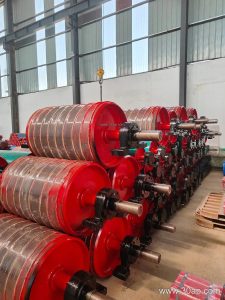
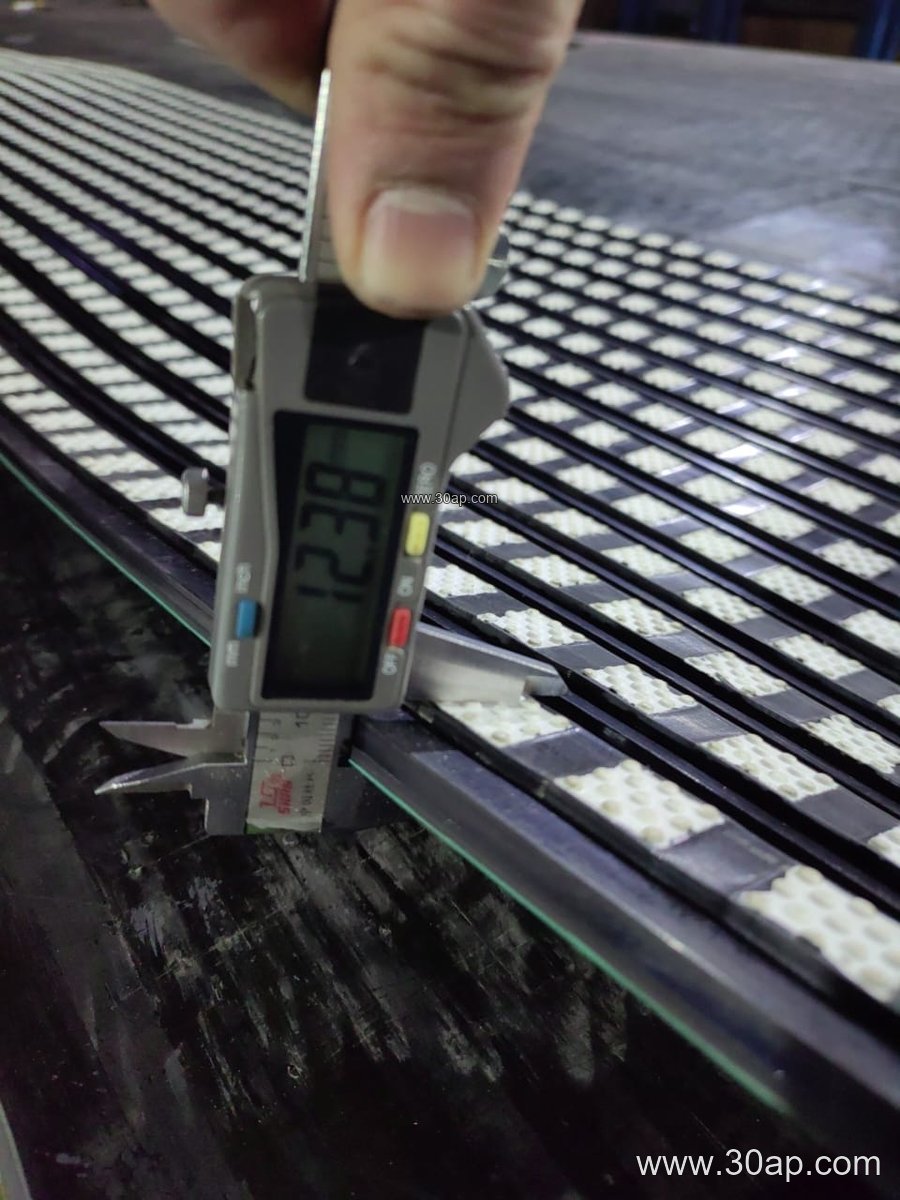
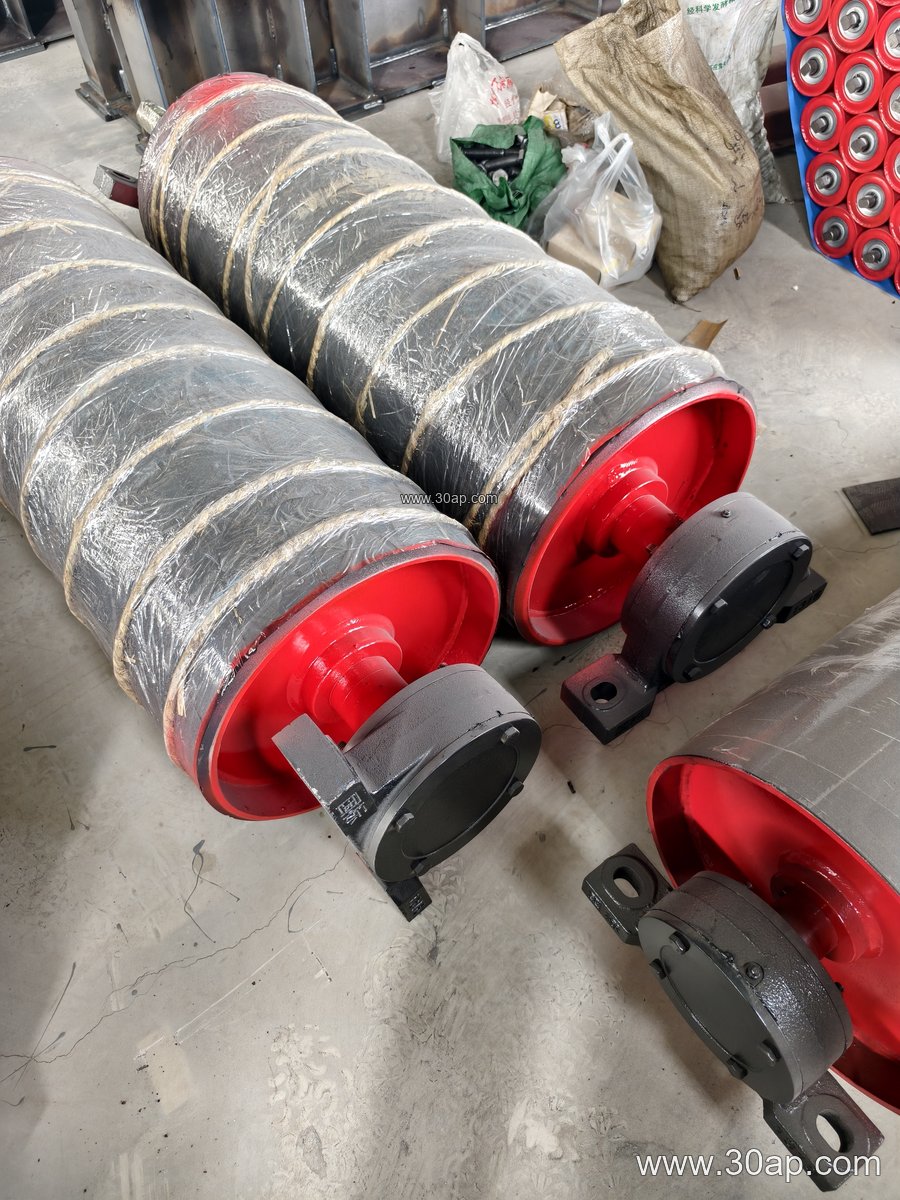
The external surface is often lagged to raise friction. Common surface forms include plain finish, cold-bonded rubber, hot-vulcanized rubber, diamond grooving, herringbone grooving, and ceramic lagging. Lagging thickness commonly ranges from 8 mm to 20 mm depending on duty. The pulley face width is normally wider than the belt, for example B800 belt with roughly 950 mm face, or B1200 belt with about 1400 mm face. Diameter and shaft size are selected from torque and load, not from belt width alone.
| Parameter | Typical reference values |
|---|---|
| Belt width | B400, B500, B650, B800, B1000, B1200, B1400, B1600 |
| Pulley diameter | Ø200, Ø250, Ø315, Ø400, Ø500, Ø630, Ø800, Ø1000 |
| Shaft diameter | Ø50, Ø60, Ø70, Ø80, Ø100, Ø120, Ø140, Ø160 |
| Lagging thickness | 8, 10, 12, 15, 20 mm |
| Surface options | plain, rubber lagging, diamond, herringbone, ceramic |
Where It Fits on the Conveyor
The motor-driven pulley is most often installed at the head or discharge position, where it pulls the loaded belt. It can also serve as a tail or tension pulley in short or compact conveyors, though a tail pulley in a long overland system is usually a separate non-driven unit. It is not a substitute for a bend pulley or a snub pulley, which only redirect the belt. Those positions call for a standard conveyor pulley without an internal drive.
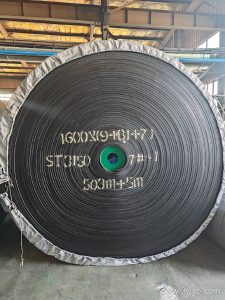
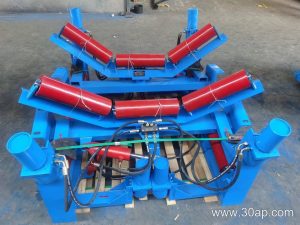
Typical duty includes bulk handling in a quarry, a limestone mine, a cement plant clinker line, a power plant coal yard, a sand and aggregate plant, and a fertilizer or grain silo facility. In these settings the pulley works together with the conveyor belt, idler rollers, and conveyor brackets. A heavy-duty mining conveyor belt or an abrasion resistant conveyor belt may run over the same drive, and the lagging choice should match the belt surface and the material carried.
Matching the Pulley to the Belt and Load
Selection starts with the required belt pull, belt speed, and duty cycle. The pulley diameter must be large enough to limit belt bending stress, especially with a thick, stiff belt such as a steel cord conveyor belt or a multi-ply fabric core belt. A fabric core conveyor belt such as an EP conveyor belt or NN conveyor belt usually tolerates a smaller diameter than a steel cord belt of similar strength. The shaft diameter follows the torque and the bearing load, not a fixed rule from belt width.
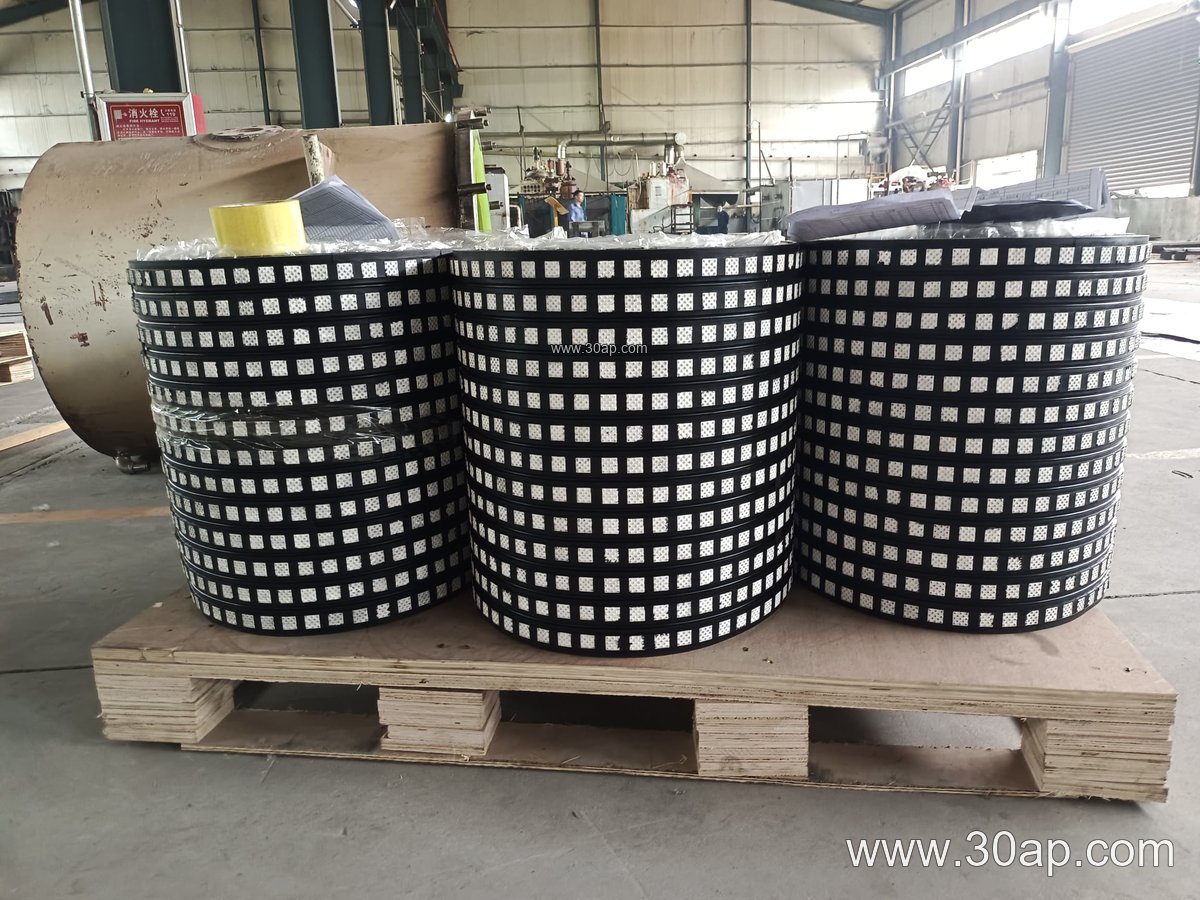
Lagging matters as much as size. A diamond or herringbone rubber lagging helps shed water and fines, which is useful in a wash plant or an underground coal mining conveyor. Ceramic lagging gives higher grip in wet, muddy conditions. A plain finish may be adequate for a clean, low-tension application. For a food grade conveyor belt or a heat resistant conveyor belt, confirm that the lagging compound and the internal lubricant are compatible with the environment.
Buyer Checklist Before Ordering
- Confirm belt width, pulley face width, and pulley diameter as a set, not in isolation.
- State the belt type and tension so the shaft and bearings can be sized correctly.
- Specify the lagging surface and thickness for the actual material and moisture level.
- Check the duty rating and cooling needs, since an enclosed motor relies on the shell for heat dissipation.
- Plan access for maintenance, because internal repair usually means removing the pulley from the conveyor bracket.
- Ask for the sealing class and the expected ambient temperature range.
For a reliable quotation, describe the conveyor layout, the belt, the load, and the environment. A motor-driven pulley is a compact and efficient drive solution, but it works best when the pulley, the conveyor belt, the idler roller set, and the supporting structure are treated as one system. For more information on conveyor drums and related components, visit www.example.com/conveyor-pulley or www.example.com/motor-driven-pulley.