What a Steel Idler Does on a Conveyor
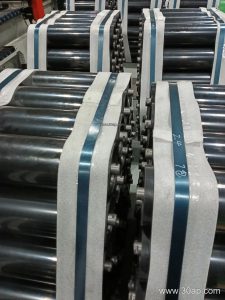
A steel idler is the rotating support that carries a conveyor belt along its run. In a quarry, a coal handling plant or a cement kiln feed line, these rollers hold the loaded belt up, guide it on the return side and keep friction low enough to protect both the belt and the drive. The body is usually a steel tube fitted with bearing housings at each end, a shaft through the centre and a sealing arrangement that keeps dust and water away from the bearings. Because the roller turns with the belt rather than against it, a well-built steel idler roller can run for a long time with little attention.
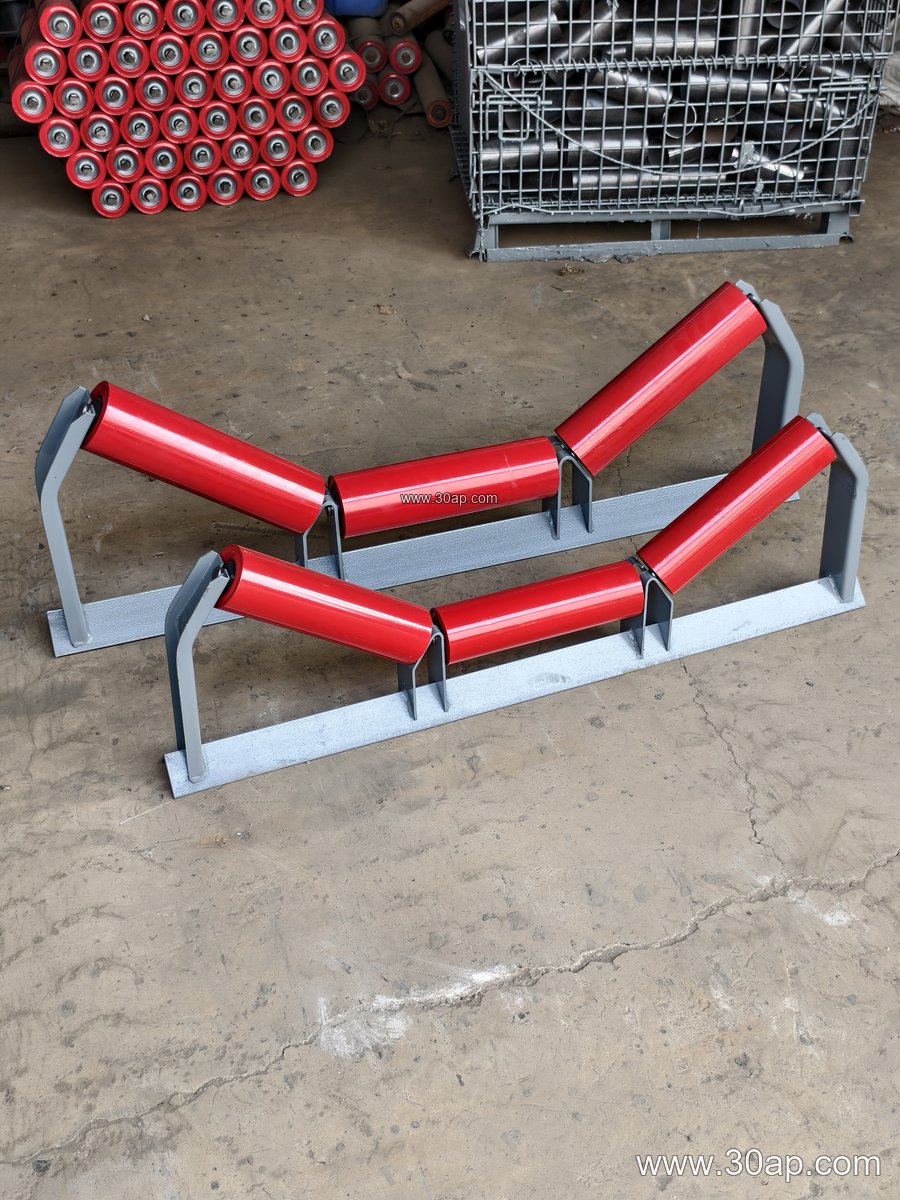
The term covers several positions on the same machine. Troughing idlers sit under the carrying side and form the belt into a channel; return idlers support the empty belt on its way back; impact idlers absorb the drop at a transfer point. They share a basic construction but are not interchangeable in service, so it helps to know which position each one is meant for before ordering.
How the Roller Is Built
Most steel idlers use a seamless or welded steel tube, machined at both ends to take the bearing housing. The shaft is normally cold-drawn steel, and the bearings are deep-groove ball bearings chosen for the load and speed of the conveyor. Common bearing sizes include 6204, 6205, 6305, 6306, 6308 and 6310, but the correct match depends on the roller diameter and the duty, not on belt width alone.
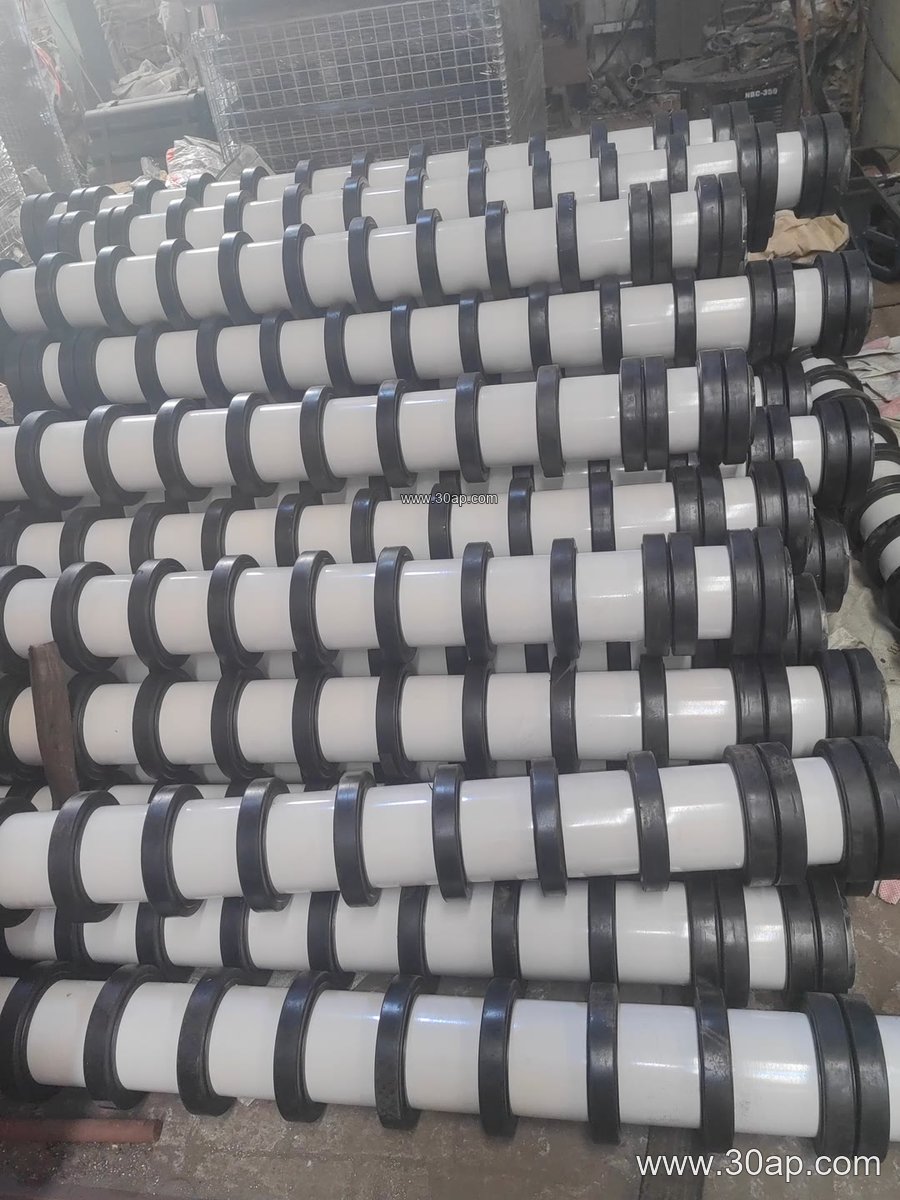
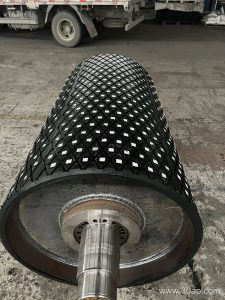
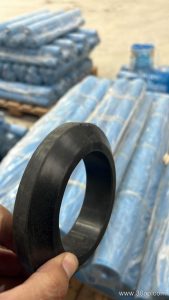
Sealing is where cheap and good idlers differ most. A labyrinth seal with a dust lip, sometimes backed by grease, is typical for dusty sites such as a crushing and screening line or a limestone mine. Roller surfaces may be plain steel, nylon-coated, ceramic-covered or fitted with rubber rings for impact absorption. Each surface form suits a different job, so a rubber-ring impact roller at a transfer chute should not be swapped for a plain carrying roller without checking the duty.
Sizes and Arrangements
Roller diameter and belt width are chosen together with the conveyor design. The table below gives common reference values, not fixed combinations.
| Item | Common reference values |
|---|---|
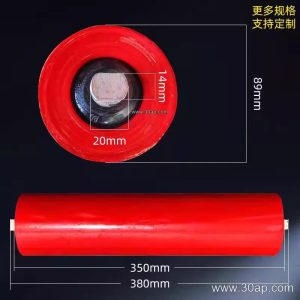
| Roller diameter | Ø63, Ø76, Ø89, Ø102, Ø108, Ø127, Ø133, Ø159, Ø178, Ø194, Ø219 mm |
| Belt width | B400, B500, B650, B800, B1000, B1200, B1400, B1600, B1800, B2000, B2200, B2400 |
| Trough angle | 20°, 30°, 35°, 45° |
| Roller set form | single roll, two-roll, three-roll troughing |
| Bearing (examples) | 6204, 6205, 6305, 6306, 6308, 6310 |
Roller length changes with belt width, trough angle and set form. As a rough guide, a three-roll troughing set might use a roll of about 200 mm at B500, 315 mm at B800, 465 mm at B1200 and 600 mm at B1600. Side rolls and centre rolls can differ, so these figures are starting points for discussion with the conveyor designer rather than a rule.
Where Steel Idlers Are Used
You will find them wherever a belt moves bulk material. In a coal mining conveyor or an underground coal mining conveyor, flame retardant and anti-static properties matter for the belt, while the idlers must cope with fines and moisture. At a copper ore or iron ore transfer, heavy impact rollers protect the belt at the load point. In a power plant coal yard, a cement plant clinker line or a port ship loading system, long overland runs rely on low rolling resistance to keep power demand down. The belt itself may be an EP conveyor belt, an NN conveyor belt, a steel cord conveyor belt or a heat resistant conveyor belt, and the idler selection should follow the belt speed, load and environment rather than the belt brand.
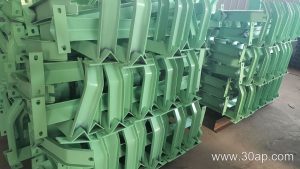
Different positions call for different hardware. Troughing idlers on the carry side, V-return or flat return idlers underneath, self-aligning idlers on long curves and impact idlers under chutes all belong to the same family, and each has its own mounting. A conveyor bracket or frame holds the set at the right height and angle, and the bracket spacing affects belt sag between supports.
What to Check Before Buying
- Confirm the position: carrying, return, impact or transition. A transition idler near the head or tail has a different job from a standard troughing set.
- Match roller diameter to belt width and load, and check shaft and bearing size against the actual duty.
- Ask about the seal design and the grease arrangement for dusty or wet sites.
- Check the roller surface: steel, nylon, ceramic or rubber ring, depending on abrasion and impact.
- Verify mounting dimensions, bracket type and roller length against the existing frame.
- For coal or underground work, confirm the flame retardant and anti-static requirements with the belt supplier and the site safety team.
Finally, keep spare rollers for the positions that wear fastest, usually the impact and return stations. A steel idler is a simple part, but choosing the right one for each spot on the conveyor is what keeps a quarry line, a coal handling system or a cement plant running without unscheduled stops. More details on matching idlers with conveyor belt and conveyor pulley selections are available from the site team.