What a Three-Roll Idler Bracket Does
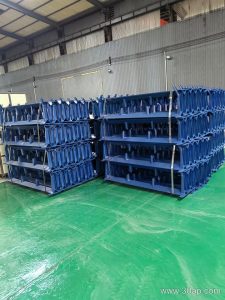
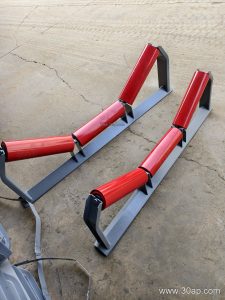
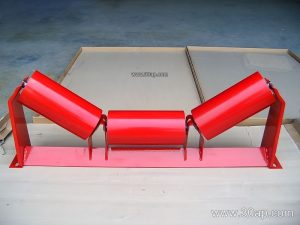
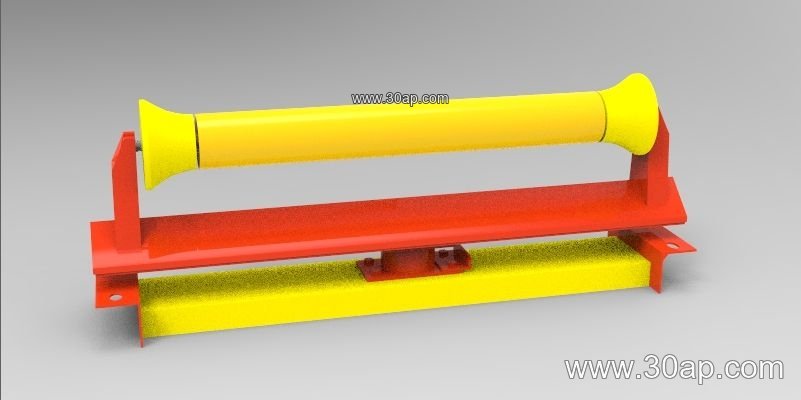
A three-roll idler bracket is the steel support that holds three troughing idlers in the carrying run of a belt conveyor. The two outer rolls sit at an angle while the center roll stays level, forming the trough that keeps bulk material centered on the belt. Without this bracket, the idlers have no fixed geometry, and the belt profile changes along the line. The part is often called a troughing idler bracket, troughing frame, or troughing set support, and those names describe the same assembly.
In a quarry, a cement plant, or a power plant coal yard, the three-roll idler bracket is repeated every few meters along the conveyor. Each unit carries a share of the belt and material load, so the bracket must match the belt width, the roll diameter, and the trough angle chosen for that section of the conveyor.
How the Bracket Is Built
Most brackets are fabricated from angle steel, channel steel, or folded steel plate. The frame has two inclined seats for the side idlers and a flat seat for the center idler, plus mounting holes for the conveyor stringer or frame. Welded gussets add stiffness where the roll shafts sit. A powder-coated or galvanized finish is common in dusty and humid plants.
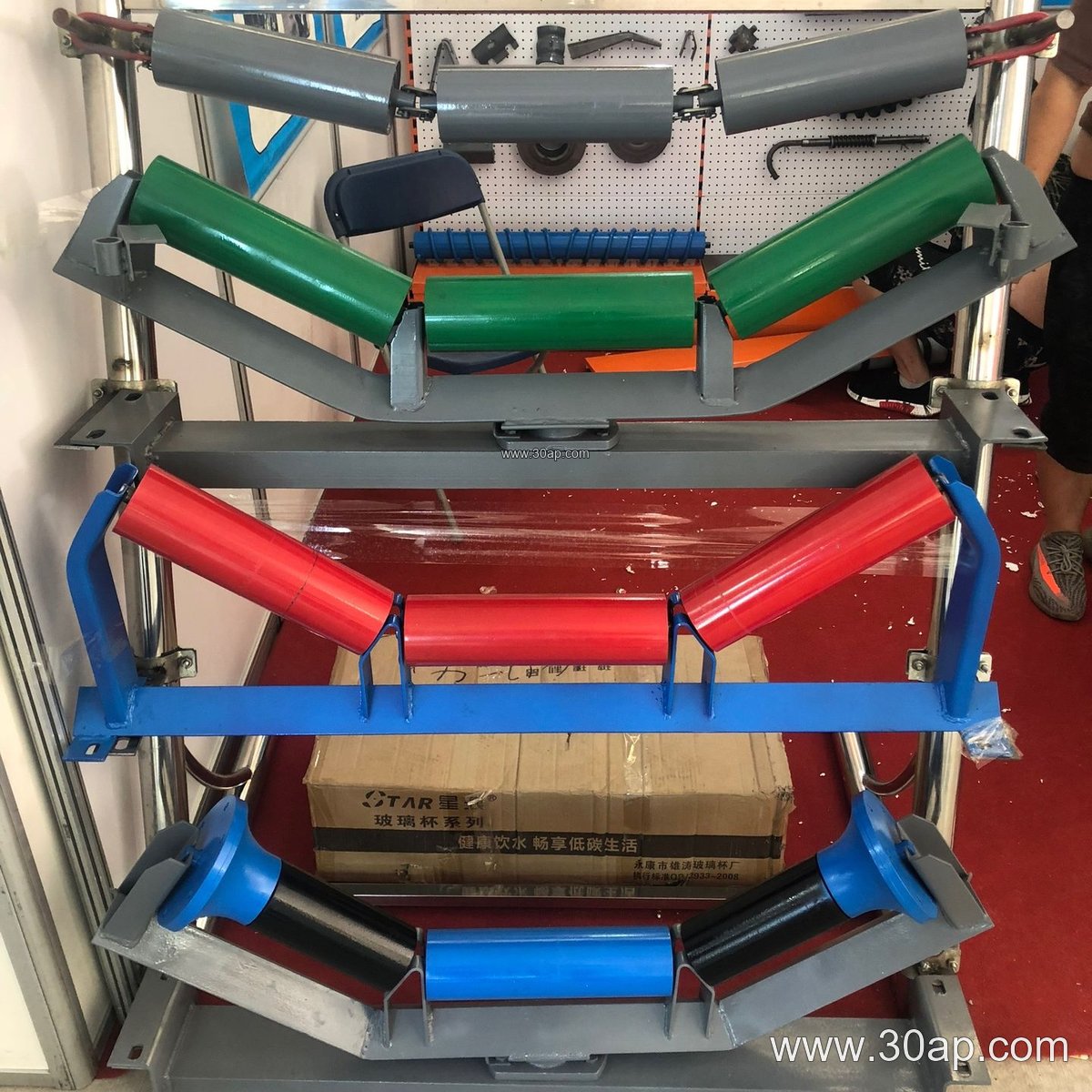
Key build details a buyer should check include:
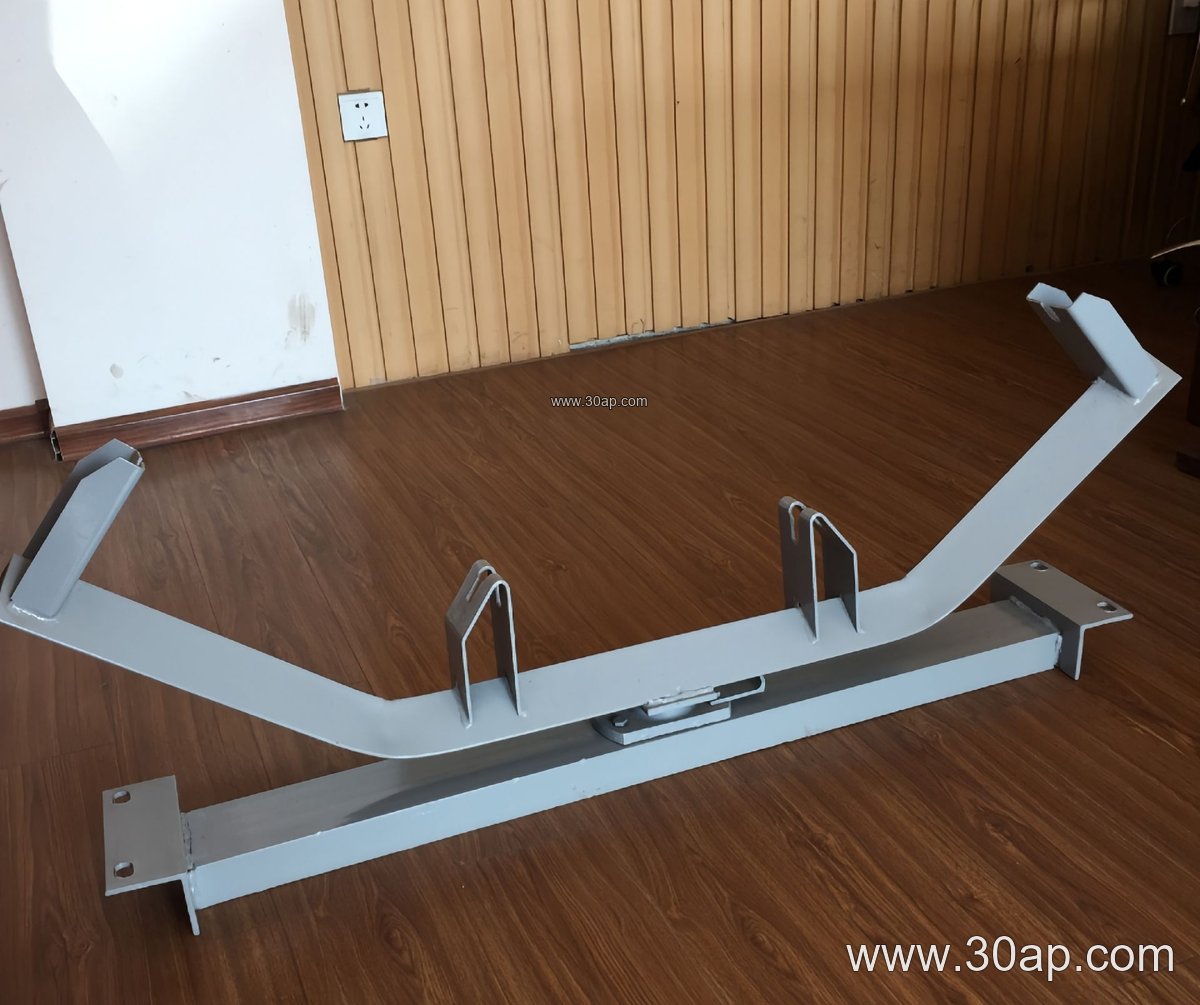
- Roll seat spacing and angle accuracy, which control how evenly the belt is supported
- Mounting hole pattern and crossbeam length, which must suit the actual conveyor frame
- Plate or section thickness against the load and belt speed
- Welding quality at the load-bearing joints
Installation height and hole pitch are not universal. They follow belt width, trough angle, and the conveyor design, so they should be confirmed against drawings rather than assumed.
Common Configurations and Reference Sizes
Trough angles of 20, 30, 35, and 45 degrees are common. A 30 or 35 degree bracket suits many general bulk lines, while 45 degree sets are used where a deeper trough helps contain the load. Adjustable brackets allow the angle to be changed within a range, which is useful during commissioning or when material behavior changes.
Reference combinations often seen in catalogues and drawings include the following. These are examples, not fixed rules, and one belt width can be paired with more than one trough angle or roll diameter.
| Belt width | Trough angle | Roll diameter |
|---|---|---|
| B650 | 30 degrees | Ø89 |
| B800 | 35 degrees | Ø108 |
| B1000 | 35 degrees | Ø108 |
| B1200 | 45 degrees | Ø133 |
| B1400 | 35 degrees | Ø159 |
| B1600 | 45 degrees | Ø159 |
Other widths such as B500, B1800, B2000, and B2200 also appear in heavy-duty projects. Roll diameters from Ø89 to Ø194 are available depending on load and belt speed. The bracket drawing should state the crossbeam length, mounting hole centers, and roll shaft size, because these are design-specific.
Where Three-Roll Idler Brackets Are Used
These brackets appear wherever a conveyor carries bulk material on a troughed belt. In a limestone quarry or a sand and gravel line, they support crusher feed and transfer belts. In a coal washing plant or a power station coal handling system, they carry coal over long distances. Cement plants use them on clinker and raw meal lines, and ports use them on ship loading and stockyard conveyors. A steel plant may use them on sinter or ore belts, while a fertilizer or grain silo facility uses them on lighter-duty lines.
The belt itself matters too. A heavy abrasion resistant conveyor belt or a steel cord conveyor belt carries more tension and load, so the bracket and idler set must be sized for that duty. In dusty coal service, a flame retardant conveyor belt is often specified, and the bracket finish and clearances should suit the environment.
Selection and Maintenance Notes
Match the bracket to the conveyor, not the other way around. Confirm belt width, trough angle, roll diameter, and mounting pattern before ordering. Check that the bracket suits the stringer spacing and that the roll seats accept the chosen idler roller shaft. For transitions near a conveyor pulley, a transition bracket with a shallower angle may be needed to avoid belt stress.
During operation, inspect for loose bolts, bent frames, and worn roll seats. A misaligned bracket can cause belt mistracking and edge damage, so alignment should be checked after installation and after any frame repair. Keep spare brackets for the most common sizes on the line to reduce downtime.
For more detail on matching brackets with conveyor belting and rollers, see the range at www.beltconveyorparts.com three-roll idler bracket and conveyor bracket pages.