What a Wear-Resistant Lagged Pulley Does on the Line
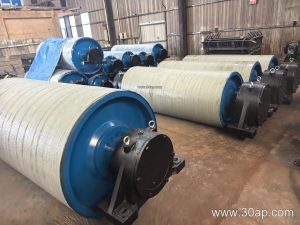
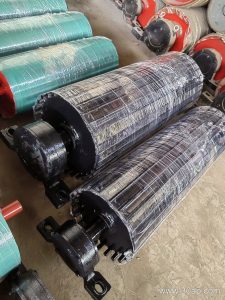
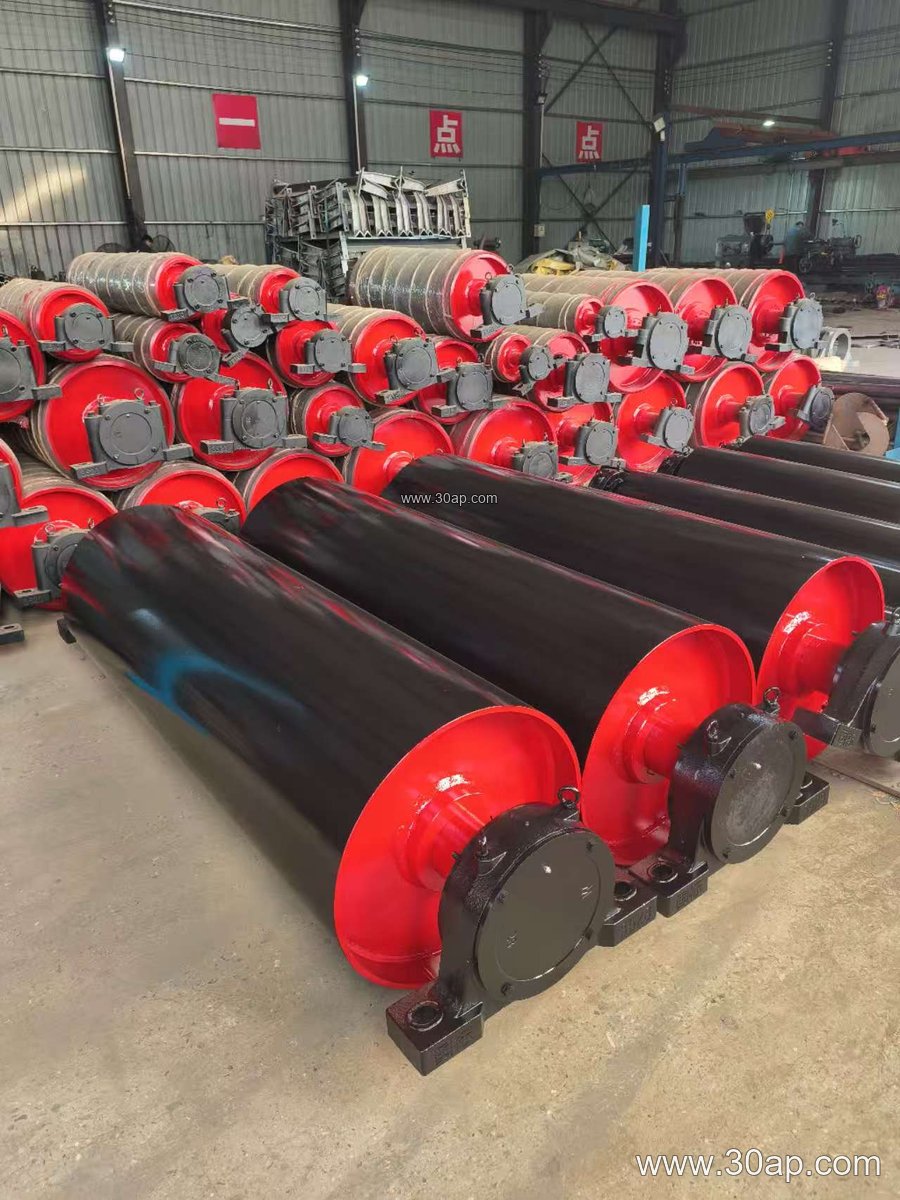
A wear-resistant lagged pulley is a conveyor pulley whose shell carries a rubber or ceramic lagging layer that protects the drum face and improves grip on the belt. In a mine, quarry or stone crushing circuit, the pulley often runs in a cloud of grit and dust, so the lagging takes the rubbing action instead of the steel shell underneath. That protection matters most where the belt wraps the drum under load, such as a head drive position on a long overland conveyor.
The lagging also raises friction between the pulley face and the belt. A well-chosen covering can reduce belt slip on a start under load, when the drive must pull a fully loaded conveyor belt from rest. The pulley is a system component, so the result depends on the belt, the load and the duty cycle, not on the lagging alone.
How the Lagging Is Built and Attached
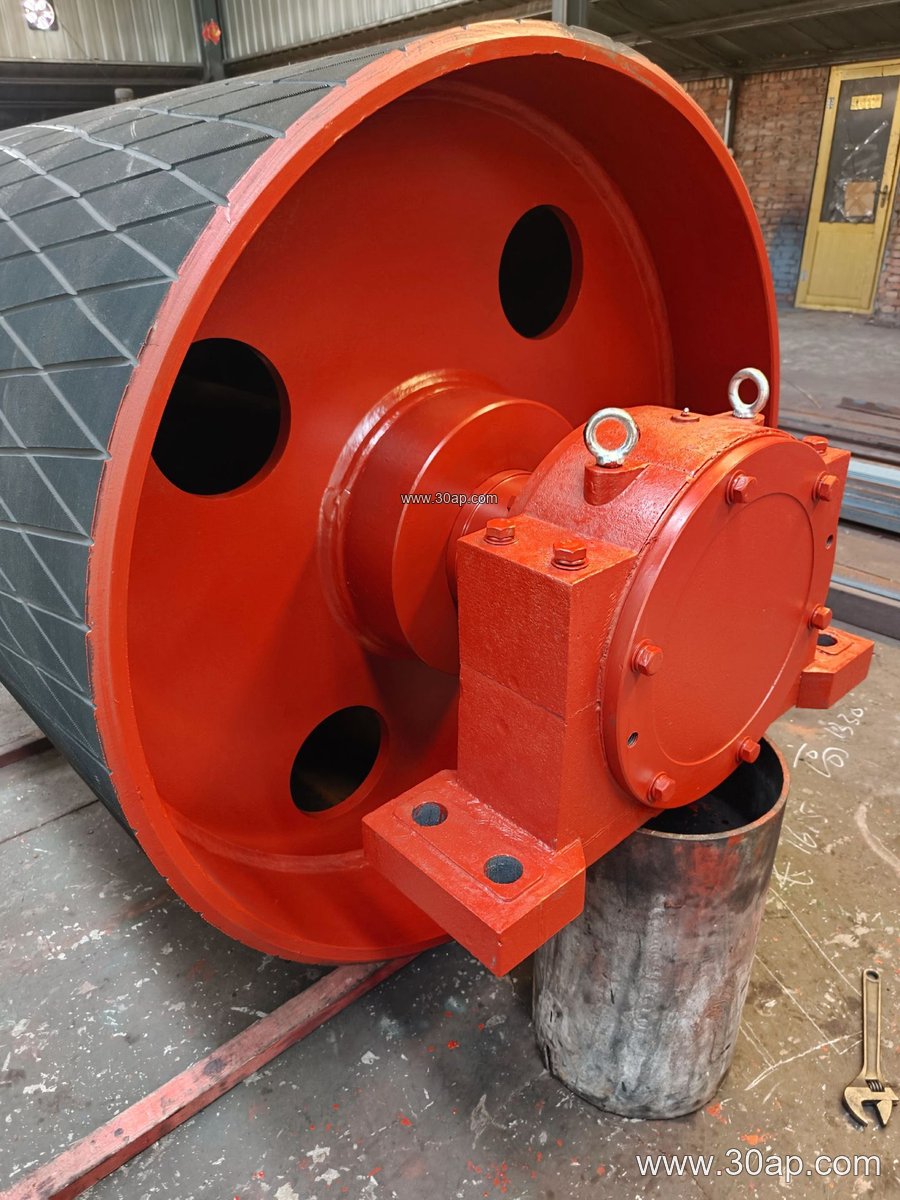
Most units use a steel shell with a welded or shrink-fitted hub and shaft, then a rubber layer applied by hot vulcanizing, cold bonding or casting. Thickness commonly ranges from 8 mm to 20 mm depending on the wrap pressure and the abrasiveness of the material. Surface patterns include plain rubber, diamond or chevron grooving, and ceramic tiles set in a rubber matrix for the harshest service.
Ceramic lagging suits ore and rock duty where sharp particles cut plain rubber quickly. Diamond groove rubber is a common middle option for sand and aggregate lines. A buyer should also ask about the bond method, because a poorly bonded cold-glued layer can peel at the edges long before the rubber itself wears out.
- Plain lagging: general duty, easy to clean
- Diamond or chevron pattern: improved grip and water shedding
- Ceramic tile lagging: high abrasion resistance in ore and slag service
- Hot vulcanized bond: usually preferred for heavy, continuous load
Where It Fits in a Conveying Circuit
Drive pulleys at the head end see the highest belt tension, so lagging there is often specified in a wear-resistant grade. A tail pulley runs in the return strand and may collect fines; a bend or snub pulley changes belt direction without driving. These positions are not interchangeable, and the lagging specification should follow the actual role of the drum.
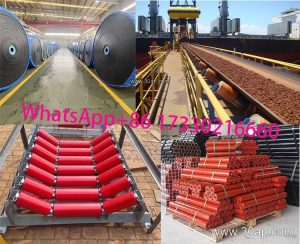
Typical sites include limestone quarries, iron ore handling, coal washing plants, cement clinker lines, power plant coal yards, port bulk terminals and crushing and screening plants. In each case the material being carried decides the belt type, and the pulley must match it. A Steel Cord Conveyor Belt on a long haul needs a pulley with enough shell strength and a lagging that will not deform under high radial pressure, while an EP Conveyor Belt on a shorter aggregate line may work with a more standard covering.
The belt side of the decision also involves the Abrasion Resistant Conveyor Belt grade, since a hard, gritty load attacks both the belt cover and the pulley face. On coal faces, a Flame Retardant Conveyor Belt may be required by the site, and the pulley specification should follow the same duty class. Matching a wear-resistant pulley to a Mining Conveyor Belt in underground or surface service usually means checking lagging hardness, groove depth and bond quality together.
Common Sizes and Combinations
The table below shows reference ranges, not fixed supply promises. Diameter and shaft size are determined by torque, belt tension and design load, and a given belt width can often be paired with more than one drum diameter.
| Parameter | Common reference values | Notes |
|---|---|---|
| Belt width | B400, B500, B650, B800, B1000, B1200, B1400, B1600, B1800 | Shell face usually wider than the belt, e.g. B800 around 950 mm |
| Pulley diameter | Ø200, Ø250, Ø315, Ø400, Ø500, Ø630, Ø800, Ø1000, Ø1250 | Selected by belt tension and wrap angle |
| Lagging thickness | 8, 10, 12, 15, 20 mm | Thicker layers suit higher pressure and grit |
| Shaft diameter | Ø50, Ø60, Ø70, Ø80, Ø90, Ø100, Ø120, Ø140, Ø160 | Set by torque and bearing load, not by belt width alone |
| Example pairings | B800 × Ø500, B1200 × Ø1000, B1400 × Ø800 | Illustrative only; confirm by calculation |
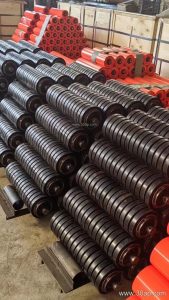
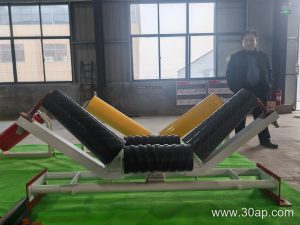
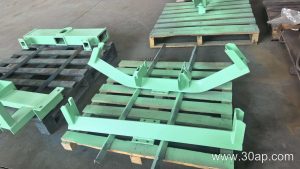
An idler roller elsewhere on the same frame may be a standard item, but the pulley needs its own specification because it carries drive load and belt wrap. A conveyor bracket or frame detail should also be checked so the lagged face clears the belt path and the scraper.
Buyer Checklist Before Ordering
- Confirm the pulley role: drive, tail, bend, take-up or snub.
- State the belt type and width, plus the material carried and its abrasiveness.
- Ask for the lagging pattern, thickness and bond method in writing.
- Check compatibility with the belt cleaner and the pulley scraper.
- Confirm shaft size from the drive calculation, not from a size chart alone.
- For coal or underground duty, verify the flame retardant and anti-static requirements of the belt and the related components.
A wear-resistant lagged pulley is a small part of the total conveyor cost, but it sits where belt tension, dust and grit meet. Getting the lagging grade, thickness and bond right at the order stage is usually cheaper than replacing a peeled drum during a shutdown.