What a Wear-Resistant Lagged Pulley Does
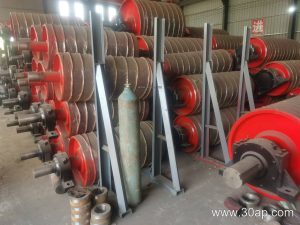
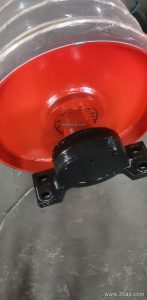
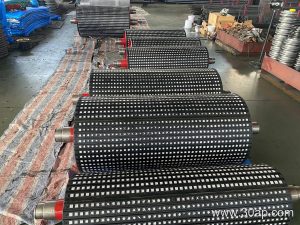
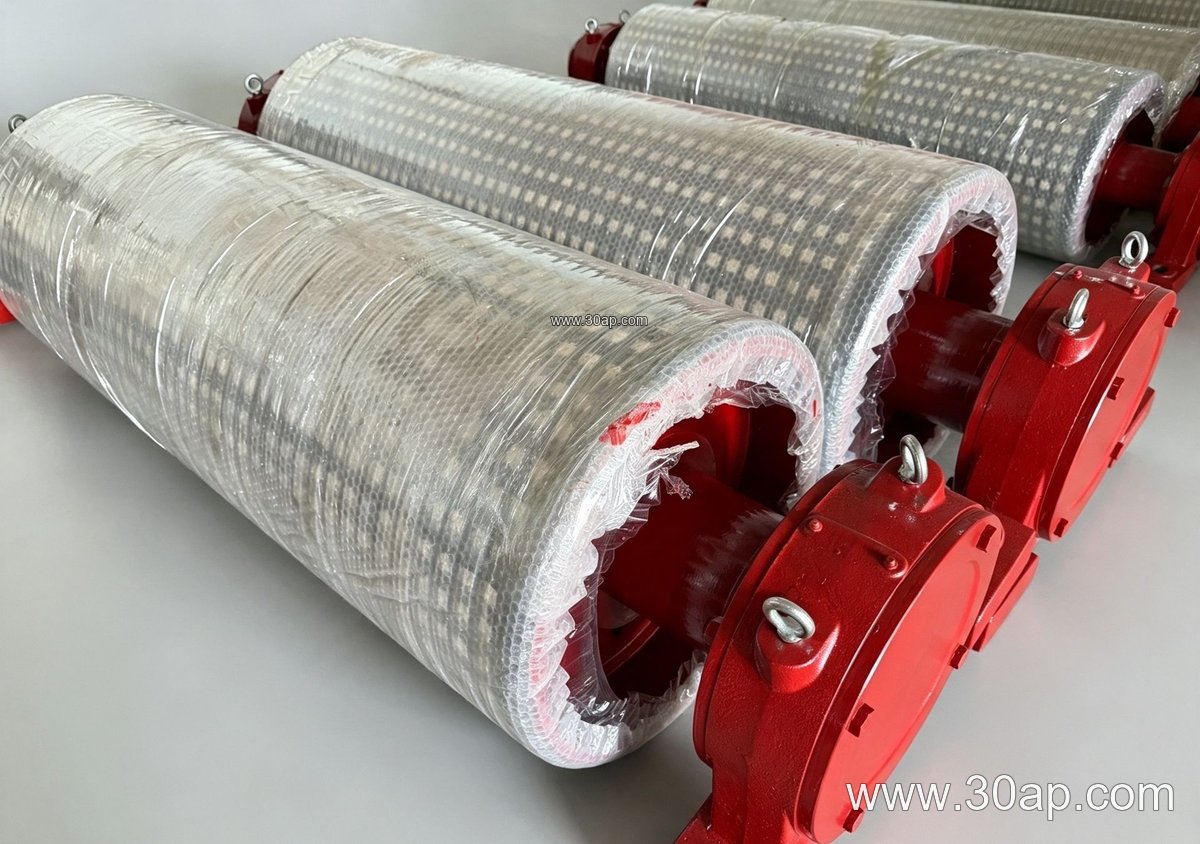
A wear-resistant lagged pulley is a conveyor pulley whose shell is covered with a durable rubber or ceramic layer. That covering, called lagging, protects the steel drum, raises friction between the pulley face and the conveyor belt, and absorbs some of the shock from heavy loads. In a quarry or a cement plant, the drive position is where this component earns its keep: without reliable grip, a fully loaded belt can slip, and slip means heat, wear, and downtime.
The product is a conveyor pulley first and a wear part second. It still has to carry belt tension, transmit torque, and hold alignment. Lagging simply gives the working surface a longer service life. Buyers often search for this item as a rubber lagged conveyor pulley or a rubber-covered drum pulley, both of which describe the same component.
Construction and Surface Options
The base is a welded steel shell with end discs, a shaft, and bearing housings mounted on a sturdy frame. Lagging is applied in several ways, and the choice matters more than many people expect.
- Cold-bonded rubber sheet, suitable for general duty and easy field repair
- Hot-vulcanized rubber, bonded under heat and pressure for higher shear strength
- Diamond or herringbone grooving to shed water and fines
- Ceramic tiles set in rubber for extreme abrasion at the drive face
- Plain sheet where smooth contact is preferred
Common lagging thicknesses are 8, 10, 12, 15, and 20 mm. Thicker covers last longer under coarse material but add weight and cost. For a crusher discharge or a transfer point handling sharp rock, a ceramic or heavily grooved rubber surface usually outperforms a plain sheet.
Matching Pulley Size to Belt Width
Shell face width normally exceeds belt width so the belt is fully supported. Typical relationships include B800 with roughly 950 mm face, B1000 with about 1150 mm, and B1200 with about 1400 mm. Diameter is a separate decision, driven by torque, wrap angle, and belt tension rather than belt width alone. A B800 unit might use Ø500, while a B1200 drive could run Ø1000; neither pairing is a rule.
| Belt width | Typical face width | Common diameter range |
|---|---|---|
| B500 | about 600 mm | Ø250 to Ø400 |
| B650 | about 750 mm | Ø315 to Ø500 |
| B800 | about 950 mm | Ø400 to Ø630 |
| B1000 | about 1150 mm | Ø500 to Ø800 |
| B1400 | about 1600 mm | Ø630 to Ø1000 |
Shaft diameter is calculated from torque and bearing loads. Values such as Ø80, Ø100, Ø120, or Ø160 appear across many installations, but no belt width fixes a shaft size. Always confirm with the conveyor designer.
Where It Fits on the Conveyor
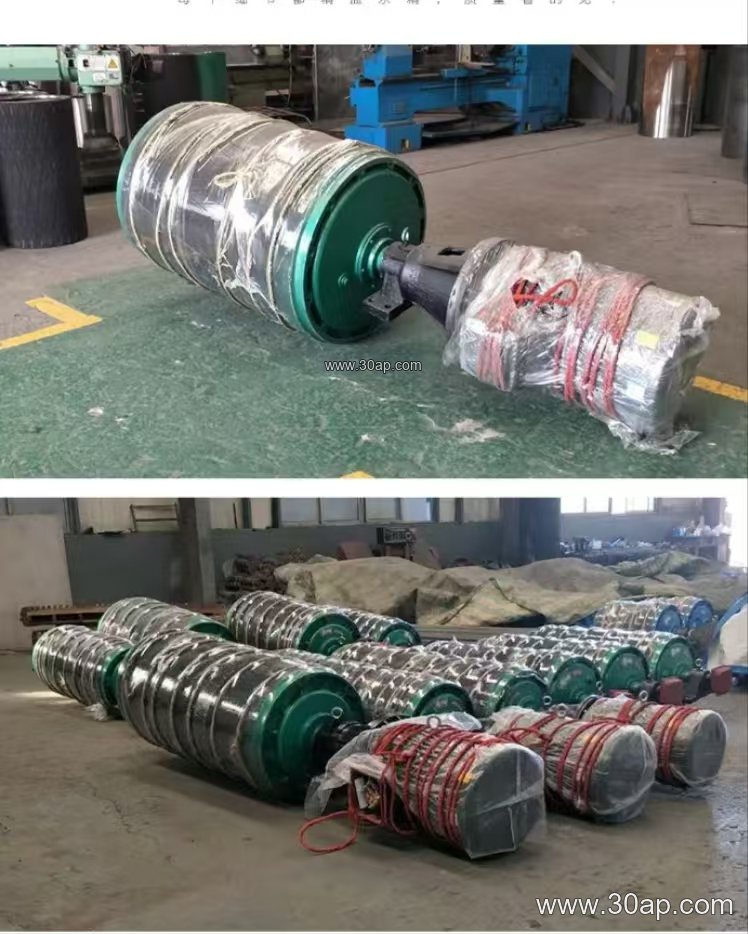
This pulley type appears most often at the drive station, where grip is critical. A tail pulley rarely needs the same abrasion protection, and a bend pulley usually runs with a lighter cover because it sees less torque. That difference is worth remembering when comparing quotes: the wear-resistant version belongs where slip and abrasion are real risks, not automatically at every station.
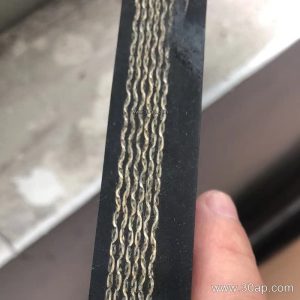
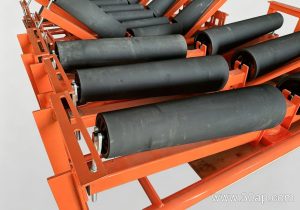
Typical duty includes limestone and iron ore handling, coal preparation plants, clinker lines, power station coal yards, and aggregate crushing circuits. In these settings the pulley works alongside an abrasion resistant conveyor belt, conveyor idler rollers, and heavy conveyor brackets, so the whole train should be specified together.
Buyer Checklist
- Confirm belt width, pulley face width, and required diameter from the layout drawing
- State the material being carried and whether wet, oily, or sharp
- Choose lagging compound and thickness for the abrasion level
- Specify grooving pattern if water or fines cause slip
- Check shaft size, keyway, bearing type, and mounting centers
- Ask how the lagging is bonded and whether field re-lagging is possible
On a coal mining conveyor belt system, flame retardant properties may also apply to the belt and surrounding components, so coordinate the pulley covering with the overall fire strategy. A well-chosen wear-resistant lagged pulley, correctly sized and properly bonded, protects both the drum and the belt, and keeps the whole conveyor running at its design capacity.