What a Ceramic Lagged Pulley Does in a Conveyor
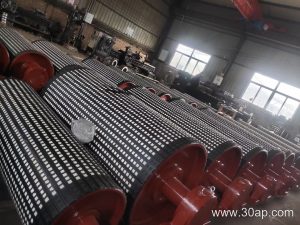
A wear-resistant ceramic lagged pulley is a conveyor pulley whose shell is covered with ceramic tiles set in a rubber or epoxy matrix. The ceramic provides a hard, abrasive-resistant surface that grips the conveyor belt while resisting wear from slipping, impact, and abrasive dust. This type of pulley is often used as a drive pulley, where traction matters most, but it can also serve in tail or bend positions when the duty is severe. Unlike a standard rubber lagged pulley, the ceramic inserts create a textured surface that maintains friction even when the belt is slightly misaligned or the load is heavy.
In industries such as mining, coal preparation, cement plants, and aggregate quarries, a ceramic lagged pulley helps reduce belt slip and extend service life. It is not a substitute for proper belt tensioning or alignment, but it adds a durable layer of protection where rubber alone might wear quickly.
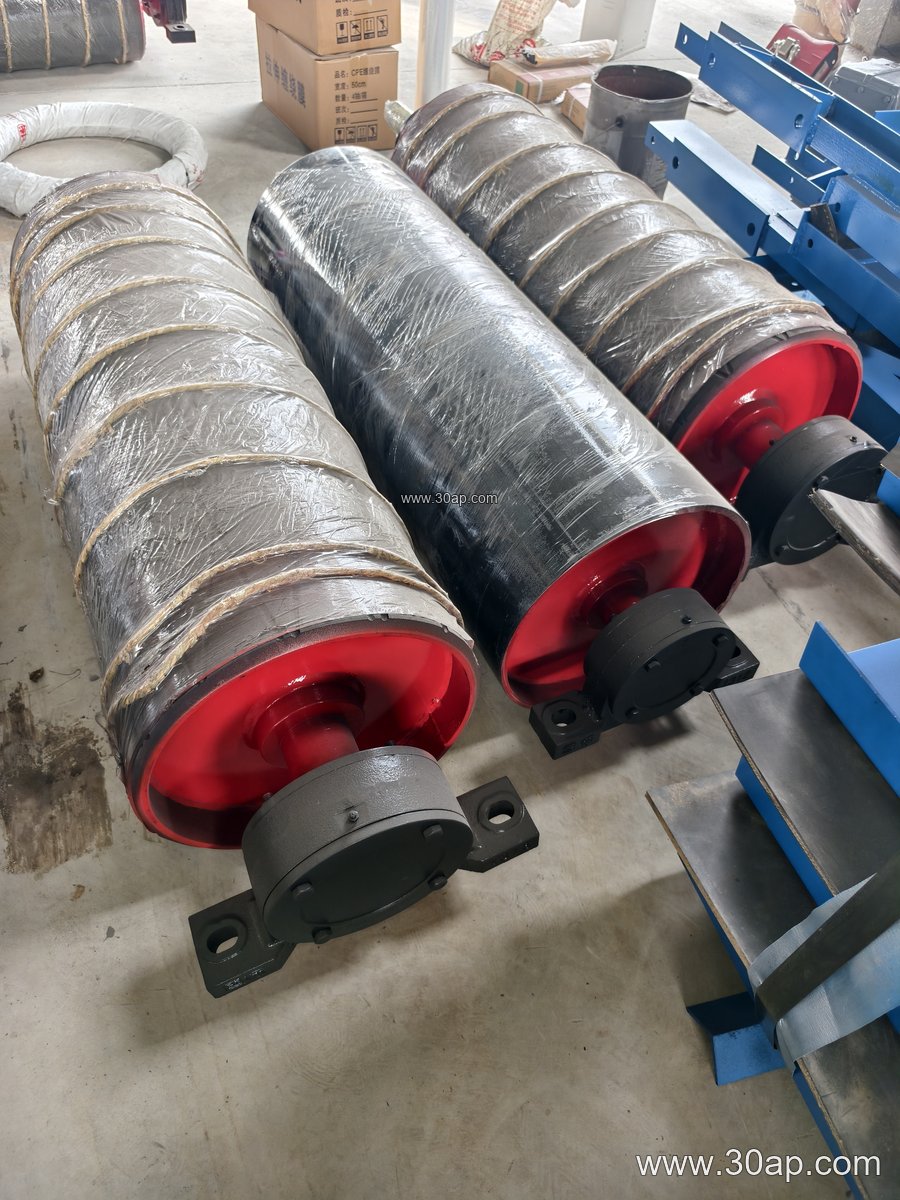
Construction and Surface Options
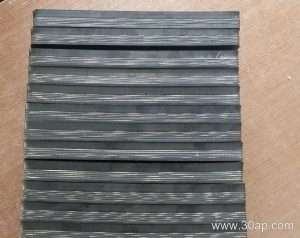
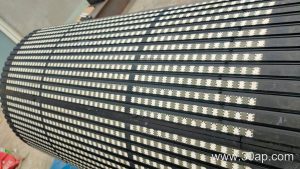
The pulley body is typically a welded steel shell with end discs and a shaft, machined for balance and concentricity. The lagging consists of ceramic tiles—often alumina—bonded to the shell. Common bonding methods include hot vulcanized rubber, cold-bonded rubber, or epoxy. The tiles may be arranged in a plain pattern or with diamond or herringbone profiles to enhance grip. Lagging thickness commonly ranges from 8 mm to 20 mm, depending on the application and belt tension.
Surface forms for ceramic lagging include flat ceramic tiles and patterned ceramic tiles. The pattern helps channel water and fines away from the contact area, which is useful in wet or dusty conditions. For comparison, a rubber lagged pulley with diamond grooving is common in less abrasive service, while a ceramic lagged pulley is chosen when wear resistance is the priority.
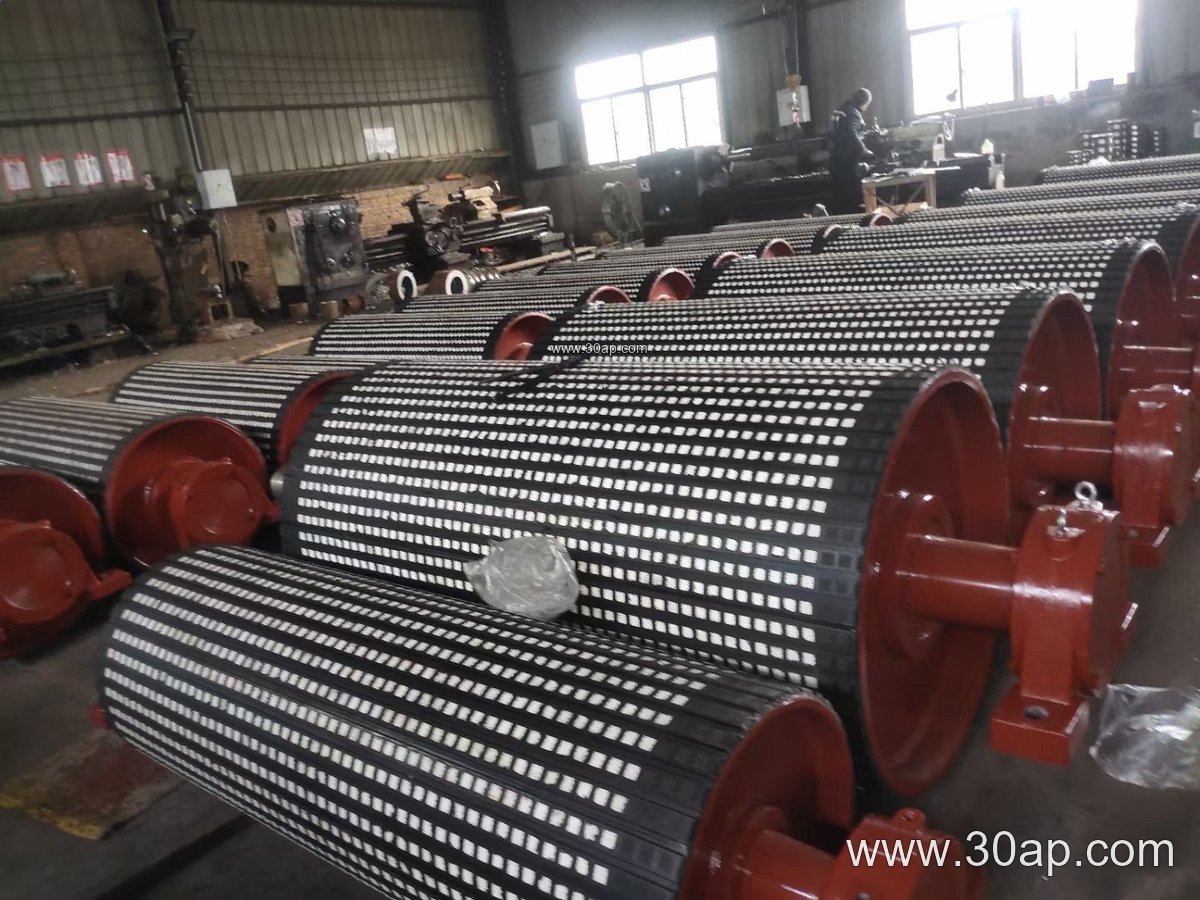
Where It Fits in the Conveyor Layout
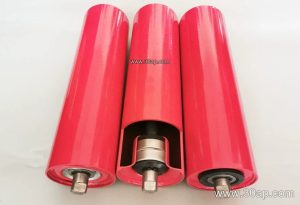
A ceramic lagged pulley is often specified for the drive pulley at the head of a conveyor, especially in primary crushing and bulk material handling. It can also be used as a tail pulley in gravel and ore applications where the belt is exposed to abrasive material. In a cement plant, it may appear on clinker conveyors or raw material belts. In a coal preparation plant, it helps maintain grip on belts carrying washed coal. The pulley works together with the conveyor belt, idler rollers, and conveyor brackets to keep the system running smoothly.
For example, a B1200 conveyor belt might run on a drive pulley with a Ø1000 mm shell and ceramic lagging, while a smaller B800 belt could use a Ø500 mm pulley with the same lagging type. The exact combination depends on belt tension, torque, and load, not on a fixed rule.
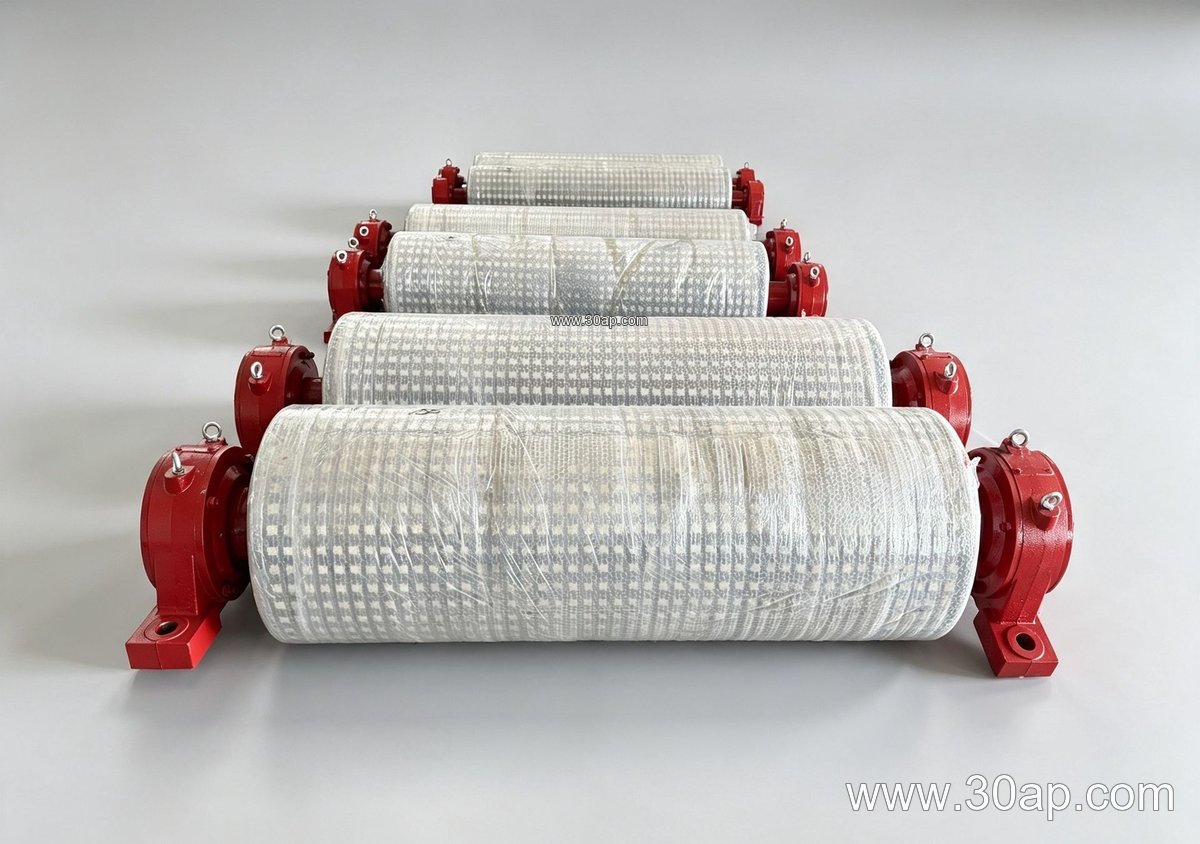
Common Sizes and Parameters
Pulley dimensions are selected according to belt width, shaft load, and required traction. The table below lists typical reference values; these are not mandatory specifications for every conveyor.
| Parameter | Common Range / Example |
|---|---|
| Belt width (B) | B400, B500, B650, B800, B1000, B1200, B1400, B1600, B1800, B2000 |
| Pulley diameter (Ø) | Ø200, Ø250, Ø315, Ø400, Ø500, Ø630, Ø800, Ø1000, Ø1250, Ø1400 |
| Lagging thickness | 8 mm, 10 mm, 12 mm, 15 mm, 20 mm |
| Face width | Usually wider than belt, e.g. B800 ≈ 950 mm, B1200 ≈ 1400 mm |
| Shaft diameter | Ø50, Ø60, Ø70, Ø80, Ø90, Ø100, Ø120, Ø140, Ø160, Ø180, Ø200 (determined by torque and load) |
When selecting a ceramic lagged pulley, consider the belt type as well. An abrasion resistant conveyor belt or a heavy-duty mining conveyor belt may pair well with ceramic lagging in high-wear zones. In coal mining, a flame retardant conveyor belt is often required, and the pulley lagging should be compatible with the belt cover. For long overland conveyors, a steel cord conveyor belt may be used, and the drive pulley must provide enough friction without damaging the belt.
Buyer Checklist
- Confirm the pulley position: drive, tail, or bend. Drive pulleys benefit most from ceramic lagging, but tail pulleys in abrasive service can also use it.
- Check belt width and pulley face width to ensure proper belt tracking. Face width is usually slightly larger than belt width.
- Specify lagging thickness and pattern based on the material being conveyed and the environment. Wet or oily conditions may require a different pattern.
- Verify shaft diameter and bearing size against the actual load and torque. Do not assume a shaft size from belt width alone.
- Consider the conveyor belt type: an EP conveyor belt, NN conveyor belt, or fabric core conveyor belt may have different cover hardness, which affects lagging choice.
- For underground coal mining, ensure the pulley lagging is compatible with fire resistant and anti-static belt requirements.
In a sand and gravel plant or a copper ore concentrator, a wear-resistant ceramic lagged pulley can be a practical upgrade over plain rubber lagging. It is not a universal solution, but when abrasive wear and belt slip are ongoing issues, it offers a durable alternative. Always review the full conveyor design—including idler roller spacing, conveyor bracket condition, and belt tension—before changing pulley lagging.