What an Impact Idler Bracket Does
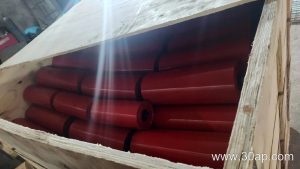
An impact idler bracket is the mounting frame that holds impact idler rollers directly beneath the loading point of a conveyor belt. Its job is simple to describe and demanding in practice. Every time crushed rock, coal, or clinker drops onto the belt, the bracket absorbs the shock and keeps the rollers in the correct position so the belt does not sag or deflect excessively. In a quarry, a coal handling plant, or a cement kiln feed line, this small structural component protects both the rollers and the belt itself.
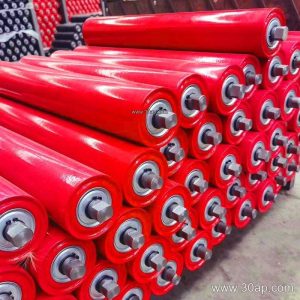
The bracket works together with a group of idler rollers and the conveyor belt. When material falls from a chute, the impact is concentrated on a short section of belt. Impact brackets spread that load across several rollers, reducing point pressure. Without them, the belt cover would wear through quickly and the roller bearings would fail early.
Construction and Materials
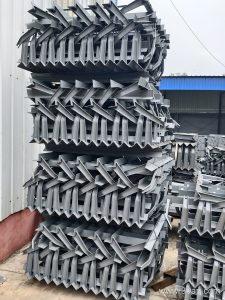
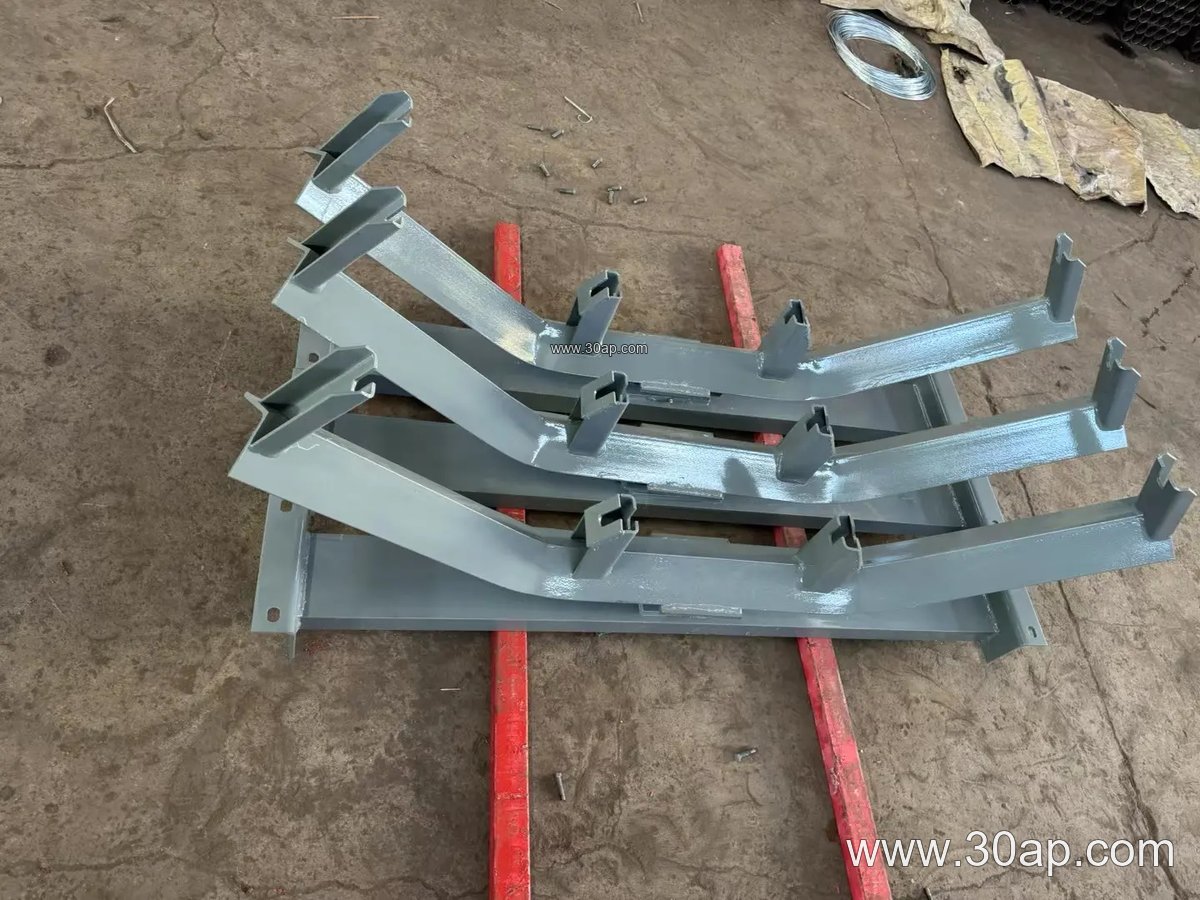
Most impact idler brackets are fabricated from angle steel, channel steel, or bent steel plate. The frame is welded or bolted and then drilled to accept the roller shafts. Because the bracket sits in the material path, it often includes reinforced mounting pads or gussets to resist vibration and repeated shock.
Common build details include:
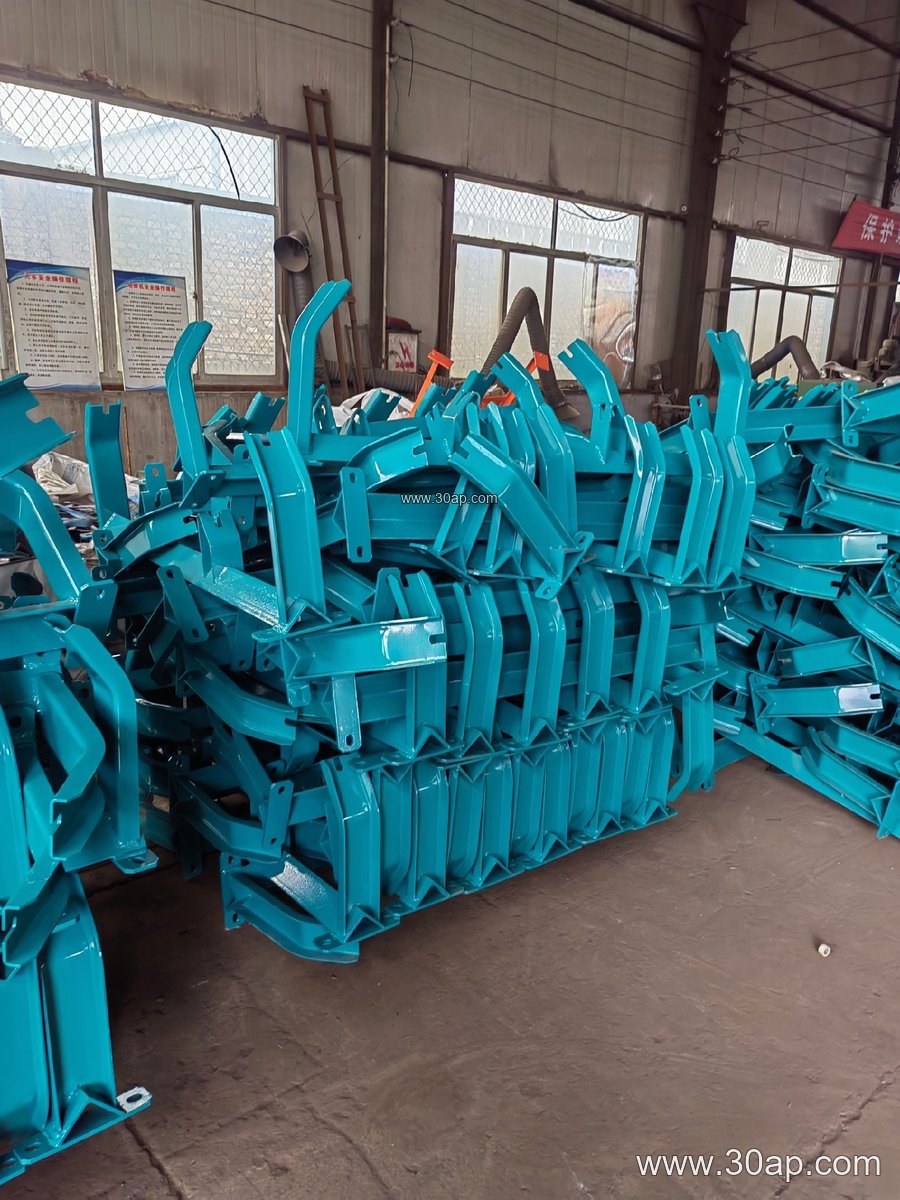
- Welded channel or angle frame sized to the belt width
- Slotted or drilled mounting holes for roller shaft adjustment
- Reinforced base plates for bolting to the conveyor stringer
- Optional rubber or polyurethane cushioning under the roller seats
Material thickness and coating depend on the duty. In a wash plant or port terminal with salt air, galvanized or painted finishes are common. In a steel plant or sintering line, heavier plate is often specified.
Where Impact Brackets Are Used
You will find impact idler brackets at transfer points, crusher discharges, and truck or rail unloading stations. Two typical settings illustrate the range. In a limestone quarry, the bracket sits under the primary crusher outlet where large lumps hit the belt at speed. In a power plant coal yard, the same component handles continuous coal flow from a stacker or reclaim chute.
They are also used in sand and gravel lines, tunnel spoil handling, and fertilizer or grain loading. The common thread is a drop point where material velocity and lump size create repeated impact. In these positions, a heavy-duty conveyor belt such as an abrasion resistant conveyor belt or a multi-ply fabric core conveyor belt is often paired with impact brackets to extend service life.
Sizing and Selection Notes
Buyers should match the bracket to the belt width, trough angle, and roller diameter used on the conveyor. Reference values below are typical ranges, not fixed rules. Final dimensions are determined by design and should be confirmed with the conveyor layout.
| Parameter | Common Reference Values |
|---|---|
| Belt width | B500, B650, B800, B1000, B1200, B1400, B1600, B1800, B2000 |
| Trough angle | 20°, 30°, 35°, 45° |
| Roller diameter | Ø89, Ø108, Ø133, Ø159, Ø194 |
| Frame material | Angle steel, channel steel, bent steel plate |
A B800 bracket with a 35° trough and Ø108 rollers is a common combination in aggregate plants. A wider B1200 frame at 45° with Ø133 rollers may suit a high-capacity ore conveyor. These are examples only. Hole spacing and crossbeam length vary with belt width and trough angle, so they should never be assumed from belt width alone.
Impact Bracket Versus Standard Support
A standard carrying idler bracket is designed for steady load, not shock. The impact version adds stiffness and often cushioning to survive falling material. It should not be confused with a transition bracket, which guides the belt from flat to troughed profile, or with a return bracket under the empty strand. Each has its own position and purpose. Likewise, a drive pulley, tail pulley, and bend pulley are separate components and are not interchangeable with any idler bracket.
Buyer Checklist
- Confirm belt width and trough angle before ordering
- Match roller diameter to the existing idler roller set
- Check mounting hole pattern against the conveyor stringer
- Specify material and finish for the site environment
- Ask whether adjustable or fixed trough geometry is needed
- Review impact energy and lump size at the loading point
For more on related conveyor components, see the belt and roller ranges at chengconveyor.com. A well-chosen impact idler bracket is a low-cost way to protect a conveyor belt, reduce downtime, and keep material moving at the toughest point on the line.