What a 10mm EP Belt Is
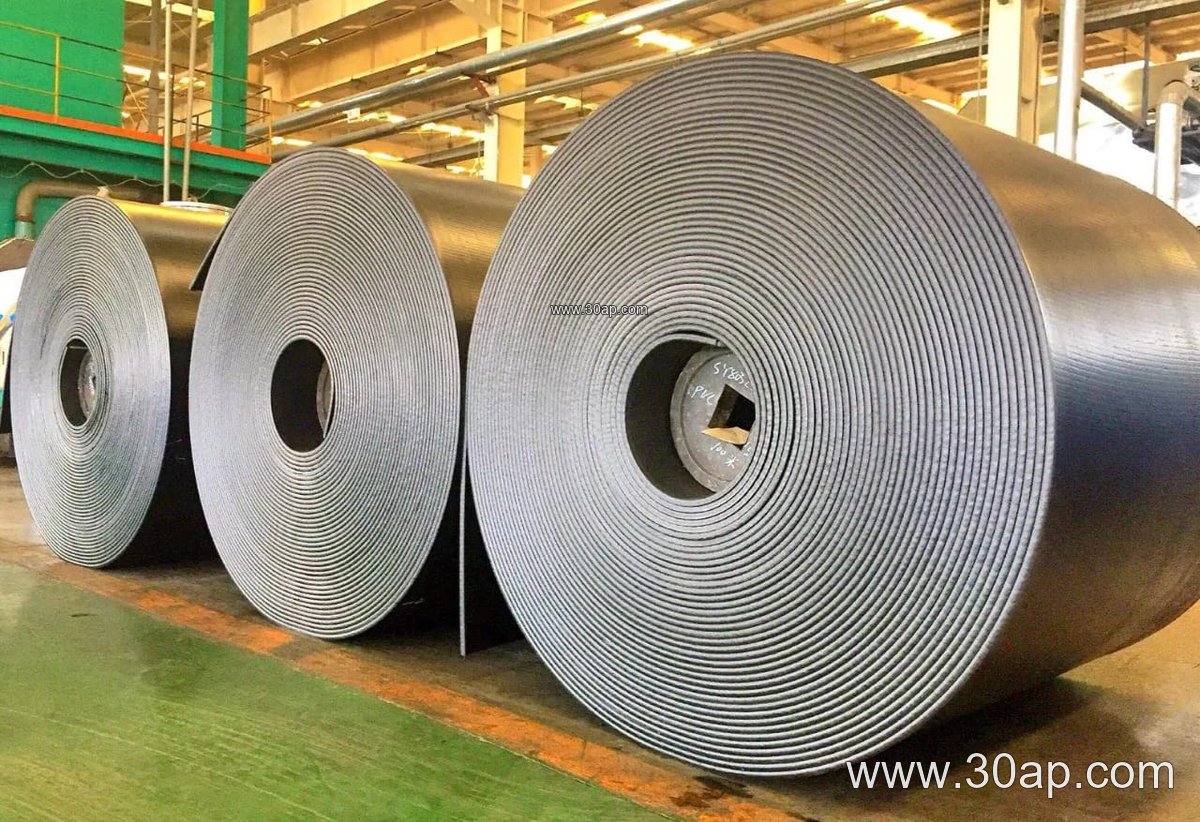
An EP Conveyor Belt, 10mm Thick is a fabric-core rubber belt built on polyester warp and polyamide weft plies. The 10mm figure refers to the nominal overall thickness of the finished belt, not to the thickness of one individual component, so the split between cover rubber and carcass varies between constructions and suppliers. In practice, a belt of this gauge falls into the heavy-duty band of fabric belting, sitting above light single-ply stock and below thick steel cord designs.
The carcass is the load-bearing part. Multiple woven EP plies are bonded together with skim rubber, then top and bottom covers are applied and the whole assembly is vulcanised. Because polyester stretches very little under tension and polyamide resists fatigue, the finished EP Rubber Conveyor Belt holds its length well on long centre distances and resists repeated flexing at the pulleys. The 10mm build is often chosen where abrasion, impact and moderate heat all appear on the same line.
Construction and Surface Options
A typical build for this gauge uses two to six plies, with cover thicknesses such as 4+2 mm, 5+2 mm or 6+2 mm. The covers dominate wear life in quarry and crusher duty, while the carcass governs tensile strength and troughability. Buyers should ask for both figures separately, because a 10mm belt with light covers and a 10mm belt with thick covers behave very differently in service.
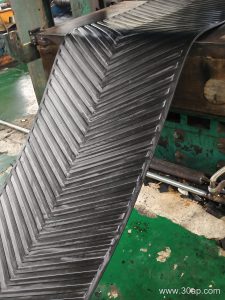
Surface form is a separate decision. Plain covers suit most bulk material on flat or troughed idlers. A Chevron Conveyor Belt raises cleats to grip material on inclines, while a Corrugated Sidewall Conveyor Belt adds side walls for steep, space-limited routes. These forms are alternatives for specific handling problems, not substitutes for the plain belt described here.
Typical Duty and Industries
Thickness alone does not set the strength grade. A 10mm EP belt may be supplied in EP200, EP315, EP400, EP500, EP630 or EP800 constructions, and the correct grade depends on the duty, the incline and the load profile. Common applications include:
- Mining and coal handling, where a Mining Conveyor Belt must resist cutting, impact and, in underground work, flame spread
- Cement plants and clinker lines, where heat and abrasion combine
- Power plants and port terminals moving coal and ore
- Sand, stone and aggregate plants feeding crushers and screens
- Steel plants and foundries handling hot sinter or scale, where a Heat Resistant Conveyor Belt grade is needed
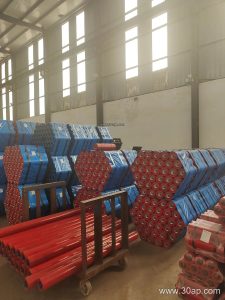
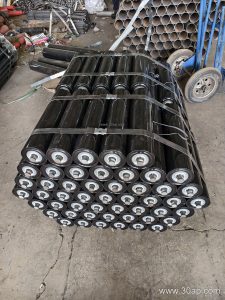
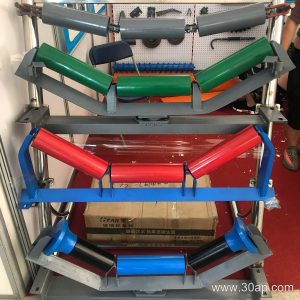
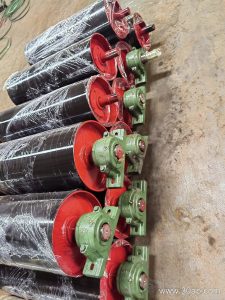
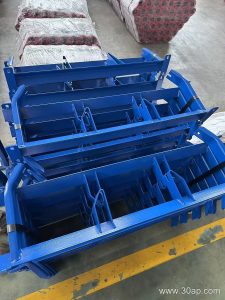
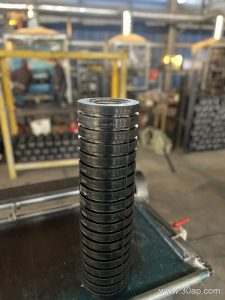
On these lines the belt works with conveyor pulleys at the head and tail, idler rollers supporting the carry and return strands, and conveyor brackets holding the whole frame rigid. Drive, tail and bend pulleys are distinct components with different functions, so they should be specified by role rather than treated as interchangeable.
Sizing and Specification Notes
Belt width and thickness are independent choices. A 10mm EP Conveyor Belt can be produced in B500, B650, B800, B1000, B1200, B1400, B1600, B1800 or B2000 widths depending on the manufacturer, and each width may be paired with a range of pulley diameters. There is no fixed rule tying one belt width to one pulley size or one shaft diameter; those values come from the conveyor design.
A practical checklist for a buyer:
- State the material, lump size, temperature and moisture
- Give the required tensile grade and the number of plies
- Confirm top and bottom cover thickness in millimetres
- Specify width in millimetres and overall thickness
- Ask about special grades such as Abrasion Resistant Conveyor Belt, Oil Resistant Conveyor Belt or Anti-Static Conveyor Belt
- Confirm whether an Endless Conveyor Belt splice is required or open ends are acceptable
Comparisons That Matter
Where tensile demand is very high or the route is extremely long, a Steel Cord Conveyor Belt or a high-grade Multi-Ply Fabric Core Conveyor Belt may be the better choice than a 10mm fabric belt. For lighter, cleaner duties, an NN Conveyor Belt or a PVC belt can be more economical. In underground coal work, a PVG800S or similar PVG belt is often specified for fire safety. These are comparisons for selection, not replacements for the EP product itself.
Installation and Care
Correct tracking starts with alignment of the conveyor pulleys, idler rollers and brackets, not with the belt alone. Store rolls on a dry, level surface away from direct sunlight, and avoid tight bends when lifting. Check cover wear at loading points, watch for edge damage after mistracking, and inspect splices regularly. Matching the belt grade and cover compound to the real duty will extend service life more reliably than simply choosing a thicker belt.