What a Conveyor Belt Idler Does
A conveyor belt idler is the rotating roller assembly that supports the belt and the material load along the carrying and return runs. In a typical bulk handling line, these idlers sit between the head and tail of the conveyor and carry most of the belt’s weight, so their condition directly affects tracking, power draw, and belt life. Buyers often refer to the same component as a conveyor roller or carrying roller, and these names describe the same product family in everyday use.
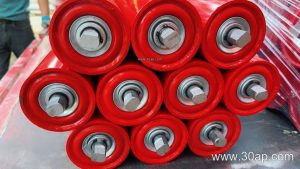
The idler is a simple assembly in principle. A steel tube forms the roller shell, with bearing housings pressed into each end, a shaft running through the center, and a sealing arrangement to keep dust and water out of the bearings. On a quarry or crusher conveyor line, a worn seal is usually the first sign of trouble, long before the shell itself fails.
Construction Details That Matter
The shell material and bearing choice define how long an idler lasts. Common roller surfaces include steel tube, nylon, ceramic, and rubber rings. Rubber-ring impact idlers are often used at transfer points where falling rock or ore hits the belt, while ceramic or nylon surfaces can help in sticky or abrasive service.
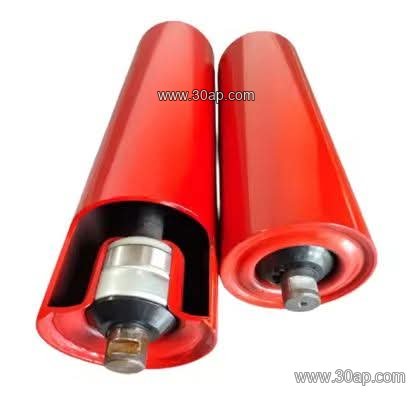
Bearings are usually selected from standard sizes such as 6204, 6205, 6305, 6306, 6308, and 6310. A larger bearing is not automatically better; it must match the shaft, load, and speed of the conveyor. Sealing quality matters just as much, especially in coal mining, cement plants, and power plant coal handling, where fine dust is constant.
Idler Types and Where They Fit
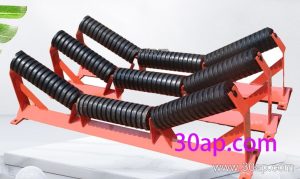
The carrying side of a conveyor normally uses three-roll troughing sets, with side rollers inclined at a trough angle. Common trough angles are 20, 30, 35, and 45 degrees. A deeper trough helps contain bulk material on a wide belt, but it also increases the load on the side rollers. Transition idlers are placed near the head and tail pulleys to ease the belt from flat to troughed profile.
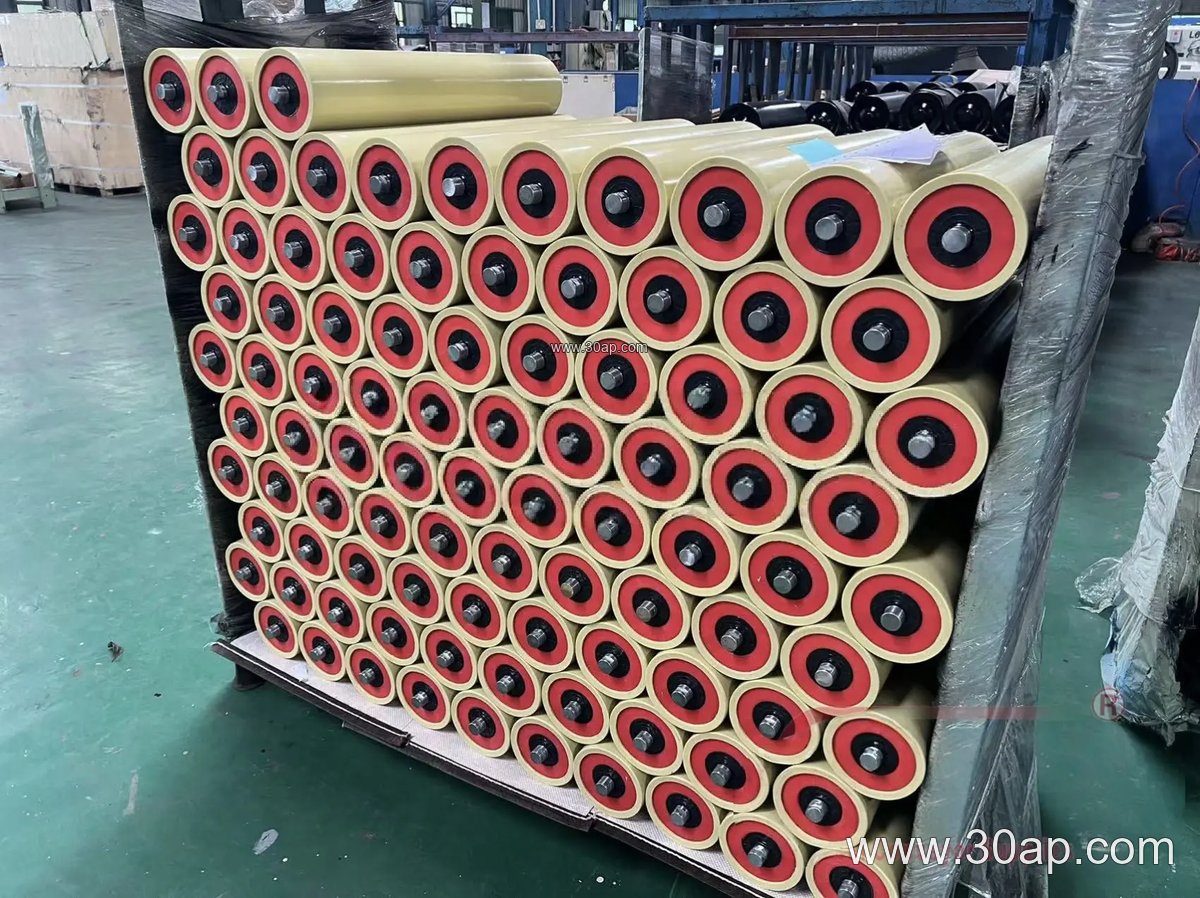
On the return side, flat return rollers or V-type return rollers support the belt. Self-aligning idlers, including friction and tapered types, are used where belt tracking is a concern. Spiral rollers can help shed sticky material in fertilizer, grain, and some mineral handling lines. These are different roles, not interchangeable parts.
Belt Width, Roll Diameter, and Roll Length
Idler dimensions follow belt width and conveyor design. Roll diameters are commonly Ø63, Ø76, Ø89, Ø102, Ø108, Ø127, Ø133, Ø159, Ø178, Ø194, and Ø219 mm. Belt widths range from B400 and B500 up to B2400, with B650, B800, B1000, and B1200 being very common in aggregate and cement service.
Roll length changes with belt width, trough angle, and idler arrangement. The table below shows typical examples for three-roll troughing sets; side rollers and center rollers may differ, and final dimensions are set by the conveyor design.
| Belt Width | Typical Roll Length (three-roll troughing) | Common Roll Diameter Range |
|---|---|---|
| B500 | about 200 mm | Ø63 to Ø89 mm |
| B650 | about 250 mm | Ø76 to Ø108 mm |
| B800 | about 315 mm | Ø89 to Ø127 mm |
| B1000 | about 380 mm | Ø102 to Ø133 mm |
| B1200 | about 465 mm | Ø108 to Ø159 mm |
| B1400 | about 530 mm | Ø127 to Ø159 mm |
| B1600 | about 600 mm | Ø133 to Ø178 mm |
| B1800 | about 670 mm | Ø159 to Ø194 mm |
| B2000 | about 750 mm | Ø159 to Ø219 mm |
These figures are common references, not fixed pairings. A B800 belt can work with more than one roll diameter depending on load, speed, and frame design. The shaft diameter should be confirmed from the idler drawing and bearing selection, not guessed from belt width alone.
Applications Across Industries
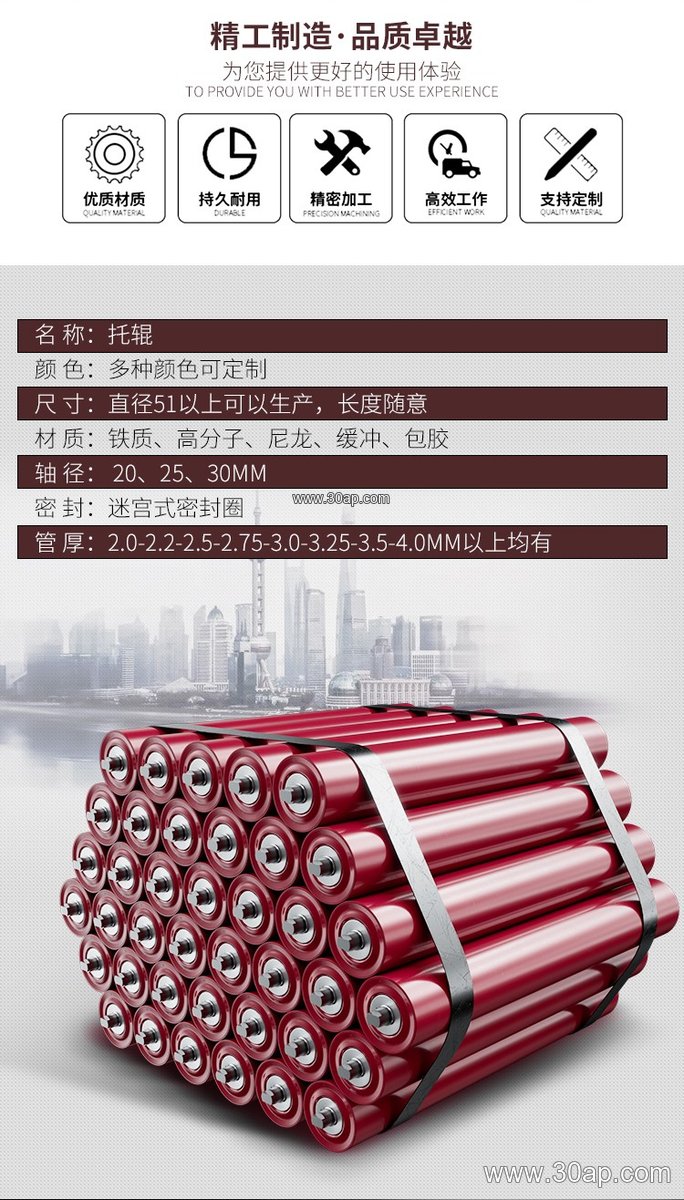
Conveyor belt idlers appear wherever bulk material moves continuously. In an iron ore or copper ore terminal, heavy-duty troughing idlers carry dense, abrasive loads. In a coal mining or underground coal mining operation, flame retardant and anti-static belts are paired with sealed idlers to handle dust and limited space. In a cement plant, idlers support clinker and limestone on long inclined conveyors, while a power plant coal yard relies on them for steady fuel feed.
Sand and gravel pits, crushing and screening plants, and concrete mixing stations use idlers on belts that often run at high speed. Port ship loading lines and steel plant sinter conveyors also depend on reliable roller rotation. The belt itself may be an EP conveyor belt, a steel cord conveyor belt, or a fabric core conveyor belt, and the idler must suit the belt’s width, speed, and load profile.
Buyer Checklist
- Confirm belt width and conveyor capacity before choosing roll diameter.
- Match the idler type to its position: carrying, impact, transition, return, or self-aligning.
- Check bearing size, shaft size, and sealing class for the site conditions.
- Review trough angle and roll length together with the conveyor bracket dimensions.
- For dusty or wet sites, specify sealed bearings and a roller surface that resists buildup.
A well-matched idler set keeps the belt running centered and reduces unnecessary wear on the conveyor pulley and belt splices. More product details are available at www.example.com/conveyor-belt-idler and through the site’s conveyor roller and belt sections.