What a Take-Up Device Pulley Does
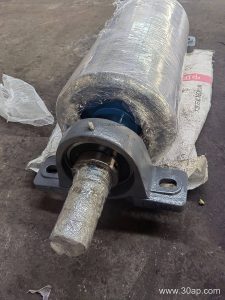
A take-up device pulley is the drum that carries the belt at the tensioning station of a conveyor. Its job is not to drive the belt or to change its direction for process reasons, but to hold the belt in a loop that can be lengthened or shortened so the required tension stays in the system. In many layouts this drum is also called a tension pulley or take-up drum, and it sits inside a sliding carriage, a pivoting arm, or a gravity tower. When the belt stretches with service, or when starting torque demands extra grip at the drive, the take-up device pulley moves and keeps the slack out of the circuit.
Because it works continuously under load, this drum is a wear item as much as a structural part. A quarry line running a heavy-duty mining conveyor belt, a cement plant moving clinker on a heat resistant conveyor belt, and a power plant feeding coal on a flame retardant conveyor belt all depend on the tensioning drum to keep the belt tracking and to prevent slip at the head drive.
Construction and Surface Options
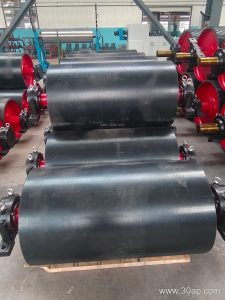
The assembly usually consists of a welded shell, two end discs, a through shaft, bearing housings, and a lagging layer. Shell thickness and shaft diameter are selected from the actual belt tension and the resulting shaft load, not from belt width alone. Common shaft sizes include Ø80, Ø100, Ø120, Ø140 and Ø160, while the drum diameter often falls between Ø315 and Ø800 depending on the belt stiffness and the wrap angle needed. A typical combination might read B800 × Ø500 or B1200 × Ø1000, but the same belt width can work with more than one drum diameter.
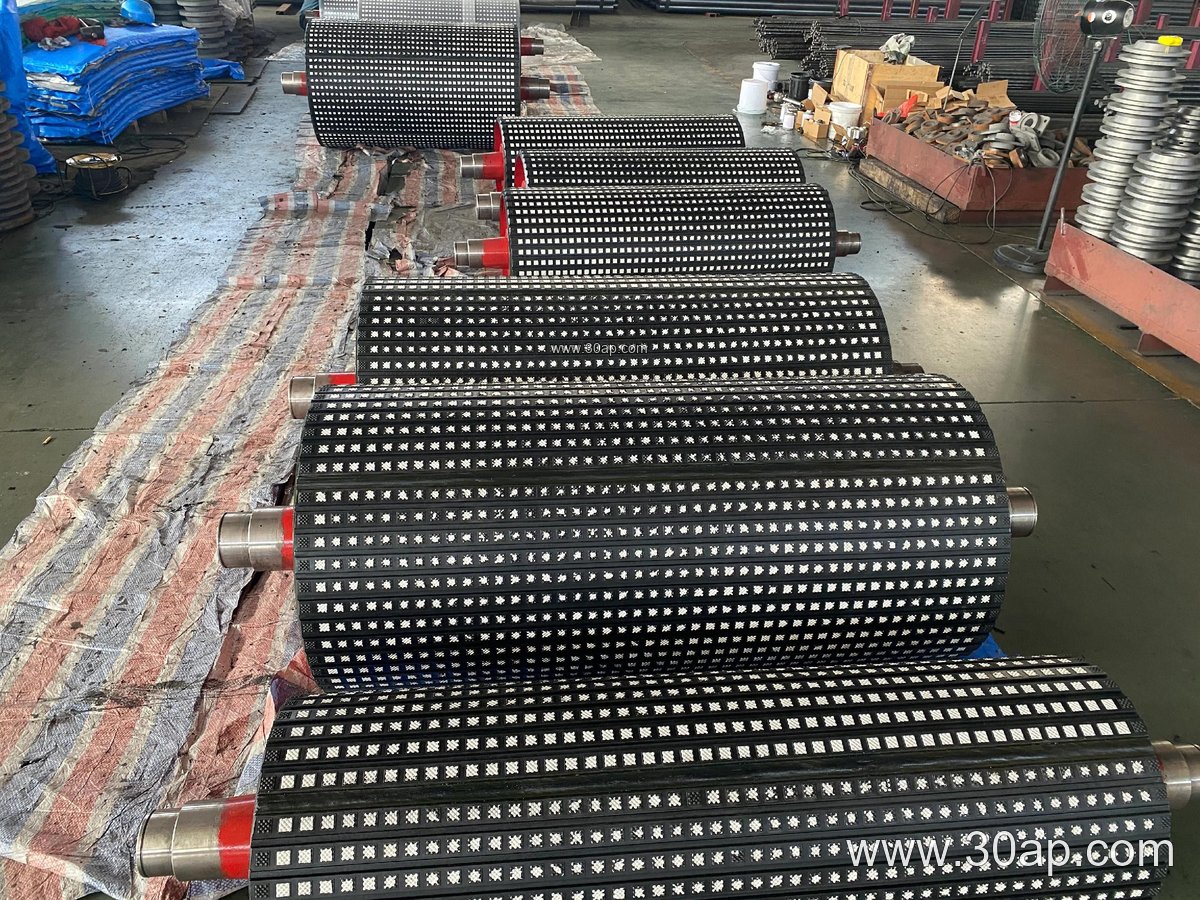
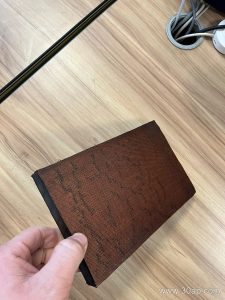
Surface form matters at the tensioning point. Plain finish is used where the drum only guides, while diamond lagging, herringbone lagging, or ceramic lagging improves grip when the tension pulley also transmits wrap force. Rubber lagging thickness is commonly 8, 10, 12, 15 or 20 mm. Hot vulcanized rubber is preferred for high-load stations, and cold bonded rubber suits easier replacement in the field.
Common reference data for tensioning drums
| Item | Typical range |
|---|---|
| Belt width | B500 to B2000 |
| Drum diameter | Ø250 to Ø1000 |
| Face width | About 100 mm wider than belt, e.g. B650 about 750 mm |
| Shaft diameter | Ø50 to Ø200, by torque and load |
| Lagging | Plain, diamond, herringbone, ceramic, 8 to 20 mm |
Where It Is Installed
Two locations dominate. In a gravity take-up tower, the drum hangs in a vertical frame and counterweight, so belt tension stays nearly constant as the belt stretches. In a screw or hydraulic take-up at the tail, the drum slides horizontally in guide rails fixed to the conveyor bracket. Both arrangements need the drum axis to stay square to the belt centerline; a skewed carriage causes edge wear and mistracking that no amount of idler roller adjustment can fully correct.
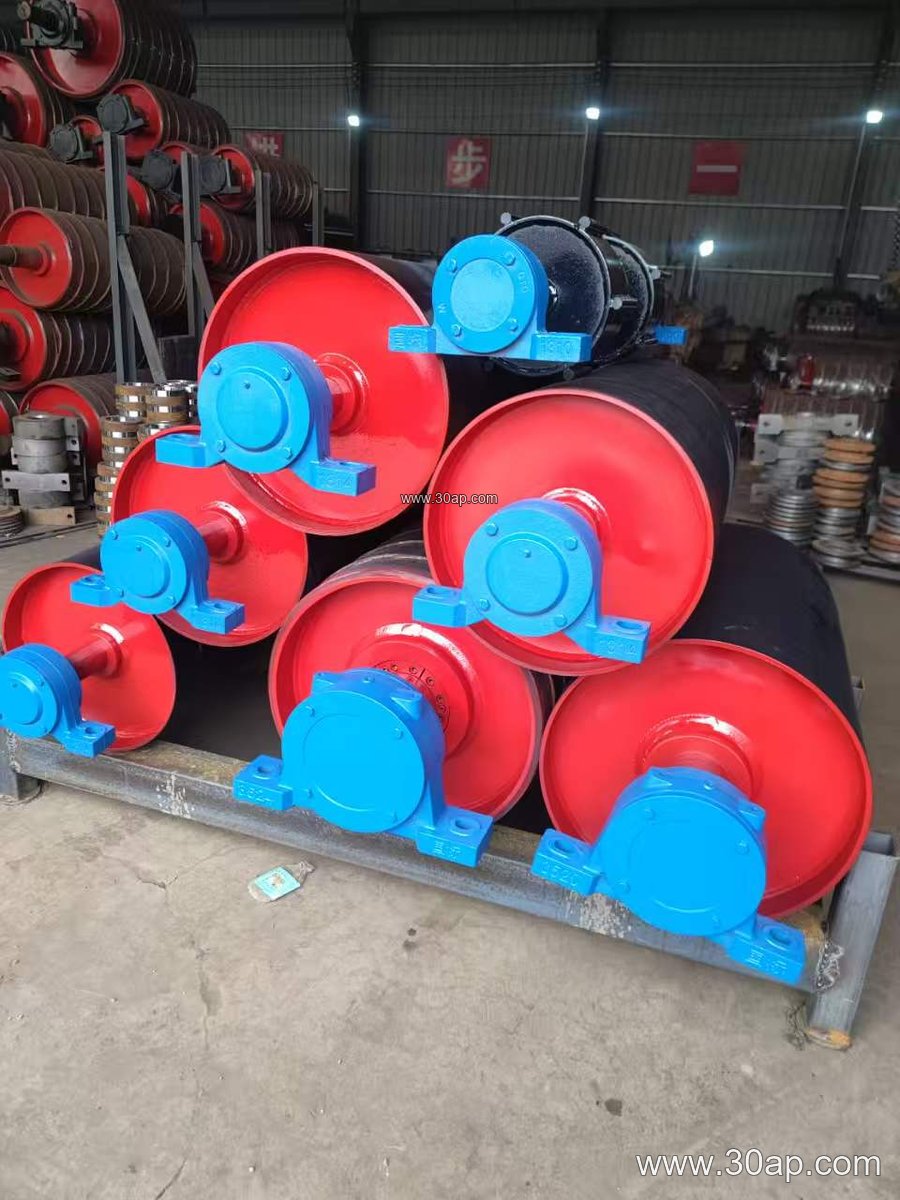
In an underground coal mining conveyor belt system, space is tight and the take-up travel is short, so compact bearing housings and sealed designs are common. In a port or ship loading line with a long overland conveyor, the take-up device pulley may be large and fitted with a heavy lagging to handle starting loads with a steel cord conveyor belt.
Buyer Checklist
- Confirm the tensioning method first: gravity, screw, hydraulic, or winch. The carriage design follows from it.
- State the belt type and duty, such as EP conveyor belt, NN conveyor belt, or a multi-ply fabric core conveyor belt, because belt modulus affects the required take-up travel.
- Give the calculated belt tension and the shaft load, not only the belt width, so the supplier can size the shaft correctly.
- Specify lagging only where grip is needed; a plain-faced tension drum is often sufficient and cheaper to maintain.
- Check face width against belt width and confirm the clearance for the carriage and guide rails.
- Ask for the bearing type and lubrication plan, since a tension drum is often in a dusty or wet area.
Maintenance is straightforward but easy to neglect. Inspect lagging wear at the belt edges, check that the carriage slides freely, and verify that the drum remains parallel to the adjacent pulley. On a sand and gravel line, grit packed into the guide rails is a frequent cause of uneven tension, and on a fertilizer or grain silo conveyor, corrosion protection on the shaft and housings matters more than drum diameter.
Used together with a properly rated conveyor pulley at the head and well-chosen conveyor brackets, the take-up device pulley keeps the whole circuit stable. For matching drums and belt specifications, see the conveyor pulley range and conveyor belt data at www.beltconveyorpulley.com, where take-up, drive, and bend types are listed separately so buyers can select the right position for each drum.