What a Trough Idler Bracket Does
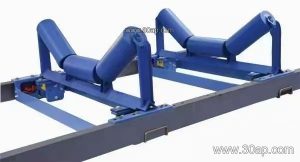
A trough idler bracket is the steel support that holds the three-roller troughing set in the carrying run of a belt conveyor. It fixes the side rollers at the troughing angle, keeps the center roller level, and transfers the load of the belt and material into the conveyor frame. In a quarry, a coal preparation plant, or a power plant coal yard, the bracket is the part that decides whether the troughing set sits at the right angle and stays there under constant vibration.
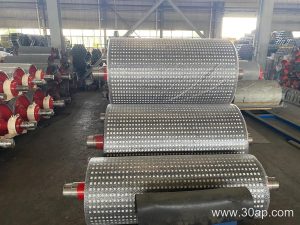
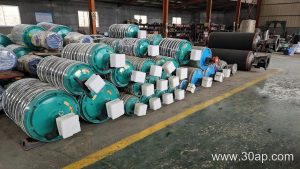
The bracket is often called a troughing idler bracket or troughing set bracket. It is not the same component as a return bracket, and it should not be confused with a conveyor pulley, which drives or redirects the belt. The bracket is a passive structural part; the rollers do the rotating and the conveyor belt does the carrying.
How the Bracket Is Built
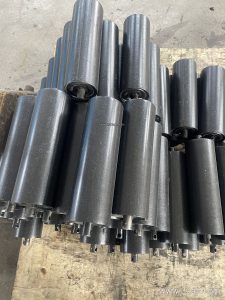
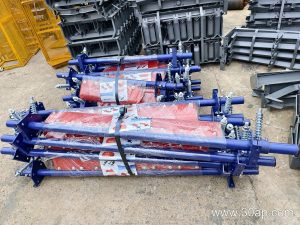
Most trough idler brackets are fabricated from angle steel, channel steel, or folded steel plate. The common form has a base beam that bolts to the conveyor frame, plus two inclined seats that carry the side idler rollers. The center seat holds the middle roller. Slots or drilled holes allow the roller shafts to be located and, on adjustable designs, to be moved.
Fabrication quality matters more than the raw steel grade in many cases. Weld seams should be continuous at load points, holes should line up with the frame, and the angled seats should be square to the belt centerline. A twisted bracket will pull the troughing set out of line and cause belt mistracking.
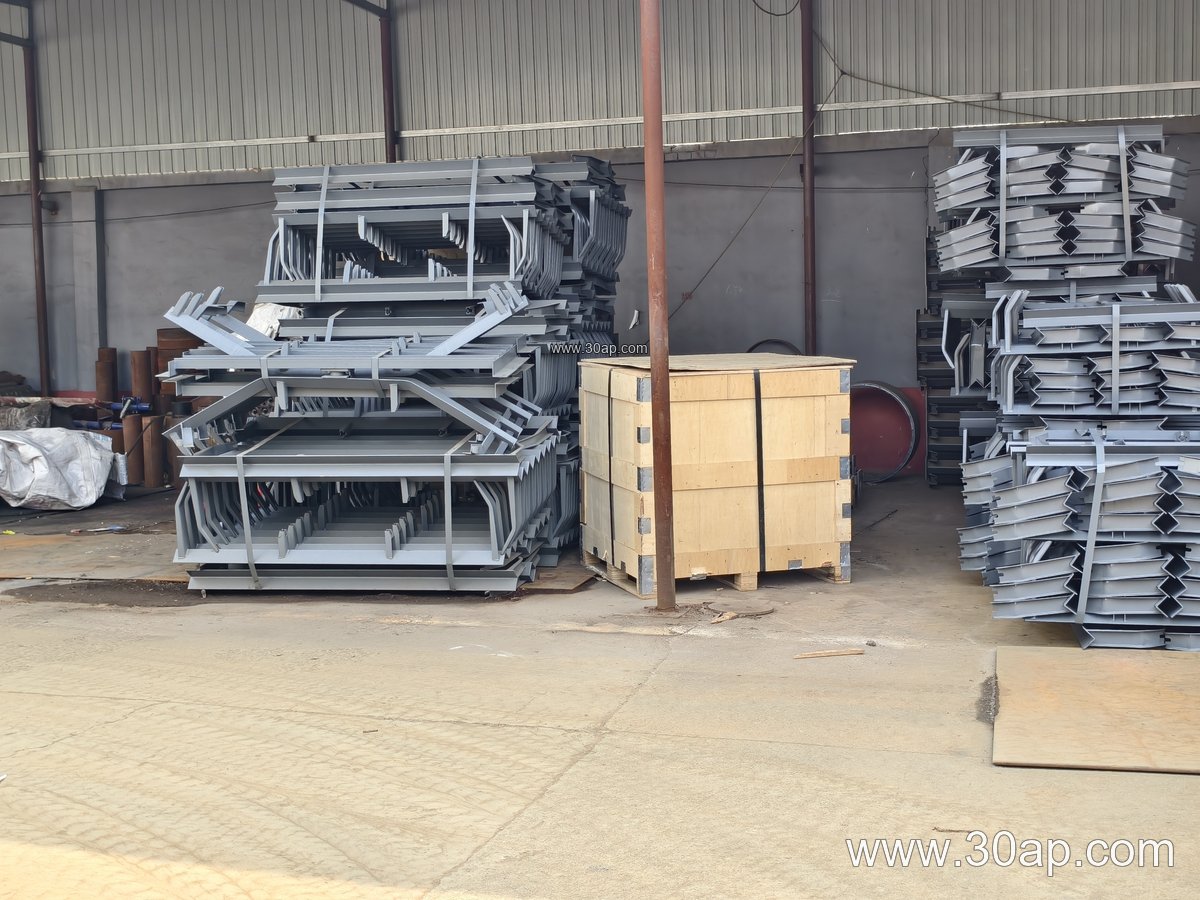
Common Configurations and Reference Dimensions
Bracket choice follows belt width, troughing angle, and roller diameter. The table below gives typical reference combinations; actual mounting hole spacing and beam length are determined by the conveyor design, not by belt width alone.
| Belt width | Troughing angle | Roller diameter | Typical use |
|---|---|---|---|
| B650 | 30 degrees | Ø89 | Small aggregate and sand lines |
| B800 | 35 degrees | Ø108 | General bulk material conveying |
| B1000 | 35 degrees | Ø108 or Ø133 | Cement plant and crusher discharge |
| B1200 | 45 degrees | Ø133 | High-capacity ore and coal conveying |
| B1400 | 35 to 45 degrees | Ø133 or Ø159 | Port and steel plant systems |
| B1600 to B2000 | 35 to 45 degrees | Ø159 or Ø194 | Heavy-duty mining and power plant lines |
Troughing angles of 20, 30, 35, and 45 degrees are common. A larger angle increases material capacity but also increases belt edge tension, so the choice should match the material and the belt construction. A 1.5 to 2 degree forward tilt is sometimes used on the side rollers to help center the belt, and the bracket must be made to hold that tilt.
Fixed and Adjustable Brackets
Fixed trough idler brackets are welded to a set angle and are simple and rigid. Adjustable brackets let maintenance staff change the troughing angle or compensate for wear and misalignment. In a limestone mine where the belt may be re-tensioned seasonally, an adjustable bracket can save time. In a fixed-capacity sand and gravel line, a welded bracket is usually enough.
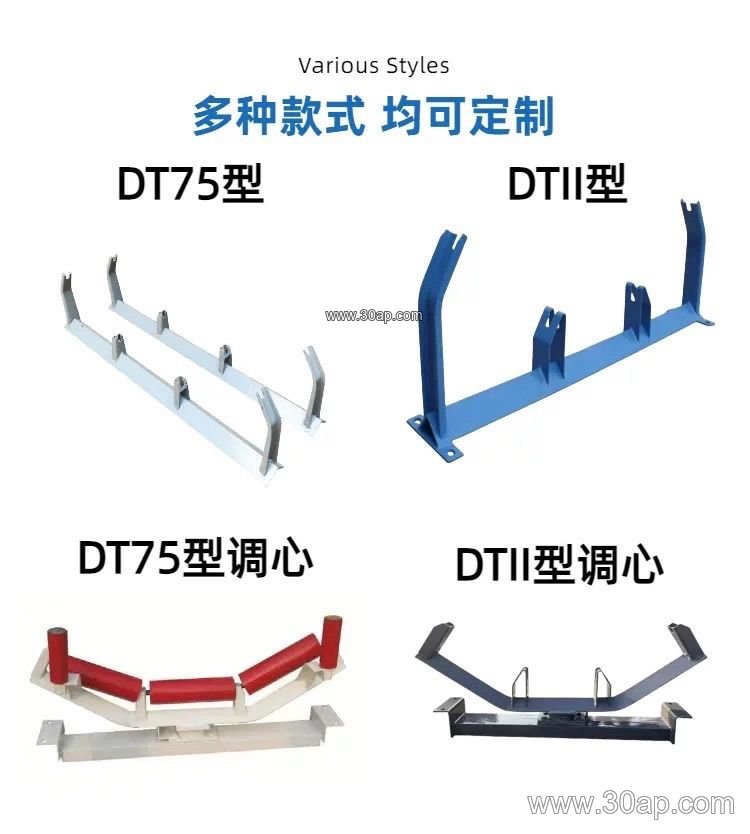
Transition brackets are a separate subtype used where the belt changes from a flat pulley to a full trough. They are mentioned here only for comparison; they do not replace the standard trough bracket in the carrying run.
Where Trough Idler Brackets Are Used
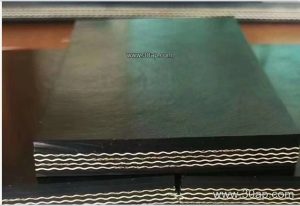
These brackets appear wherever a conveyor belt carries loose material. In a coal preparation plant, they support the troughing sets under a flame retardant conveyor belt and a fire resistant conveyor belt. In a cement plant, they sit under an abrasion resistant conveyor belt moving clinker and limestone. In an iron ore or copper ore operation, heavy-duty brackets carry the load under a steel cord conveyor belt or a high strength conveyor belt.
Other common sites include power plant coal handling, port ship loading, aggregate crushing and screening, and fertilizer or grain silo systems. The bracket itself does not care what the material is, but the load, the belt width, and the environment decide the steel section and the roller diameter.
Buyer Checklist
- Confirm belt width, troughing angle, and roller diameter before ordering.
- Check mounting hole spacing against the existing conveyor frame.
- Match the bracket material to the duty: folded plate for light duty, channel or angle steel for heavy loads.
- Ask whether the design is fixed or adjustable, and whether forward tilt is required.
- For underground coal mining or dusty plants, specify anti-static conveyor belt and flame retardant conveyor belt together with the bracket to keep the whole set consistent.
- Inspect weld quality and hole alignment on delivery; a twisted bracket is hard to correct on site.
A well-matched trough idler bracket keeps the troughing set square, protects the conveyor belt from edge damage, and lets the idler roller turn freely. For buyers sourcing conveyor components, it is a small part that has a large effect on belt life and downtime.