What a Conveyor Take-Up Pulley Does
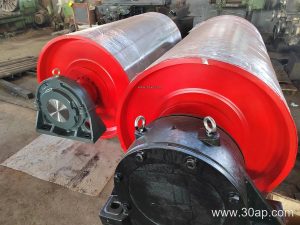
A conveyor take-up pulley is the drum that maintains consistent tension on the conveyor belt. It is not a drive pulley, nor a tail or bend pulley; its job is to take up slack as the belt stretches or contracts under load and temperature changes. In a quarry or a coal washing plant, the take-up pulley often sits at the tail end or in a vertical tower, moving on guides to keep the belt from slipping on the drive drum. Without it, a fabric core conveyor belt or a steel cord conveyor belt would lose traction, wander off-center, and wear prematurely.
The take-up pulley works with the conveyor bracket and take-up frame. As the belt elongates, the pulley travels along a track, sometimes weighted, sometimes screw-adjusted, sometimes winch-driven. This movement absorbs the extra length and holds the required tension for stable operation.
Construction and Surface Options
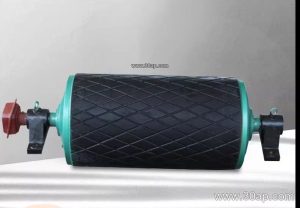
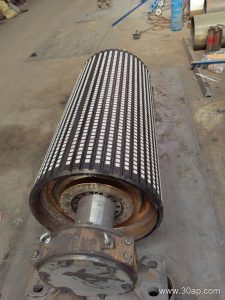
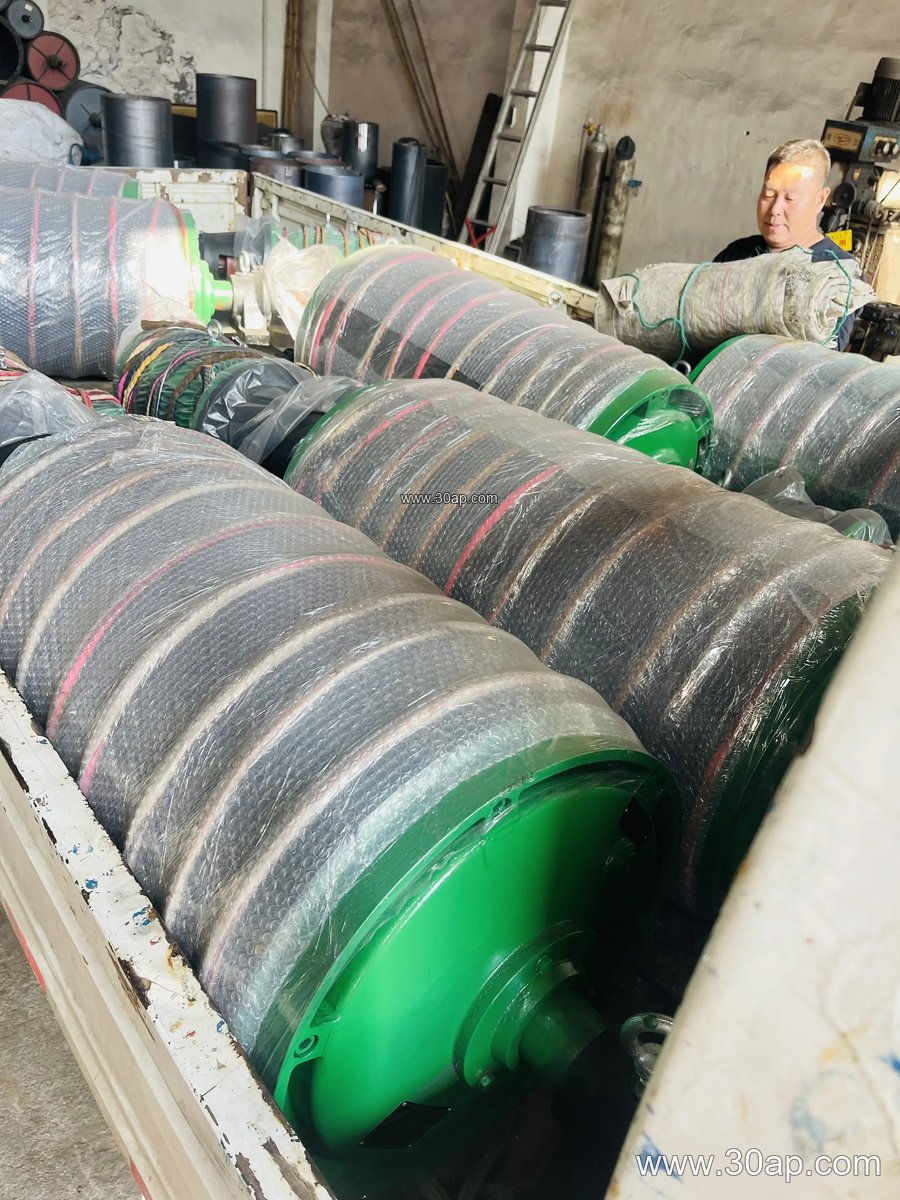
Most take-up pulleys are welded steel drums with a shaft, hub, and bearing housings. The shell is machined to keep runout low, and the surface may be plain, rubber-lagged, or ceramic-lagged. Lagging helps grip the belt on the return side and reduces slip when the belt is wet or dusty. Common lagging thicknesses are 8, 10, 12, 15, and 20 mm, chosen according to belt tension and environmental conditions.
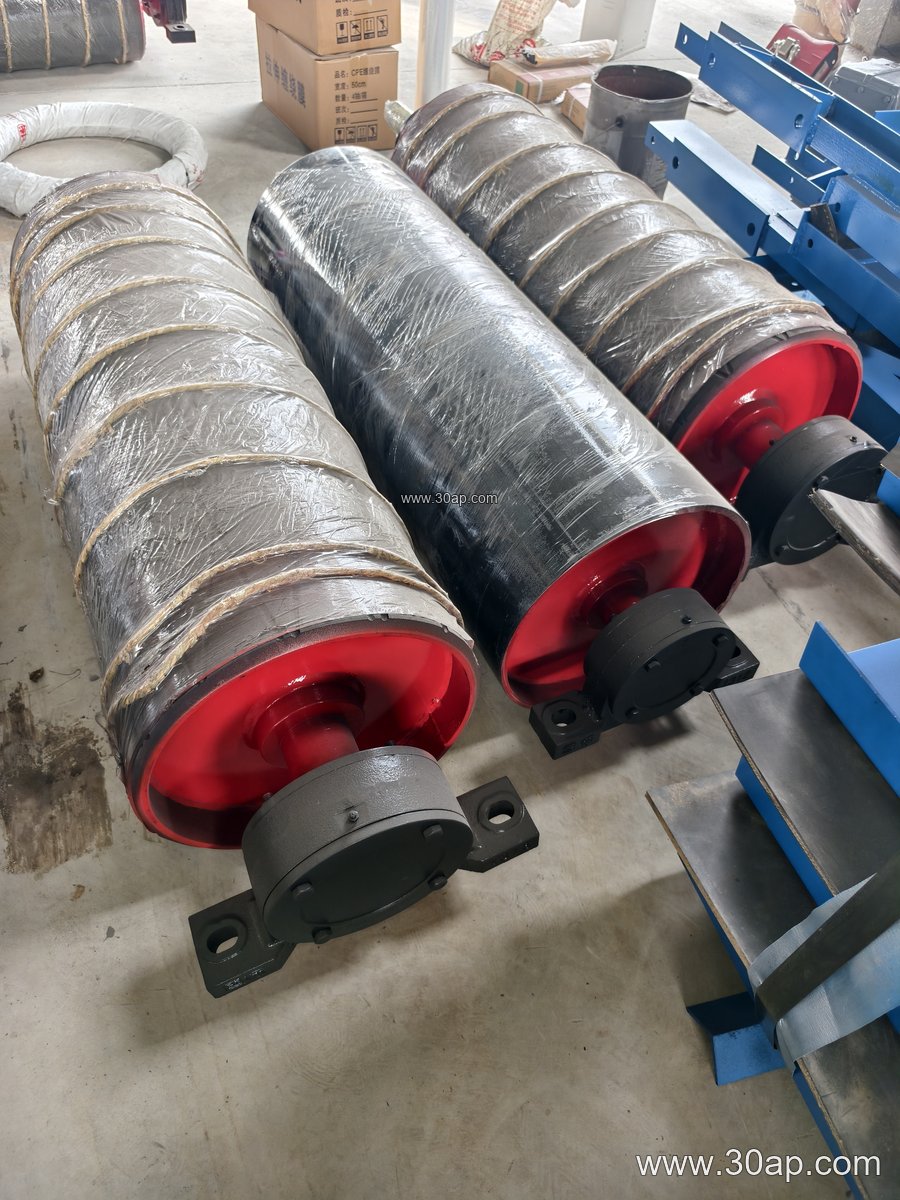
The pulley diameter is selected by belt tension, shaft load, and the belt’s minimum pulley diameter requirement. A B800 belt might run with a Ø500 take-up pulley in one conveyor and a Ø630 drum in another, depending on the belt construction and the take-up travel needed. Shaft diameter is determined by torque and bearing load, not by belt width alone. Typical shaft sizes range from Ø50 to Ø200, and the pulley face width usually exceeds the belt width, for example about 950 mm for a B800 belt and about 1400 mm for a B1200 belt.
Where It Fits in the Belt System
Take-up pulleys appear in aggregate plants, cement works, power station coal handling, and port bulk terminals. In a crusher conveyor belt line, the take-up pulley may be positioned near the tail to keep tension on the carrying side. In a pipe conveyor belt system, it helps maintain the belt’s shape and contact with the idler roller sets. In underground mining conveyor belt installations, the take-up pulley is often part of a heavy-duty frame that allows regular adjustment as the belt ages.
The take-up pulley should not be confused with a bend pulley, which only changes belt direction, or a tail pulley, which redirects the belt at the loading point. Each has a distinct role, and using the wrong one in a tensioning position can lead to belt slip or structural overload.
Matching the Pulley to the Belt and Duty
Belt type affects take-up pulley selection. An abrasion resistant conveyor belt in a sand and gravel plant may need a lagged take-up pulley to resist slip under dusty conditions. A heat resistant conveyor belt in a cement plant may require a plain or heat-tolerant lagging to avoid degradation. A flame retardant conveyor belt in a coal mine must be paired with components that do not compromise fire safety, and the take-up pulley lagging should be selected accordingly.
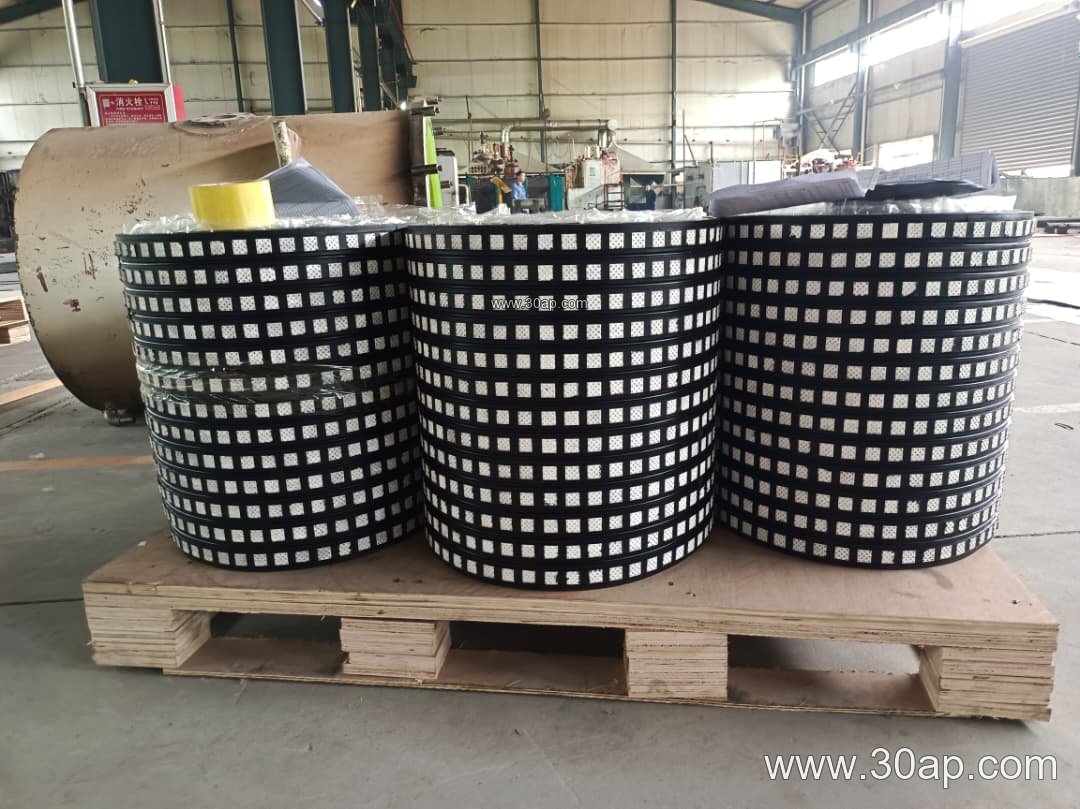
For heavy-duty mining conveyor belts, the take-up pulley is often larger in diameter and fitted with robust bearings. The table below shows common reference combinations; these are examples, not fixed rules.
| Belt Width (mm) | Example Pulley Diameter (mm) | Typical Face Width (mm) |
|---|---|---|
| B500 | Ø315 | 600 |
| B650 | Ø400 | 750 |
| B800 | Ø500 | 950 |
| B1000 | Ø630 | 1150 |
| B1200 | Ø800 | 1400 |
| B1400 | Ø1000 | 1600 |
These values are for orientation only. The final diameter and shaft size must be confirmed by the conveyor designer, considering belt tension, take-up travel, and the minimum pulley diameter recommended for the belt construction.
Buyer Checklist
- Confirm the take-up type: screw, gravity, or winch, and the required travel distance.
- Check the pulley diameter against the belt’s minimum pulley diameter, especially for EP conveyor belt and NN conveyor belt constructions.
- Specify lagging type and thickness if slip is a concern; plain surface may be sufficient in clean, dry conditions.
- Verify shaft diameter and bearing size from the actual load calculation, not from belt width alone.
- Ensure the conveyor bracket and take-up frame are compatible with the pulley’s bearing housings and guide tracks.
- Consider the environment: dust, water, heat, or oil may require different lagging and sealing.
For more information on related components such as conveyor pulleys, idler rollers, and conveyor brackets, and to discuss belt-friendly take-up solutions for your plant, visit our site at https://www.made-in-china.com/ and search for conveyor take-up pulley.