What a Guide Idler Does on a Conveyor
A guide idler is a small-diameter training roller mounted where the belt needs a gentle correction rather than a heavy load-bearing job. In practice, plant crews often call this component a belt guide roller or a training idler, and it usually sits close to the tail pulley, ahead of a loading point, or on the return strand where mistracking starts. Its task is simple: touch the belt edge or the belt surface with a slight angle so the belt walks back toward the center line before misalignment becomes a spillage problem. On a quarry conveyor belt or an underground coal mining conveyor belt, that small correction can prevent edge damage and reduce cleanup work.
The guide idler is not a drive pulley, a tail pulley, or a bend pulley. Those are conveyor pulleys that transmit power or change belt direction. A guide idler is a rotating roller assembly, normally carried by a conveyor bracket, that steers the belt without driving it. Keeping this distinction clear helps buyers order the right part and avoid mixing roller assemblies with pulley assemblies.
Construction Details That Matter
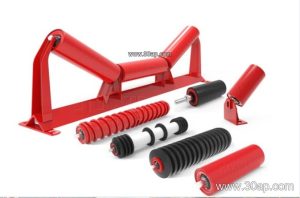
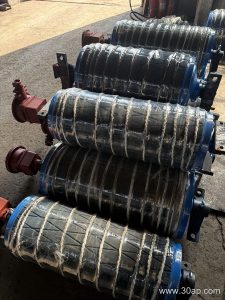
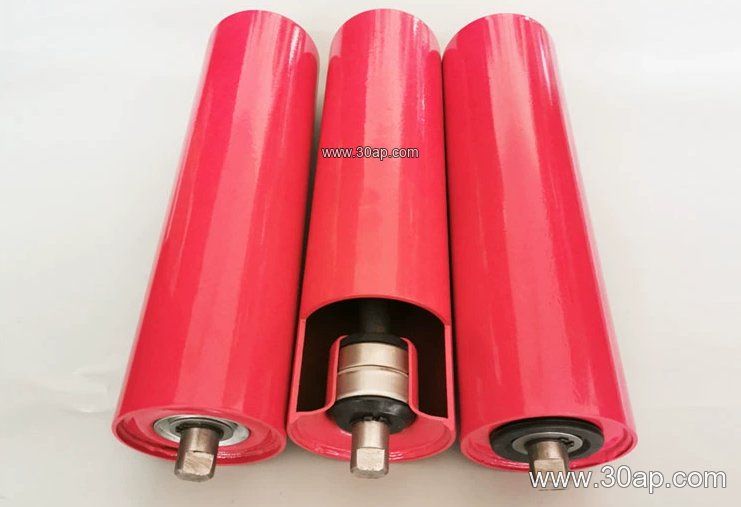
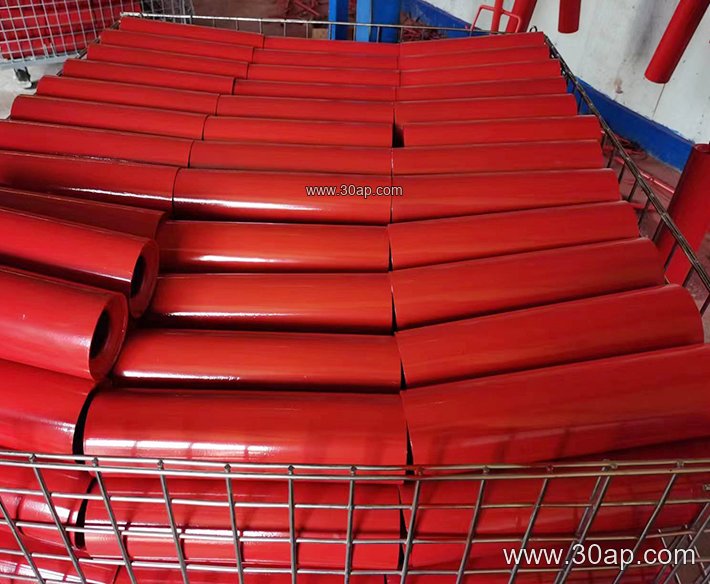
A typical guide idler uses a steel tube shell, welded end discs, a shaft, and sealed ball bearings. Common roller diameters include Ø63, Ø76, Ø89, Ø102, Ø108, Ø127, and Ø133 mm, while larger training rollers may reach Ø159 or Ø178 mm on wide, heavy belts. Bearing sizes such as 6204, 6205, 6305, 6306, 6308, and 6310 appear across the range, but no single bearing is tied to one shell diameter. The bearing is chosen with load, speed, and sealing arrangement in mind, not by tube size alone.
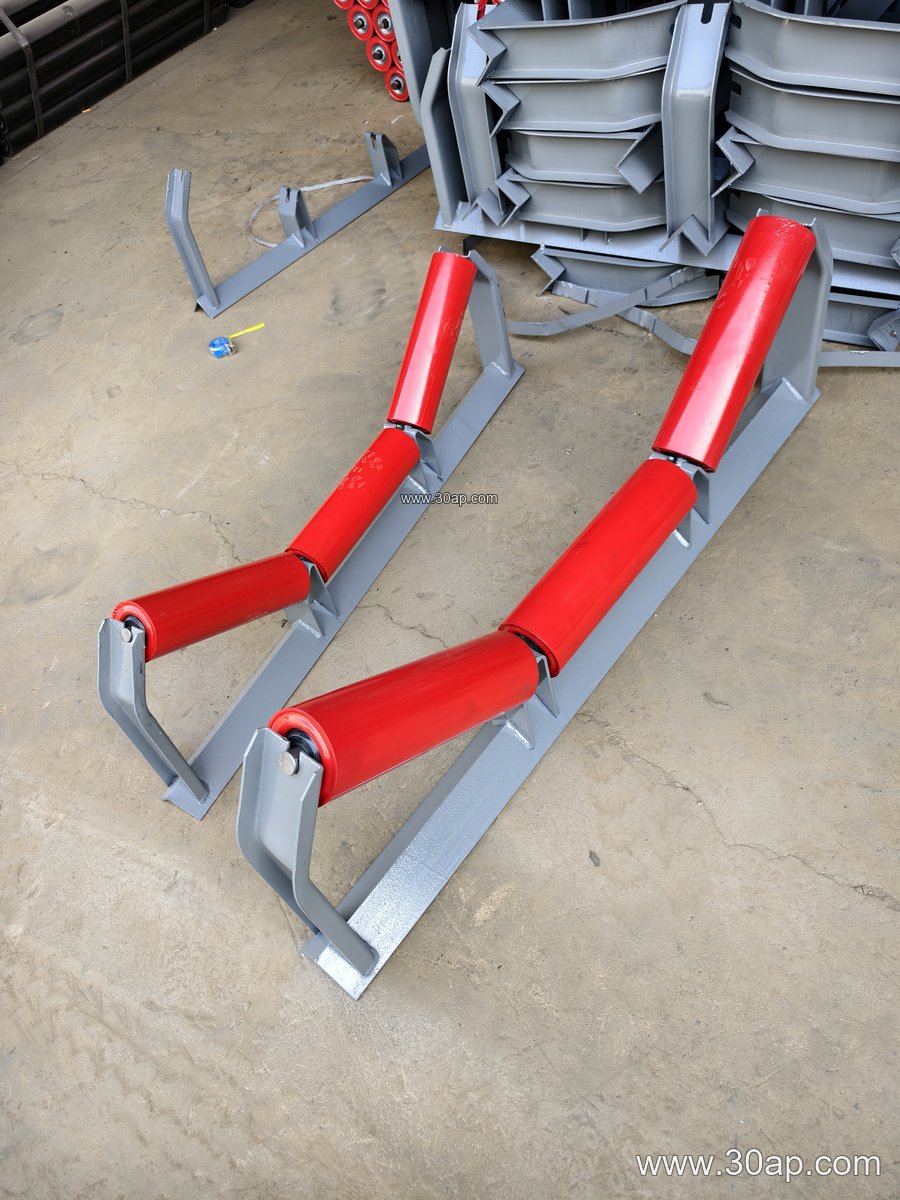
Surface form also varies. A plain steel shell is common, while a rubber-covered or ceramic-covered guide roller gives extra grip on wet or dusty belts. Some designs use a vertical axis with two or three small rollers that contact the belt edge; others use a short angled roller under the belt. Both approaches are guide idlers, and both rely on a sturdy conveyor bracket to hold the setting.
| Parameter | Common Reference Range | Notes |
|---|---|---|
| Roller diameter | Ø63 to Ø178 mm | Selected by belt width, load, and mounting space |
| Belt width | B400 to B2400 | Roller length follows belt width and frame design |
| Bearing | 6204, 6205, 6305, 6306, 6308, 6310 | Matched to duty, not to one fixed shell size |
| Shell material | Steel, nylon, rubber-covered, ceramic-covered | Wet or abrasive conditions favor covered shells |
Where Guide Idlers Fit in the Plant
In a limestone quarry or a sand and gravel line, a guide idler is often placed just after the crusher discharge, where stone lumps and off-center loading push the belt sideways. In a coal washing plant or a power plant coal yard, the same roller helps keep a flame retardant conveyor belt centered on the return run, especially where the belt passes a transfer chute. Port terminals handling iron ore or copper ore also use training rollers on long inclined runs, because a small drift over hundreds of meters turns into a serious edge rub.
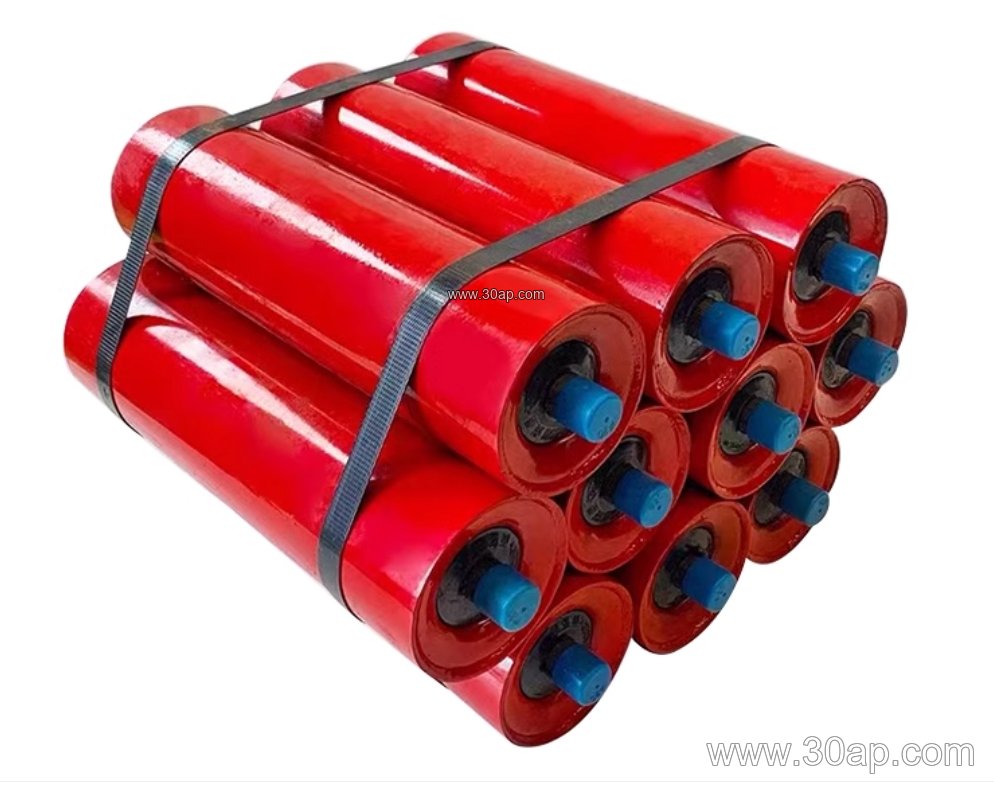
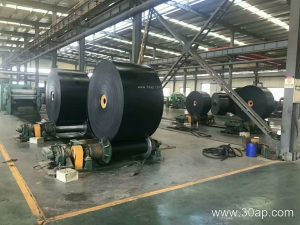
The working partner is the belt itself. A heavy-duty mining conveyor belt with high abrasion resistance will tolerate edge contact better than a thin lightweight belt, but no belt should rub continuously against a guide roller. The guide idler should touch only when correction is needed, then release. On a pipe conveyor belt or a corrugated sidewall conveyor belt, training is handled differently, and a standard edge guide roller may not suit the profile at all.
Selection and Setup Checks
- Confirm belt width and the space available on the conveyor bracket before choosing roller length.
- Match roller diameter to belt speed and load; a small Ø63 roller spins fast, while Ø133 or Ø159 suits heavier duty.
- Check sealing quality in dusty or wet service, since bearing life usually ends with contamination rather than wear.
- Set the guide angle small and adjust gradually; over-correction causes the opposite edge to rub.
- Verify that the roller can be replaced without cutting the belt or removing the frame.
Buyers should also ask how the roller is balanced and whether the shaft ends fit the existing bracket slots. A guide idler that wobbles will wear the belt edge and the bearing at the same time. For abrasive service, a rubber or ceramic surface is worth considering, while a plain steel roller is often enough on clean, dry belts carrying aggregate.
Maintenance Points Worth Planning For
Inspect guide idlers during every belt walk-down. Look for a seized roller, a flattened spot on the shell, or a bent shaft after a lump impact. A seized training roller acts like a fixed scraper and can cut a belt edge quickly, so replacement should not wait. Keep a small stock of common diameters and bearing sizes so shutdowns in a cement plant or a crushing circuit do not stretch on. When the belt is replaced, recheck the guide idler setting, because a new belt may run on a slightly different line than the old one.