What a Trough Idler Bracket Does
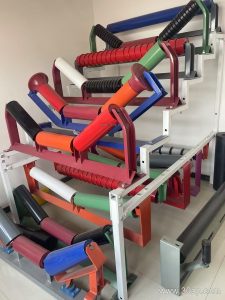
A trough idler bracket is the structural support that holds the troughing idlers in the carrying run of a belt conveyor. It sets the three-roll or five-roll trough profile, keeps the idler roller shafts at the correct spacing, and transfers the load of the conveyor belt and the material into the conveyor frame. In many plants the same component is called a troughing idler bracket, troughing set bracket, or simply a conveyor trough bracket, and these names all refer to the same part.
Because the bracket fixes the trough angle and the roll positions, it directly affects belt training, material spillage, and the service life of the idlers. A weak or misaligned bracket shows up quickly as edge wear on the belt or as premature bearing failure in the rolls.
How the Bracket Is Built
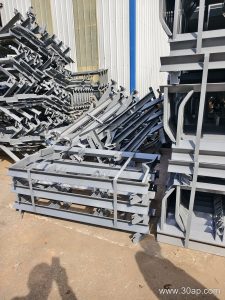
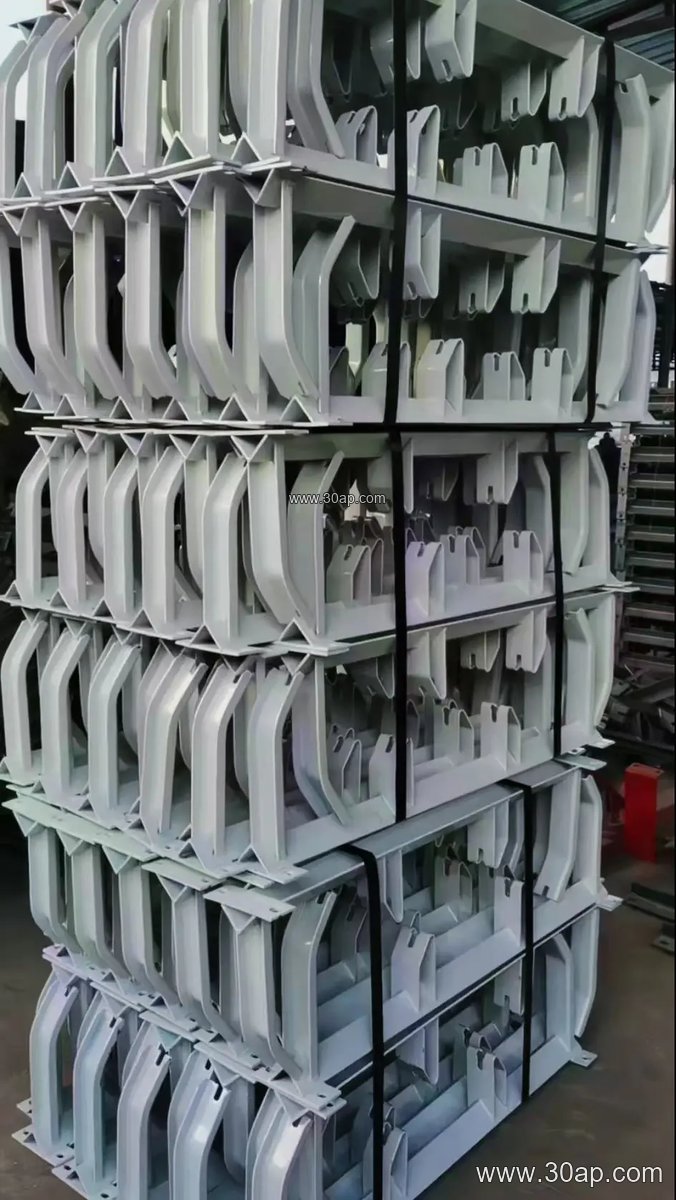
Most trough idler brackets are fabricated from angle steel, channel steel, or folded steel plate. The common construction is a crossbeam with two or more mounting slots or tabs, each drilled to accept the shaft end of an idler. Slotted holes allow fine adjustment during installation, while fixed holes give a more rigid set-up.
- Crossbeam in angle or channel section, welded or bolted to the frame
- Roll mounting tabs or brackets with shaft flats and retaining slots
- Adjustable versions with slotted holes or pivoting arms for trough angle changes
- Galvanized or painted finish for dusty and humid service
Fabrication quality matters more than the section size alone. Weld alignment, hole spacing, and squareness of the roll seats determine whether the three rolls sit in one plane and whether the belt runs centered.
Where It Fits in the Conveyor
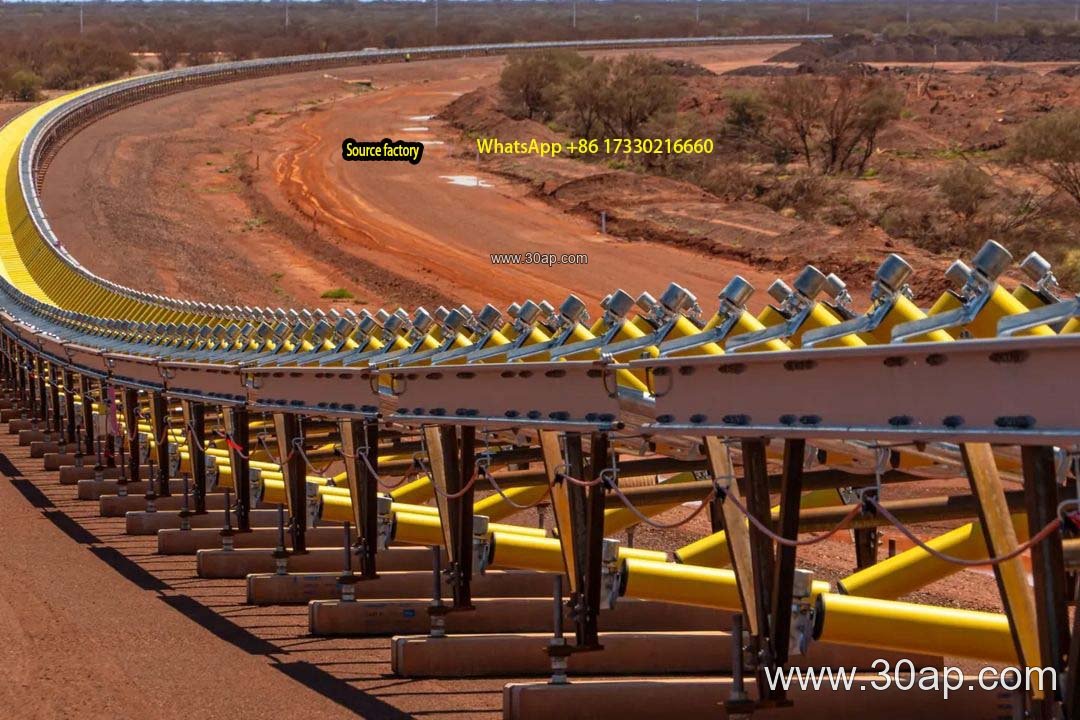
Trough idler brackets are used on the carrying side of bulk handling conveyors. Typical installations include a quarry or aggregate line feeding a crusher, a coal yard and boiler feed system in a power plant, a cement plant clinker transport, and a port or ship loading conveyor. They also appear in iron ore and copper ore handling, in fertilizer and grain silo systems, and in tunnel spoil removal.
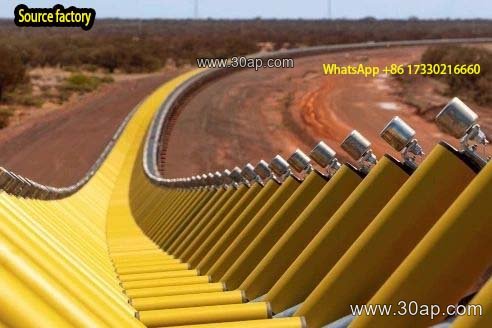
On a typical troughing set, the bracket carries a center roll and two side rolls. The same frame may also hold impact idler brackets at the load point or a self-aligning bracket where belt tracking is difficult. The bracket works together with the conveyor pulley at the head and tail, so alignment across the whole conveyor matters.
Matching Brackets to Belt Width and Trough Angle
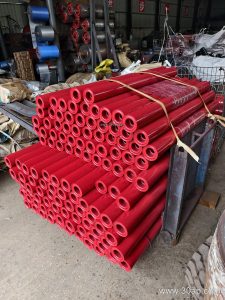
The bracket must match the belt width, the chosen trough angle, and the idler roll diameter. These three values are normally selected together, not one after another. Common belt widths run from B500 and B650 up through B800, B1000, B1200, B1400, B1600, B1800, B2000, and wider frames. Trough angles of 20, 30, 35, and 45 degrees are widely used, and adjustable brackets can be set between these positions. Roll diameters such as Ø89, Ø108, Ø133, Ø159, and Ø194 are matched to belt width and load.
Some examples of combinations seen in design work include B800 with 35 degrees and Ø108, B1200 with 45 degrees and Ø133, and B650 with 30 degrees and Ø89. These are reference examples only. A given belt width does not lock the bracket to one trough angle or one roll diameter; the final choice depends on capacity, material lump size, and the conveyor profile.
| Parameter | Common Range | Notes |
|---|---|---|
| Belt width | B500 to B2200 | Match frame and crossbeam length |
| Trough angle | 20°, 30°, 35°, 45° | Adjustable brackets cover several angles |
| Roll diameter | Ø89, Ø108, Ø133, Ø159, Ø194 | Selected with load and belt width |
| Material | Angle, channel, folded plate | Finish per site conditions |
Fixed, Adjustable, and Transition Brackets
A fixed trough idler bracket holds one trough angle for the life of the installation. It is simple, rigid, and common on long straight runs. An adjustable bracket lets maintenance staff change the trough angle or correct roll alignment without replacing the frame, which is useful during commissioning or when the material changes.
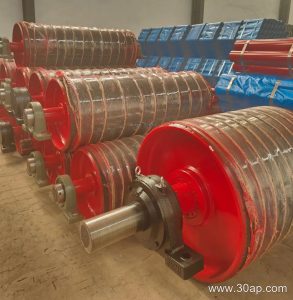
Transition brackets sit near the head and tail pulleys, where the belt changes from troughed to flat. They are not the same as a standard troughing bracket and should be specified as a separate item. Impact brackets at the loading point, and V-return or flat return brackets on the return run, are also different components and are not interchangeable with the carrying-side trough bracket. Drive pulleys, tail pulleys, and bend pulleys are separate items as well and should never be ordered as a substitute for a bracket.
Buyer Checklist
- Confirm belt width, trough angle, and roll diameter before ordering.
- State whether the bracket is fixed or adjustable.
- Give the mounting hole spacing and crossbeam length required by the frame, since these change with belt width and trough angle.
- Specify the material and finish for dusty, wet, or corrosive sites.
- Check that the idler shaft ends match the bracket slots.
- For heavy-duty mining or quarry duty, ask for the load rating and weld inspection details.
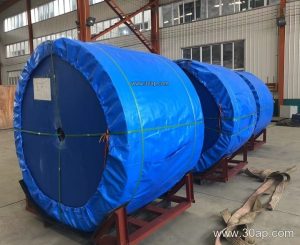
Good brackets are inexpensive compared with the cost of a stopped conveyor. Ordering them with the correct width, angle, and roll size, and checking fit on site before the run starts, keeps the troughing set working with the belt instead of against it. For matching idlers, belts such as abrasion resistant or flame retardant conveyor belt grades, and related conveyor components, buyers can review options at beltconveyorparts.com and idlerbracket.com before finalizing the specification.