What a Heavy-Load Pulley Does on a Conveyor
A heavy-load pulley is the drum that carries the belt at the head, tail, or bend points of a conveyor moving dense or abrasive material. In a quarry, a limestone mine, or a cement plant clinker line, the belt may be a thick abrasion resistant conveyor belt or a steel cord conveyor belt carrying hundreds of tonnes per hour. The pulley has to transmit drive torque, hold belt tension, and keep the belt tracking without flexing or losing its grip. Buyers often call this a conveyor pulley, but the heavy-load version is specified by its duty, not by a single model number.
The same product is also described as a heavy-duty conveyor pulley or a heavy-duty drum pulley. Drive, tail, and bend pulleys are distinct positions on the conveyor and are not interchangeable names. A drive pulley transmits power; a tail pulley returns the belt; a bend pulley changes belt direction. Each has its own load case, and a heavy-load pulley is selected for the position it occupies.
Construction Details That Carry the Load
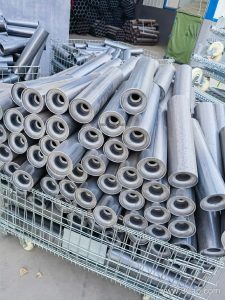
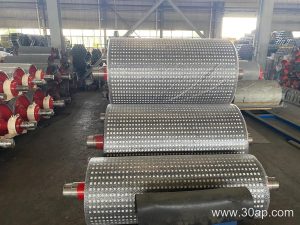
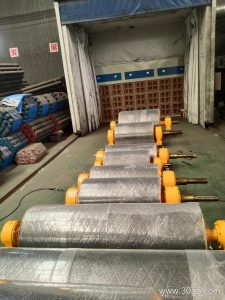
The shell is usually a rolled steel cylinder, machined at both ends and welded to the end discs. Shafts are sized by torque and radial load rather than belt width alone. Common shaft diameters include Ø80, Ø100, Ø120, Ø140, Ø160, and Ø180 mm, but a heavy-load pulley for a B1200 belt may use a larger shaft than a light-duty drum for the same width. Bearings are selected for the resulting radial and thrust loads, and the bearing housings are bolted to the conveyor bracket.
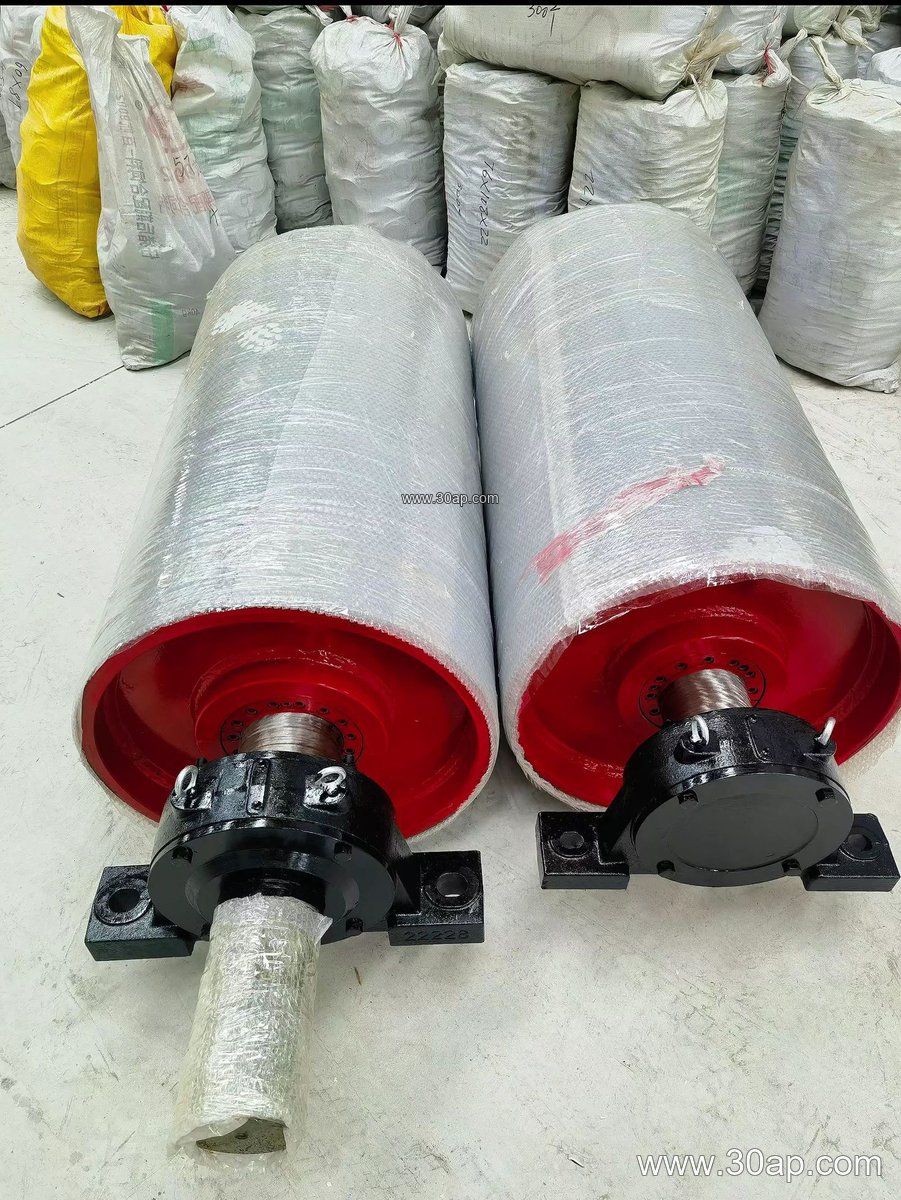
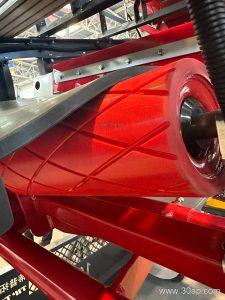
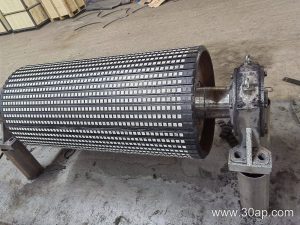
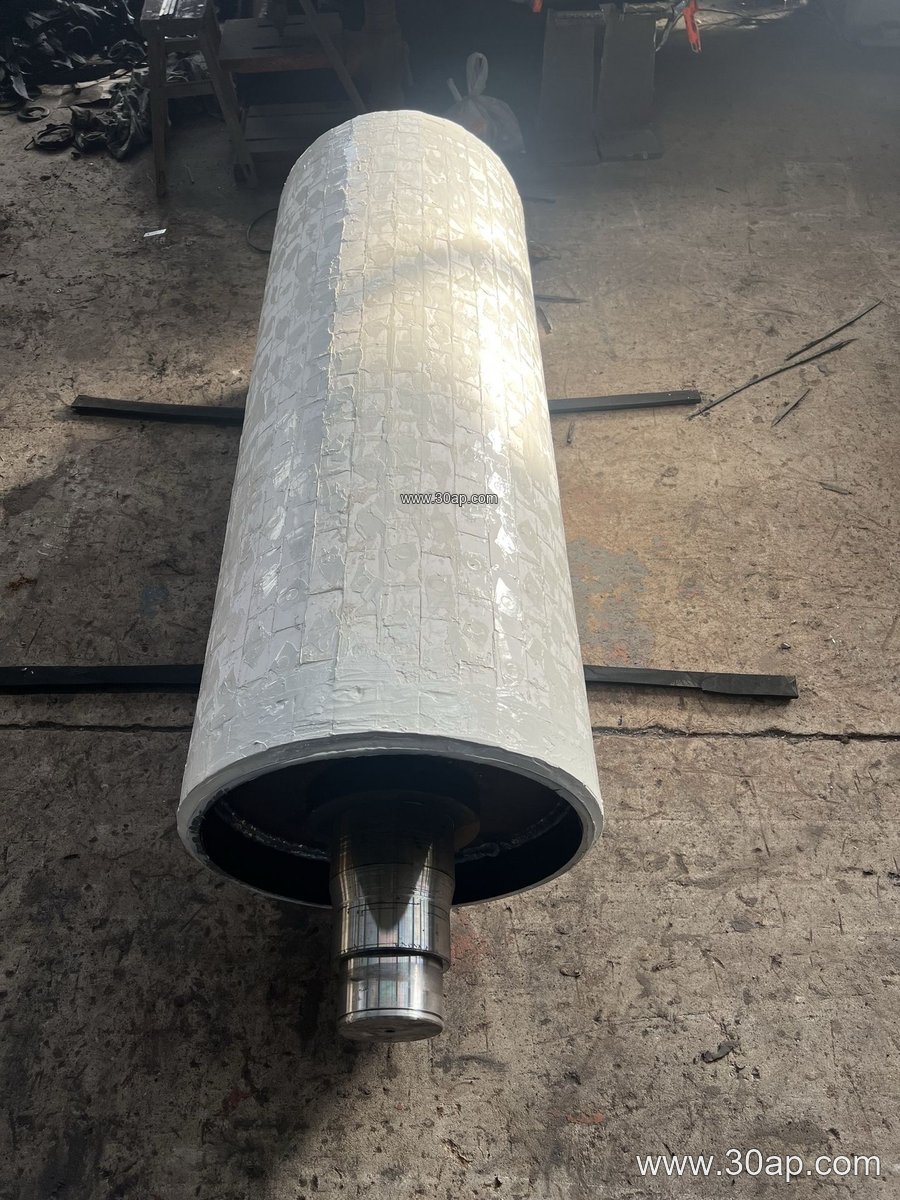
Surface treatment matters as much as the shell. Plain finish suits clean, dry belts. Rubber lagging improves grip and reduces slip on inclined sections; diamond or herringbone patterns help shed water and fines. Ceramic lagging is chosen where abrasive rock dust wears rubber quickly. Lagging thickness is commonly 8, 10, 12, 15, or 20 mm, and the choice depends on belt tension and the material being carried.
Where Heavy-Load Pulleys Are Used
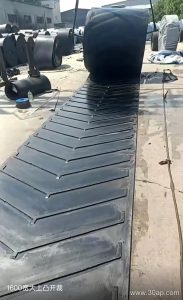
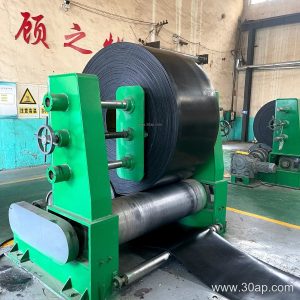
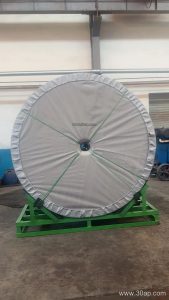
These drums appear in primary crushing circuits at a quarry, in iron ore and copper ore handling, in coal preparation plants, and in power station coal yards. A typical installation uses a wide, thick belt such as an EP conveyor belt or a multi-ply fabric core conveyor belt, supported by idler rollers and held in line by conveyor brackets. In a sand and aggregate line, a heavy-load pulley may be paired with a chevron conveyor belt on an incline, while a pipe conveyor belt in a tunnel or port application uses a different drum geometry.
Other positions are sometimes compared for context. A bend pulley in a long overland conveyor may see high tension but little torque, while a drive pulley sees both. That difference explains why a heavy-load pulley is specified per position rather than by a single catalogue size.
Common Size Combinations and Reference Data
Drum width usually exceeds belt width so the belt is fully supported. Reference combinations include B800 × Ø500, B1200 × Ø1000, and B1400 × Ø800. These are examples, not fixed rules, and a given belt width can match several diameters depending on tension and wrap angle.
| Belt width | Typical drum face width | Common diameter range |
|---|---|---|
| B500 | about 600 mm | Ø250 to Ø400 |
| B650 | about 750 mm | Ø315 to Ø500 |
| B800 | about 950 mm | Ø400 to Ø630 |
| B1000 | about 1150 mm | Ø500 to Ø800 |
| B1200 | about 1400 mm | Ø630 to Ø1000 |
| B1400 | about 1600 mm | Ø800 to Ø1250 |
| B1600 | about 1800 mm | Ø1000 to Ø1400 |
Larger diameters reduce belt bending stress and can extend belt life, but they also raise cost and require more space. The final choice is confirmed by the conveyor designer against actual belt tension and shaft load.
What Buyers Should Check Before Ordering
- Confirm the pulley position: drive, tail, tension, or bend. The load case changes with position.
- State the belt type and width, for example a flame retardant conveyor belt at 1200 mm, so the drum face width and lagging can be matched.
- Provide belt tension and wrap angle; these drive shaft and bearing selection.
- Choose lagging for the environment: rubber for grip, ceramic for abrasion, plain for light duty.
- Check that the conveyor bracket and bearing housing dimensions fit the existing frame.
- Ask for the balancing grade and runout if the pulley will run at high speed.
For a heavy-load pulley, the useful question is not which single size is best but which combination of shell, shaft, bearing, and lagging matches the belt and the material. A drum that is correctly sized for one quarry line may be oversized or undersized for a power plant coal conveyor, so the duty cycle should always be stated clearly.