What a Stone Conveyor Pulley Does on a Crushing Line
In a quarry or a sand and aggregate plant, the belt is only as reliable as the drums that carry it. A stone conveyor pulley is the cylindrical, belt-driving or belt-guiding component mounted on a shaft and held by conveyor brackets at the head, tail, take-up, or bend points of the frame. Its job is simple to describe and hard to do well: transmit torque without slip, keep the belt tracking, and survive constant grit, moisture, and shock loading from rock that has just left the crusher.
Because crushed stone is heavy and abrasive, this drum is usually built heavier than a general-purpose conveyor pulley. The shell is thicker, the end discs are welded with reinforcing gussets, and the shaft is sized by torque and radial load rather than by belt width alone. A hub and lagging system is normally fitted so the surface can be renewed without scrapping the whole assembly.
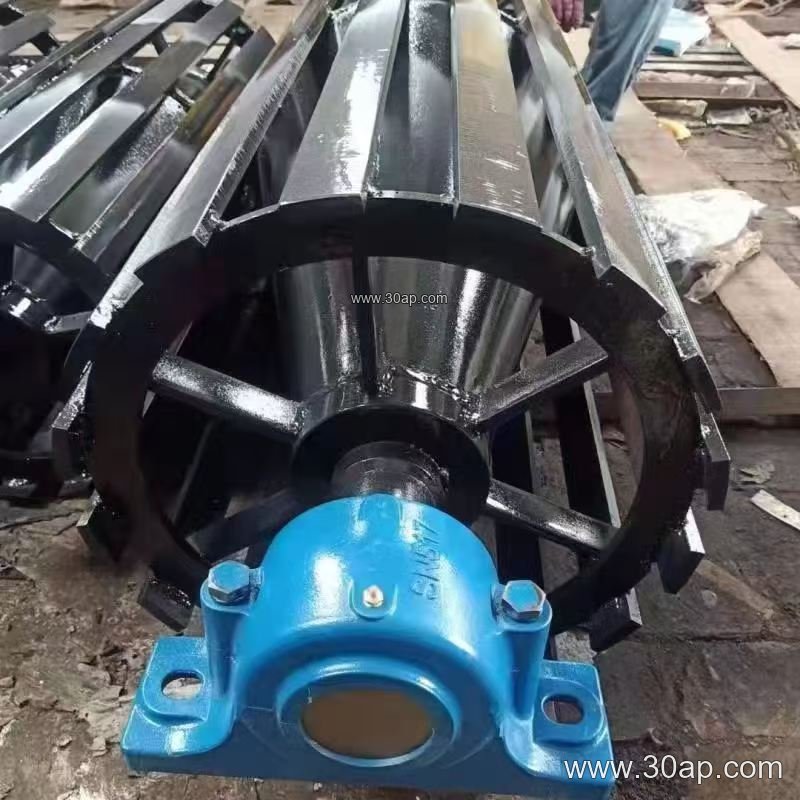
How the Drum Is Built
Most units combine a rolled steel shell, two dished or flat end plates, a through shaft, and bearing housings on both sides. Common surface forms include plain, cast rubber, cold-bonded rubber, hot-vulcanized rubber, diamond groove, herringbone, and ceramic lagging, with lagging thickness often 8, 10, 12, 15, or 20 mm depending on duty.
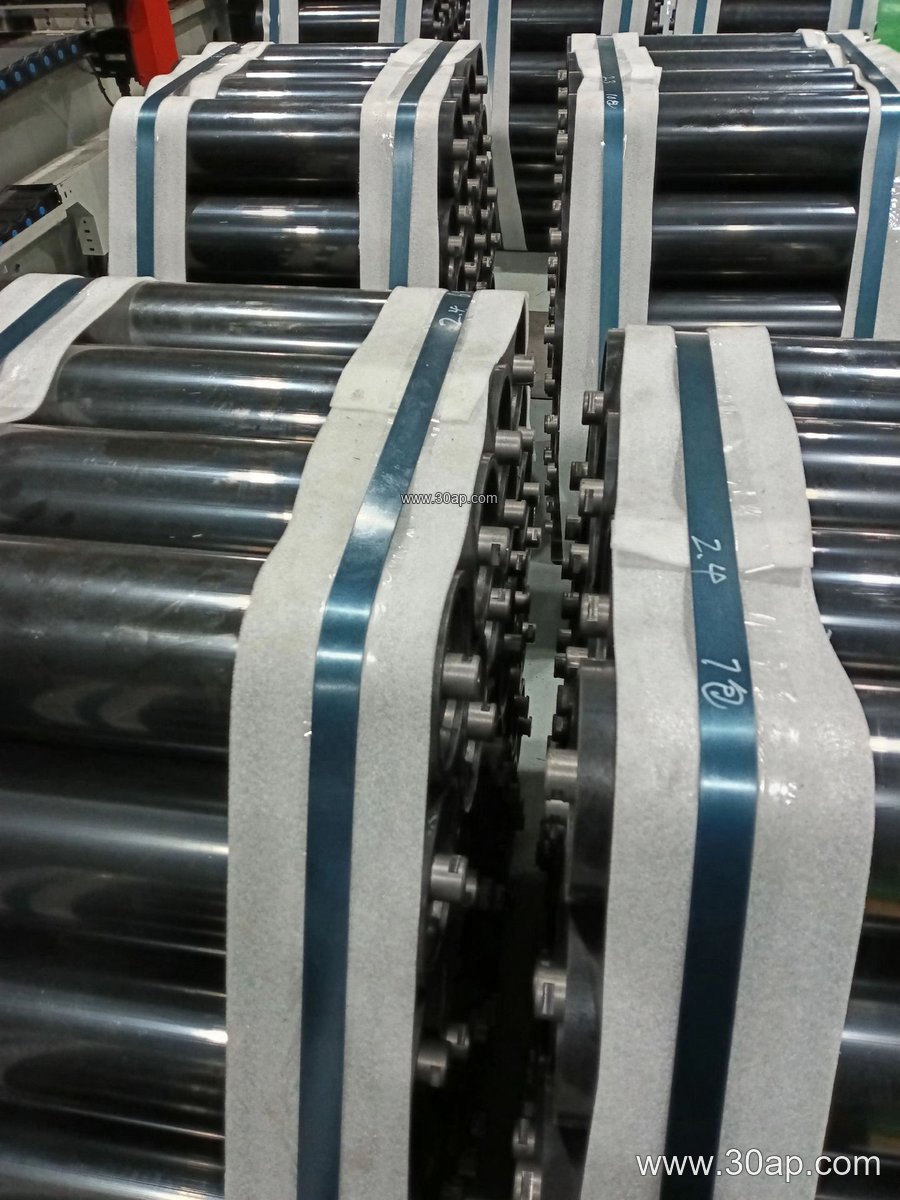
- Shell: rolled and welded steel, machined for concentricity.
- Lagging: rubber or ceramic layer that raises friction and protects the shell.
- Shaft: common diameters include Ø50, Ø60, Ø70, Ø80, Ø90, Ø100, Ø120, Ø140, Ø160, Ø180, and Ø200 mm, chosen from calculated torque and load.
- Bearings and seals: selected for dust, water, and slow-speed high-load running.
Face width is normally a little wider than the belt. Typical pairings are B400 with roughly 500 mm face, B500 with about 600 mm, B650 with about 750 mm, B800 with about 950 mm, B1000 with about 1150 mm, B1200 with about 1400 mm, B1400 with about 1600 mm, and B1600 with about 1800 mm. These are reference relationships, not fixed rules, and a B1200 x Ø1000 or B800 x Ø500 combination should always be confirmed against the actual conveyor design.
Drive, Tail, and Bend Positions Are Not Interchangeable
A drive pulley at the discharge end transmits power and usually carries the heaviest lagging and the largest shaft. A tail pulley at the loading end guides the belt back and often needs a self-cleaning or wing-type form when sticky fines pack the surface. A bend pulley simply changes belt direction and carries far less torque.
The same logic applies to a take-up or snub position. Calling all of them by one name hides real differences in bearing size, lagging pattern, and shell thickness. When specifying, state the position first, then the duty.
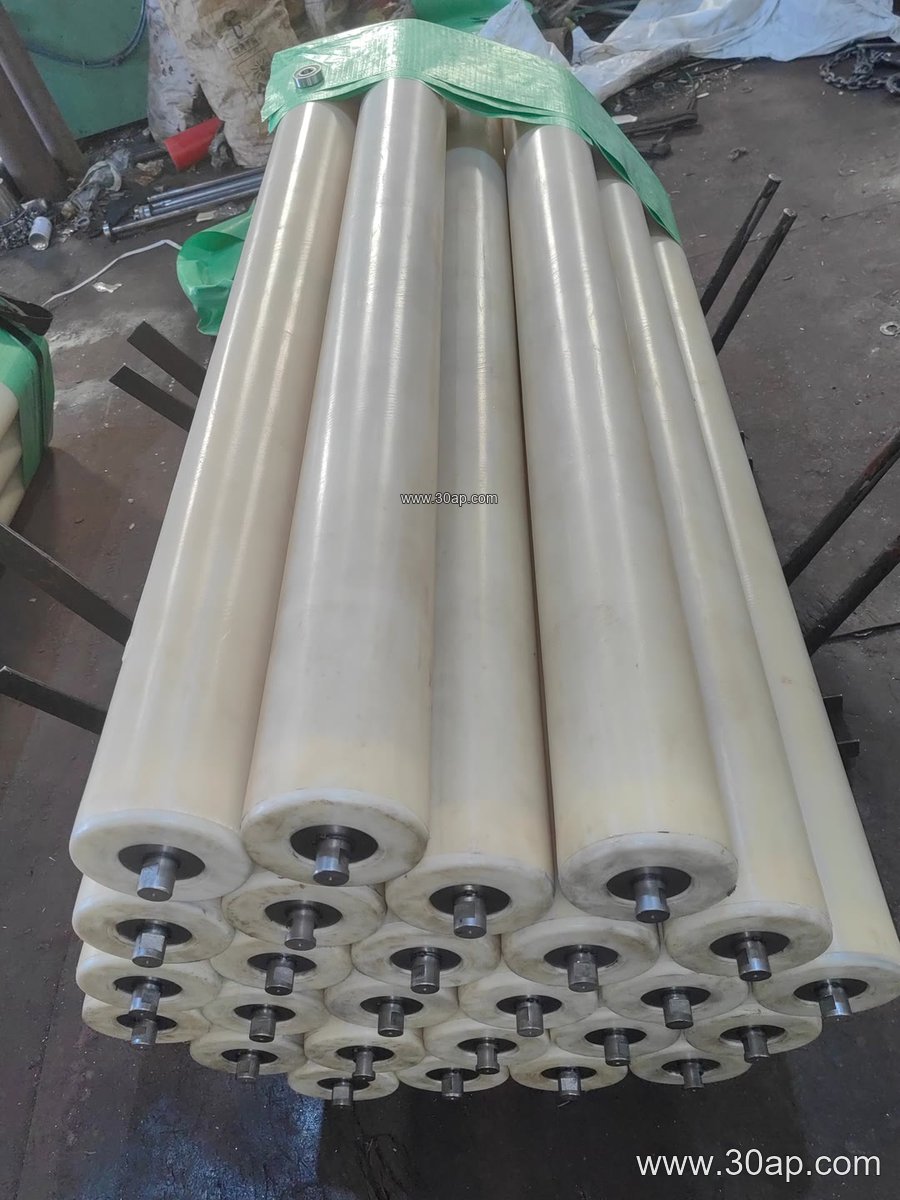
Matching the Drum to the Belt and the Duty
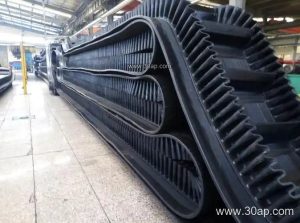
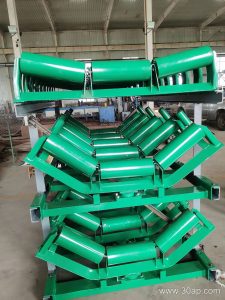
The belt side matters as much as the drum side. A heavy abrasion resistant conveyor belt running over a smooth shell may slip under wet conditions, while a chevron or corrugated sidewall belt needs clearance and a surface that will not damage the profile. In coal handling and underground mining, a flame retardant conveyor belt is often paired with rubber-lagged drums, and static dissipation should be considered across the whole belt path, including the idler roller set.
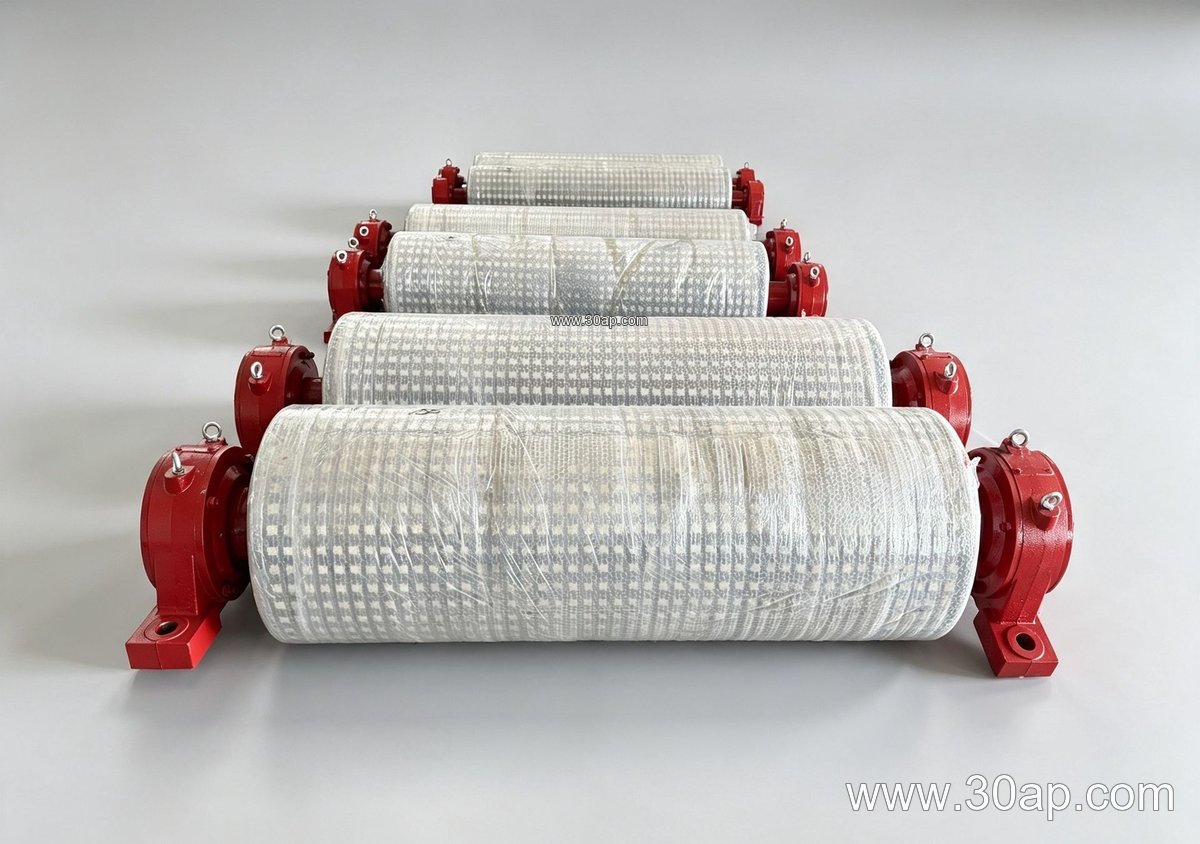
For long overland lines in iron ore or copper ore service, a steel cord conveyor belt demands a large-diameter drum to limit bending stress. Fabric constructions such as EP conveyor belt or NN conveyor belt grades tolerate tighter wrap angles. The table below shows indicative combinations only; final sizing follows belt tension, wrap angle, and shaft load.
| Belt width | Typical face width | Common diameter range | Typical position |
|---|---|---|---|
| B650 | about 750 mm | Ø400 to Ø630 | Tail or bend |
| B800 | about 950 mm | Ø500 to Ø800 | Drive or tail |
| B1000 | about 1150 mm | Ø630 to Ø1000 | Head drive |
| B1200 | about 1400 mm | Ø800 to Ø1250 | Main drive |
| B1400 | about 1600 mm | Ø800 to Ø1400 | Heavy drive |
Larger widths such as B1800, B2000, B2200, and B2400 are used on high-capacity trunk conveyors, where the drum, shaft, and bearings are designed together as a system.
Buyer Checklist Before Ordering
- Confirm the mounting position and whether the unit is a drive, tail, take-up, or bend drum.
- Provide belt type and tension data, not just belt width.
- State lagging type and thickness, plus groove pattern if needed.
- Give shaft diameter and bearing style from the conveyor drawing.
- Confirm face width, keyway, and bolt-hole layout for the conveyor bracket.
- Describe the environment: dust, water, temperature, and any oil or chemical exposure.
Well-chosen drums, together with matched conveyor pulleys, idler rollers, and a properly tensioned belt, keep a crushing or screening line running through long shifts. Buyers who supply full duty information usually get a better-balanced assembly than those who order from a belt width alone.