What Conveyor Bracket Fabrication Involves
Conveyor bracket fabrication is the process of cutting, bending, drilling and welding steel into the support frames that hold idler rollers and carry the belt along a conveyor route. These brackets are the interface between the conveyor structure and the rotating components, so their geometry directly affects belt tracking, load distribution and service life. In a quarry, a cement plant or a coal handling system, a poorly made bracket can cause misalignment that wears the belt edge and stresses the pulley. Good fabrication starts with a clear drawing that ties the bracket to the actual belt width, trough angle and roller diameter.
Materials and Build Methods
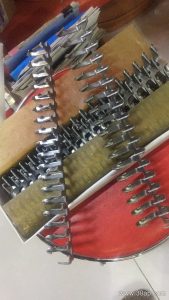
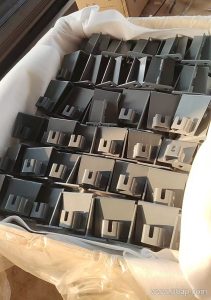
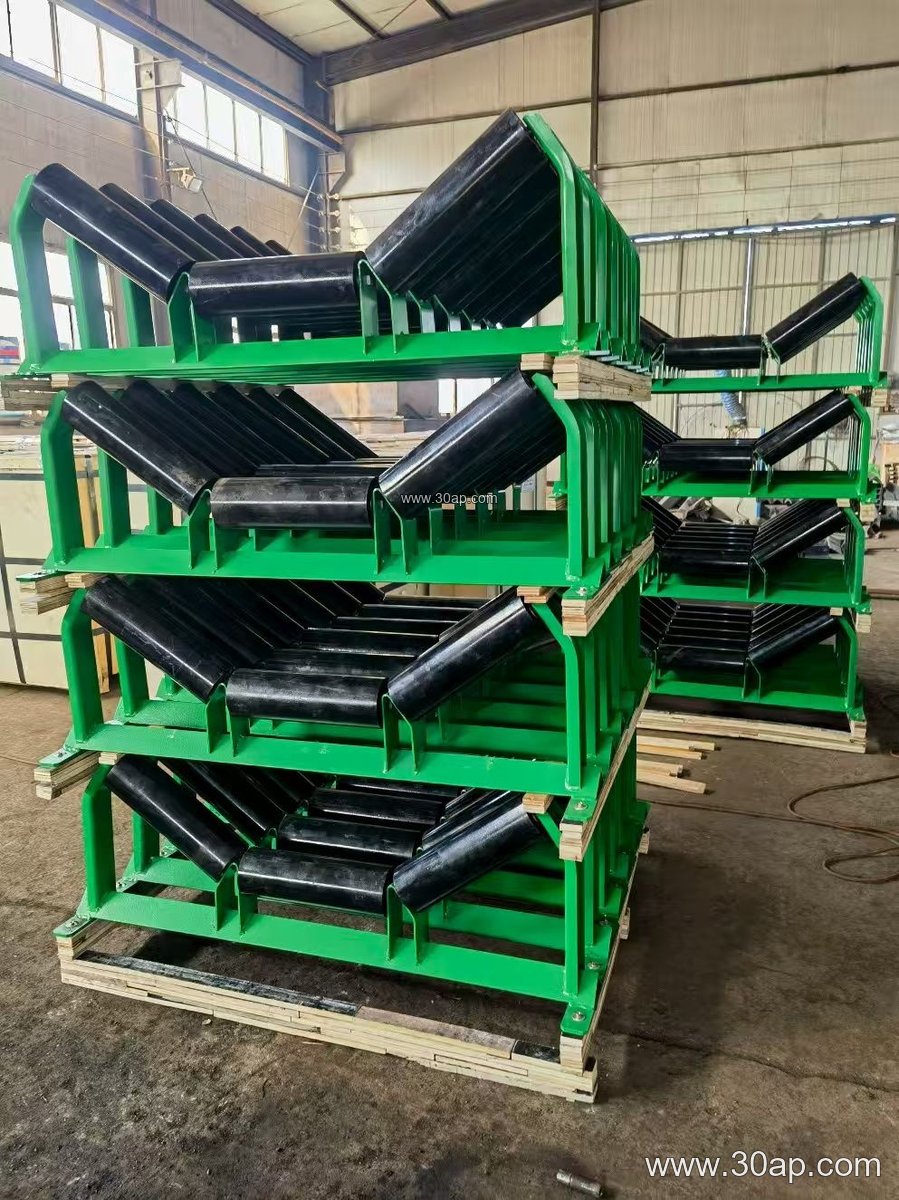
Fabricators usually work from angle steel, channel steel or folded steel plate. The choice depends on the load and the environment. Angle iron is common for lighter troughing brackets, while channel sections suit heavier carrying idlers and impact zones. Folded plate can reduce weight and give a cleaner profile. Welding must be controlled to avoid distortion, because a twisted bracket will not sit square on the stringer. Holes for idler shafts are usually drilled or punched after assembly so that the spacing matches the roller frame. Surface treatment, such as painting or galvanizing, is selected according to dust, moisture and corrosive conditions at the site.
Common Bracket Types and Where They Sit
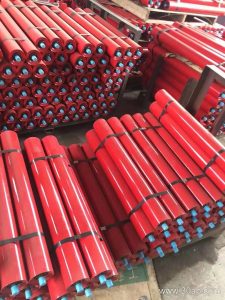
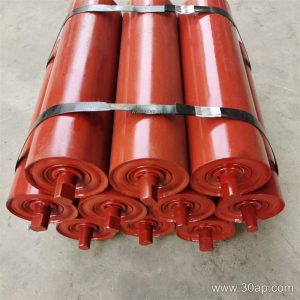
Different positions on a conveyor call for different bracket designs. The main carrying side often uses troughing brackets, while the return side uses flat or V-return brackets. Transition brackets help the belt change from a flat pulley to a troughed profile without over-stressing the edges. Impact brackets with cushioning are placed under loading points, and self-aligning brackets are used where belt wander is a risk. A buyer should distinguish these from drive, tail and bend pulleys, which are separate rotating components and not interchangeable with support brackets.
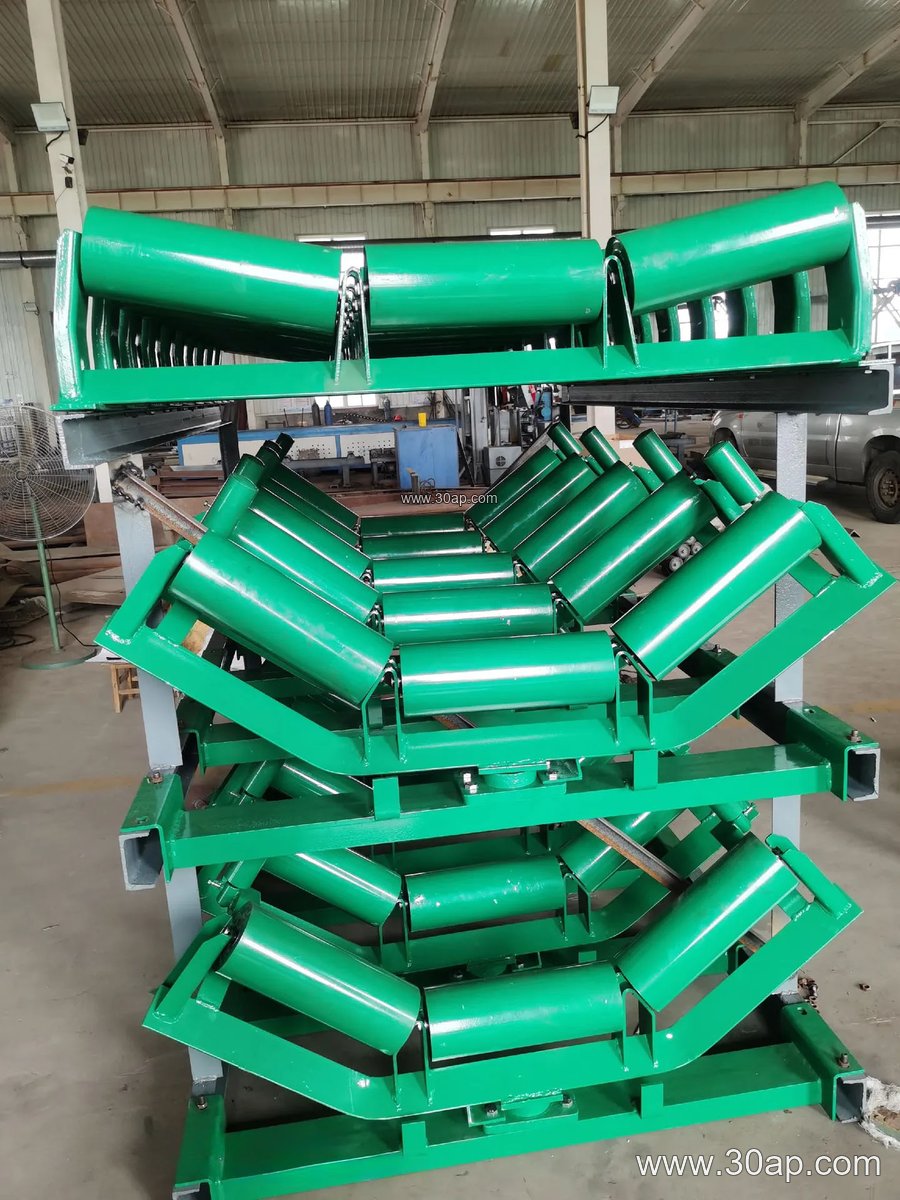
- Troughing bracket: supports three idlers in a trough shape.
- Transition bracket: gradual change of trough angle near pulleys.
- Return bracket: carries the empty belt on the return strand.
- Impact bracket: absorbs shock at transfer points.
- Adjustable bracket: allows the trough angle to be set on site.
Matching Brackets to Belt Width, Trough Angle and Roller Diameter
Fabrication dimensions follow the conveyor design. A B800 belt may run with a 35 degree trough and Ø108 idlers, while a B1200 system might use a 45 degree trough and Ø133 rollers. These are common combinations, not fixed rules, and the final choice depends on capacity, material lump size and belt stiffness. The table below shows typical reference values that fabricators use when preparing drawings. Installation hole spacing and crossbeam length change with belt width and trough angle, so they should be confirmed per project rather than copied from a catalogue.
| Belt width | Common trough angle | Typical idler diameter | Bracket note |
|---|---|---|---|
| B500 | 20–30° | Ø89 | Light duty, narrow frame |
| B650 | 30° | Ø89–Ø108 | Adjustable option common |
| B800 | 35° | Ø108 | General bulk handling |
| B1000 | 35–45° | Ø108–Ø133 | Heavier crossbeam |
| B1200 | 45° | Ø133 | Mining and quarry duty |
| B1400 | 35–45° | Ø133–Ø159 | High capacity lines |
| B1600 | 35–45° | Ø159 | Reinforced fabrication |
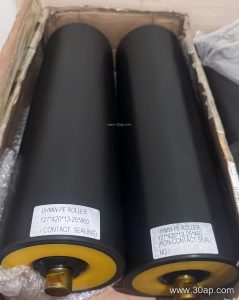
For abrasive bulk material, the bracket must hold the idler firmly so that the belt does not vibrate. In a sand and gravel line, a loose bracket can quickly wear the roller shell and damage the belt cover. When the conveyor uses a heavy-duty mining conveyor belt or a steel cord conveyor belt, the supporting frame should be stiff enough to keep the trough shape under load. Fabricators should also allow for belt training adjustments, since small errors in bracket alignment are easier to correct with slotted holes or shims than with field cutting.
Fabrication Details That Affect Performance
Squareness is the first check after welding. A bracket that is out of square will tilt the idler and push the belt to one side. The second check is hole position, because idler shafts must sit parallel to each other across the conveyor. The third is weld quality at the joints where the crossbeam meets the side plates. For adjustable brackets, the locking mechanism should be strong enough to hold the set angle without slipping. A fabricator who understands how the belt, idler roller and conveyor pulley interact will usually produce a better frame than one who only follows a sketch.
Buyer Checklist for Conveyor Bracket Fabrication
Before placing an order, confirm the belt width, trough angle, roller diameter and mounting hole pattern. Ask for the fabrication drawing and check that the bracket type matches the position on the conveyor. For a coal mining conveyor belt or a cement plant application, state the environment so the fabricator can choose a suitable coating. Request dimensional tolerances for squareness and hole spacing, and agree on a trial fit if the brackets are part of a retrofit. Keep in mind that a conveyor bracket works together with the conveyor belt, idler roller and conveyor pulley, so any change in one component may require a review of the bracket design.