What a Self-Aligning Idler Bracket Does
A self-aligning idler bracket is a pivoting support that holds a troughed idler roller and steers it slightly when the conveyor belt starts to drift. You will also see it called a self-aligning roller bracket or an automatic training bracket. It is not a fixed bracket, and it is not a transition bracket. The bracket sits under the belt, usually on the carrying side, and rotates on a vertical pivot. When the belt edges contact the steering rollers, the bracket turns a few degrees and nudges the idler roller so the belt returns toward the center line.
In a quarry, a coal washing plant, a cement kiln feed line, or a power station coal yard, belt mistracking is a daily concern. A self-aligning idler bracket reduces edge damage and spillage without needing constant manual adjustment.
How the Bracket Is Built
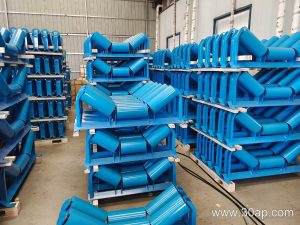
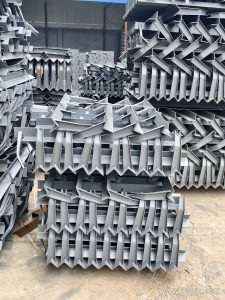
Most frames are welded from angle steel, channel steel, or folded steel plate. The pivot assembly includes a vertical shaft, a thrust bearing, and a base plate that bolts to the conveyor stringer. The top of the bracket carries the idler roller mounts. A pair of small vertical guide rollers usually sits at the leading and trailing edges. These guide rollers are what the belt touches first when it wanders.
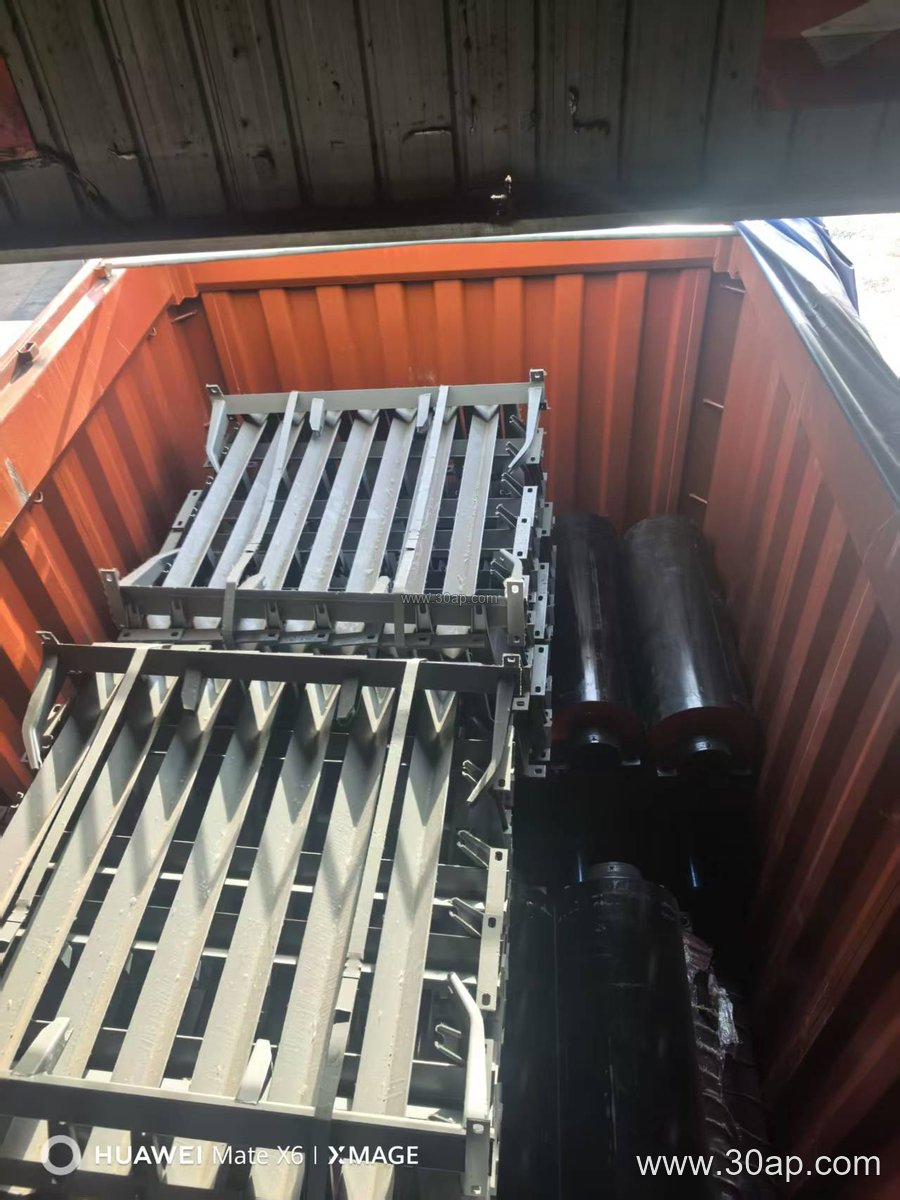
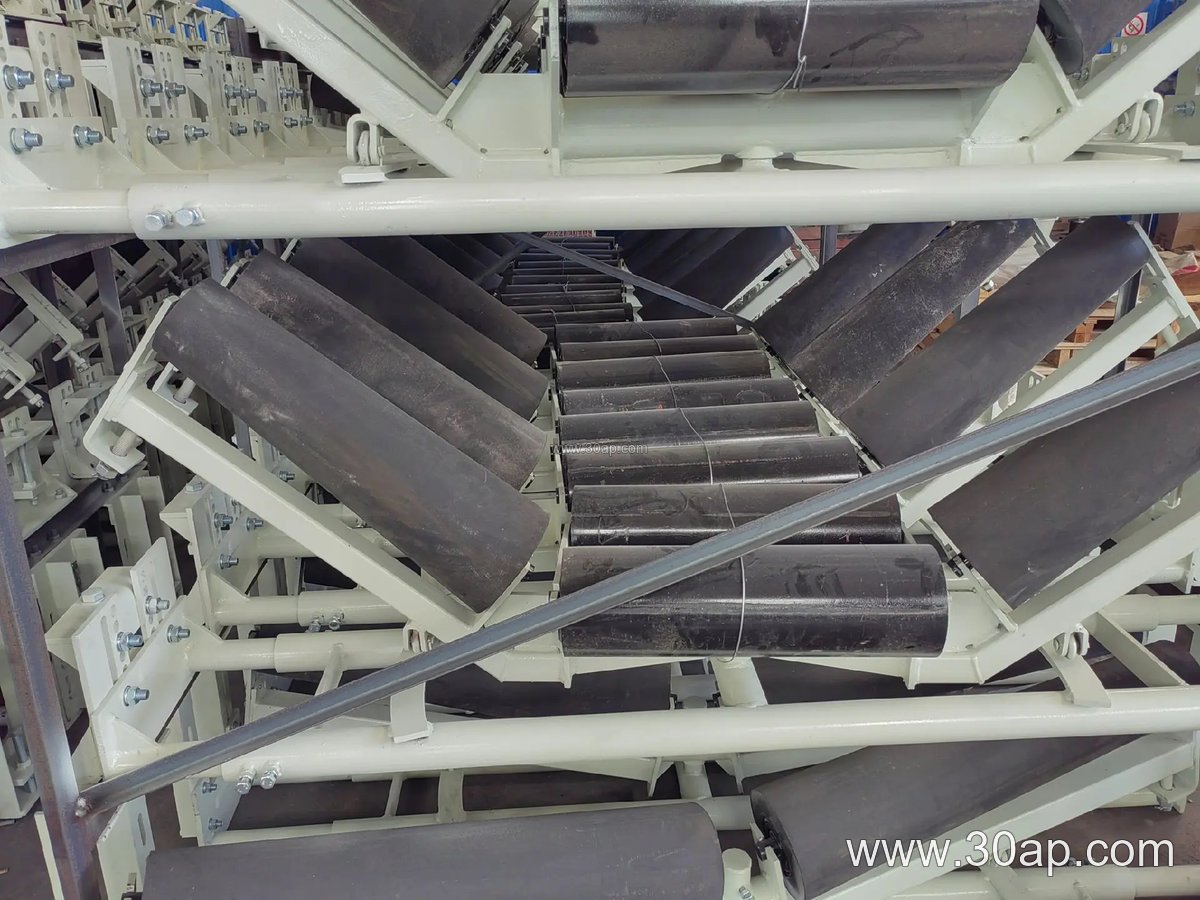
Surface finish is often painted or galvanized. The bracket must be strong enough to carry the belt load plus material load, yet free enough to pivot under light side force. A stiff pivot defeats the purpose; a loose pivot wears quickly.
Where It Fits on the Conveyor
Self-aligning brackets are commonly installed on the carrying side, spaced every 20 to 50 meters along a straight run, and also just after a loading point or a curve. They are not a replacement for a drive pulley, a tail pulley, or a bend pulley. Those pulleys handle power transmission and direction changes. A self-aligning bracket handles tracking only.
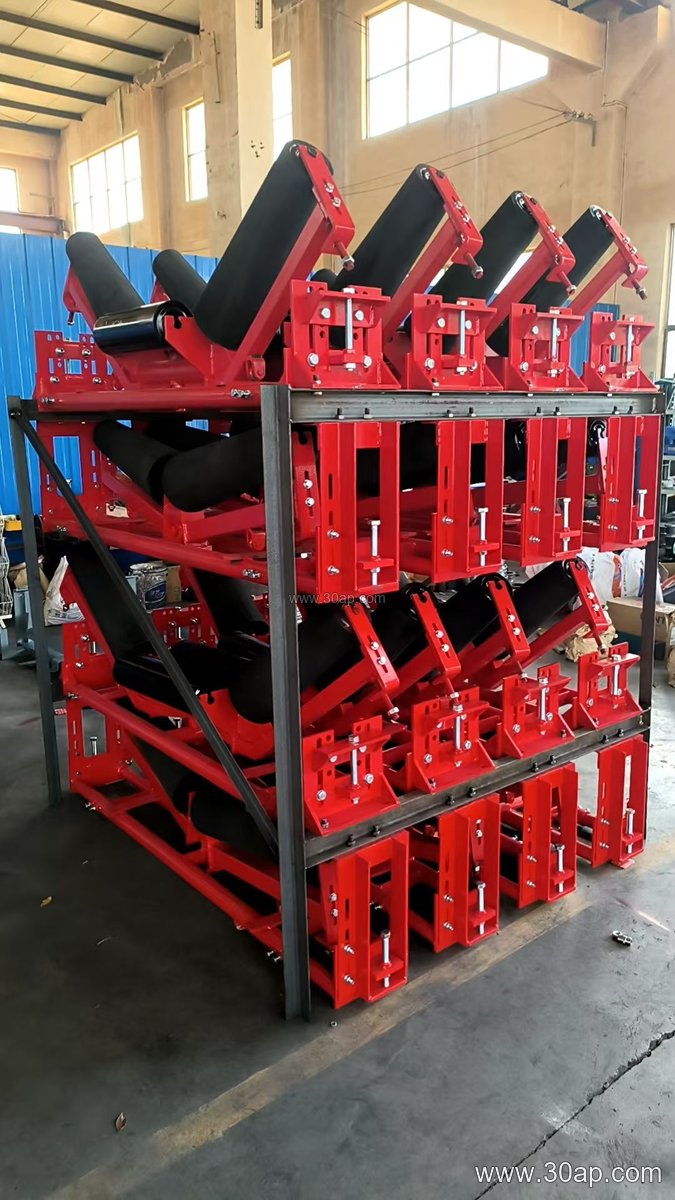
On the return side, a V-return bracket or a flat return bracket may be used instead. A self-aligning return bracket also exists, but it is a different subtype. For comparison, a fixed troughed bracket does not pivot; it holds the idler roller at a set angle. A self-aligning bracket adds the steering function on top of that support role.
Common Mounting Positions
- After the loading chute, where material impact often pushes the belt off center
- Along long straight sections in a tunnel or overland conveyor
- Before the head pulley, to center the belt before discharge
- On the return strand, where a self-aligning return bracket is specified
Matching Belt Width, Trough Angle, and Roller Diameter
The bracket is selected to suit the conveyor belt width, the trough angle, and the idler roller diameter. These three values are related but not locked together. A B800 belt may run at 30 degrees or 35 degrees, with Ø89 or Ø108 rollers, depending on the material and capacity. A B1200 belt might use 35 degrees or 45 degrees with Ø133 rollers. The table below shows common reference combinations, not mandatory matches.
| Belt Width | Common Trough Angle | Common Roller Diameter | Typical Bracket Note |
|---|---|---|---|
| B500 | 20°, 30° | Ø89 | Light duty, narrow frame |
| B650 | 30°, 35° | Ø89, Ø108 | Adjustable angle option |
| B800 | 30°, 35°, 45° | Ø108, Ø133 | Common in cement and sand lines |
| B1000 | 35°, 45° | Ø108, Ø133, Ø159 | Medium to heavy duty |
| B1200 | 35°, 45° | Ø133, Ø159 | Mining and port use |
| B1400 | 35°, 45° | Ø133, Ø159, Ø194 | Heavy duty frame |
| B1600 | 35°, 45° | Ø159, Ø194 | High capacity |
| B1800–B2200 | 35°, 45° | Ø159, Ø194 | Large mining and bulk terminals |
Installation hole spacing and crossbeam length change with belt width and trough angle. They are not a single fixed number. A buyer should confirm the stringer hole pattern and the idler roller shaft size before ordering.
What a Buyer Should Check
First, confirm the belt width and the actual trough angle. Second, confirm the roller diameter and the shaft end shape. Third, check the pivot bearing type and the guide roller material. Fourth, ask whether the bracket is fixed or adjustable. An adjustable self-aligning bracket can be set between 20 degrees and 45 degrees, while a fixed bracket is welded at one angle.
Also consider the environment. In a fertilizer plant or a grain silo, corrosion protection matters more than in a dry limestone quarry. In a steel mill sinter line, heat and dust may call for a heavier pivot. A self-aligning idler bracket works best when it is matched to the whole conveyor, not chosen in isolation.
Maintenance is simple: check that the pivot turns freely, that the guide rollers spin, and that the mounting bolts stay tight. A worn pivot bearing or a seized guide roller will stop the bracket from correcting belt drift. Regular inspection along the conveyor line keeps the self-aligning bracket doing its job.