What a Conveyor Welded Pulley Is
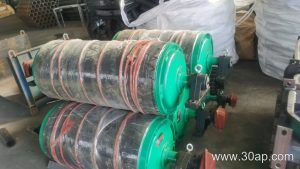
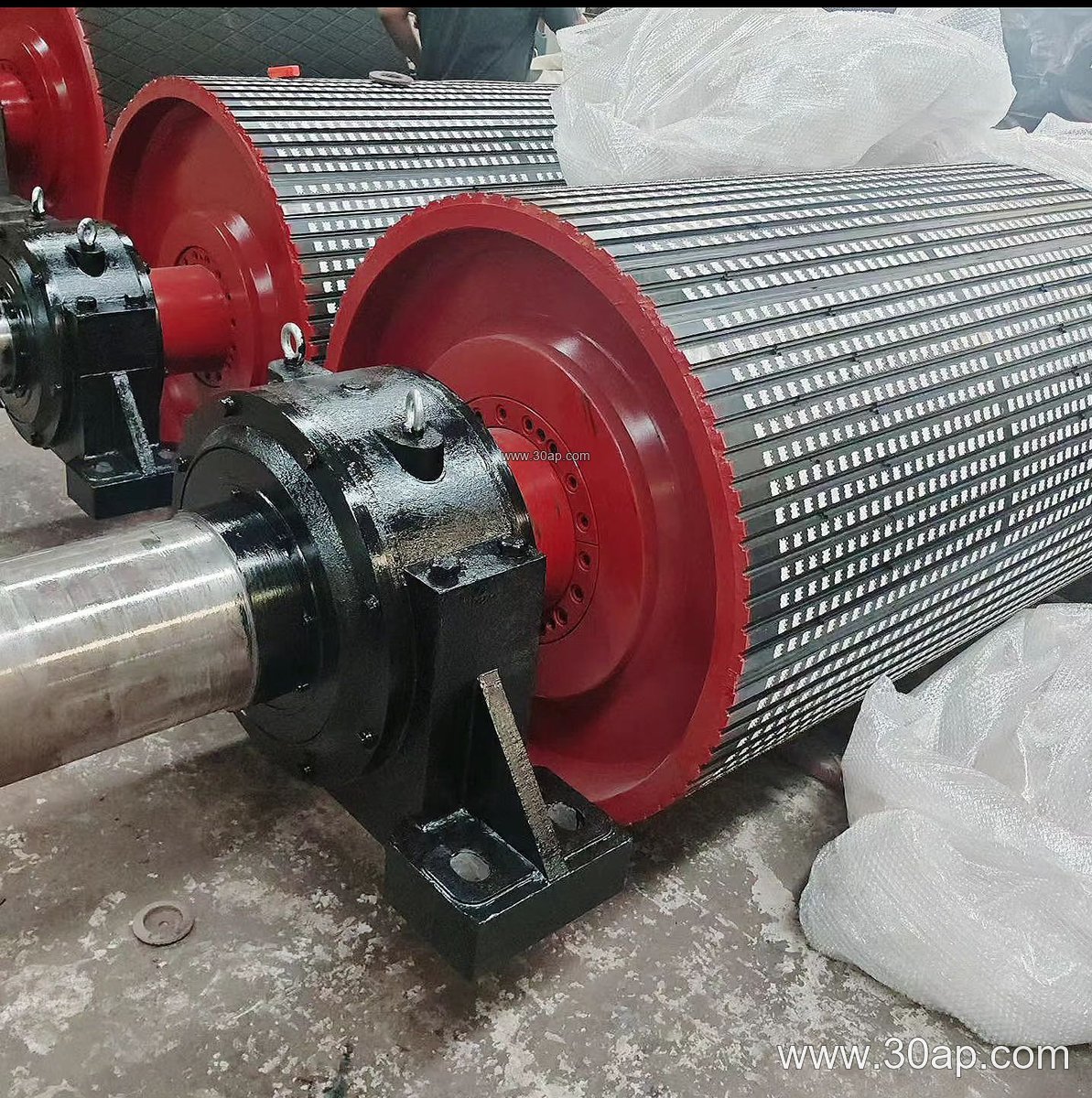
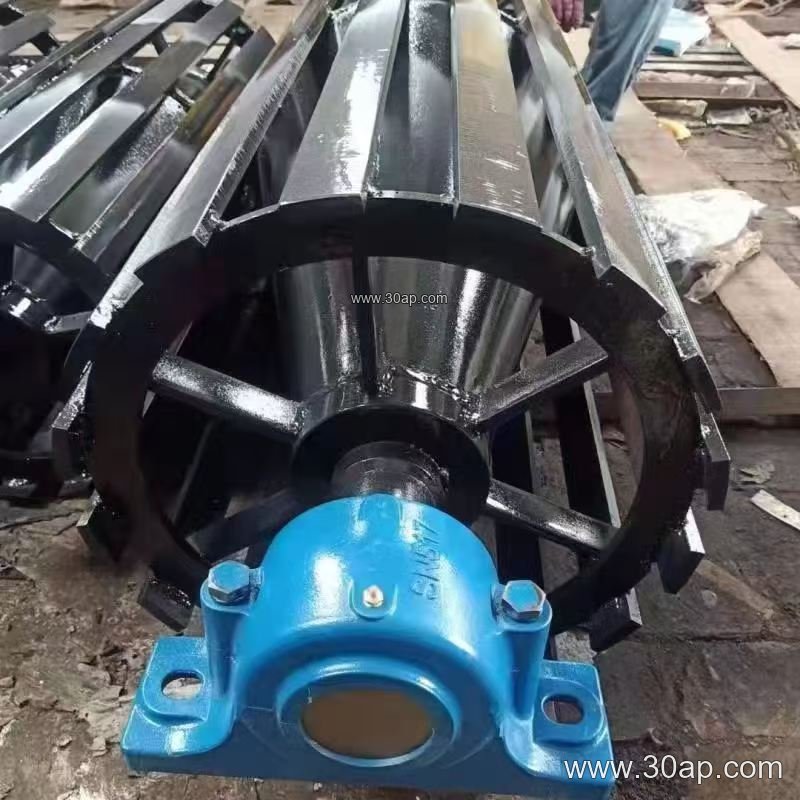
A conveyor welded pulley is a cylindrical drum built by welding rolled steel plate to end discs and a shaft hub assembly. It is the rotating element that carries and guides the conveyor belt at the head, tail, or intermediate points of a bulk handling line. Because the shell and discs are joined by continuous welds rather than by casting, this welded conveyor pulley can be produced in a wide range of diameters and face widths, and it is often the practical choice for heavy conveyors in quarries, coal preparation plants, cement works, and power station coal yards.
Buyers sometimes use the shorter term welded drum pulley for the same product. Either way, the item described is the fabricated steel pulley, not a cast iron or machined solid drum.
How the Welded Drum Is Built
The typical build starts with a rolled steel shell, two end discs, and a hub that is keyed or shrink-fitted to the shaft. The discs are welded to the shell, and gussets or stiffening rings may be added where torque and belt tension are high. After welding, the shell is machined or ground so the running surface is true, and the shaft ends are prepared for bearings and conveyor brackets.
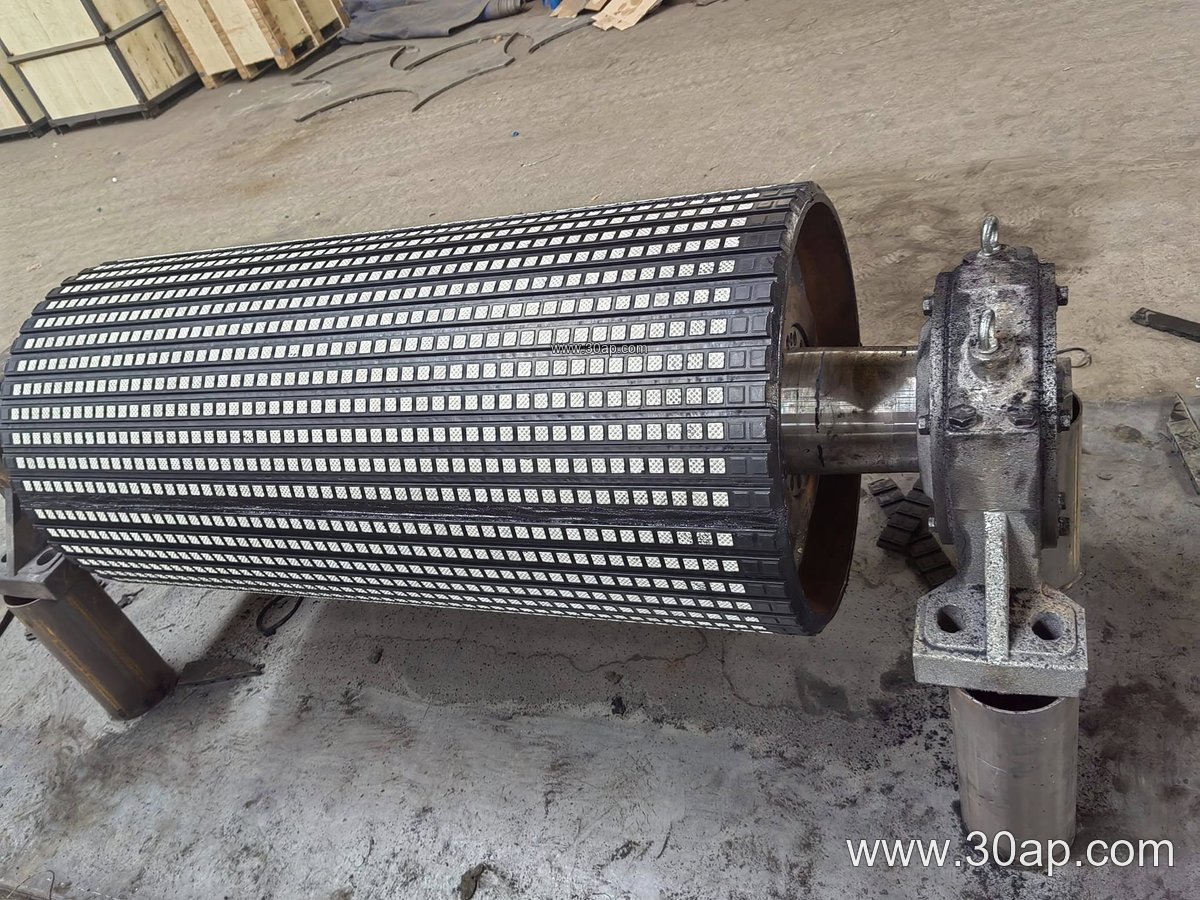
Surface treatment is chosen to match the duty. Plain finished shells are common on light duties. Rubber lagging may be applied by hot vulcanizing, cold bonding, or casting directly onto the shell, and the pattern can be flat, diamond, herringbone, or ceramic tile. Lagging thickness is commonly 8, 10, 12, 15, or 20 mm depending on grip and wear requirements.
Where It Fits in the Conveyor
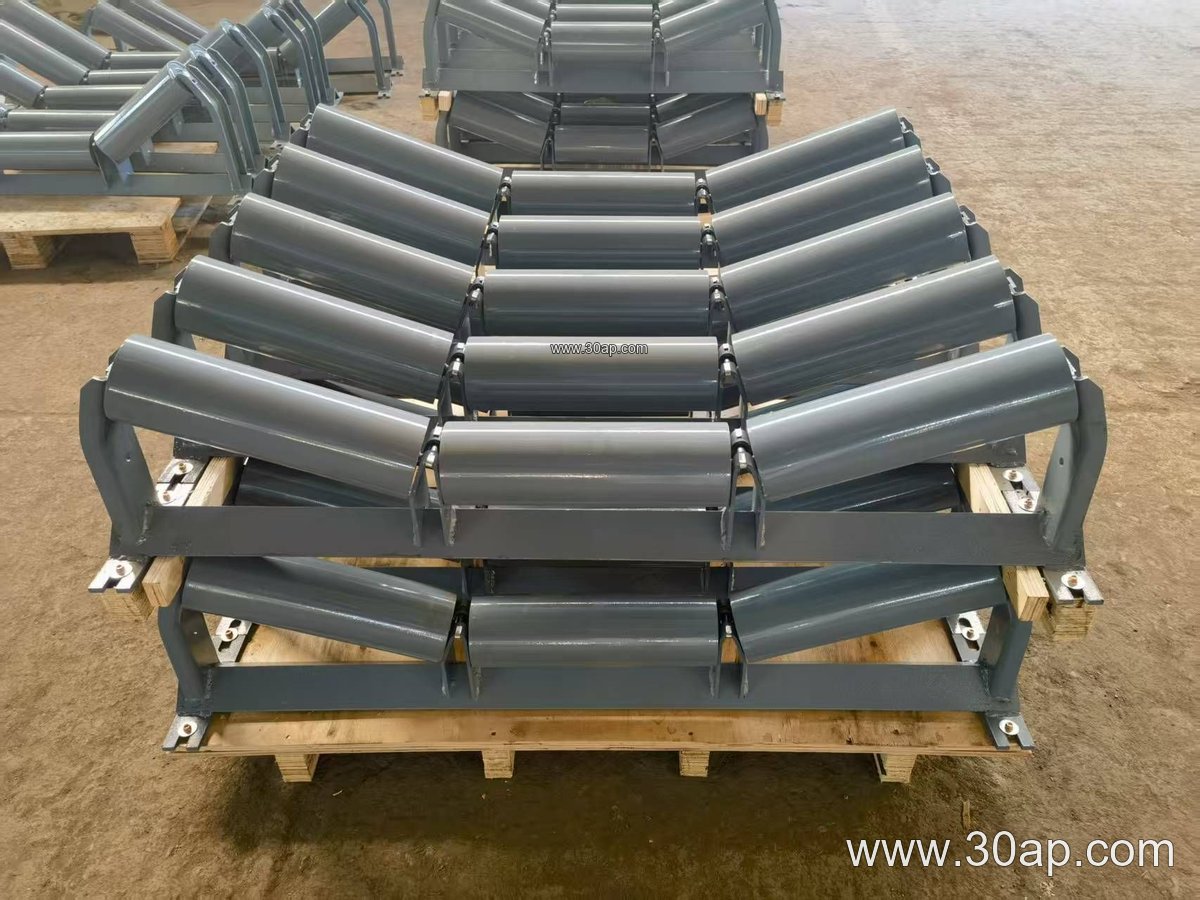
A welded pulley may serve as a drive pulley at the head, a tail pulley at the loading end, or a bend pulley that redirects the belt. These roles are not interchangeable. The drive pulley transmits torque and needs a lagged surface and a robust hub; the tail pulley mostly supports and guides the returning belt; a bend pulley changes belt direction with less torque demand. A tension pulley takes up slack, while a snub pulley increases wrap angle around the drive.
In a limestone quarry or a sand and aggregate line, the head pulley often runs with an abrasion resistant conveyor belt carrying sharp rock. In a coal handling plant, flame retardant and anti-static belts are common, and the pulley lagging must suit dusty, potentially wet conditions. Cement plants moving clinker tend to favor heat resistant belt constructions and pulleys that tolerate high temperatures and abrasive dust.
Sizes, Shafts, and Surface Options
Face width is normally a little wider than the belt so the belt is fully supported. Common reference combinations include B800 with a Ø500 shell, B1200 with a Ø1000 shell, and B1400 with a Ø800 shell, but these are examples only. Diameter is selected from belt tension, wrap angle, and space, not from belt width alone.
| Reference item | Common values |
|---|---|
| Belt width B | B400, B500, B650, B800, B1000, B1200, B1400, B1600, B1800, B2000 |
| Shell diameter | Ø200, Ø250, Ø315, Ø400, Ø500, Ø630, Ø800, Ø1000, Ø1250, Ø1400 |
| Shaft diameter | Ø50, Ø60, Ø70, Ø80, Ø90, Ø100, Ø120, Ø140, Ø160, Ø180, Ø200 |
| Lagging thickness | 8, 10, 12, 15, 20 mm |
| Surface form | plain, cast rubber, cold bonded rubber, hot vulcanized rubber, diamond, herringbone, ceramic |
Shaft diameter follows torque and bearing load, so a B650 pulley on a short light conveyor and a B650 pulley on a long heavy incline can carry very different shafts. The same logic applies to shell plate thickness and weld details.
What to Check Before Ordering
- Confirm the pulley role: drive, tail, bend, tension, or snub, and state it clearly on the inquiry.
- Give belt width, belt type, and belt speed so the supplier can size the shell and lagging.
- Provide belt tension or motor power and the shaft diameter required by the bearing and conveyor bracket.
- Specify lagging pattern and thickness, and whether the environment needs oil, heat, or abrasion resistance.
- Check balance, runout, and keyway dimensions, and confirm the shaft material and welding quality requirements.
A welded pulley works together with the conveyor belt, the idler roller set, and the frame. Matching a heavy-duty mining conveyor belt with an undersized shell or a poorly lagged drive pulley shortens belt life and causes slip. For high tension lines, a steel cord conveyor belt or a high strength EP conveyor belt such as EP200 or EP300 may be used, and the pulley then needs a larger shaft and stronger hub. In food or clean applications, a food grade conveyor belt may run on a plain or lightly lagged shell. Whatever the duty, the welded pulley should be specified as part of the whole conveyor, not as a stand-alone part.