What a Heavy-Duty Belt Conveyor Idler Does on the Line
A heavy-duty belt conveyor idler is the rotating support that carries the conveyor belt and its load along the structure. In a quarry, a limestone mine, or a crusher discharge line, the idler must keep the belt tracking, absorb impact, and resist dust and grit day after day. The heavy-duty version is built for higher loads, larger lump sizes, and longer service intervals than a standard roller.
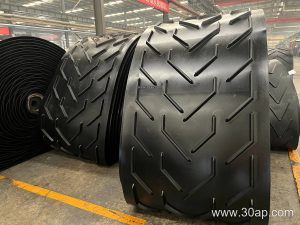
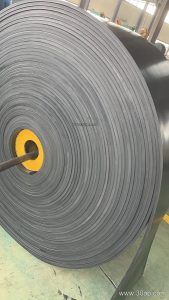
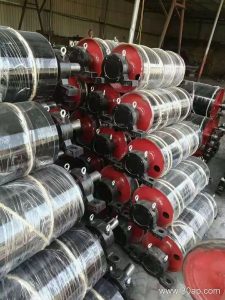
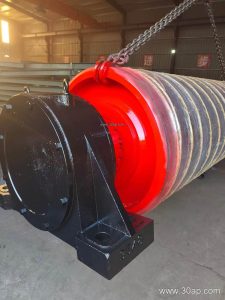
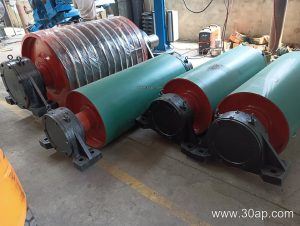
The idler works together with the conveyor belt, the conveyor pulley at the head and tail, and the conveyor bracket that fixes the station to the frame. Drive pulleys, tail pulleys, and bend pulleys are separate components with their own duties; they are not interchangeable with idlers, and they are selected on different criteria.
How the Roller Is Built
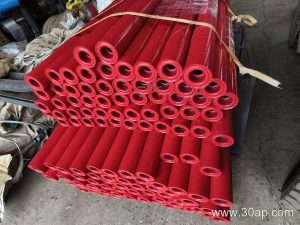
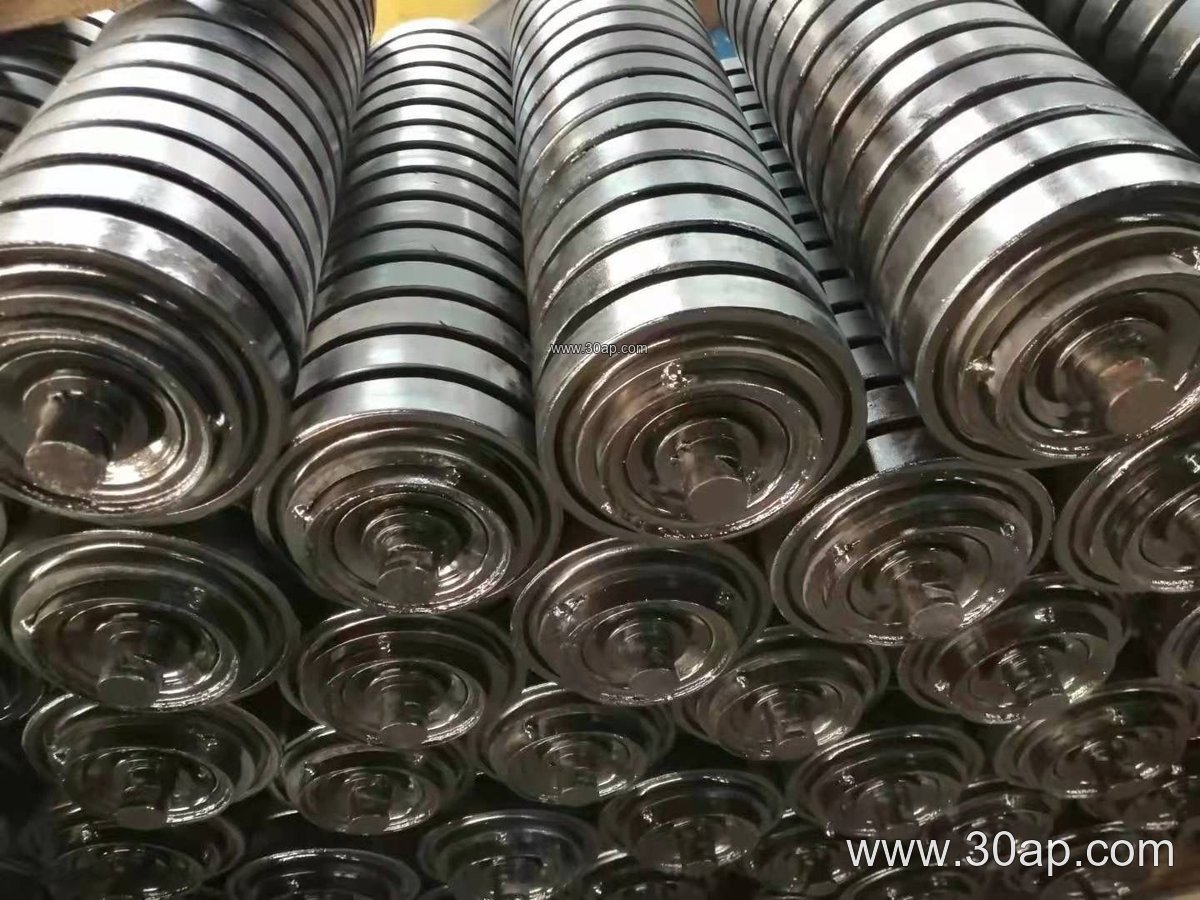
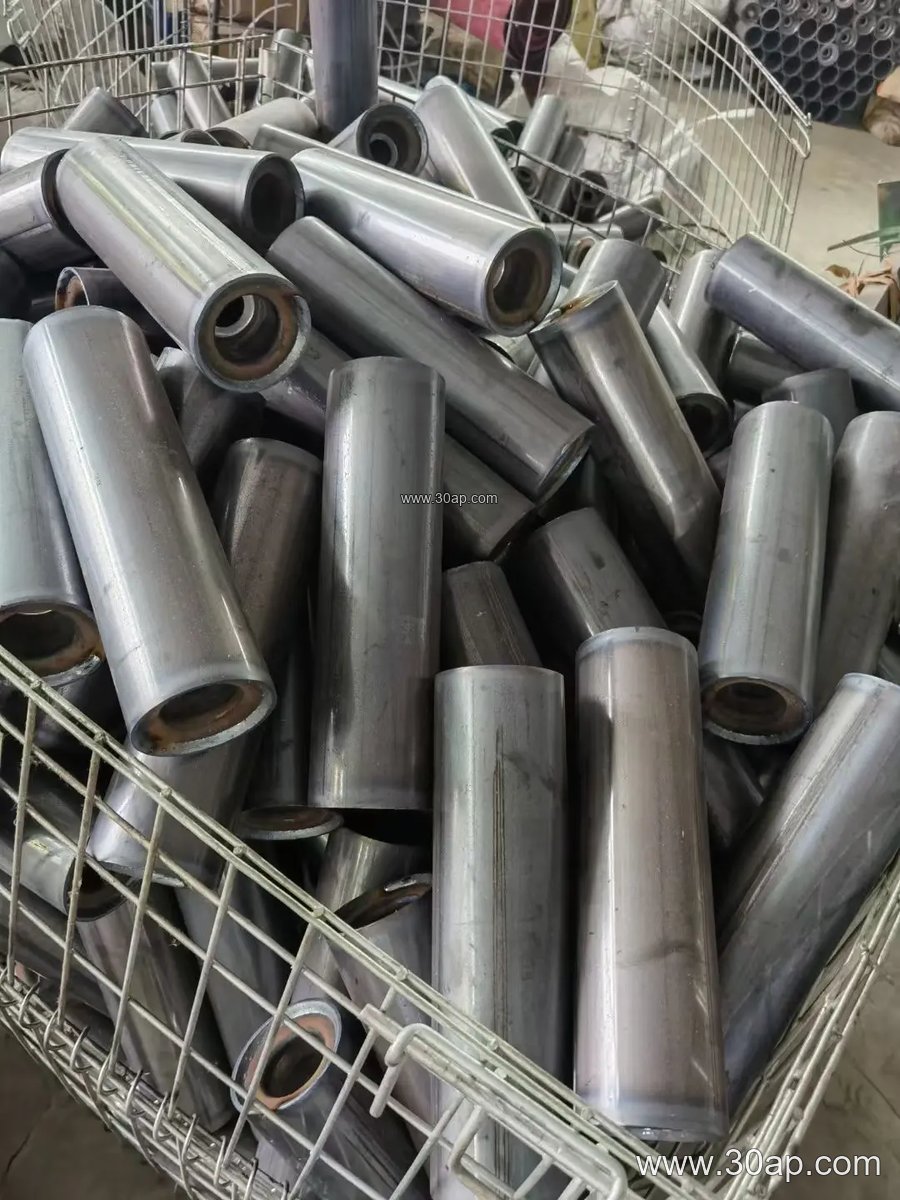
The shell is usually a steel tube, often with a rubber ring or ceramic surface where abrasion is severe. Shaft ends run in sealed ball bearings, and the seal arrangement matters as much as the tube thickness in a dusty coal handling or cement plant environment. Common bearing sizes include 6205, 6305, 6306, and 6308, but the bearing is matched to the shaft and load by the designer rather than fixed by roller diameter alone.
Typical roller diameters for heavy service run from Ø108 mm and Ø127 mm up to Ø159 mm, Ø178 mm, and Ø194 mm. Larger diameters suit wider belts and heavier loads, while smaller sizes remain common on medium-duty runs. Roll face options include plain steel, nylon, ceramic, and rubber rings for cushioning.
Where It Fits in the Conveyor
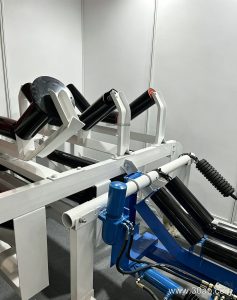
Carrying idlers support the loaded strand. A three-roll troughing set is the usual arrangement, with trough angles of 20, 30, 35, or 45 degrees. A 35-degree trough is common in aggregate and ore handling, while a 45-degree set gives a deeper trough for higher capacity on the same belt width.
Impact idlers with rubber rings sit under the loading point, where falling rock from a crusher or screen hits the belt. Return idlers support the empty strand; a V-return or flat return set keeps the belt from sagging. Transition idlers ease the belt from the flat pulley into the trough, and self-aligning idlers correct tracking on long runs. A spiral idler is sometimes used on the return side to shed sticky material.
Common Sizes and Reference Data
The table below gives typical reference values; final dimensions follow the conveyor design, belt width, and trough angle.
| Item | Common Reference |
|---|---|
| Roller diameter | Ø89, Ø102, Ø108, Ø127, Ø133, Ø159, Ø178, Ø194, Ø219 mm |
| Belt width | B500, B650, B800, B1000, B1200, B1400, B1600, B1800, B2000 mm |
| Trough angle | 20, 30, 35, 45 degrees |
| Roller length, three-roll set (example) | B500 about 200 mm; B800 about 315 mm; B1000 about 380 mm; B1200 about 465 mm; B1400 about 530 mm; B1600 about 600 mm |
| Bearing | 6204, 6205, 6305, 6306, 6308, 6310 |
| Roll surface | Steel, nylon, ceramic, rubber ring |
Side rollers and center rollers can differ in length within the same station, so the figures above are examples rather than fixed pairings. One belt width can work with more than one pulley diameter, and shaft size is set by load calculation, not by belt width alone.
Applications Across Bulk Industries
Heavy-duty idlers appear in iron ore and copper ore handling, coal washing plants, power station coal yards, cement kilns and clinker lines, and port shiploading systems. In a sand and gravel plant, they carry abrasive aggregate under a crusher conveyor belt; in a steel plant, they support sinter and coke. Where the belt itself is a heavy-duty mining conveyor belt, an abrasion resistant conveyor belt, or a flame retardant conveyor belt for underground coal mining, the idler frame and seal must match that duty.
The belt type also influences idler choice. A steel cord conveyor belt or a high strength conveyor belt can run at higher tension, so the idler spacing and load rating are reviewed together. A pipe conveyor belt or a corrugated sidewall conveyor belt needs its own support arrangement. For general reference on matching belts and rollers, see heavy-duty belt conveyor idler and the related conveyor belt and conveyor pulley pages.
What Buyers Should Check
- Confirm the belt width, trough angle, and station type before ordering.
- Ask for the seal and bearing specification, not just the tube thickness.
- Match the roll surface to the material: rubber rings for impact, ceramic for severe abrasion.
- Check that the shaft and bearing housing suit the calculated load.
- Plan a spare stock of the most wearing positions, such as impact and return idlers.
Good idler selection keeps the belt running straight, reduces splice stress, and lowers downtime in any quarry, mine, or plant.