What a Steel Plant Conveyor Pulley Does
In a steel plant, raw materials such as iron ore, coal, limestone, and sintered ore move continuously between stockyards, crushers, screening stations, and blast furnace charging systems. The steel plant conveyor pulley is the cylindrical component that drives, redirects, or tensions the conveyor belt in these demanding circuits. Unlike a simple idler roller that only supports the belt, a pulley transmits torque or changes belt direction, so its construction and surface treatment must match the load, environment, and belt type.
Pulleys in steel plants are exposed to high temperatures, abrasive dust, and occasional impact from coarse ore. A well-matched pulley keeps the belt tracking correctly and reduces downtime in sinter plants, coke ovens, and material handling yards.
How a Steel Plant Conveyor Pulley Is Built
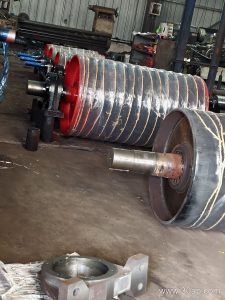
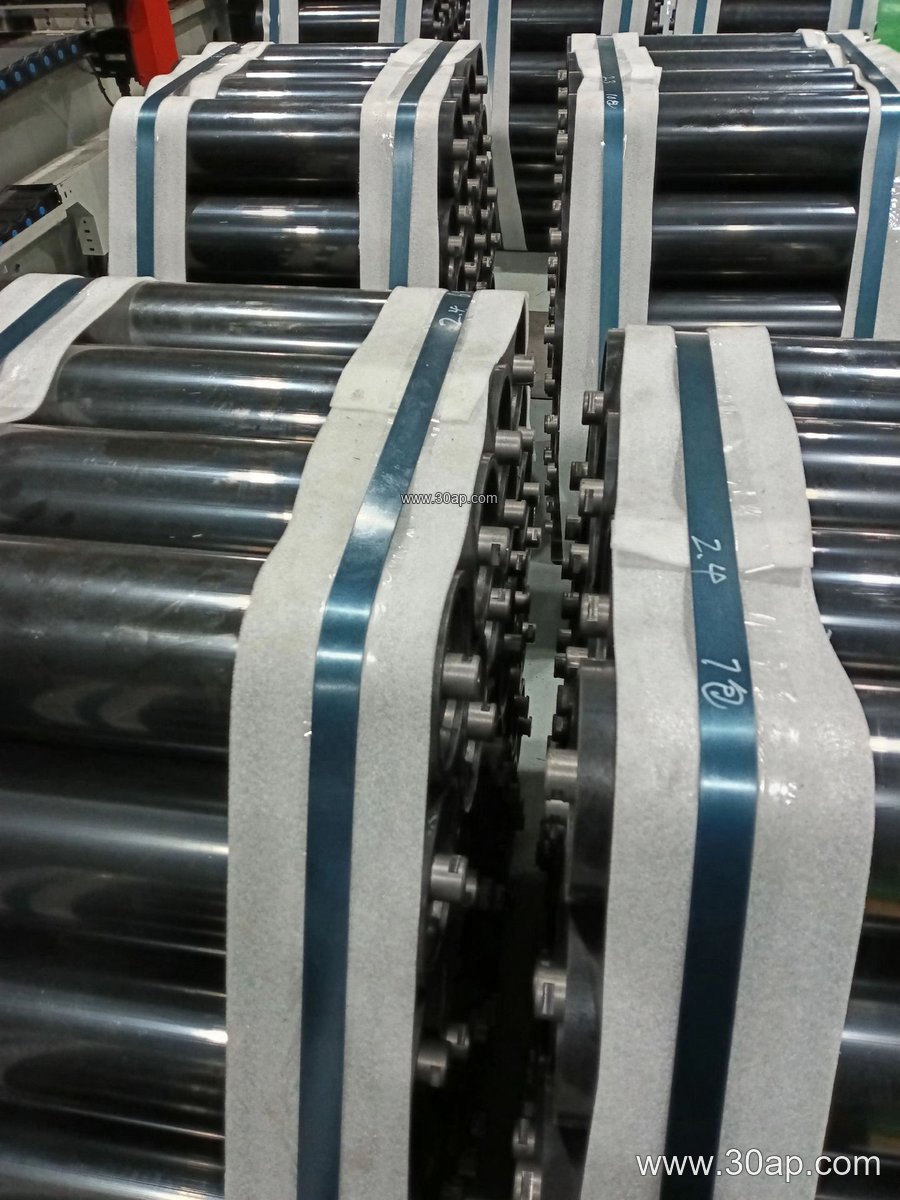
The core structure usually includes a cylindrical shell, end discs, a shaft, and bearing housings. The shell can be seamless steel tube or rolled plate, machined for balance. Shaft diameter is determined by torque and radial load, not by belt width alone. Common shaft sizes range from Ø50 to Ø200, but final selection depends on the drive power and pulley position.
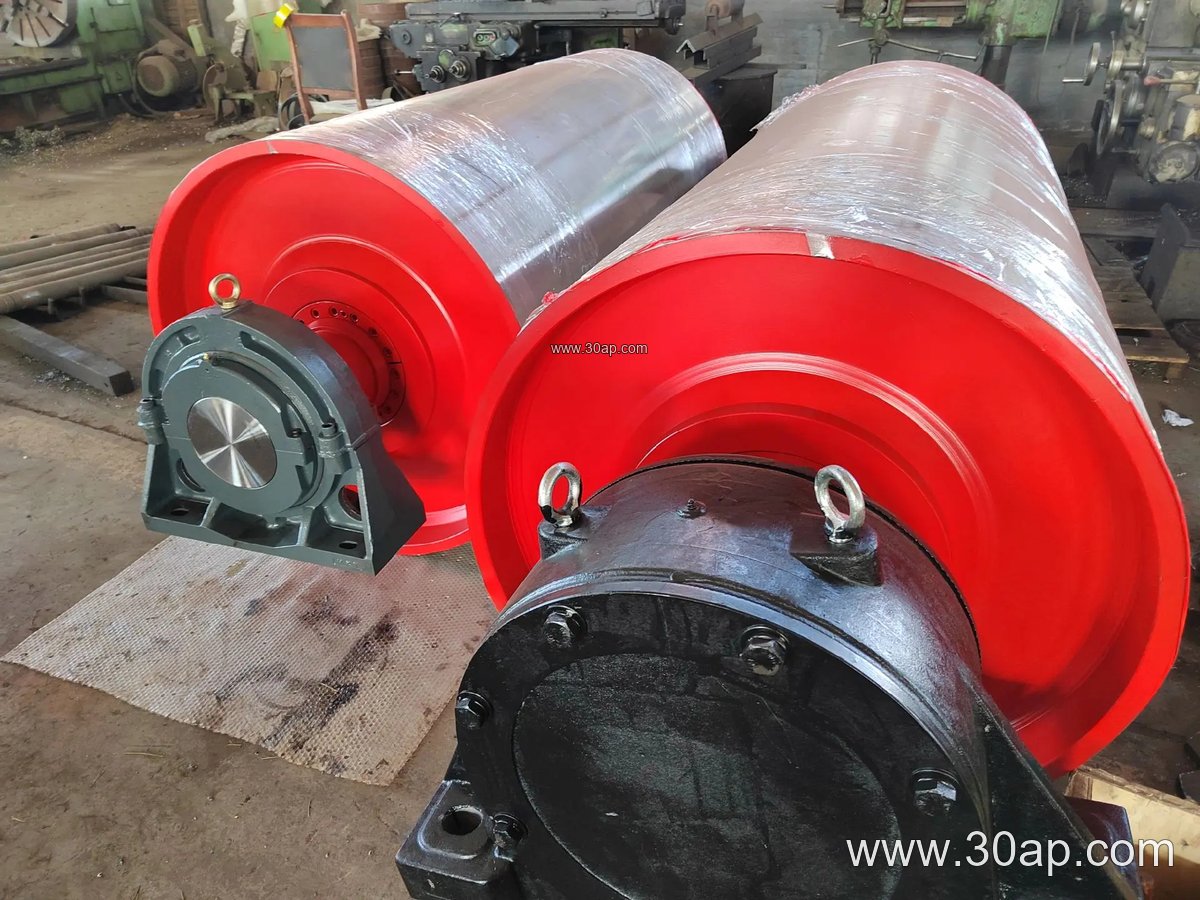
Surface treatment is a key differentiator. Plain finish is used where slip is not a concern. Rubber lagging—applied by cold bonding or hot vulcanization—improves friction and protects the shell. Diamond or herringbone grooving helps evacuate water and fine dust. Ceramic lagging offers high wear resistance for abrasive iron ore and sinter. Lagging thickness commonly ranges from 8 mm to 20 mm.
Face width is typically wider than the belt. For example, a B800 belt often runs on a pulley with about 950 mm face width, while a B1200 belt may use roughly 1400 mm. These are reference proportions, not fixed rules, and each project should confirm dimensions with the conveyor design.
Main Types and Where They Sit
Drive pulleys, also called head pulleys, transmit power to the belt and are usually lagged. Tail pulleys at the loading end redirect the belt and may be plain or lagged. Bend pulleys and take-up pulleys change direction or maintain tension in the return run. These subtypes are not interchangeable; a drive pulley cannot simply replace a bend pulley because torque, shaft, and bearing requirements differ.
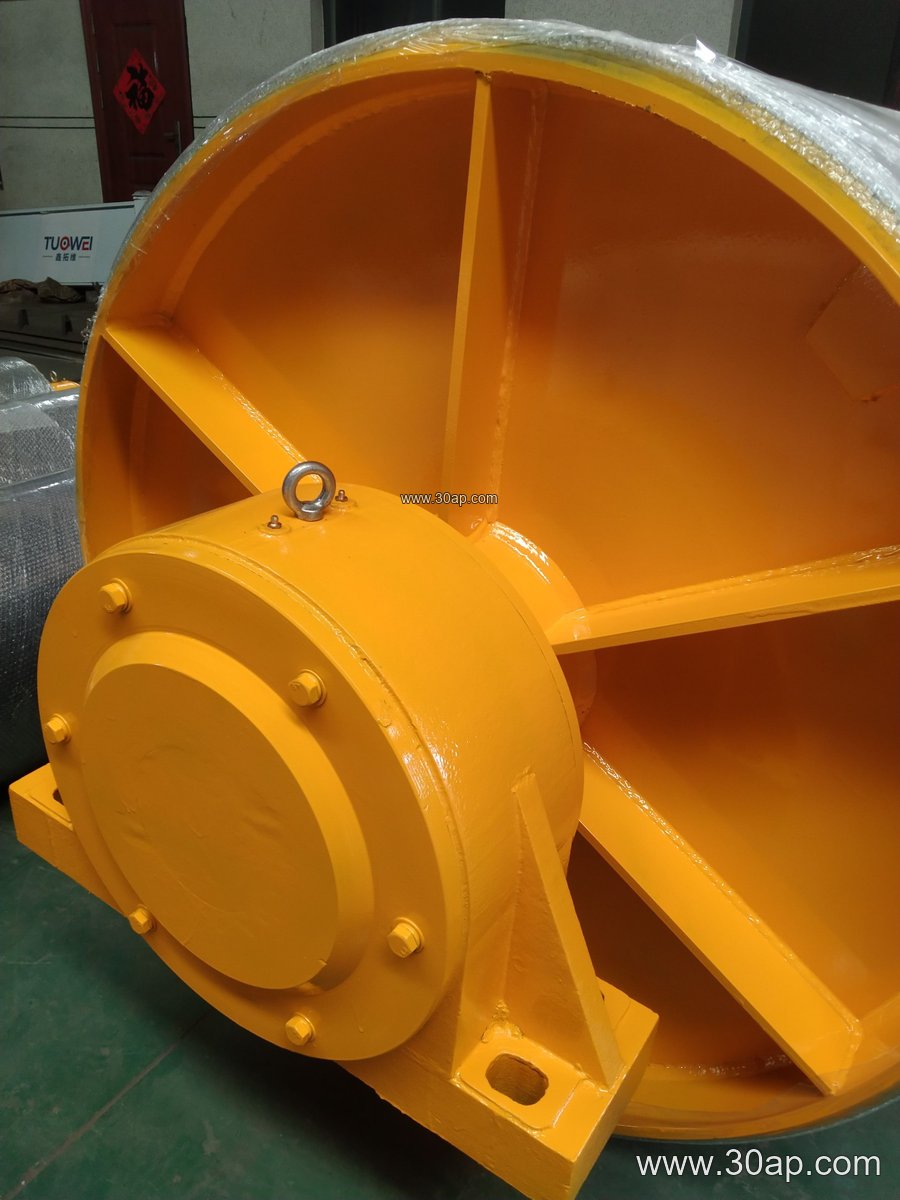
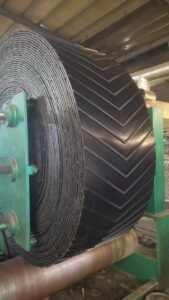
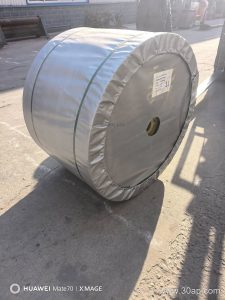
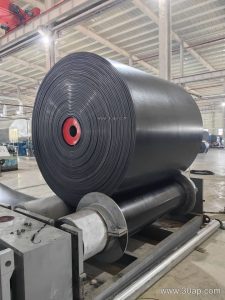
In a steel plant, the head pulley often works with a heavy-duty conveyor belt such as a Steel Cord Conveyor Belt or a high-abrasion EP Conveyor Belt. The tail pulley may see impact from lump ore, so a robust shell and adequate bearing protection matter. Take-up pulleys help compensate for belt stretch in long sinter feed lines.
Matching the Pulley to the Belt and the Duty
Belt construction influences pulley choice. A Steel Cord Conveyor Belt requires a pulley diameter large enough to avoid excessive bending stress in the cords, while a fabric-core belt such as an NN Conveyor Belt or EP Conveyor Belt may tolerate a smaller diameter for the same width. Heat Resistant Conveyor Belt used near sinter coolers may need a pulley with heat-tolerant lagging and bearing protection.
Common diameter options include Ø200, Ø315, Ø400, Ø500, Ø630, Ø800, Ø1000, Ø1250, Ø1400, Ø1600, and Ø1800. A B800 conveyor might use a Ø500 pulley in a light duty, while a B1400 main drive could use Ø800 or larger. Avoid assuming that one belt width matches only one diameter; the same width can pair with different pulley sizes depending on speed, tension, and space.
Buyer Checklist for Steel Plant Applications
- Confirm the pulley position: drive, tail, bend, take-up, or snub.
- Specify belt type and width, such as a 1200mm wide Steel Cord Conveyor Belt or an EP1000 belt.
- State the lagging preference: plain, rubber, diamond, herringbone, or ceramic, with thickness.
- Provide shaft diameter and bearing type based on torque and load calculations.
- Check environmental factors: temperature, dust, water, and oil exposure.
- Review maintenance access for bearing lubrication and lagging replacement.
For spare parts planning, keep records of pulley face width, diameter, lagging condition, and shaft size. A steel plant conveyor pulley that is correctly specified and maintained helps protect the conveyor belt, reduce belt slippage, and keep material flowing from stockyard to furnace.