What a Tail Pulley Does
A tail pulley is the return-end drum of a belt conveyor. It supports and guides the conveyor belt as the belt completes its circuit, and in many layouts it also serves as the tensioning point. On a quarry conveyor or a cement plant clinker line, the tail pulley is usually the drum the belt wraps around before it starts the carrying run, so its alignment and condition directly affect belt tracking along the whole structure.
Do not confuse it with other drums. A drive pulley transmits torque at the head end, a bend pulley changes belt direction, and a snub pulley increases wrap angle. The tail pulley is specifically the return-end drum, and the term should not be swapped for those other positions when specifying parts. A conveyor pulley supplied as a tail unit may look similar to a bend pulley, but the duty and mounting arrangement differ.
Construction and Surface Options
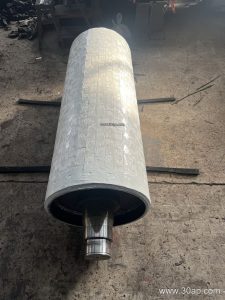
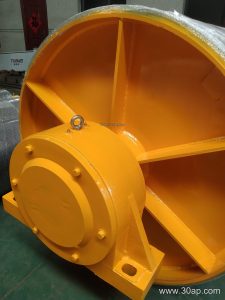
Most tail pulleys use a welded steel shell with shaft, hub, and bearing housings, or a shaftless design in some compact layouts. The shell face is usually wider than the belt. Reference dimensions commonly run from B400 with about a 500 mm face up to B2000 with about a 2200 mm face, but the final face width should follow the conveyor design.
Surface treatment depends on what the belt carries and how much slip or build-up is expected:
- Plain face for light, clean duty where tracking is stable
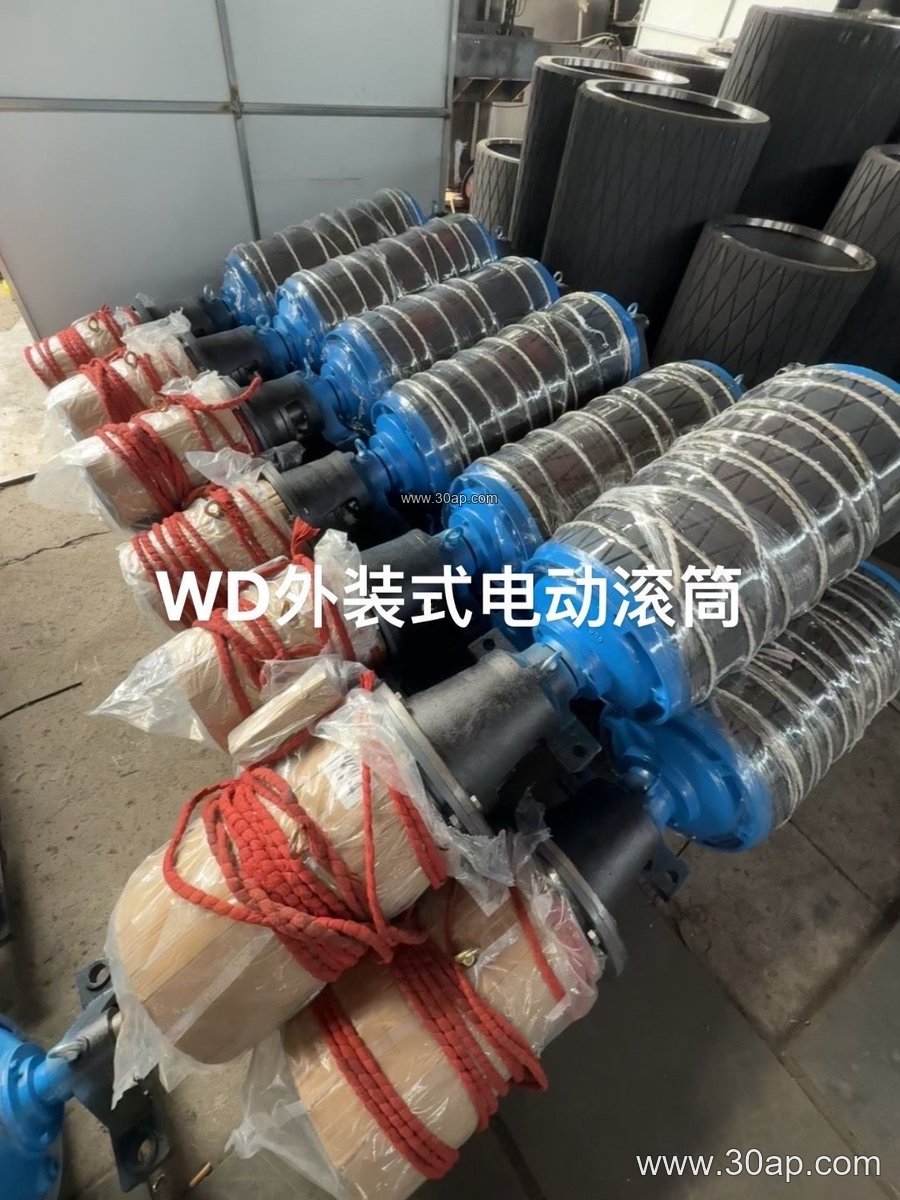
- Hot vulcanized or cold bonded rubber lagging for general grip and wear protection
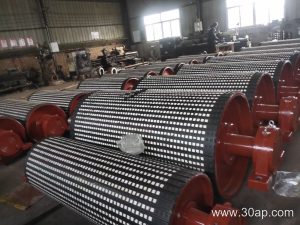
- Diamond or herringbone lagging where water, dust, or fines reduce friction
- Ceramic lagging for high-wear service in iron ore or copper ore handling
Lagging thickness is commonly 8, 10, 12, 15, or 20 mm. Diameter choices in reference ranges include Ø200, Ø315, Ø400, Ø500, Ø630, Ø800, Ø1000, and larger, but diameter should be selected from belt tension, wrap angle, and shaft load rather than from belt width alone. For example, a B800 × Ø500 arrangement and a B1200 × Ø1000 arrangement are both plausible in different duty levels; neither is a fixed rule.
Where It Fits in Bulk Handling
Tail pulleys appear across many bulk material circuits. In a coal mining conveyor or a power plant coal yard, they sit at the return end of the flight, often with a flame retardant conveyor belt and dust-tight bearing protection. In aggregate plants and crushing circuits, they work behind a crusher conveyor belt or a quarry conveyor belt that carries sharp rock, so abrasion resistant lagging and a robust shaft help. In a cement plant, the tail drum on a clinker or raw meal line may see heat and fine dust, so bearing seals and lagging choice matter.
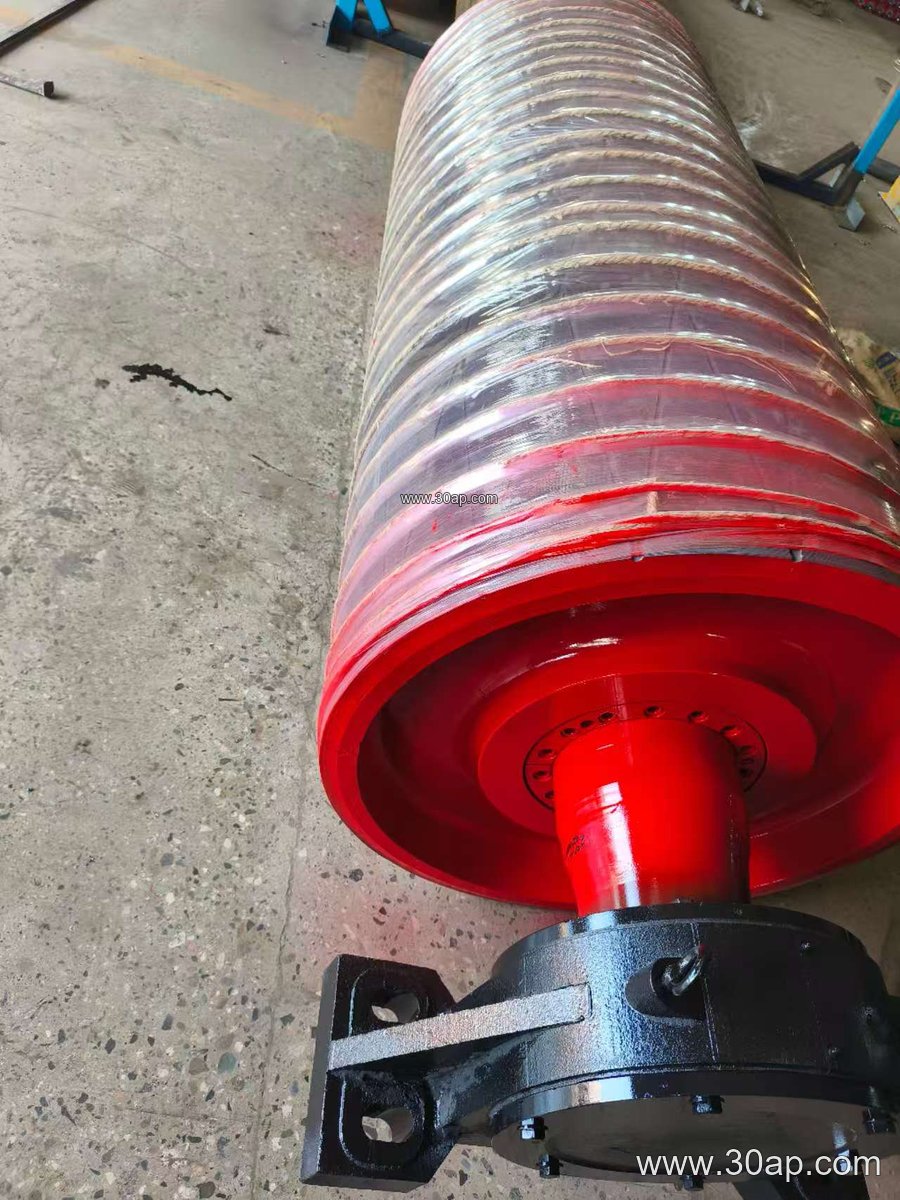
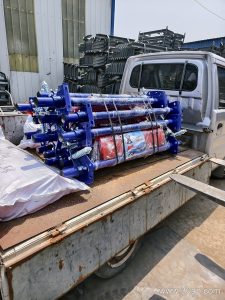
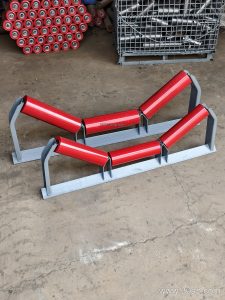
The drum also works with the conveyor belt, idler roller sets, and conveyor bracket assemblies. Misalignment at the tail end can cause edge wear, belt wander, and premature idler failure. When the tail pulley is also the tensioning drum, take-up travel and sliding frame condition should be checked together with pulley alignment.
Selection and Maintenance Notes
Buyers should confirm shaft diameter by torque and load, not by belt width. Common shaft sizes include Ø50, Ø80, Ø120, Ø160, and Ø200, but these are reference values only. Check bearing type, housing fit, lagging hardness, and whether the pulley is fixed or sliding. A tail pulley on a heavy-duty mining conveyor belt may need a larger shaft and heavier bearings than a similar-size drum on a food grade conveyor belt.
During operation, inspect lagging wear, shell runout, and bearing temperature. Keep the belt cleaner and the return run free of build-up, because material trapped near the tail drum can lift the belt and damage the lagging. Recheck alignment after any take-up adjustment. For a new installation, match the pulley face and diameter to the conveyor design, then verify tracking with the belt loaded gradually rather than at full tonnage.
For more conveyor components, see the drum and roller pages at rubberbeltconveyor.com, and match tail pulley data with the conveyor belt specification before ordering.