What a Ceramic Lagged Pulley Does in a Conveyor Drive
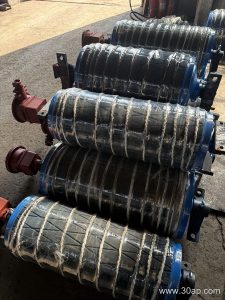
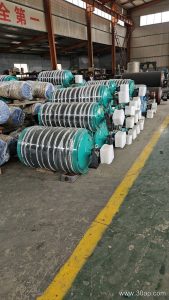
A wear-resistant ceramic lagged pulley is a conveyor pulley whose shell is covered with ceramic tiles bonded into a rubber or polymer backing. The ceramic layer sits between the steel drum face and the conveyor belt, and its job is to raise friction while resisting the abrasion that slowly polishes smooth or plain rubber surfaces. In a drive position, that extra grip helps transmit torque without excessive belt slip; in a bend or snub position, it helps keep the belt seated on the drum. The product is often simply called a ceramic pulley or ceramic-lagged drum, and it is usually specified as a complete assembly with shaft, bearings, hubs and end discs.
Ceramic lagging is not a substitute for correct pulley sizing. It is a surface treatment that works together with diameter, face width, shaft diameter and belt tension. A quarry conveyor handling sharp crushed stone and a coal handling line feeding a power plant boiler both benefit from the same basic idea, but the pulley design details will differ.
How the Ceramic Lagging Is Built
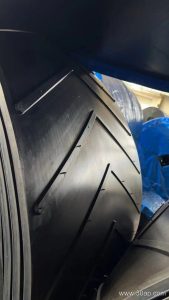
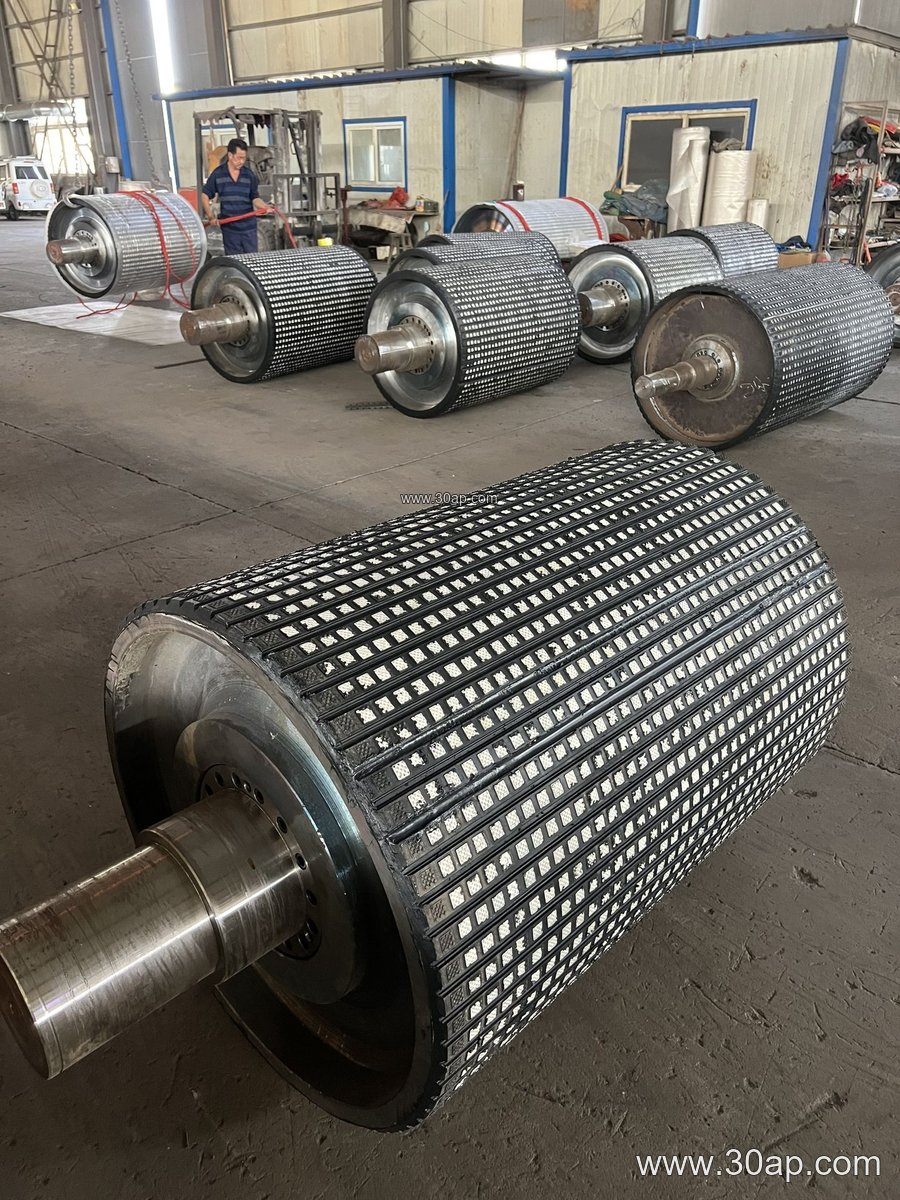
The shell is typically machined steel, with the lagging applied in one of two common ways. In the first, ceramic tiles are vulcanized into a rubber sheet that is then bonded to the drum, often in strips with gaps or grooves for drainage and dirt release. In the second, individual tiles are set into a cold-bonded polymer layer. Tile shape may be square, rectangular or hexagonal, and some designs use raised studs or diamond patterns to improve grip in wet or muddy conditions.
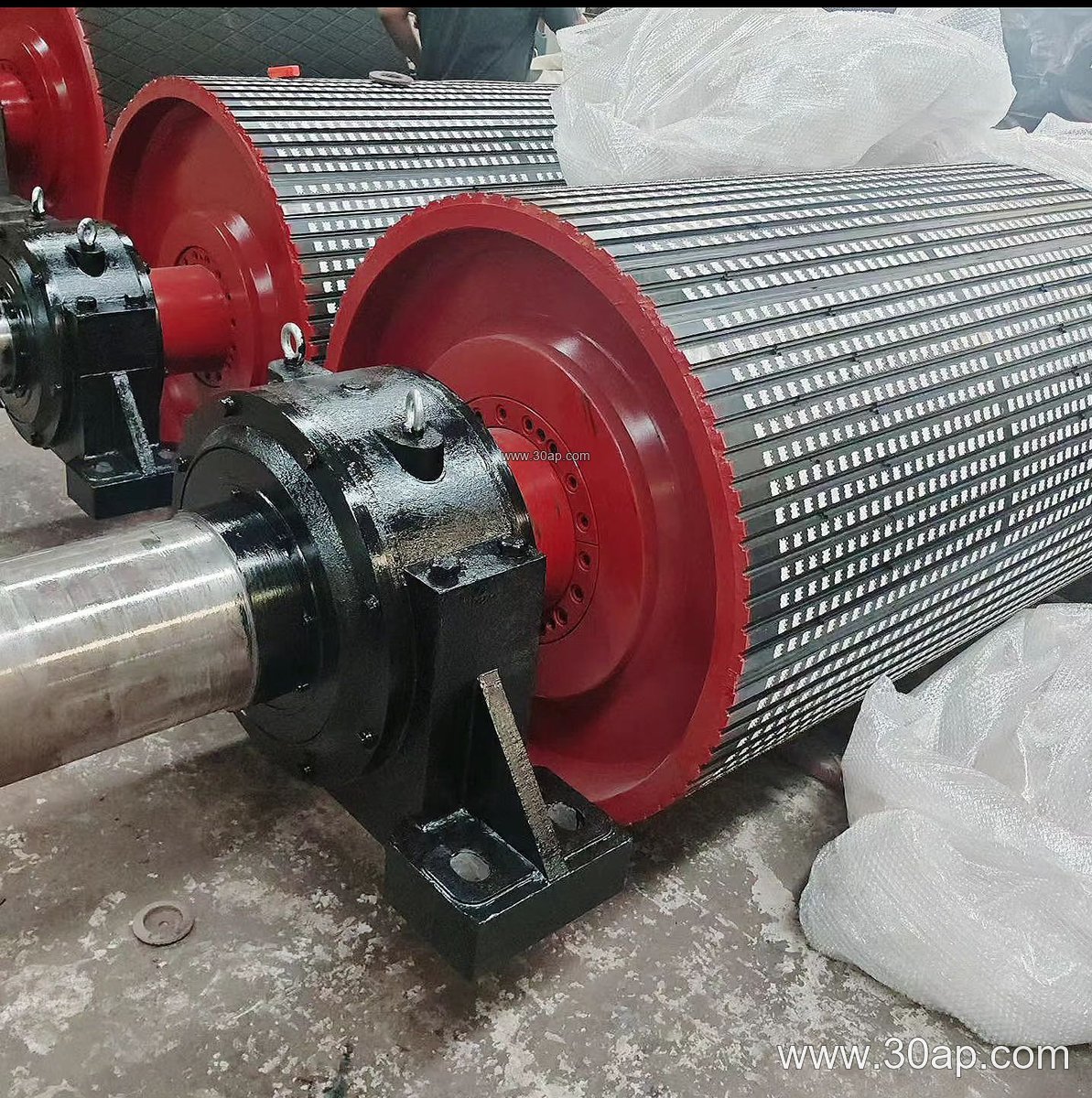
Because the tiles are hard, they resist the cutting action of fines, ore and clinker far better than plain rubber. The backing layer absorbs impact and keeps the tiles from cracking under load. A well-made assembly also pays attention to the bond line and to the edge of the lagging, since belt tracking problems often begin where the lagging ends.
Where It Fits in the Plant
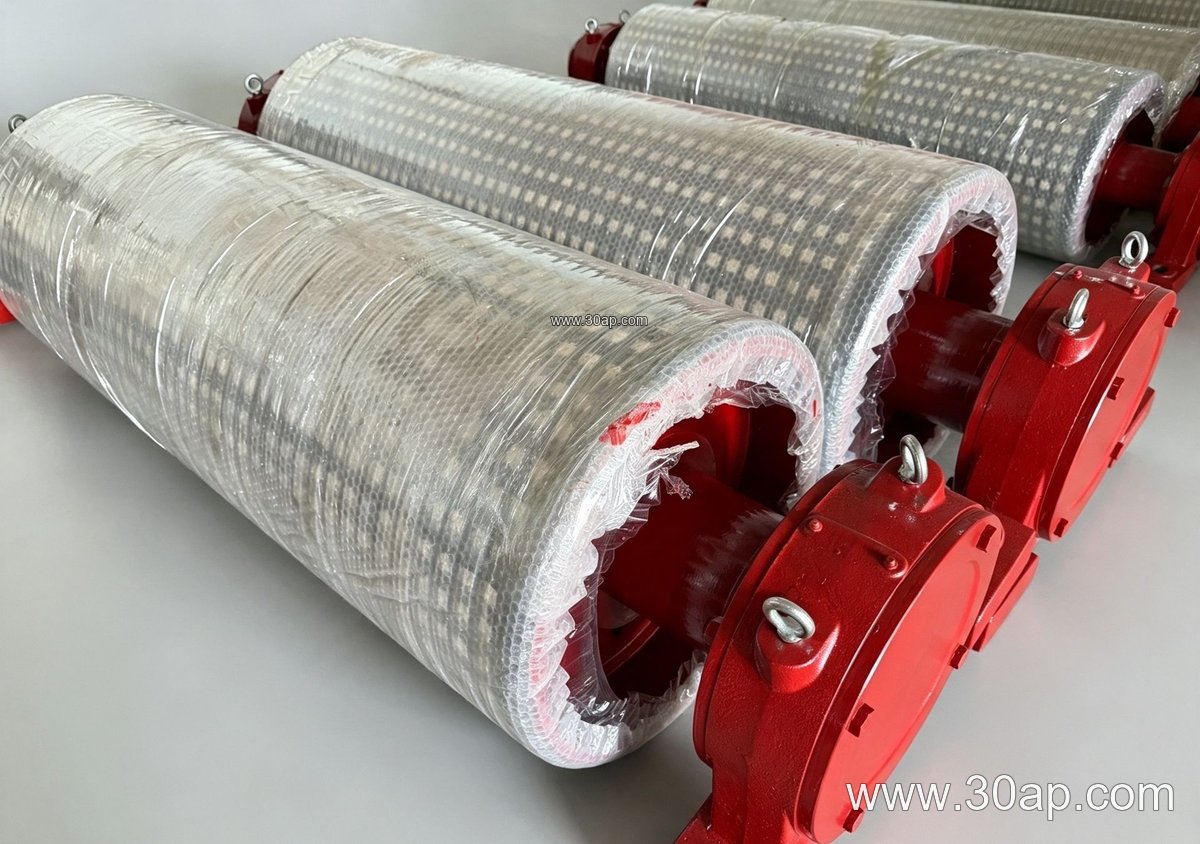
These pulleys appear where slip and abrasion occur together. Typical locations include the head or drive position on an aggregate conveyor, the tail pulley on a crusher discharge, and bend or snub pulleys on long overland lines. In cement plants they are used on clinker and raw material belts; in iron ore and copper ore operations they handle heavy, abrasive feed; in coal mining and underground coal mining conveyors they are chosen alongside flame retardant conveyor belt and anti-static conveyor belt constructions. Port bulk terminals and ship loading systems also use them where belt speeds and tonnage are high.
The choice of pulley position matters. A drive pulley needs grip to transmit power, while a tail or bend pulley mainly needs to guide the belt and resist wear. A ceramic lagged drive pulley and a ceramic lagged bend pulley may look similar, but the drive unit carries higher torque and usually needs a more robust shaft and bearing arrangement.
Common Sizes and Surface Options
Ceramic lagging can be supplied across a wide range of drum sizes. The table below gives typical reference values, not fixed rules; final dimensions follow the conveyor design.
| Parameter | Typical Reference Range |
|---|---|
| Belt width | B400, B500, B650, B800, B1000, B1200, B1400, B1600, B1800, B2000 |
| Pulley diameter | Ø200, Ø250, Ø315, Ø400, Ø500, Ø630, Ø800, Ø1000, Ø1250 |
| Lagging thickness | 8, 10, 12, 15, 20 mm |
| Shaft diameter | Ø50, Ø60, Ø70, Ø80, Ø90, Ø100, Ø120, Ø140, Ø160 |
| Face width example | B800 approximately 950 mm; B1200 approximately 1400 mm |
Examples such as B800 × Ø500 or B1200 × Ø1000 are common combinations, but one belt width does not lock the pulley to a single diameter. Shaft size is determined by torque and load, not by belt width alone. Surface forms include ceramic tile lagging, diamond ceramic lagging and grooved ceramic lagging; plain rubber or diamond rubber lagging may be considered where abrasion is mild.
Buyer Checks Before Ordering
- Confirm the pulley position: drive, tail, bend, take-up or snub. Each has different load and grip requirements.
- Match the lagging to the material: sharp rock and sinter need hard ceramic, while sticky wet material may suit a grooved pattern.
- Check belt compatibility. A heavy-duty conveyor belt or abrasion resistant conveyor belt with a thick cover tolerates ceramic lagging well; very thin covers need a smoother surface.
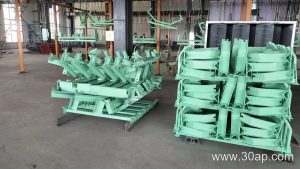
- Review the interface with the conveyor bracket and bearing housing so the assembly fits the existing frame.
- Ask for the bond method and tile pattern drawing, not just a diameter and face width.
For related conveyor components, see the conveyor pulley range and conveyor idler roller selection at ppipcc.com. A ceramic lagged pulley is a long-term wear item, so the specification should focus on bond quality, tile hardness and dimensional fit rather than on price alone.