What a Conveyor Bracket Assembly Does
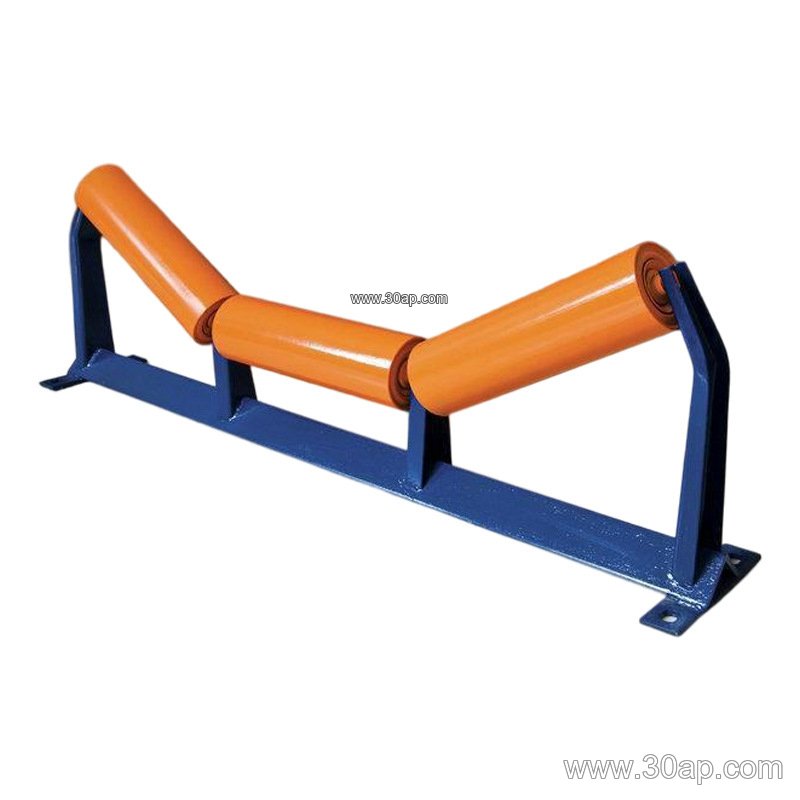
A conveyor bracket assembly is the steel structure that holds the idler rollers in the correct position under and around the conveyor belt. It is not a single part but a small frame made of angles, channels, or folded plate, drilled and welded so that idlers sit at the right height, spacing, and trough angle. In a quarry or a cement plant, this bracket is what keeps the belt from sagging between support points and what sets the belt profile that carries the load.
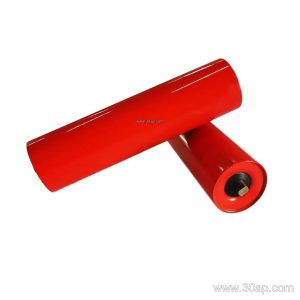
Because the assembly works together with the conveyor belt, the idler roller, and the conveyor pulley, small errors in bracket alignment show up quickly as belt wander, edge wear, or spillage. A well-built bracket assembly therefore matters as much as the belt itself.
How the Assembly Is Built
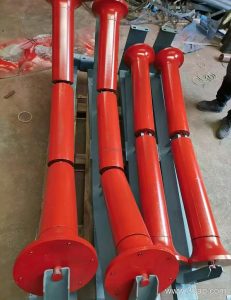
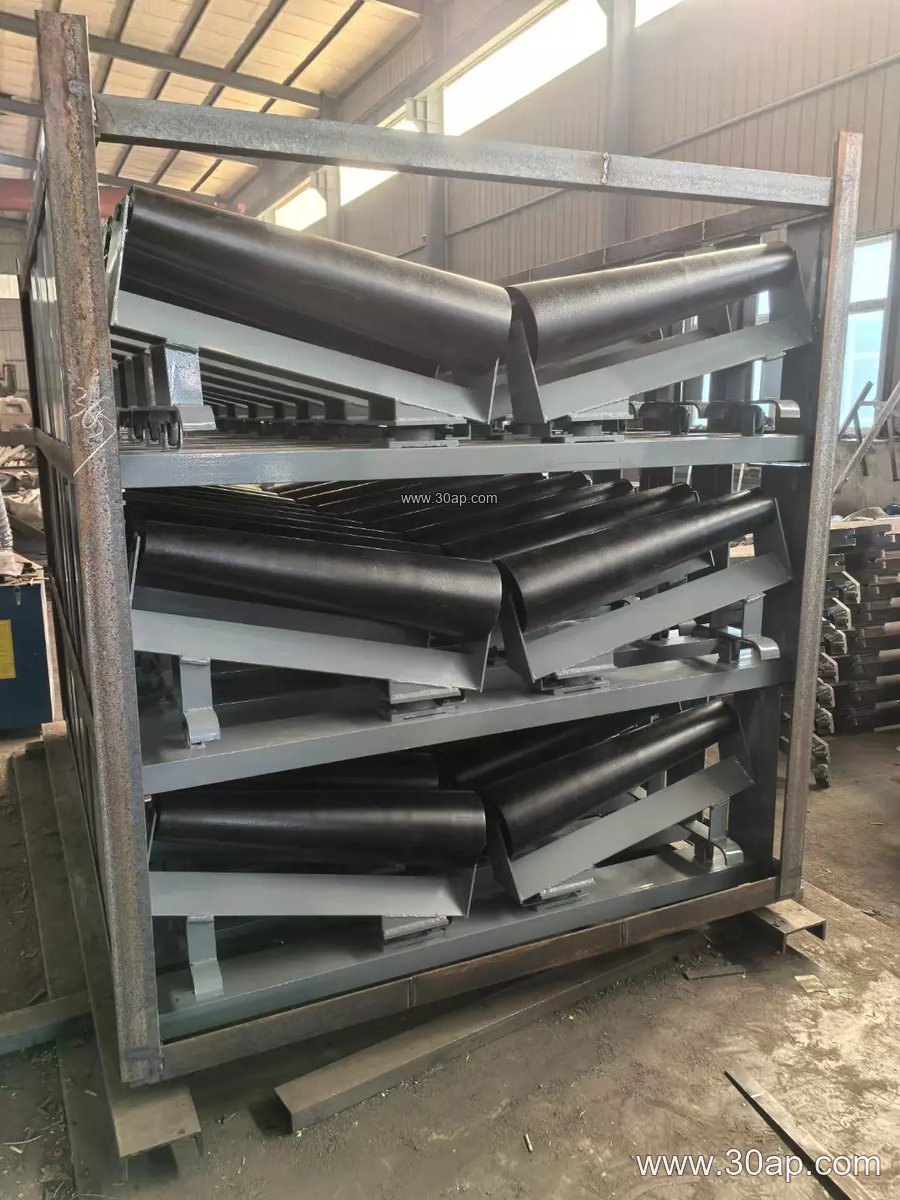
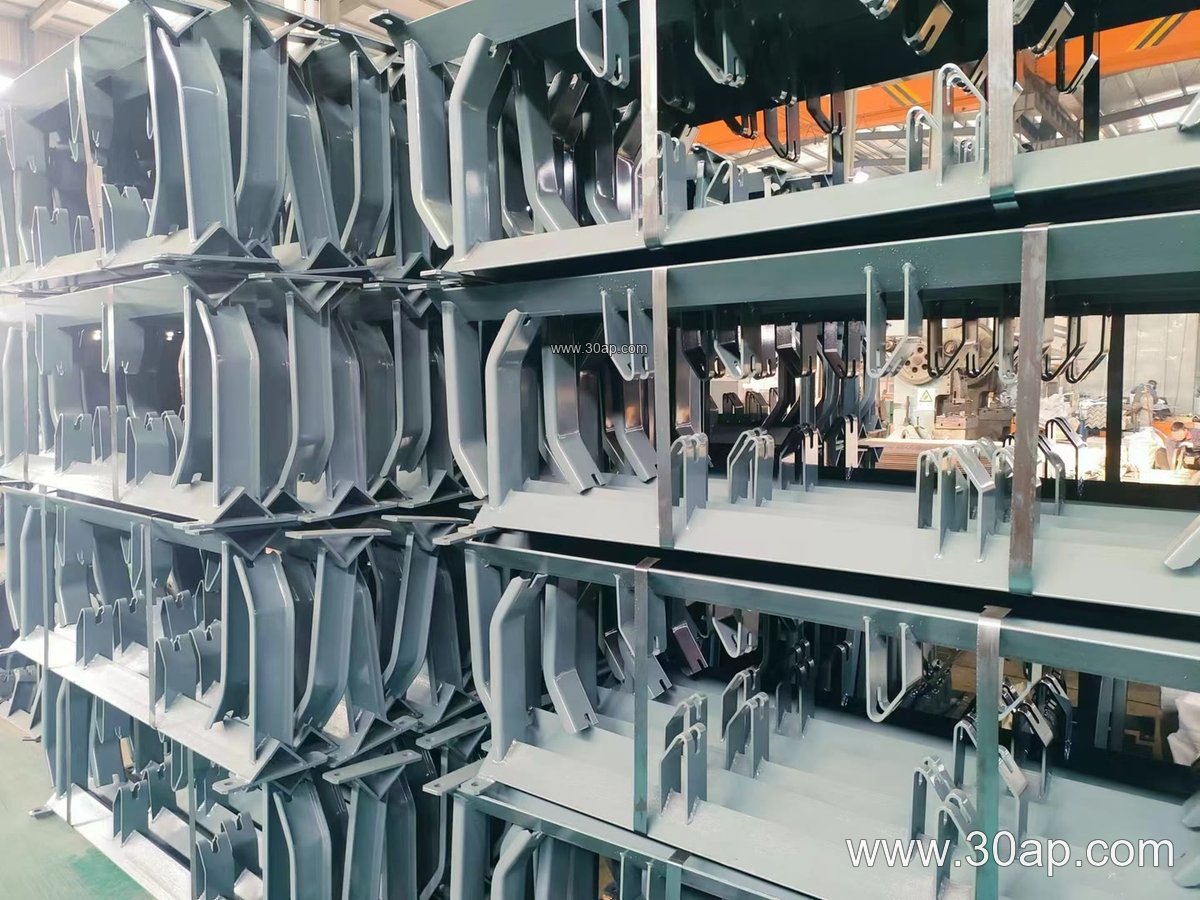
Most assemblies are fabricated from angle steel or channel steel, with folded plate used where a lighter or more compact frame is needed. The frame carries mounting slots for the idlers, a crossbeam that spans the belt width, and fixing points for the conveyor frame. Common configurations include:
- Trough bracket for the carrying side, with two or three idler positions
- Transition bracket placed near a pulley to guide the belt from flat to troughed
- Return bracket and V-return bracket for the empty side
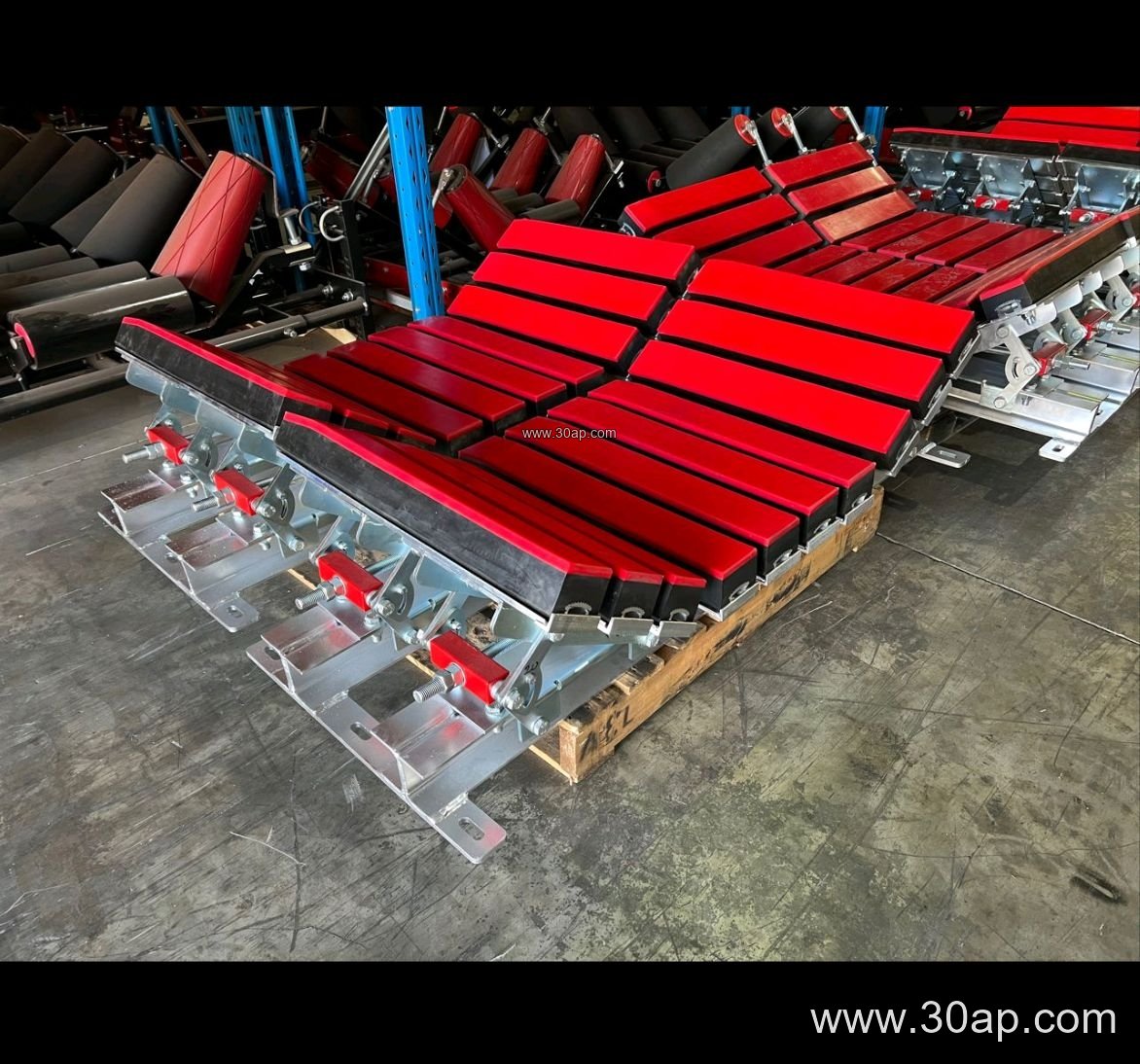
- Impact bracket under loading points, often paired with impact idlers
- Self-aligning bracket for belt tracking, and forward-leaning versions for training
- Suspended and adjustable designs for difficult mounting positions
Adjustable brackets allow the trough angle to be set between roughly 20 and 45 degrees, which is useful when one conveyor handles several materials. Forward-leaning brackets are usually set at about 1.5 to 2 degrees.
Matching Bracket, Belt, and Idler
The bracket is selected around belt width, trough angle, and idler diameter. Common belt widths run from B500 and B650 up through B800, B1000, B1200, B1400, B1600, B1800, B2000, and B2200, while typical idler diameters include Ø89, Ø108, Ø133, Ø159, and Ø194. These are reference ranges, not fixed pairings: a B800 belt may run at 30 or 35 degrees with Ø108 idlers depending on load and speed, and a B1200 line at 45 degrees with Ø133 is equally common. Mounting hole spacing and crossbeam length change with belt width and trough angle, so they are always confirmed at design stage.
| Belt width | Trough angle | Idler diameter |
|---|---|---|
| B650 | 30 degrees | Ø89 |
| B800 | 35 degrees | Ø108 |
| B1000 | 35 degrees | Ø108 or Ø133 |
| B1200 | 45 degrees | Ø133 |
| B1400 to B1800 | 35 to 45 degrees | Ø159 or Ø194 |
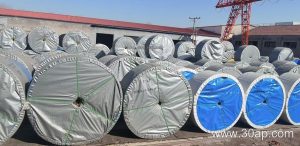
Heavy-duty lines carrying abrasive ore or coal often use a high abrasion resistant conveyor belt, while hot clinker or sinter calls for a heat resistant conveyor belt. Where a long overland route is involved, a steel cord conveyor belt reduces splice count, and the bracket spacing is adjusted accordingly.
Where These Assemblies Are Used
In a limestone quarry or a sand and gravel line, trough brackets carry the belt through the crushing and screening stages, while impact brackets sit below the crusher discharge. In a coal washing plant or a power plant coal yard, flame retardant conveyor belt and self-aligning brackets work together to keep the belt centred on long inclined runs. Cement plants use them on clinker and raw meal lines, and port terminals use them on ship loading conveyors where belt widths of 1800 mm or more are common.
Buyer Checklist
Before ordering, confirm the belt width, the intended trough angle, the idler diameter, and the hole pattern on the existing conveyor frame. Ask whether the frame is fixed or adjustable, and check the steel thickness and surface treatment for the site conditions. For corrosive or wet locations, mention the environment so the supplier can advise on coating. It also helps to state the belt type in use, since a pipe conveyor belt or a corrugated sidewall conveyor belt may need a different bracket layout than a flat troughed belt. Finally, order brackets together with the idlers so that the assembly is tested as a set rather than matched on site.