What Is an EP630 Conveyor Belt
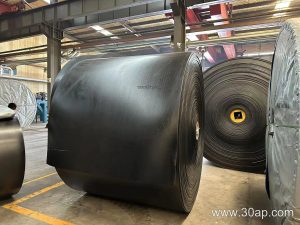
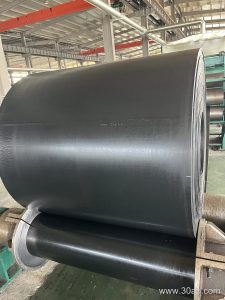
The EP630 Conveyor Belt is a multi-ply fabric core belt built around polyester (EP) warp and nylon weft cords. The designation “630” refers to the nominal tensile strength of the carcass, typically expressed in newtons per millimeter of belt width. In practical terms, this is a mid-to-high strength class within the EP family, sitting above EP500 and below EP800. It is the kind of belt specified when a conveyor must carry substantial loads over long centers without stepping up to a steel cord construction. Buyers often encounter it under the equivalent name EP Rubber Conveyor Belt or EP Fabric Core Conveyor Belt, and all three terms describe the same product.
The polyester-nylon carcass gives the belt low elongation in service and good resistance to fatigue. Compared with an NN Conveyor Belt, which uses nylon in both warp and weft, the EP630 offers better dimensional stability under tension, which matters on long overland or incline conveyors where take-up travel is limited.
Construction and Typical Specifications
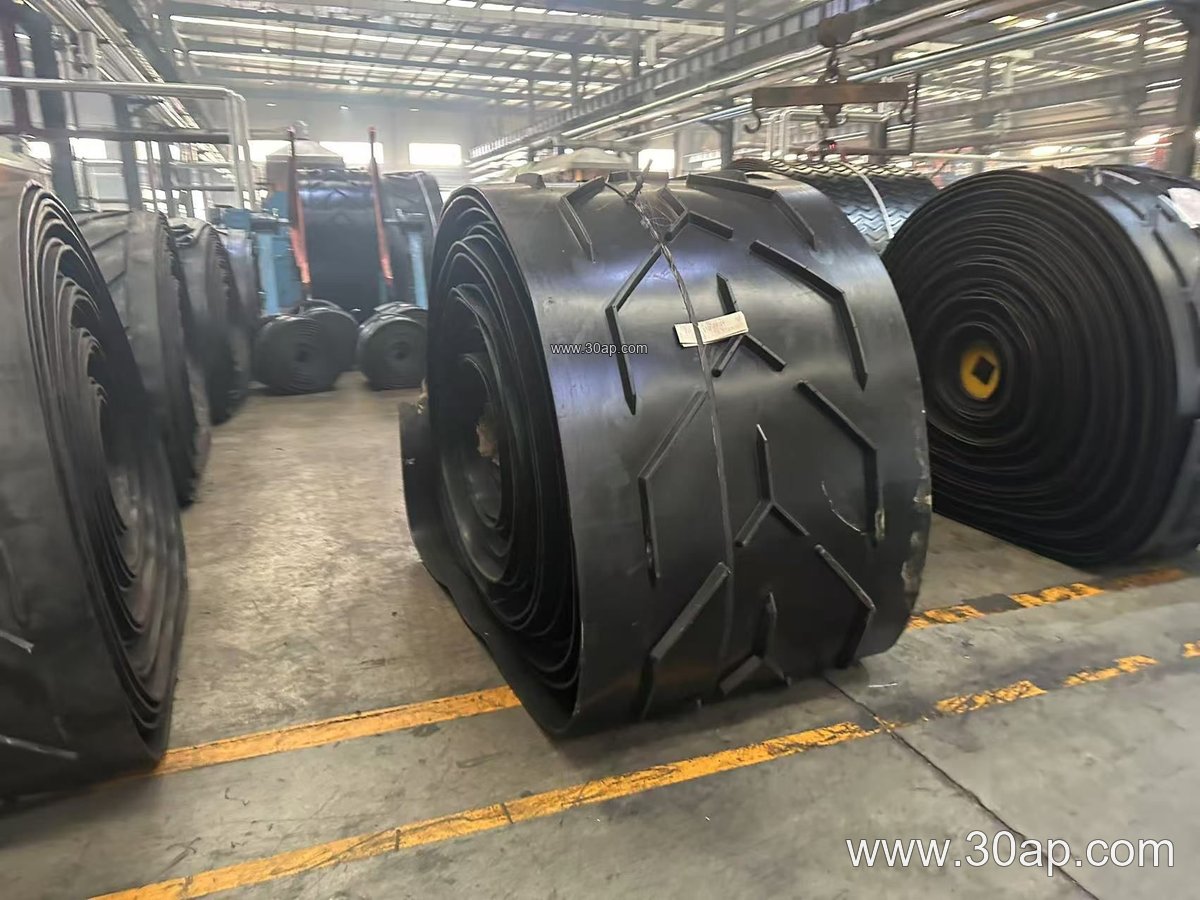
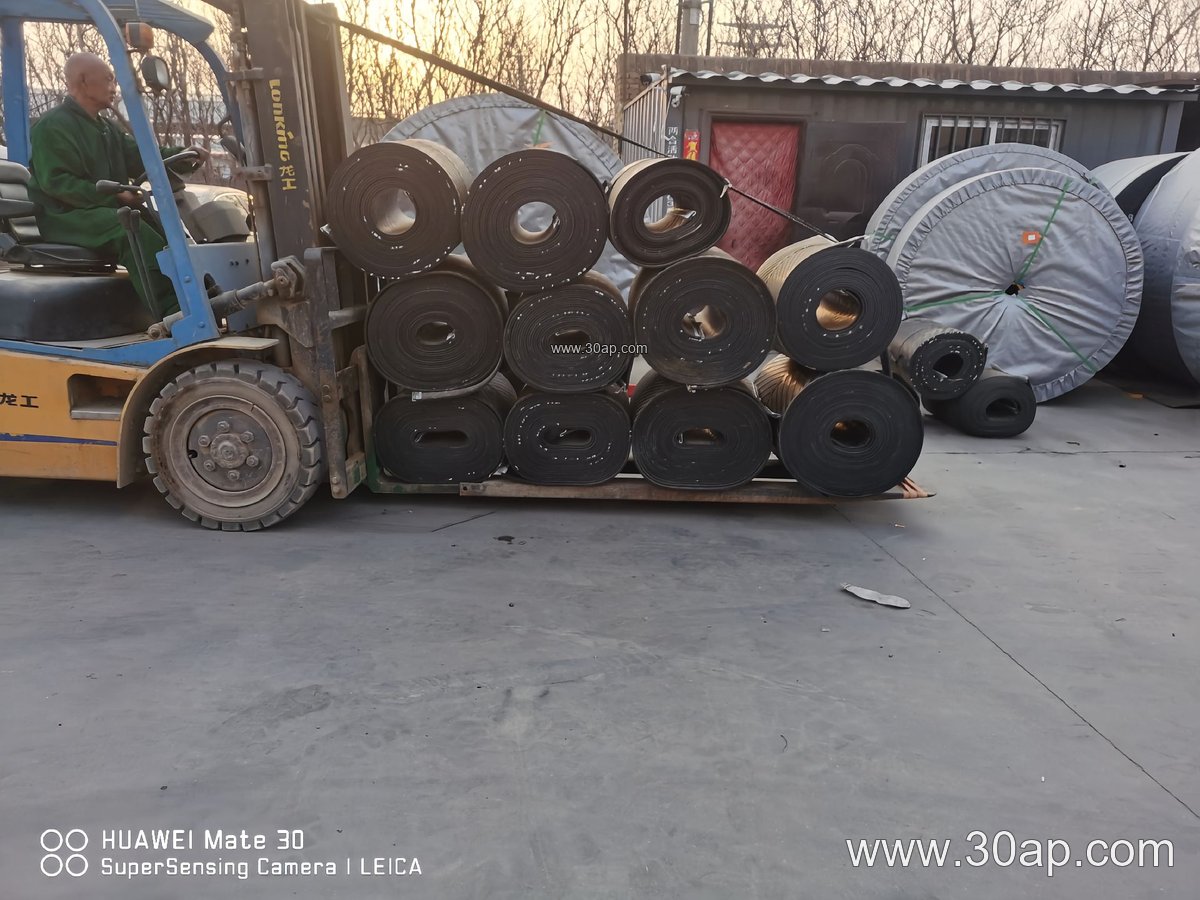
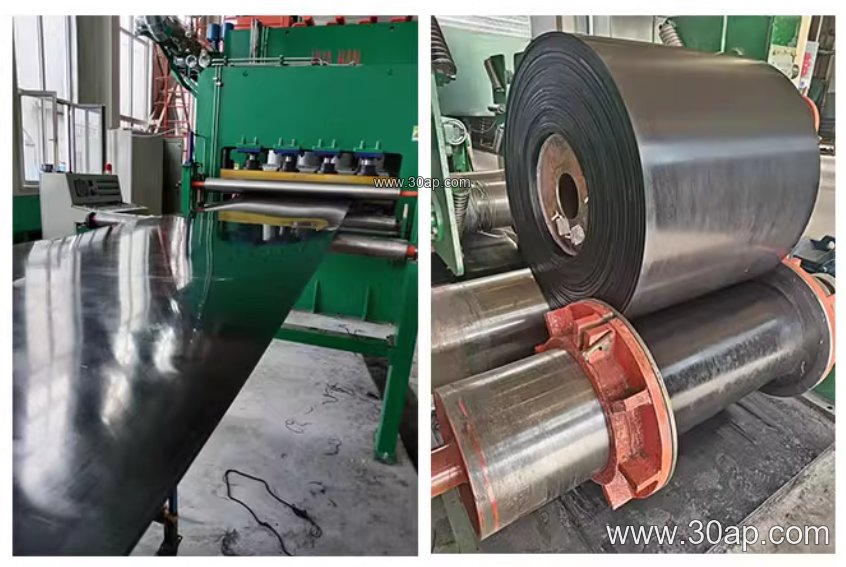
An EP630 belt is usually supplied with two to five fabric plies, depending on the manufacturer and the duty. Cover rubber grades are selected to match the material being handled. Common cover thickness combinations include 4+2 mm, 5+2 mm and 6+2 mm, with heavier builds available for abrasive duty. The table below summarizes indicative values; actual figures are confirmed by the supplier for each order.
| Parameter | Common Range or Value |
|---|---|
| Belt type | EP630 / EP Rubber Conveyor Belt |
| Carcass | Polyester-nylon fabric, multi-ply |
| Nominal strength | 630 N/mm |
| Number of plies | 2 to 5 (typical) |
| Cover thickness | 4+2, 5+2, 6+2 mm (common) |
| Belt width | B650, B800, B1000, B1200, B1400, B1600 (typical) |
| Surface form | Smooth, or chevron / corrugated sidewall on request |
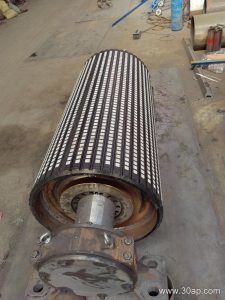
Widths outside this list, such as B500 or B1800, may be available depending on the plant. There is no fixed rule that a given belt width must pair with one specific pulley diameter; the drive pulley, tail pulley and bend pulleys are sized from the conveyor’s tension and wrap requirements, not from belt width alone.
Where the EP630 Belt Fits
This strength class is widely used in quarry conveyors, aggregate plants, cement works, power stations and general bulk material handling. It suits primary and secondary crushing circuits, stockyard feed lines and ship loading conveyors where lump size and tonnage are moderate to high. In mining, it may appear on surface haulage and ore conveyor lines, though underground coal mining conveyors frequently require a flame retardant conveyor belt or PVG construction instead. For very long, high-tension routes, a steel cord conveyor belt is often the better choice; the EP630 remains the practical option for medium-duty fabric-core systems.
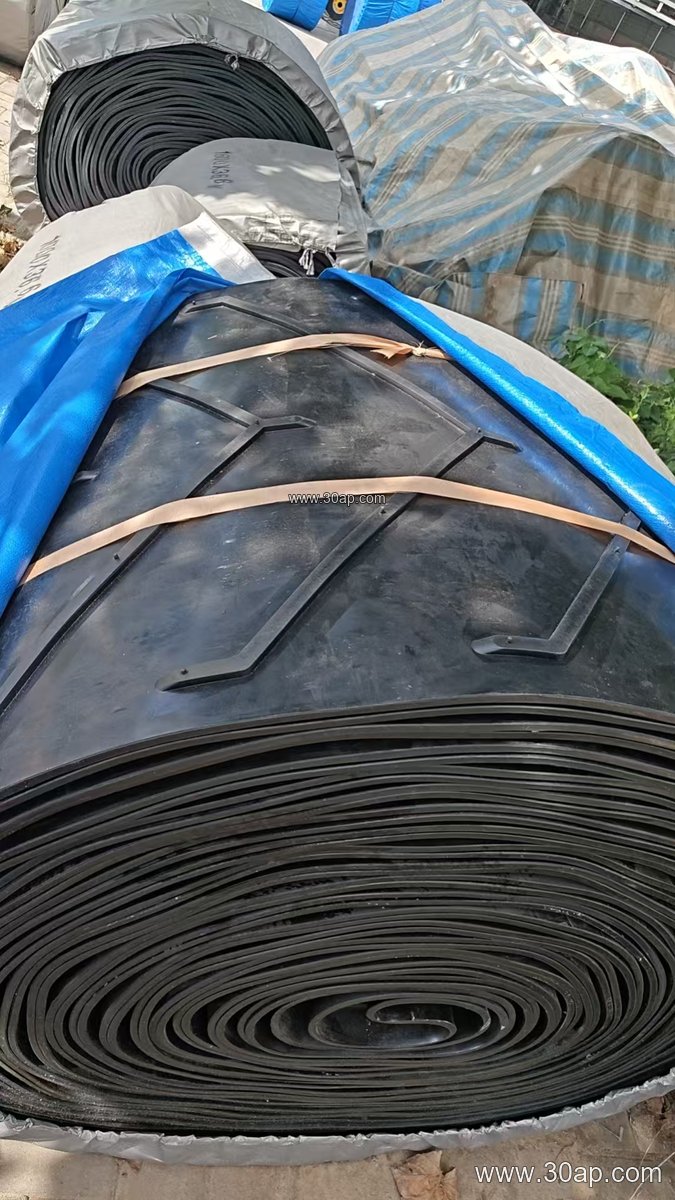
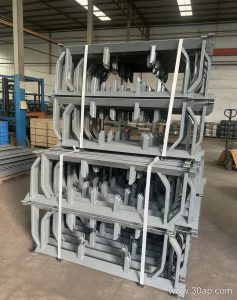
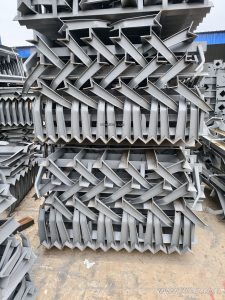
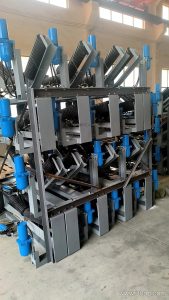
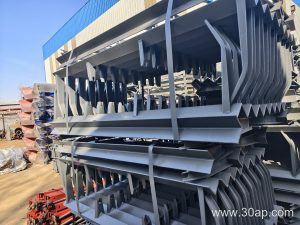
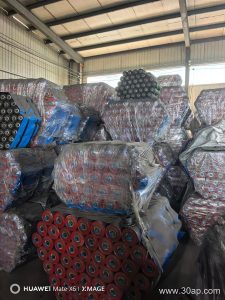
Related components such as the idler roller, conveyor pulley and conveyor bracket should be matched to the belt’s thickness and load so that training and splice life are not compromised. A chevron conveyor belt or corrugated sidewall conveyor belt is a different surface form and is selected when incline or material containment demands it, not as a substitute for the standard EP630.
Selection and Maintenance Notes
- Confirm the actual maximum tension and safety factor before choosing EP630 over EP500 or EP800.
- Match cover grade to the cargo: abrasion resistant for rock and ore, heat resistant near clinker or sinter, oil resistant for recycled material.
- Check pulley diameters and shaft sizing with the conveyor designer; these are not derived from belt width alone.
- Keep idler roller alignment and pulley lagging in good condition to protect the carcass from edge damage.
- Store belts away from ozone sources, direct sunlight and sharp folds.
For buyers comparing fabric-core belts, the EP630 Conveyor Belt occupies a useful middle ground. It is stronger than lighter EP grades, more stable than an all-nylon carcass, and less costly than steel cord. The correct choice still depends on the measured duty of the conveyor, and the final specification should be confirmed against the supplier’s data sheet for each order.