What an Anti-Slip Lagged Pulley Does
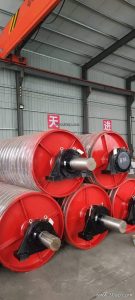
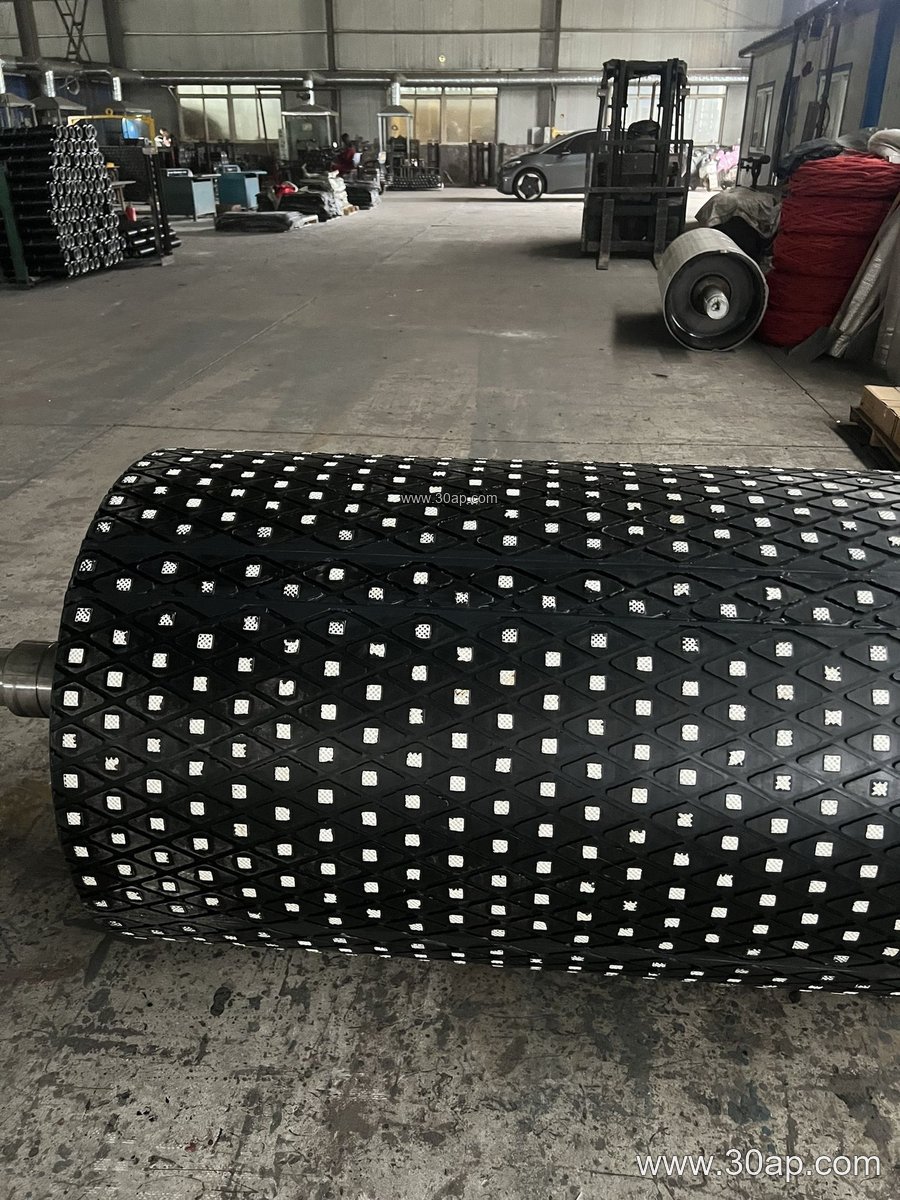
An anti-slip lagged pulley is a conveyor pulley whose shell carries a rubber or ceramic lagging layer designed to raise friction between the drum face and the conveyor belt. The lagging reduces belt slip under starting torque, wet conditions, or heavy loading, and it also protects the pulley shell from wear. In practice, this pulley is often a drive pulley, but the same friction-improving surface can be applied to a bend pulley or a tension pulley where grip matters. Drive, tail, and bend pulleys are separate positions with different duties, so the anti-slip design should be specified for the actual location rather than assumed.
In a quarry conveyor line, a slippage problem usually shows up as belt squeal, slow belt speed, or visible polishing of the drum face. A properly lagged pulley addresses that symptom at the source by improving the friction pair between the belt and the drum, while a worn plain shell may keep slipping even after tension is increased.
Construction and Surface Forms
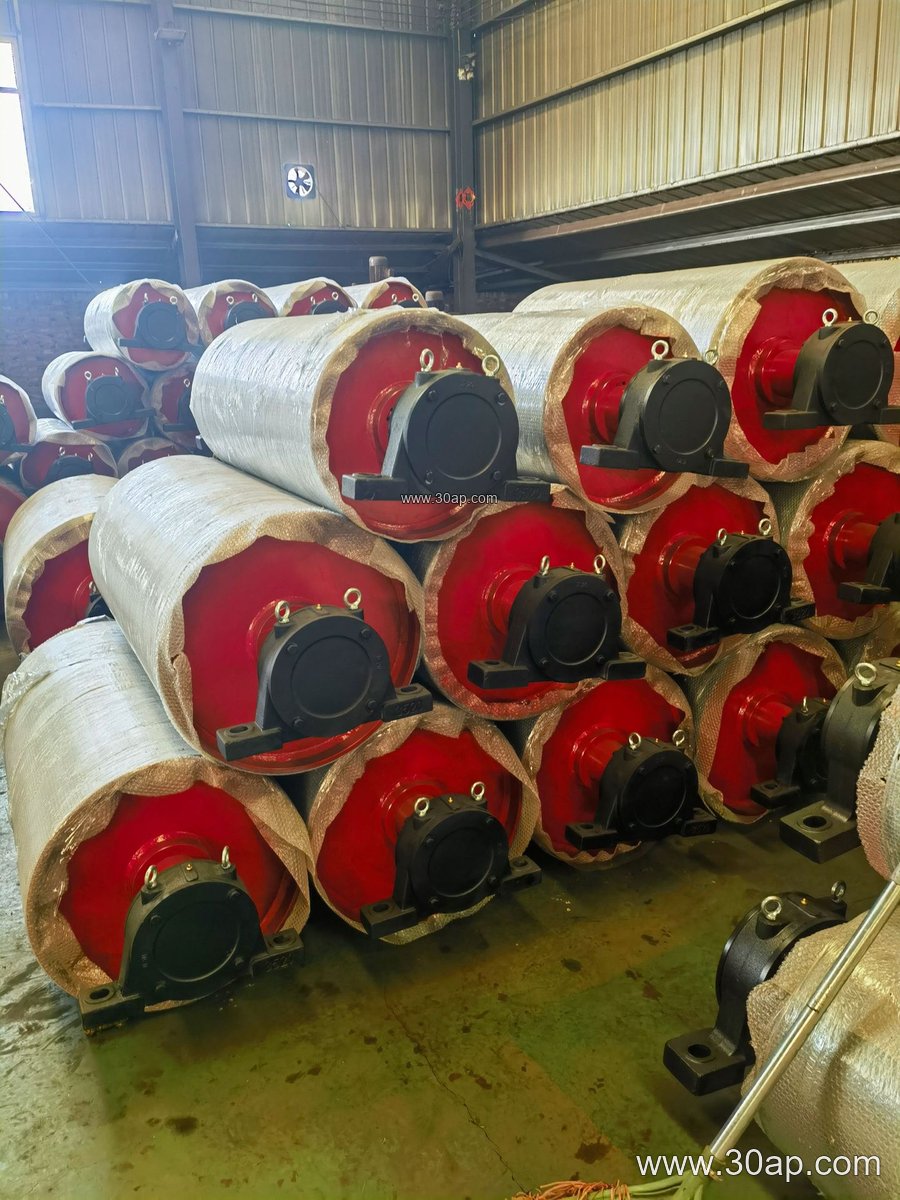
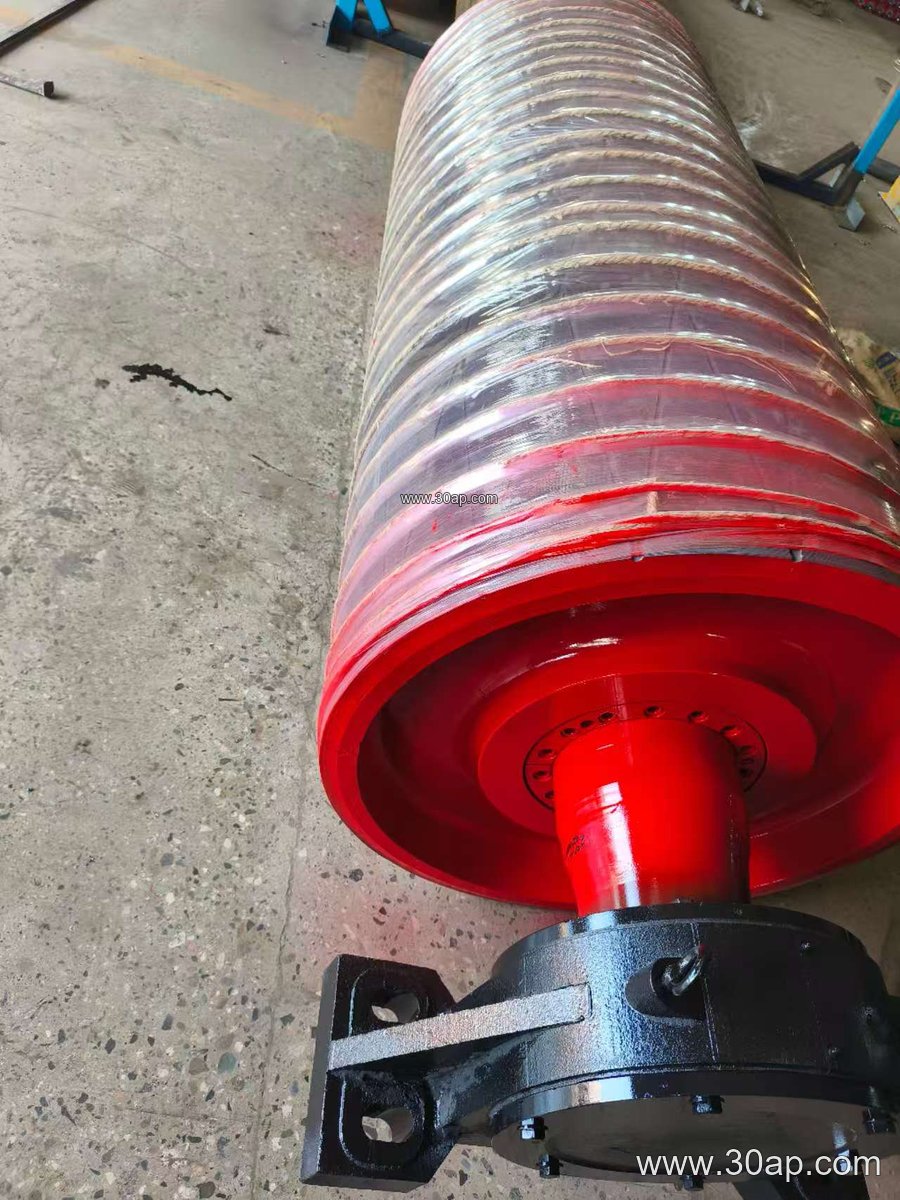
The core is usually a welded steel shell with shafts, hubs, and bearing housings. Lagging is bonded to the shell by hot vulcanization, cold bonding, or cast-on rubber. Common surface patterns include diamond lagging, herringbone lagging, plain sheet rubber, and ceramic lagging. Thickness typically ranges from 8 mm to 20 mm, with 10 mm and 12 mm often used on medium-duty drives and 15 mm or 20 mm on heavier duties.
Typical Reference Combinations
The values below are reference data for discussion, not fixed universal specifications. Final dimensions depend on torque, belt tension, and the pulley position in the conveyor.
| Belt width | Typical pulley face width | Example diameter | Example lagging |
|---|---|---|---|
| B500 | about 600 mm | Ø400 | 10 mm diamond rubber |
| B800 | about 950 mm | Ø500 | 12 mm diamond rubber |
| B1000 | about 1150 mm | Ø630 | 12 mm or 15 mm rubber |
| B1200 | about 1400 mm | Ø800 or Ø1000 | 15 mm rubber or ceramic |
| B1400 | about 1600 mm | Ø800 to Ø1000 | 15 mm rubber or ceramic |
| B1600 | about 1800 mm | Ø1000 | 15 mm or 20 mm ceramic |
Shaft diameter is set by torque and bearing load, not by belt width alone. Common shaft sizes include Ø80, Ø100, Ø120, Ø140, Ø160, and Ø180, but a B1200 pulley may use different shaft sizes depending on the drive arrangement. It is also incorrect to assume one belt width matches only one pulley diameter; a B1000 conveyor may run a Ø630 drive pulley in one plant and a Ø800 pulley in another.
Where It Fits in a Conveyor
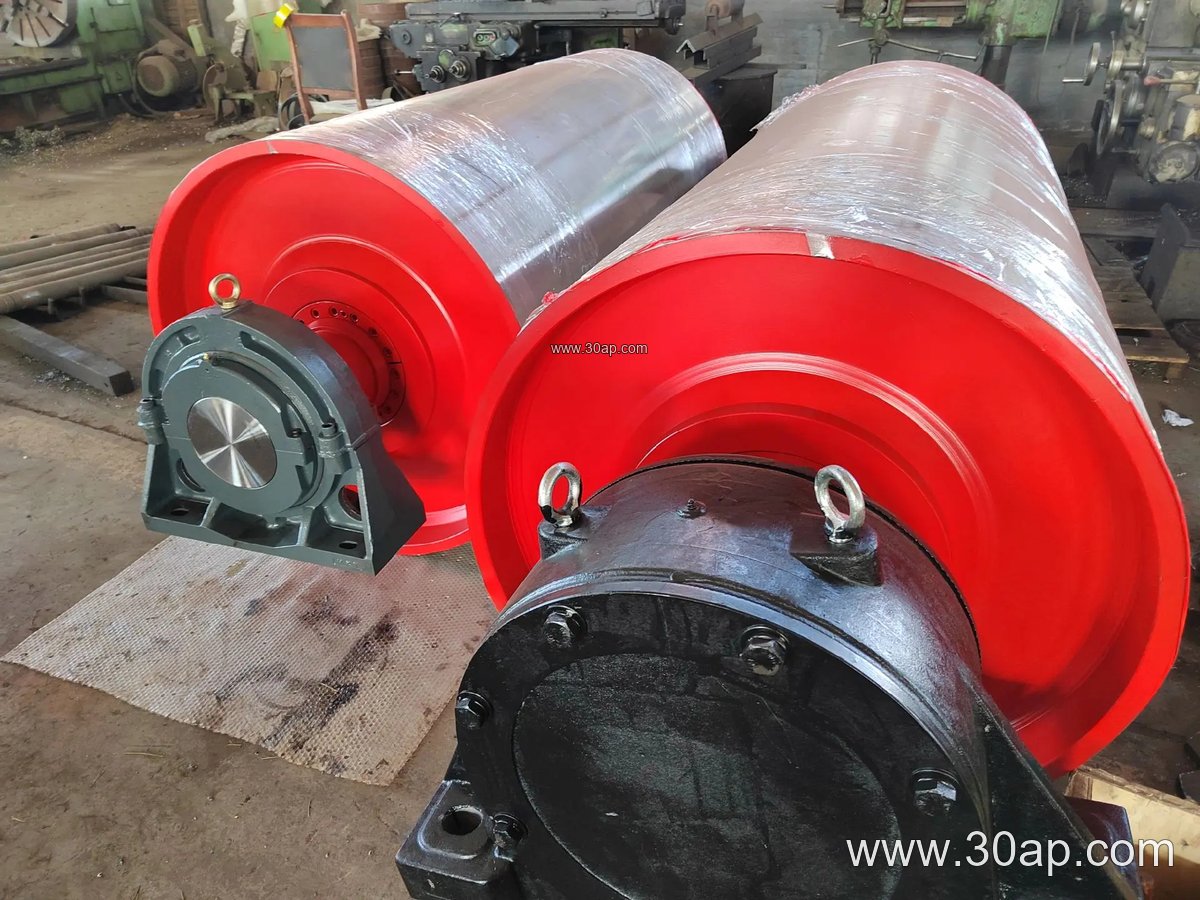
Anti-slip lagging is most valuable where the belt must transmit high traction: the head drive of a stone crushing line, the drive of a cement plant clinker conveyor, or a coal handling conveyor in a power plant. A rubber lagged drive pulley works well with abrasive bulk material, while ceramic lagging is often chosen where the drum face stays wet or oily. In a coal preparation plant, a flame retardant conveyor belt may run alongside this pulley, and the lagging material should be selected with the same fire-safety thinking in mind.
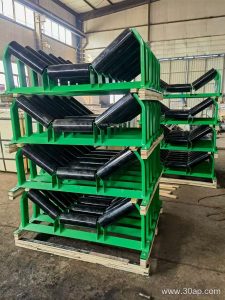
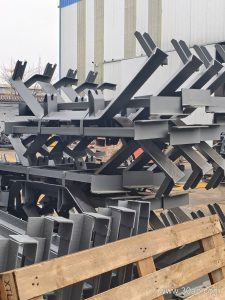
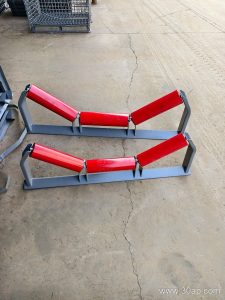
The pulley works with the conveyor belt, conveyor idler rollers, and conveyor brackets as one system. If the belt is a heavy-duty mining conveyor belt or a steel cord conveyor belt with high tension, the pulley shell, lagging bond, and shaft must be matched to that load. A common mistake is to upgrade the lagging while ignoring the bearing housing or the conveyor bracket stiffness.
Buyer Checklist
- Confirm the pulley position: drive, bend, tension, or tail. The anti-slip surface is usually specified for a drive or high-traction position.
- State belt width, belt type, and belt tension so the face width and shell thickness can be checked.
- Choose lagging thickness and pattern for the environment: diamond rubber for general grip, ceramic for wet or oily drums, plain rubber where cleaning is easy.
- Verify shaft diameter from torque and bearing load, not from belt width alone.
- Ask how the lagging is bonded and whether the pulley can be re-lagged later.
An anti-slip lagged pulley is a small part of the conveyor but a decisive one for starting reliability. Matching it to the belt, the load, and the pulley position is what keeps a quarry, cement plant, or power plant line running without repeated slip stops.