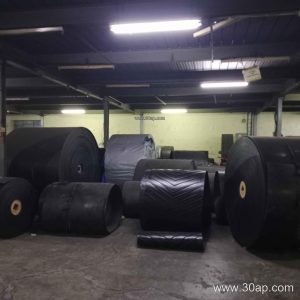
What an NN100 Conveyor Belt Is
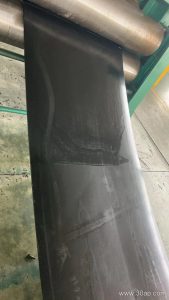
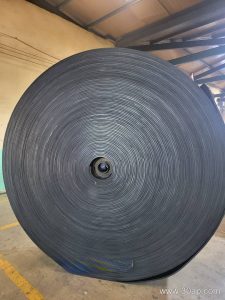
An NN100 Conveyor Belt is a fabric core belt built with nylon (NN) warp and weft cords, rated at 100 N/mm of tensile strength per ply. It belongs to the broader family of NN Conveyor Belt products, where the nylon fabric gives the carcass high elasticity, good fatigue resistance and strong resistance to impact loading. In plant rooms and transfer points, this belt is often chosen when the conveyor needs to absorb shock from lumpy feed without transferring excessive stress to the pulleys and frame.
The naming is straightforward. “NN” identifies the nylon fabric carcass, and “100” refers to the nominal breaking strength of a single ply. A two-ply or three-ply NN100 belt therefore develops roughly 200 or 300 N/mm of rated strength, depending on construction. Buyers comparing it with an EP Conveyor Belt should note that EP (polyester warp, nylon weft) generally offers lower elongation, while nylon carcasses stretch more and recover well under repeated flexing.
Construction and Cover Compounds
The carcass is the load-bearing element. Multiple plies of nylon fabric are bonded with rubber skim compound, then protected by top and bottom cover rubber. A typical build for general bulk handling uses 2 to 6 plies, with cover gauges such as 3+1.5 mm, 4+2 mm, 5+2 mm, 6+2 mm or 8+3 mm. These figures are common references, not fixed rules; the final gauge should follow the duty and the design of the conveyor.
Cover compound determines how the belt behaves in service. Standard abrasion resistant rubber suits sand, gravel and crushed stone. A heat resistant Conveyor Belt grade is used where material arrives warm, for example in cement plants and power plant ash handling. A flame retardant Conveyor Belt with anti-static properties is the usual choice for underground coal mining, while an oil resistant grade fits workshops handling oily scrap or components. NN100 itself describes the carcass, so the cover can be selected independently to match the site.
Where It Fits in a Conveying System
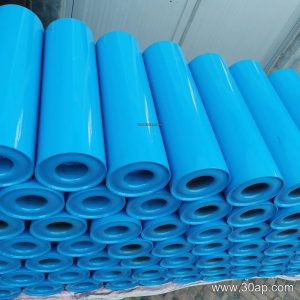
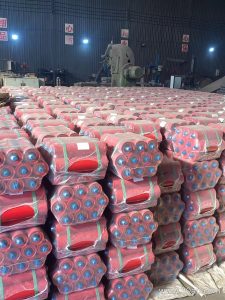
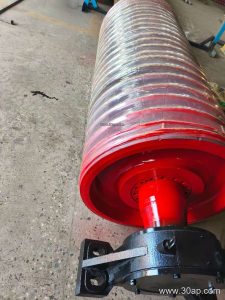
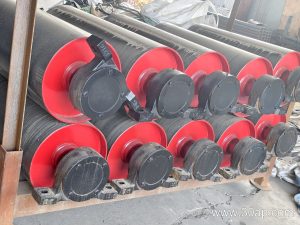
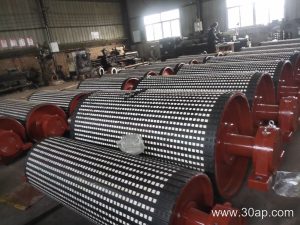
The belt runs over a conveyor pulley at the head and tail, is supported by idler roller sets along the carry and return sides, and is held in line by conveyor bracket frames. Drive, tail and bend pulleys each do a different job and are not interchangeable, so belt tension, pulley lagging and take-up travel must be considered together rather than as separate items.
Typical duty locations include:
- Aggregate and quarry lines feeding screens and crushers, where an Abrasion Resistant Conveyor Belt cover is common.
- Cement plants moving clinker, limestone and additives on medium-length conveyors.
- Coal handling and underground coal mining circuits, using flame retardant and anti-static grades.
- Iron ore, copper ore and other mineral transfer points where impact resistance matters.
- Sand making and stone crushing plants with short, steep or reversing belts.
Because the nylon carcass tolerates flexing over relatively small pulleys, NN100 is often found on conveyors with moderate center distances and multiple bends. For very long overland routes or high tonnage, a Steel Cord Conveyor Belt or a higher-strength NN Conveyor Belt grade may be more appropriate.
Reference Parameters
The following values are indicative ranges used in general design discussions. Actual specifications should be confirmed against the conveyor calculation and the manufacturer’s data sheet.
Carcass and Strength
- Nominal strength: 100 N/mm per ply
- Common ply counts: 2 to 6
- Related grades in the same family: NN200, NN300, NN400
Belt Width and Cover Options
- Common widths: B500, B650, B800, B1000, B1200, B1400, B1600
- Cover gauges: 3+1.5 mm, 4+2 mm, 5+2 mm, 6+2 mm, 8+3 mm
- Cover types: abrasion resistant, heat resistant, flame retardant, oil resistant, anti-static, cold resistant
Width and pulley diameter are matched by conveyor design, not by a single fixed rule. A wider belt does not automatically require one specific pulley size, and shaft diameter must be calculated from torque, load and bearing selection.
Selection and Buyer Checklist
Start with the material: lump size, temperature, moisture, oil content and abrasiveness. Then confirm the required tensile strength using the conveyor’s calculated working tension and the safety factor. Check whether the installation is underground and needs flame retardant and anti-static approval, or whether a heat resistant Conveyor Belt compound is needed at a kiln or boiler discharge.
Other points worth reviewing before ordering:
- Pulley diameters at drive, tail and bend positions, plus take-up allowance.
- Idler roller spacing and trough angle, which affect belt sag and edge stress.
- Loading conditions at the chute, where impact beds or buffer idlers reduce carcass damage.
- Splice method, since nylon carcasses can be vulcanized or mechanically joined depending on the application.
- Whether the belt should be supplied as an Endless Conveyor Belt for a specific frame.
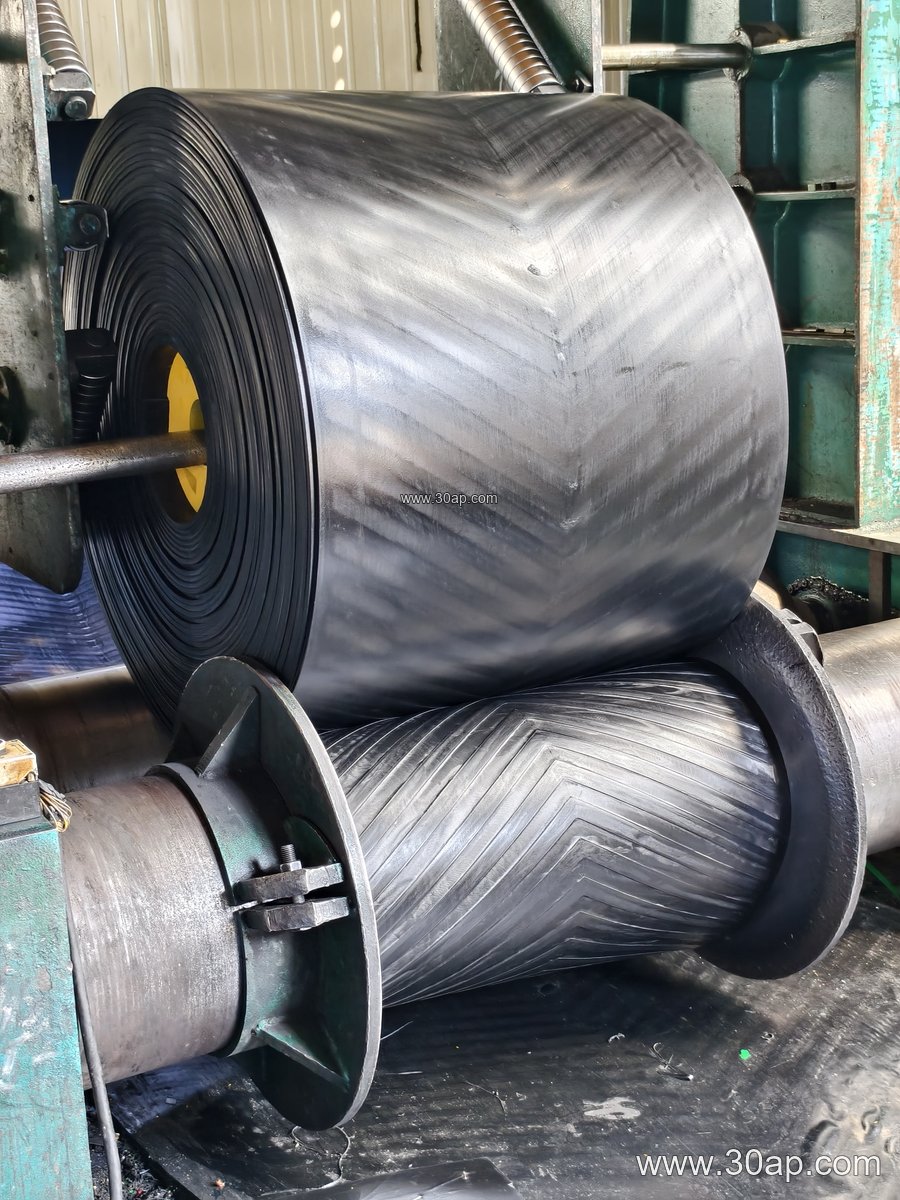
For specialized paths, a Chevron Conveyor Belt, Corrugated Sidewall Conveyor Belt or Pipe Conveyor Belt may solve an incline or spillage problem that a flat NN100 belt cannot. These are different constructions, not substitutes, so the choice should come from the conveyor layout.
Installation and Maintenance Notes
Correct alignment at the start prevents most edge wear. Center the belt on the tail pulley, check that all conveyor bracket frames are square, and verify that idler roller sets are perpendicular to the belt path. Keep the skirt rubber clear of the belt surface so it does not trap material. During operation, watch for cover wear at the loading point, ply separation at splices, and elongation that exceeds the take-up range.
Store spare belts flat and away from direct sunlight, and rotate stock so the rubber does not age unevenly. When replacing a section, match the carcass type and cover grade; mixing an NN100 belt with a different fabric core on the same conveyor can create uneven stretch and tracking problems.