What a Conveyor Frame Does on the Line
A conveyor frame is the structural backbone that holds idlers, pulleys and belts in alignment along the entire run. In a quarry, cement plant or coal handling system, the frame carries the weight of the belt and the material while keeping every component at the correct height and angle. Without a rigid, well-aligned frame, even a premium EP conveyor belt or a heavy-duty steel cord conveyor belt will track poorly, wear at the edges and demand frequent adjustment.
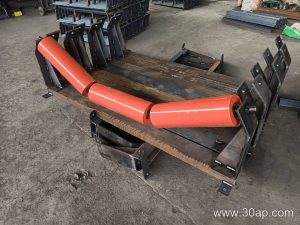
The frame is not a single part. It is a system of stringers, cross beams, brackets and supports that together form the conveyor’s load-bearing structure. Each section is designed around the belt width, the trough angle and the idler diameter, so the frame and the idler roller work as one unit rather than as separate purchases.
How the Frame Is Built
Most frames are fabricated from angle steel, channel steel or folded steel plate. The choice depends on span, load and the environment. A frame for a 1200mm wide conveyor in a crushing circuit is substantially heavier than one for a 650mm belt in a small aggregate line.
Typical components include:
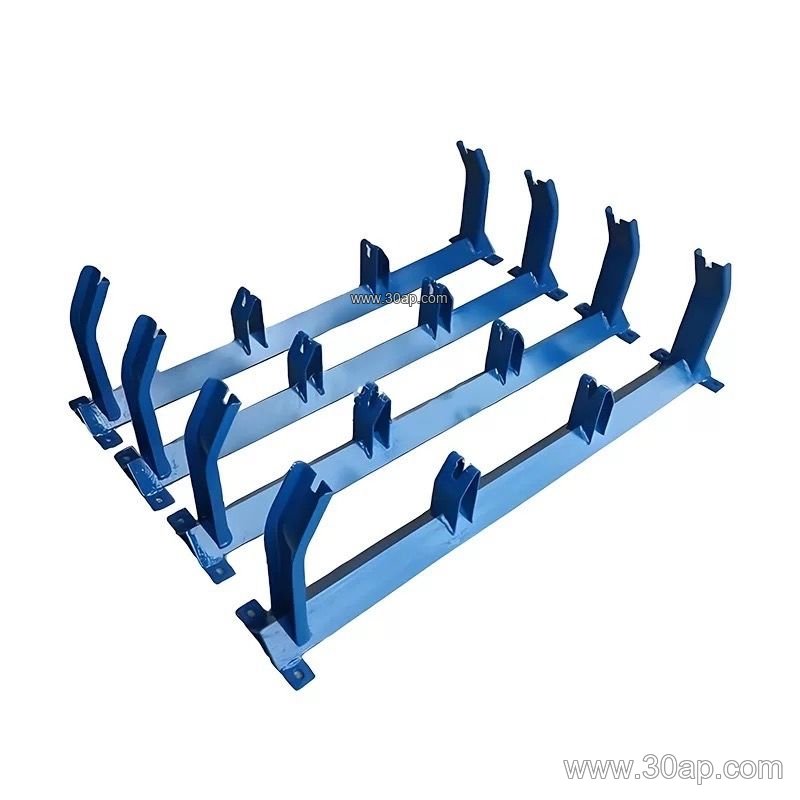
- Longitudinal stringers that run the length of the conveyor
- Cross beams that set the trough angle and support the idler brackets
- Conveyor brackets that locate and clamp the idlers
- Legs, bents or trestles that transfer load to the ground or structure
Frames are usually bolted rather than welded on site, which allows adjustment and replacement. Alignment of the frame directly affects how the belt sits on the idlers, so fabrication tolerances matter as much as steel thickness.
Trough Angle and Belt Width Go Together
The trough angle determines how deeply the belt is cupped and therefore how much material it can carry. Common angles are 20, 30, 35 and 45 degrees. A 35-degree frame is a frequent choice for bulk material, while 45 degrees suits finer, more free-flowing loads. Adjustable frames allow the angle to be changed within a range, which helps when material characteristics vary.
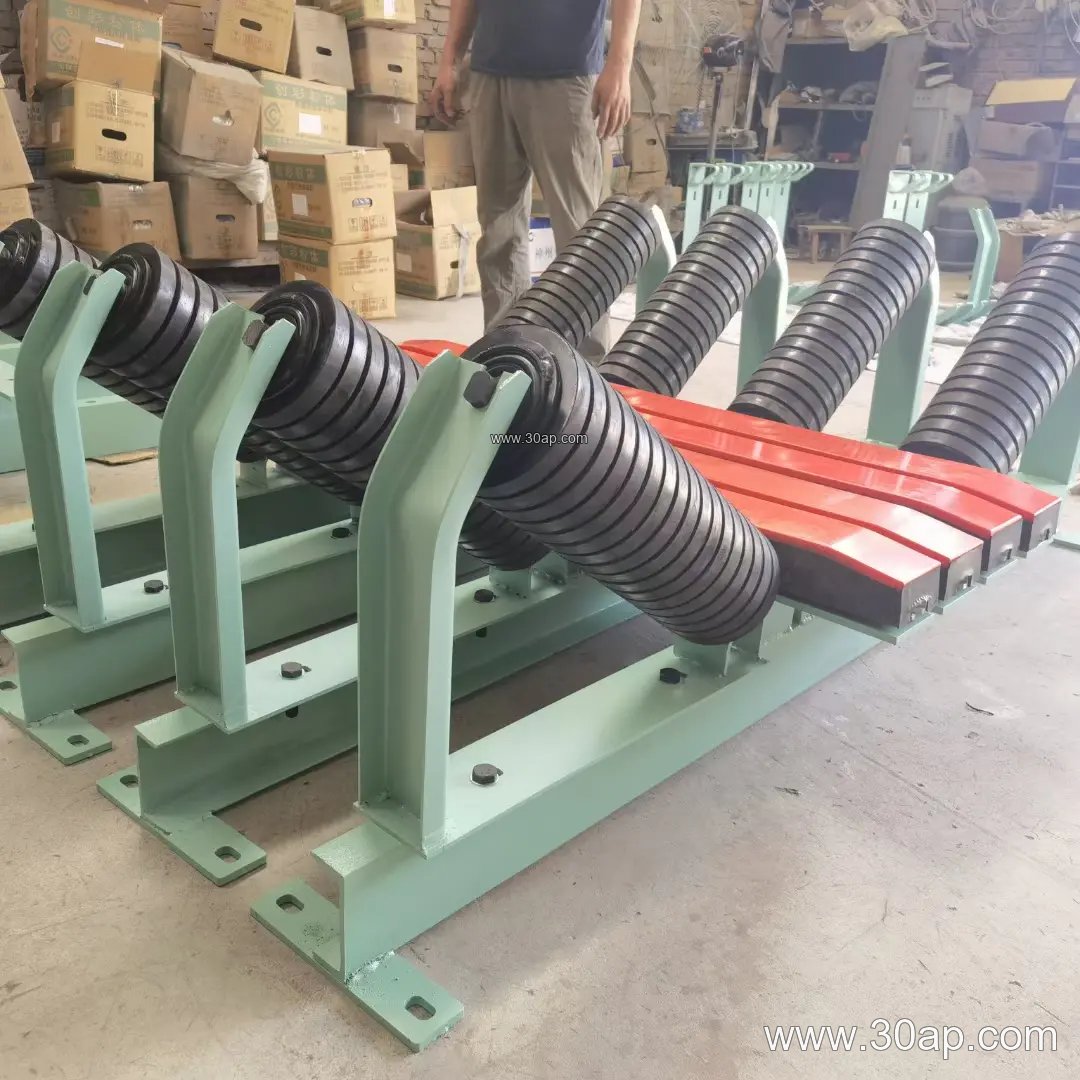
Belt width and idler diameter should be matched to the load, not treated as a fixed formula. Some representative combinations that appear in design work:
| Belt Width | Trough Angle | Idler Diameter | Typical Use |
|---|---|---|---|
| B650 | 30 degrees | Ø89 | Light aggregate, small plant |
| B800 | 35 degrees | Ø108 | Sand and gravel lines |
| B1000 | 35 degrees | Ø133 | Cement and power plant duty |
| B1200 | 45 degrees | Ø133 | Crusher feed, high tonnage |
| B1400 | 35 degrees | Ø159 | Mining and port terminals |
| B1600 | 45 degrees | Ø194 | Heavy ore and coal handling |
These are reference examples only. Mounting hole spacing and beam length change with belt width and trough angle, and should be confirmed against the actual idler drawing before fabrication.
Frame Types and Where They Fit
On the carrying side, trough idler frames hold three or more rolls in a cupped profile. Transition frames ease the belt from flat to troughed over a short distance, reducing stress at the pulley. On the return side, flat return frames and V-return frames support the empty belt and help with tracking.
Impact frames with cushioning idlers sit under the loading point, where falling rock or ore would otherwise damage the belt. Self-aligning frames correct minor misalignment, while forward-leaning frames provide a gentle centering effect. Suspended frames are used where the structure cannot carry conventional legs, such as in some tunnel or transfer applications.
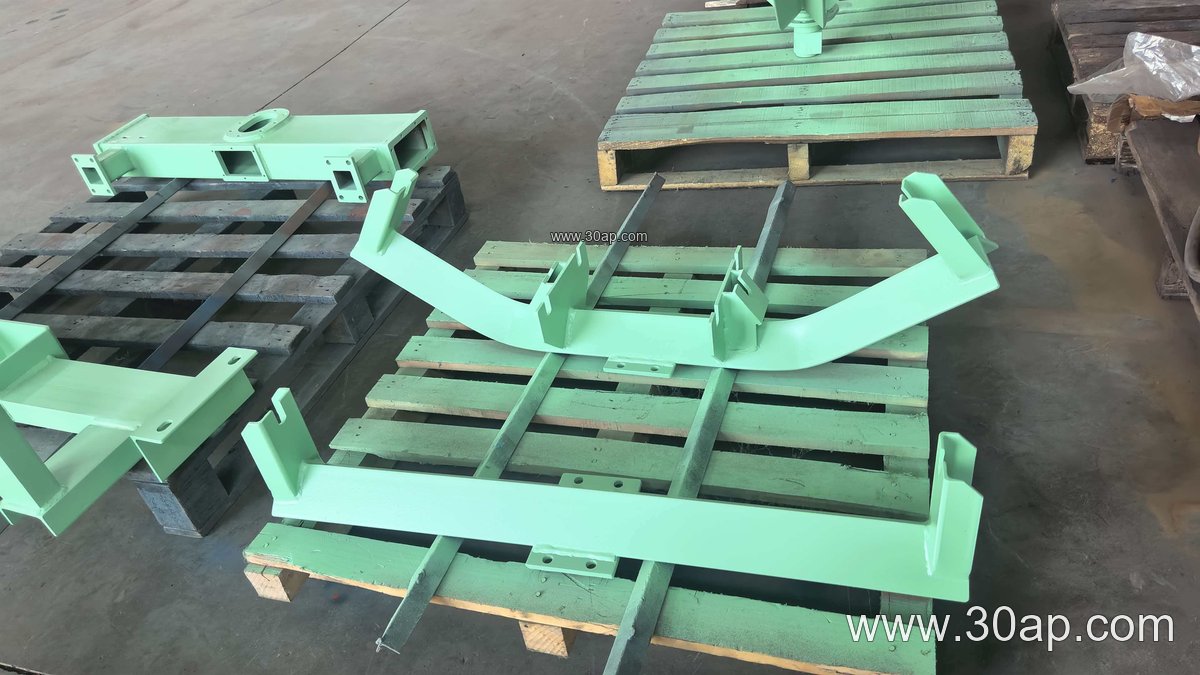
All of these are frame variants for the same product family. They are not interchangeable with drive, tail or bend pulleys, which perform a completely different function in the conveyor drive system.
Applications Across Industries
Frames appear wherever bulk material moves continuously. In a limestone quarry, a 35-degree frame with Ø133 idlers may carry crusher output to the screening building. In a coal washing plant, flame retardant and anti-static belting runs on frames designed for dusty, potentially hazardous conditions. Cement plants, power station coal yards and iron ore terminals all rely on the same structural principles, with steel thickness and support spacing adjusted for load and span.
A properly specified frame extends the life of the rubber conveyor belt, reduces edge damage and keeps the conveyor pulley running true. For very wide belts, extra-wide frames with additional cross bracing are common, and these often pair with high-strength belting such as EP1000 or steel cord constructions.
What Buyers Should Check
- Confirm belt width, trough angle and idler diameter as a set, not in isolation.
- Ask for the frame drawing showing hole spacing and beam length for the specific configuration.
- Check steel section size against the load and support span, especially at transfer points.
- Decide between fixed and adjustable frames based on whether operating conditions will change.
- Verify that brackets match the idler shaft and that the frame allows for field alignment.
- Consider corrosion protection for ports, fertilizer plants and other wet or chemical environments.
For more on matching frames with belting and rollers, see the component notes at www.example.com/conveyor-frame and the related pages on www.example.com/idler-roller. A frame that is correctly sized and well aligned is the quiet foundation of every reliable conveyor line.