What a 1000mm Conveyor Belt Is
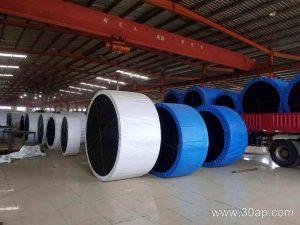
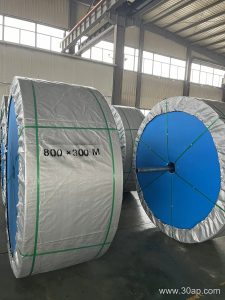
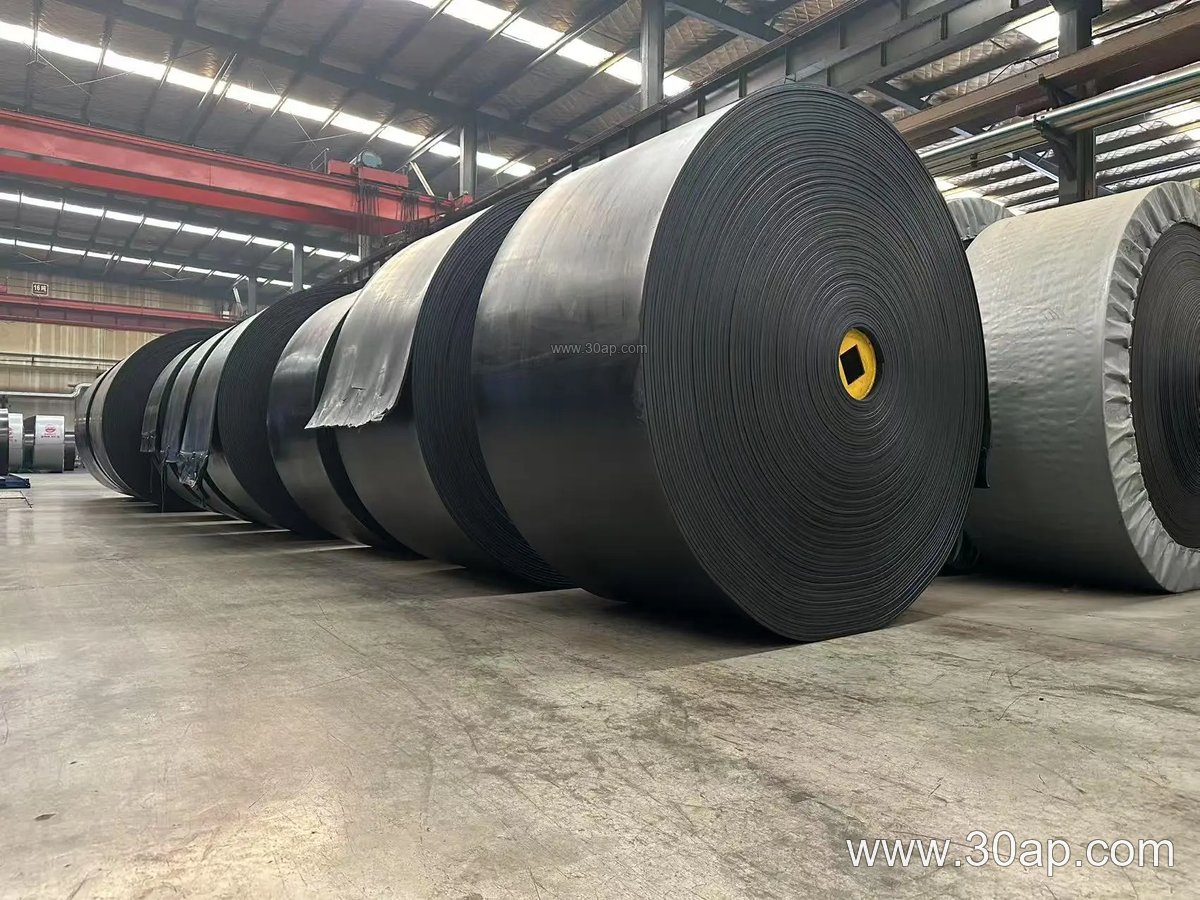
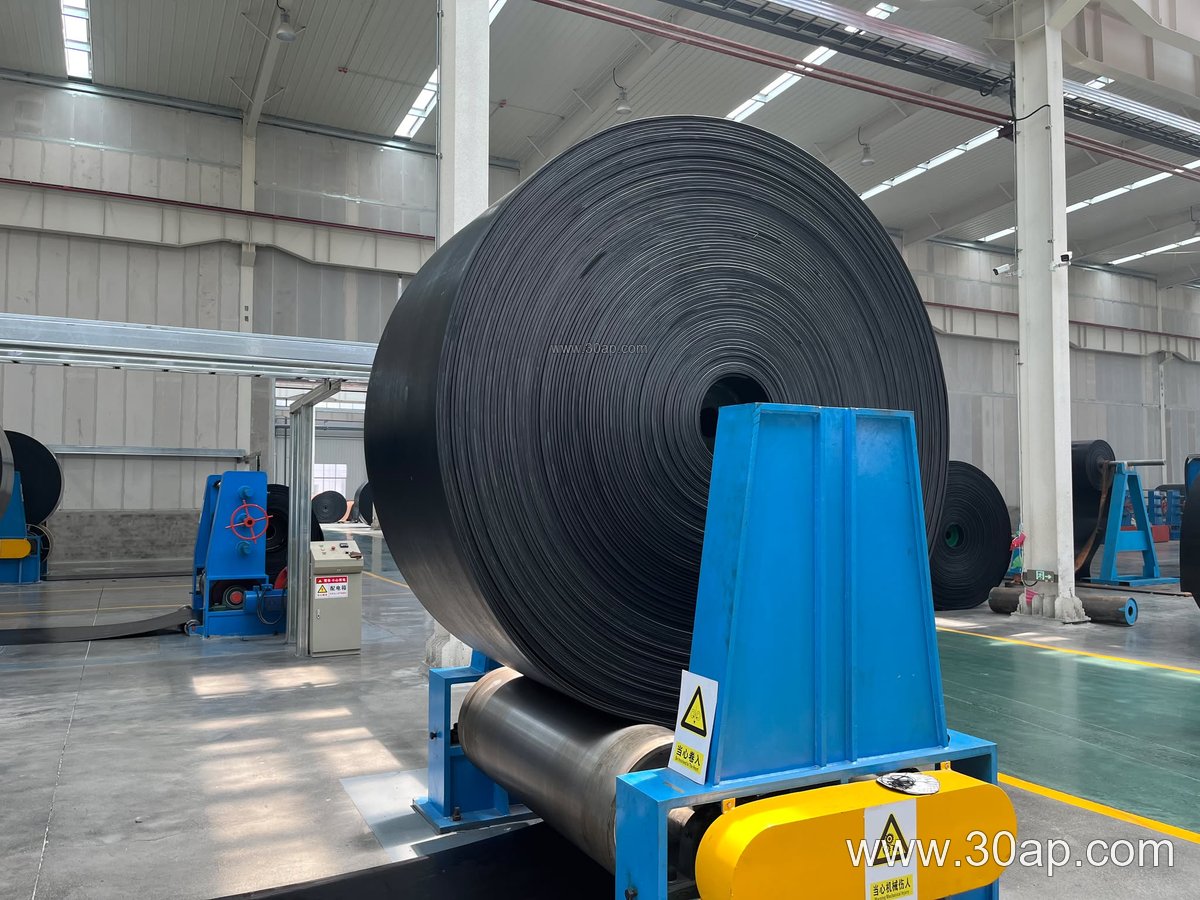
A 1000mm conveyor belt is a belting product with a nominal width of one meter, often written as B1000 in specification sheets. It sits in the middle-to-heavy range of standard belt widths, which makes it a common choice for moving bulk materials at a steady rate without building an oversized conveyor structure. In mining, coal preparation, cement plants, power stations, and sand and gravel yards, this width offers a practical balance between capacity and the cost of frames, idler rollers, and pulleys.
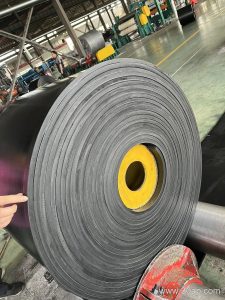
The belt itself is not a single rubber sheet. It is a composite: a tension-carrying carcass, top and bottom rubber covers, and often an edge treatment. The carcass determines strength and elongation, while the covers protect against abrasion, heat, oil, or flame depending on the working environment.
Construction and Common Specifications
A typical 1000mm belt uses a fabric carcass such as EP (polyester-cotton) or NN (nylon-nylon), or a steel cord carcass where very high tension and long center distances are involved. Cover thickness is usually quoted as top plus bottom, for example 4+2 mm or 6+2 mm. The table below shows reference values that appear in many product catalogs; actual supply should always follow the design drawing and the manufacturer’s data sheet.
| Item | Common reference values |
|---|---|
| Belt width | B1000 (1000 mm) |
| Carcass type | EP, NN, steel cord |
| Fabric strength grades | EP200, EP315, EP400, EP500, EP630, EP800, EP1000 |
| Cover thickness | 3+1.5, 4+2, 5+2, 6+2, 8+3 mm |
| Ply count | 2 to 6 layers, depending on duty |
| Surface forms | smooth, chevron, cleated, corrugated sidewall |
Special grades include wear-resistant, heat-resistant, oil-resistant, flame-retardant, anti-static, cold-resistant, and acid-alkali resistant belting. A coal mine may require flame retardancy and anti-static properties, while a cement plant often prioritizes heat and abrasion resistance.
Where a 1000mm Belt Fits in a Conveyor
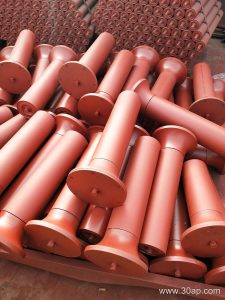
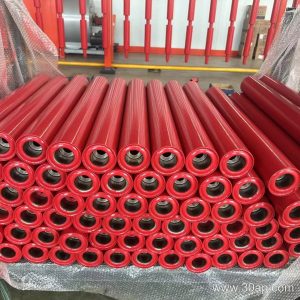
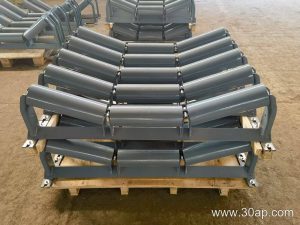
On a typical bulk handling line, the belt runs over a drive pulley at the head, a tail pulley at the loading end, and bend pulleys that redirect the path. These three pulley roles are different and are not interchangeable. The belt is supported on the carrying side by troughing idler rollers and on the return side by flat return rollers. A conveyor bracket holds the idlers and pulleys in alignment along the frame.
Because a 1000mm belt is relatively wide, it usually runs on three-roller troughing sets with a 35-degree trough angle, though the exact arrangement is set by the conveyor designer. The belt width does not dictate one fixed pulley diameter or shaft size. Pulley dimensions come from the belt tension, the required wrap angle, and the allowable surface pressure, not from the belt width alone.
Applications Across Industries
- Mining and coal: transporting run-of-mine ore, coal, and waste rock, often with flame-retardant belting.
- Cement: clinker, limestone, and additives at high temperatures, favoring heat-resistant covers.
- Power plants: coal feed and ash handling, where anti-static and wear-resistant grades are common.
- Sand and gravel: aggregate, crushed stone, and sand, where abrasion resistance extends service life.
- Ports and stockyards: medium-capacity transfer lines using EP or NN carcass belts.
In each case, the choice of 1000mm width is usually driven by the required tonnage, the material lump size, and the existing conveyor structure. It is not a universal size, and narrower or wider belts are used where the duty calls for them.
What Buyers Should Check
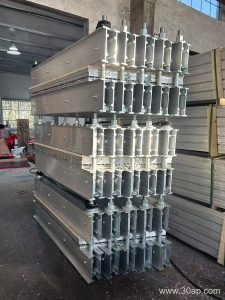
Before ordering a 1000mm conveyor belt, confirm the carcass type and strength grade, the cover thickness and rubber grade, and whether the surface needs a pattern such as chevron or a corrugated sidewall. Ask for the belt’s stated tensile strength, elongation, and recommended minimum pulley diameter. Also check the splice method: vulcanized splices are common for long runs, while mechanical fasteners may suit shorter or temporary lines.
Operating conditions matter as much as the belt itself. Abrasive material, high temperature, oil mist, and sharp edges all shorten belt life. Proper training of the belt, correct idler roller alignment, and suitable pulley lagging reduce edge damage and tracking problems. A belt that is correctly matched to its conveyor pulleys, idlers, and brackets will run straighter and last longer than one selected on width alone.