What a Dual Drive Pulley Is
A dual drive pulley is a conveyor pulley that transmits torque through two drive points rather than one. In practice, this usually means a pulley shell fitted with two separate motor-and-gearbox units, one at each end of the shaft, or a single pulley body that carries two drive couplings feeding power into the same shell. Both arrangements serve the same purpose: spread the drive load across the pulley face and the shaft so that a single high-torque input is not concentrated at one point. In a quarry or a limestone mine where a long overland conveyor moves hundreds of tonnes per hour, that distributed input can make the difference between a compact drive station and an oversized single-drive arrangement.
The product is also described as a dual-drive conveyor pulley or a two-drive pulley. It remains a drive pulley, not a tail pulley or a bend pulley, even though it may sit at the head end of the conveyor. The distinction matters because the drive pulley is the component that pulls the belt, while tail and bend pulleys only redirect it.
How the Design Is Put Together
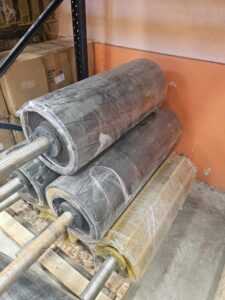
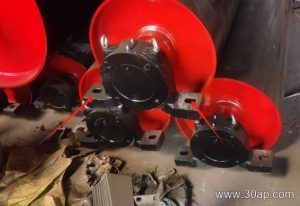
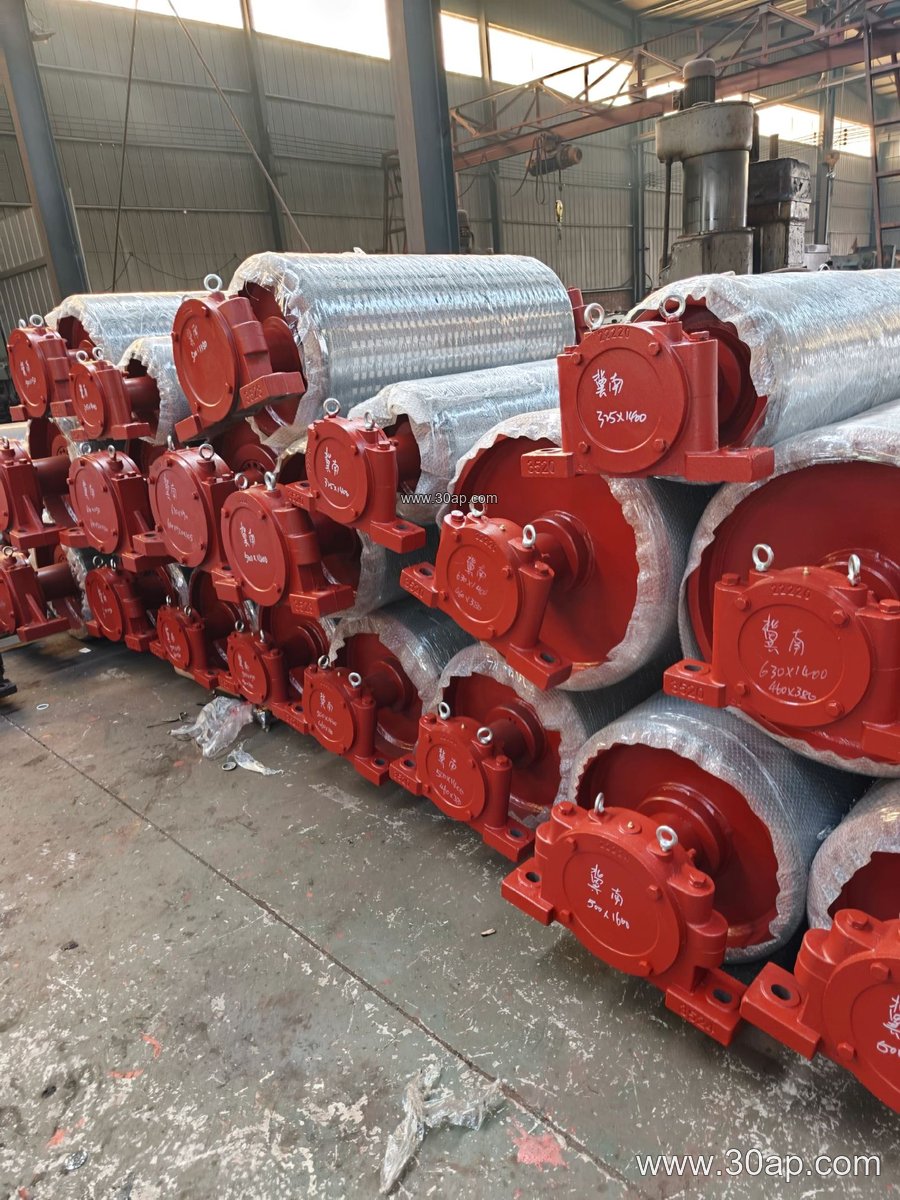
A typical unit combines a welded or rolled steel shell, end discs, a through-going shaft, bearing housings, and a lagging surface. The two drive inputs are normally mounted on opposite shaft extensions, and the bearing arrangement must accommodate the combined radial load from belt tension plus the torque reaction of both drives. Because the shell carries two torque paths, manufacturers often specify a heavier end-disc and hub design than a comparable single-drive pulley.
Common construction details include:
- Shell diameters from about Ø500 to Ø1400, with larger sizes available for high-tension installations.
- Face widths matched to the belt, for example a B1200 belt on a pulley with roughly 1400 mm face width.
- Shaft diameters typically from Ø100 to Ø200, selected by torque and load rather than by belt width alone.
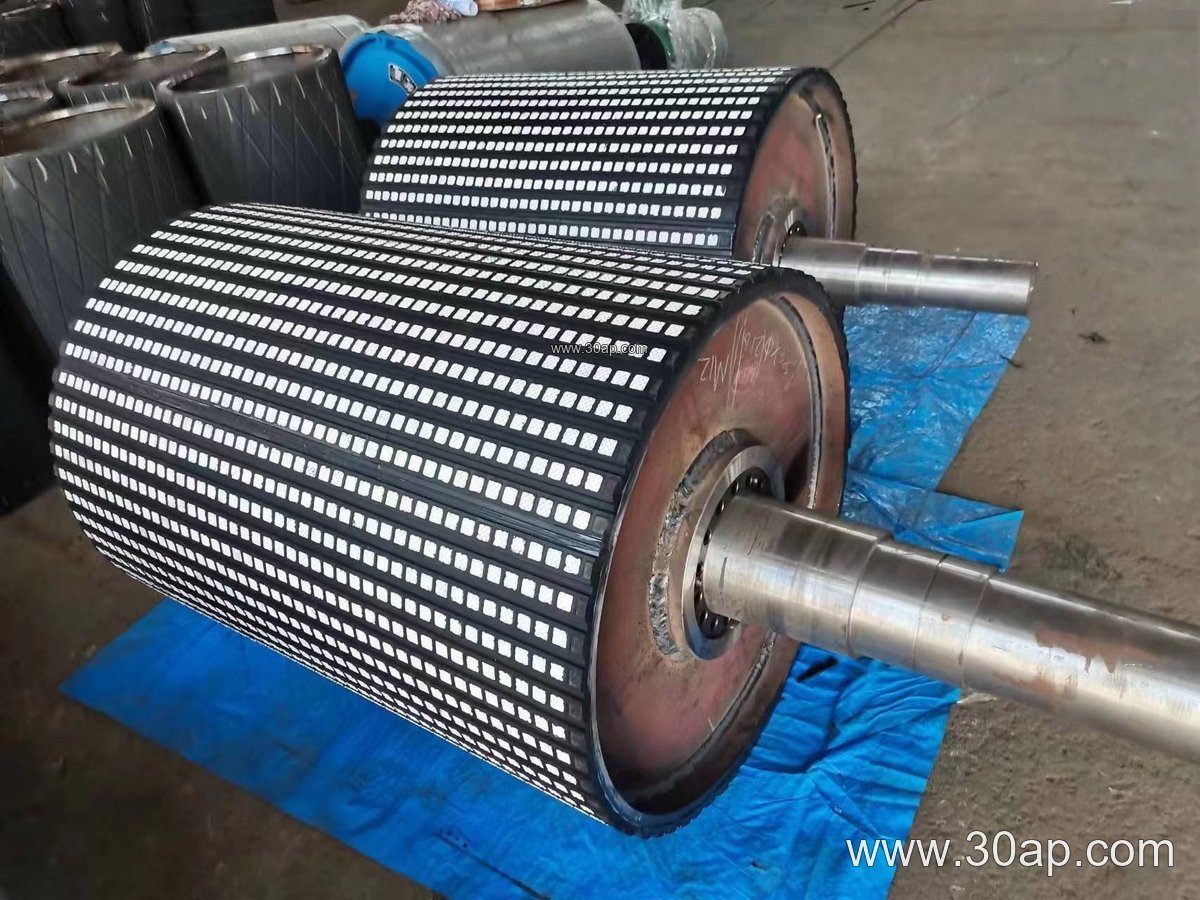
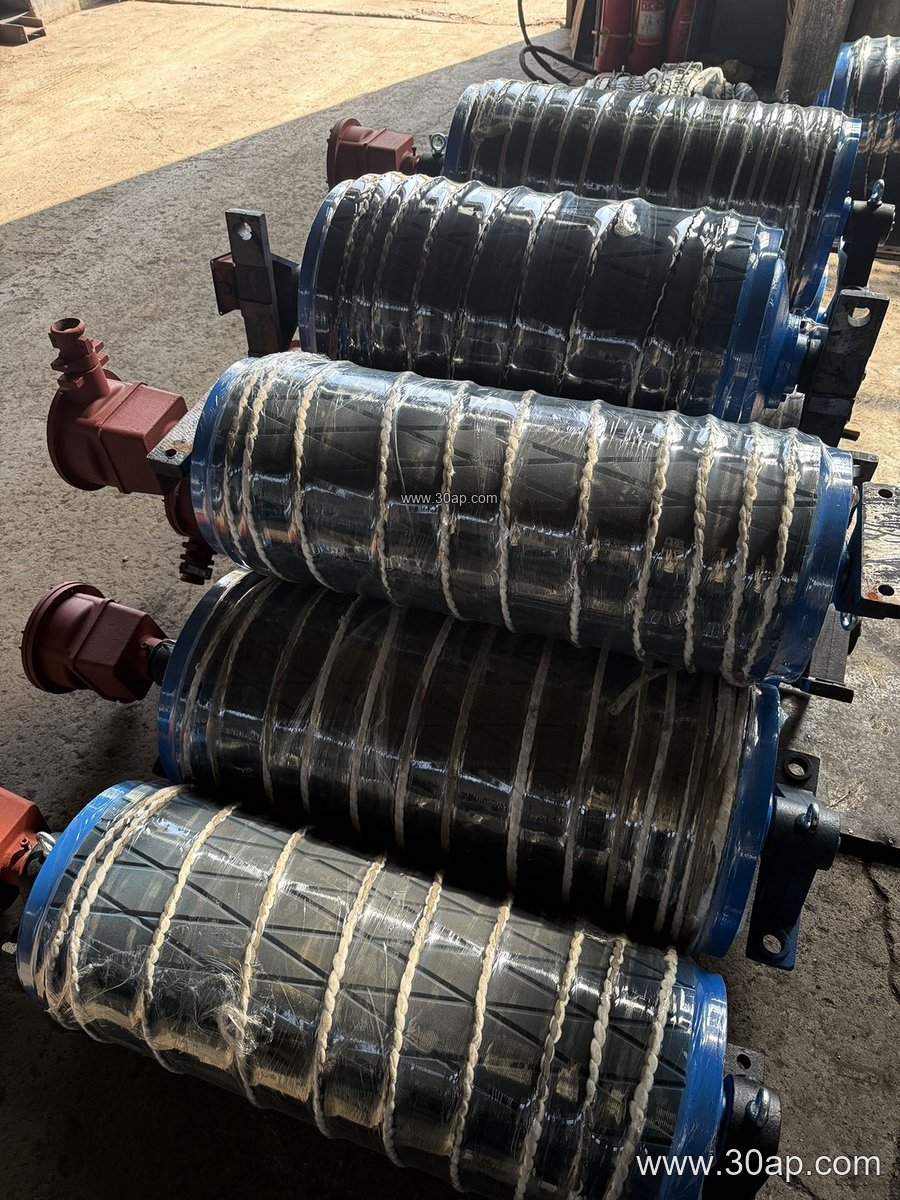
- Lagging in plain rubber, diamond grooved, chevron, or ceramic tile form, with thickness commonly 8 to 20 mm.
Pairing the pulley with a suitable conveyor belt is part of the selection. A high-abrasion site such as an iron ore or copper ore operation may run a heavy-duty abrasion resistant conveyor belt, while a coal handling circuit often uses a flame retardant conveyor belt. The dual drive pulley must be sized for the belt tension those belts demand, not the other way around.
Where It Fits in the Conveyor
The dual drive pulley is most often found at the head of a conveyor in a cement plant, power plant coal yard, or port bulk terminal, where the belt discharges onto the next stage. It also appears as a tension-end drive in long overland systems and in high-capacity underground coal mining conveyors where space at the drive station is limited. In a crushing and screening line, a dual drive head pulley can handle the high starting torque of a fully loaded belt without an unusually large single gearbox.
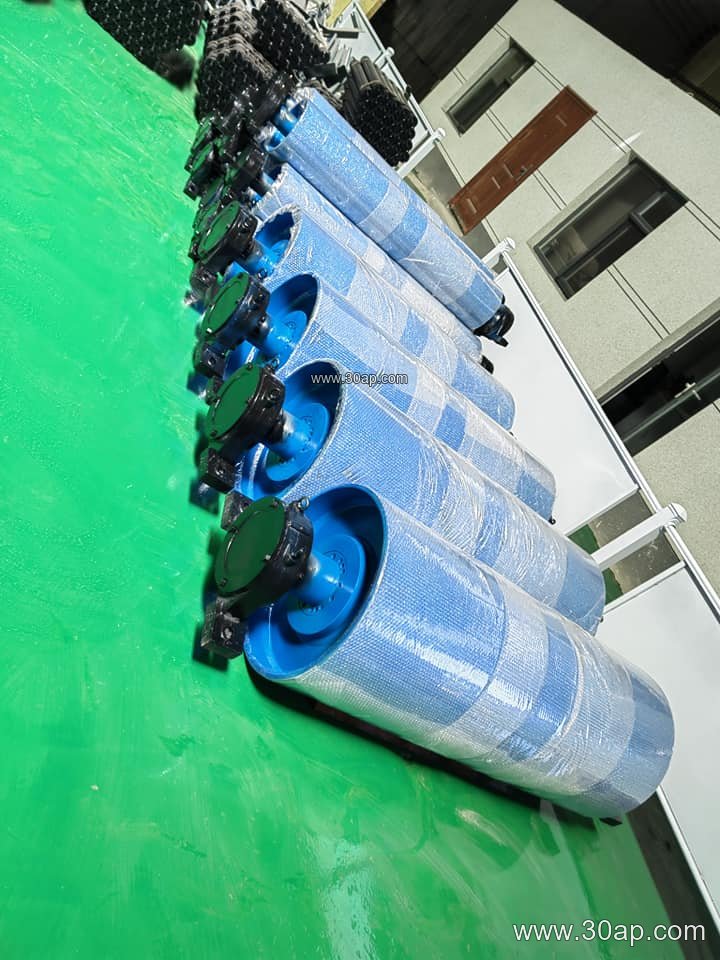
It should not be confused with other pulley roles. A tail pulley sets belt tension at the return end; a bend pulley changes belt direction with no drive input. Using a dual drive pulley in place of a bend pulley makes no sense because the bend position does not require torque transmission.
Selection Points for Buyers
Buyers should confirm several items before ordering. First, the required drive power and the split between the two inputs, since unequal loading can overload one gearbox. Second, the belt width and the corresponding pulley face width; a B800 belt normally runs on a pulley face near 950 mm, but the exact figure follows the conveyor design. Third, the lagging type and thickness, which depend on whether the site handles wet, oily, or abrasive material.
Also check shaft diameter, bearing type, and the mounting interface with the conveyor bracket. The bracket and bearing housing must accept the dual drive layout, and the take-up arrangement must allow the pulley to be removed for lagging replacement. For a mine or a sand and gravel plant, spare lagging and a planned relagging interval are worth agreeing at the purchase stage.
Maintenance Notes
Because two drives share the load, alignment between them matters. Coupling alignment, gearbox mounting, and belt tracking should be checked after installation and periodically during operation. Lagging wear is the most visible sign of service life; worn diamond or chevron lagging reduces grip and can lead to belt slip under load. Keeping the pulley surface clean and the belt tension correct extends the interval between relagging jobs, whether the conveyor handles clinker, coal, or aggregate.