What Conveyor Bracket Fabrication Covers
Conveyor bracket fabrication is the metalwork behind every stable idler station on a belt conveyor. The bracket, often called a conveyor support bracket or idler frame, is the fabricated steel part that holds the idler roller at the correct height, angle and spacing so the conveyor belt keeps its trough shape under load. In a quarry or a cement plant, a poorly made bracket shows up quickly as belt wander, spilled material and uneven roller wear, so fabrication quality matters as much as the pulley and belt selection.
Fabricators usually work from the conveyor layout: belt width, trough angle, idler diameter and the load the station must carry. The result is a set of brackets that bolt onto the stringer or cross member and carry the rollers that support the belt on both the carrying and return sides.
How a Bracket Is Built
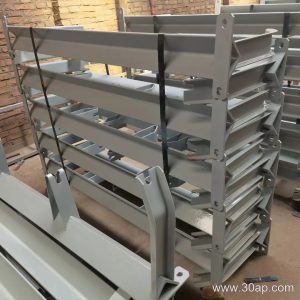
Most brackets are welded assemblies made from angle steel, channel steel or folded steel plate. The common steps are:
- Cutting the profile parts to length from the drawing
- Punching or drilling mounting holes for the idler shaft and the frame bolts
- Jig welding the side arms and cross member to hold the trough angle
- Checking squareness, hole pitch and arm height before surface treatment
- Painting or galvanizing, depending on the site environment
Hole pitch and cross member length change with belt width and trough angle, so they are set per design rather than taken as a fixed number. A bracket for a B650 frame is a different fabrication job from one for a B1400 frame, even when both use the same roller diameter.
Common Forms and Where They Sit
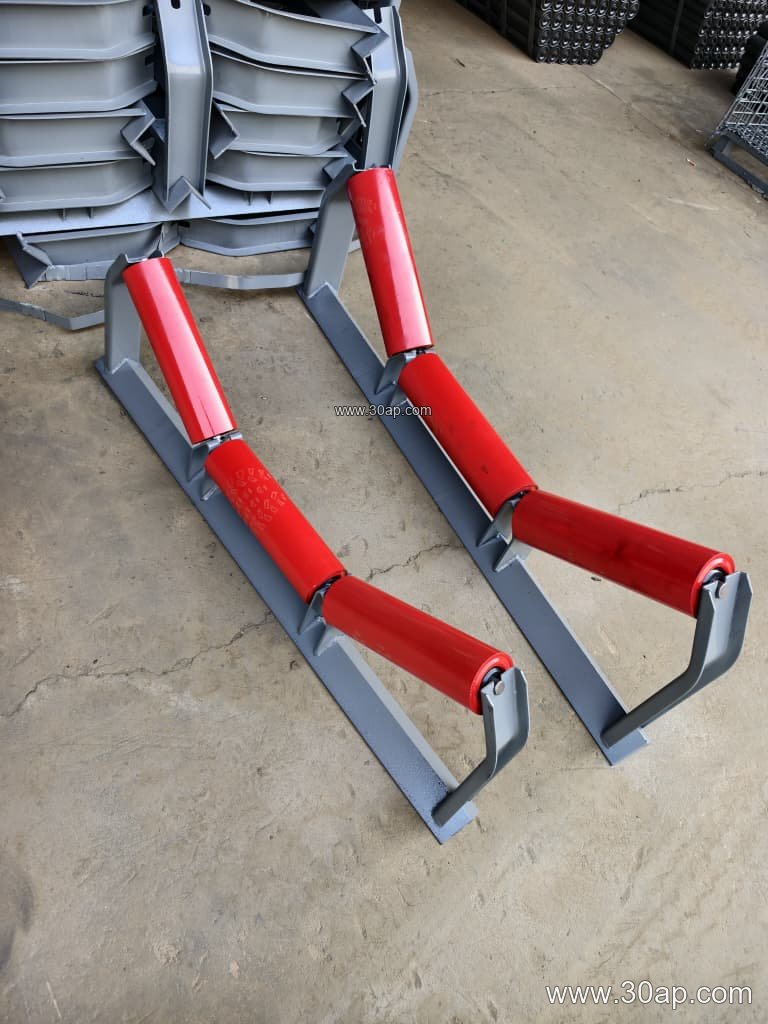
The troughing bracket carries the three-roller set on the loading side and is the most familiar fabrication item. Transition brackets sit near the pulleys, where the belt changes from flat to troughed, and are often made with a shallower angle to reduce edge stress. Return brackets support the belt on its way back, and V-return or flat-return forms are chosen to suit belt width and material build-up.
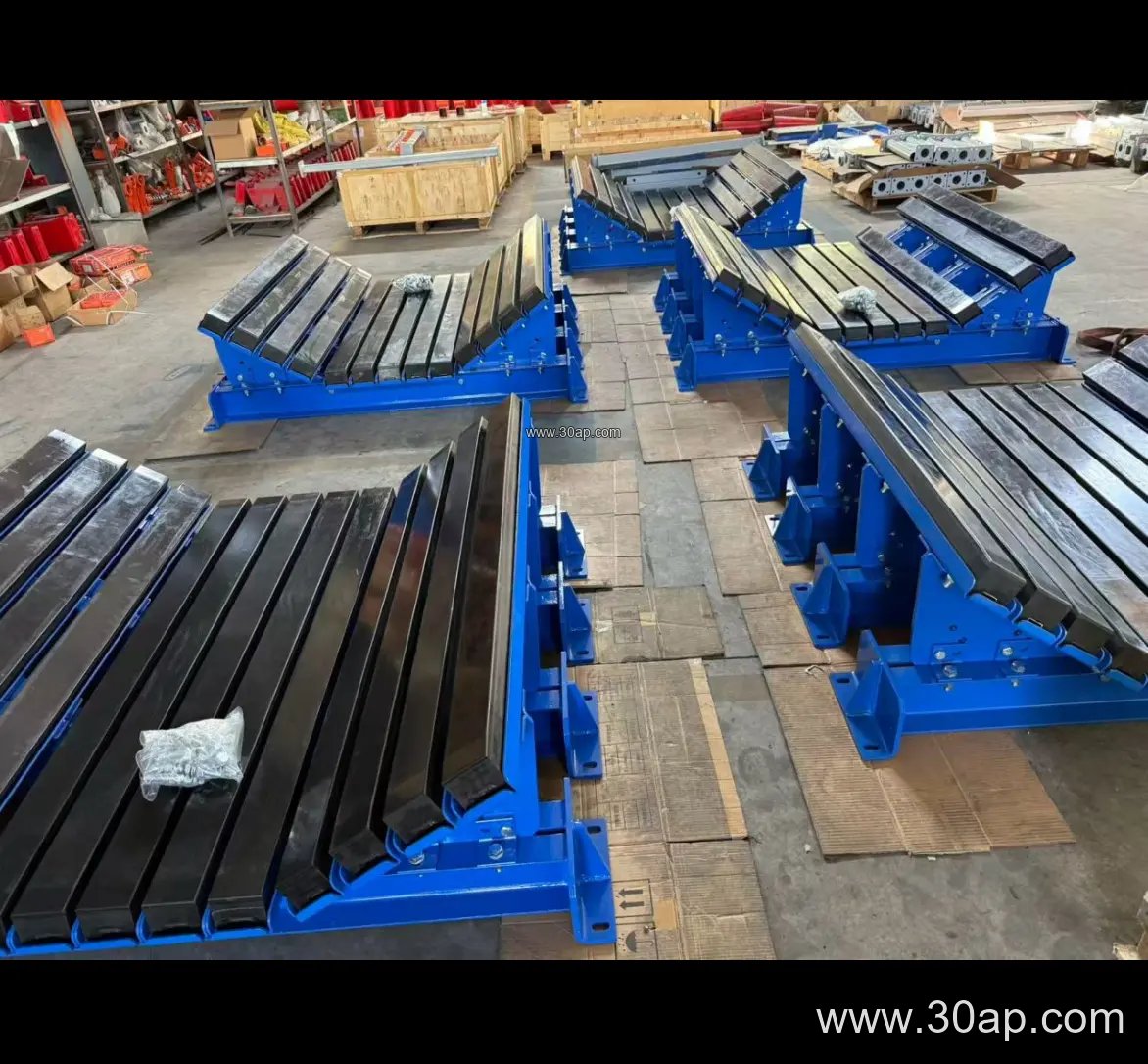
Impact brackets are reinforced where material drops onto the belt, and self-aligning brackets allow a small amount of rotation to correct belt tracking. Adjustable brackets let the maintenance team change the trough angle on site, typically between 20, 30, 35 and 45 degrees, while fixed brackets are welded to one angle for a simpler, stiffer frame.
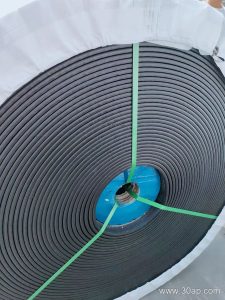
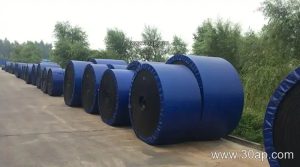
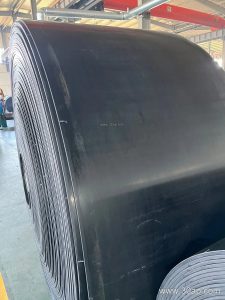
Welded frames are usually paired with a rubber conveyor belt or an EP conveyor belt in aggregate duty, and with a flame retardant conveyor belt or fire resistant conveyor belt in coal handling. The bracket does not change the belt specification, but it must suit the belt width so the trough supports the load evenly.
Typical Reference Combinations
The values below are common reference combinations, not universal rules. Final sizes come from the conveyor design.
| Belt width | Trough angle | Idler diameter |
|---|---|---|
| B650 | 30 degrees | Ø89 |
| B800 | 35 degrees | Ø108 |
| B1000 | 35 degrees | Ø108 |
| B1200 | 45 degrees | Ø133 |
| B1400 | 45 degrees | Ø159 |
| B1600 | 35 degrees | Ø159 |
| B1800 | 45 degrees | Ø194 |
One belt width can work with more than one trough angle or roller diameter, and the right match depends on capacity, belt stiffness and the transition length available. Forward-leaning brackets, usually around 1.5 to 2 degrees, are a separate tracking measure and are not a substitute for a different trough angle.
Where the Fabricated Frames Are Used
These frames appear wherever bulk material moves on a belt. In a limestone quarry or crushing and screening line, troughing and impact brackets carry abrasive rock after the primary crusher. In a cement plant they support clinker and raw meal conveyors, where dust and heat call for careful paint or galvanizing. Power plant coal yards and washing plants use them under a coal mining conveyor belt, often with flame retardant grades. Ports, steel plants and batching plants use the same fabrication approach with heavier plate for high-tonnage lines.
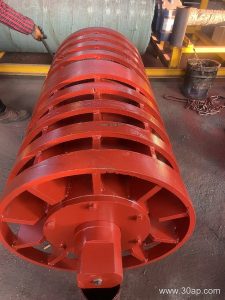
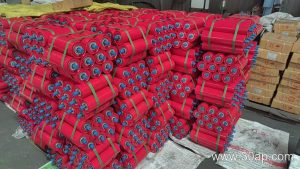
For a full station, the bracket is matched with the idler roller, the conveyor pulley and the belt, so the frame, roller and belt wear together rather than fighting each other. Buyers can review related conveyor components at www.example.com/conveyor-bracket and confirm belt side details at www.example.com/ep-conveyor-belt before ordering fabrications.
What Buyers Should Check
- Drawing agreement on belt width, trough angle and roller diameter
- Material thickness and steel grade for the load and impact level
- Hole pitch and mounting pattern against the existing stringer
- Weld quality, squareness and coating suitable for the site
- Whether fixed or adjustable brackets are needed for future angle changes
- Spare-part consistency if several conveyors share the same frame size
Ordering brackets by belt width alone is risky. A clear drawing with the trough angle, roller diameter and mounting dimensions keeps fabrication accurate and keeps the conveyor bracket, idler roller and belt working as one system. More frame references are available at www.example.com/conveyor-bracket and roller data at www.example.com/idler-roller for cross-checking before release to production.