What a Steel Plant Conveyor Pulley Does
A steel plant conveyor pulley is the rotating drum that drives, redirects, or tensions the conveyor belt in a bulk material handling line. In a sinter plant, coke yard, or finished-product transfer house, the pulley is the point where motor torque becomes belt motion. The same component family appears as a drive pulley at the head station, a tail pulley at the loading end, and bend or take-up pulleys along the route. Each position performs a different job, so a drive pulley, tail pulley, and bend pulley should not be treated as interchangeable parts during specification or replacement.
The working environment shapes the design. Dust, iron ore fines, scale, and heat from nearby processes put stress on the belt, on the idler roller set, and on the pulley shell and lagging. A pulley that suits a quarry or a cement plant may need a different surface and bearing arrangement in a steel mill.
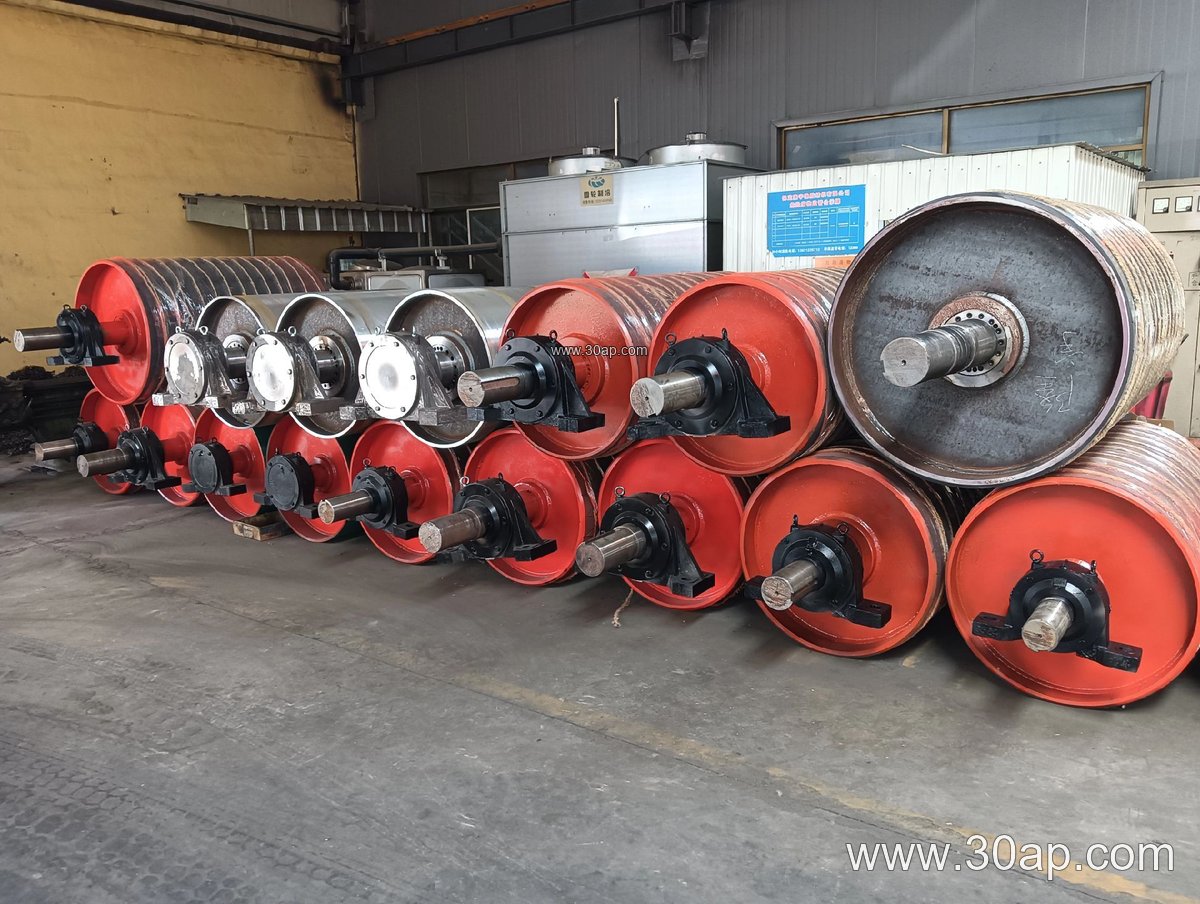
Construction and Main Components
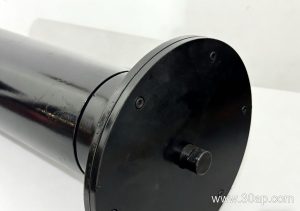
The basic build is a steel shell, two end discs, a shaft, hub connections, and bearing housings mounted on a frame. The shell is machined so the belt runs true, and the shaft is sized by torque and radial load rather than by belt width alone. Common shaft diameters include Ø50, Ø60, Ø70, Ø80, Ø90, Ø100, Ø120, Ø140, Ø160, Ø180, and Ø200 mm, but the final choice follows the drive calculation.
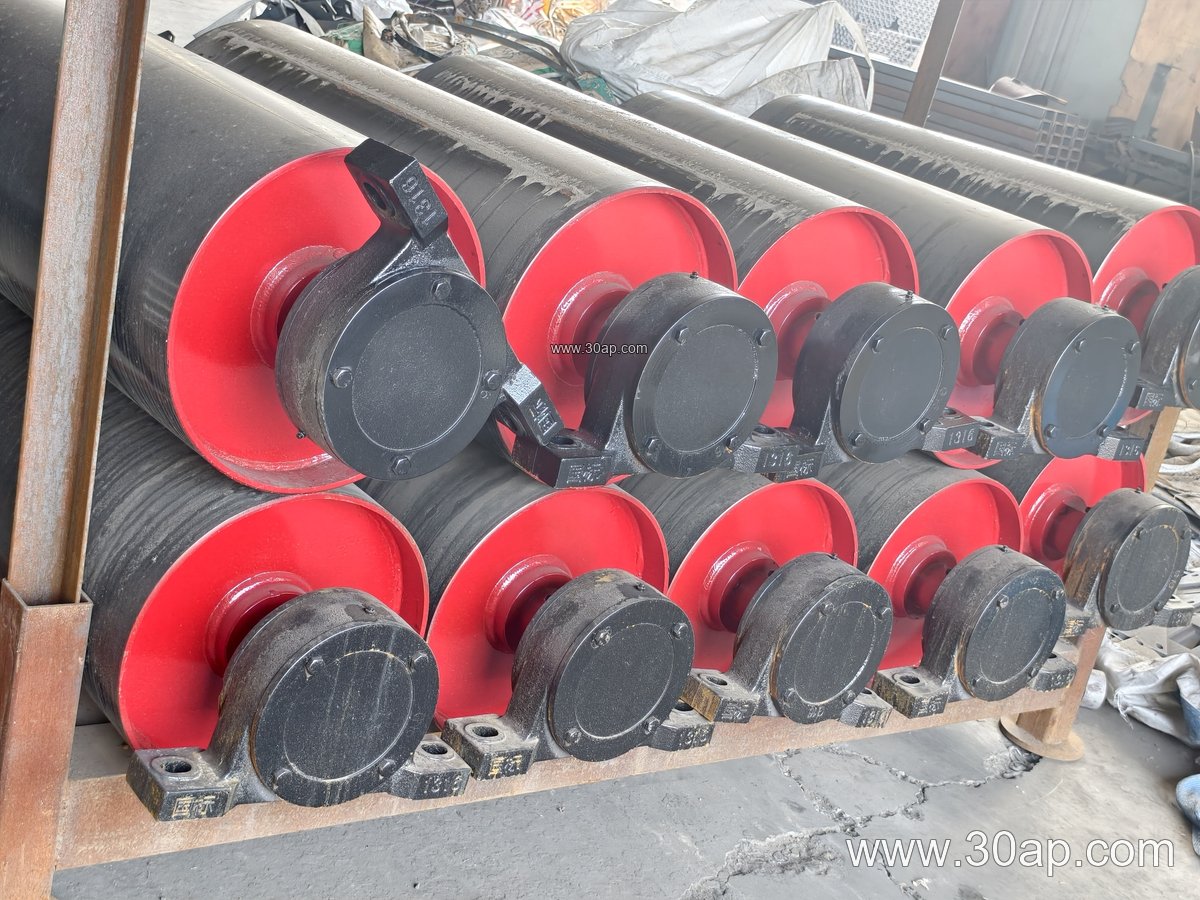
- Shell: rolled and welded steel, often with a slight crown to help belt tracking.
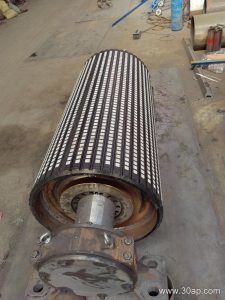
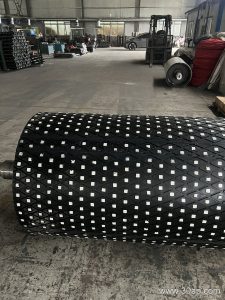
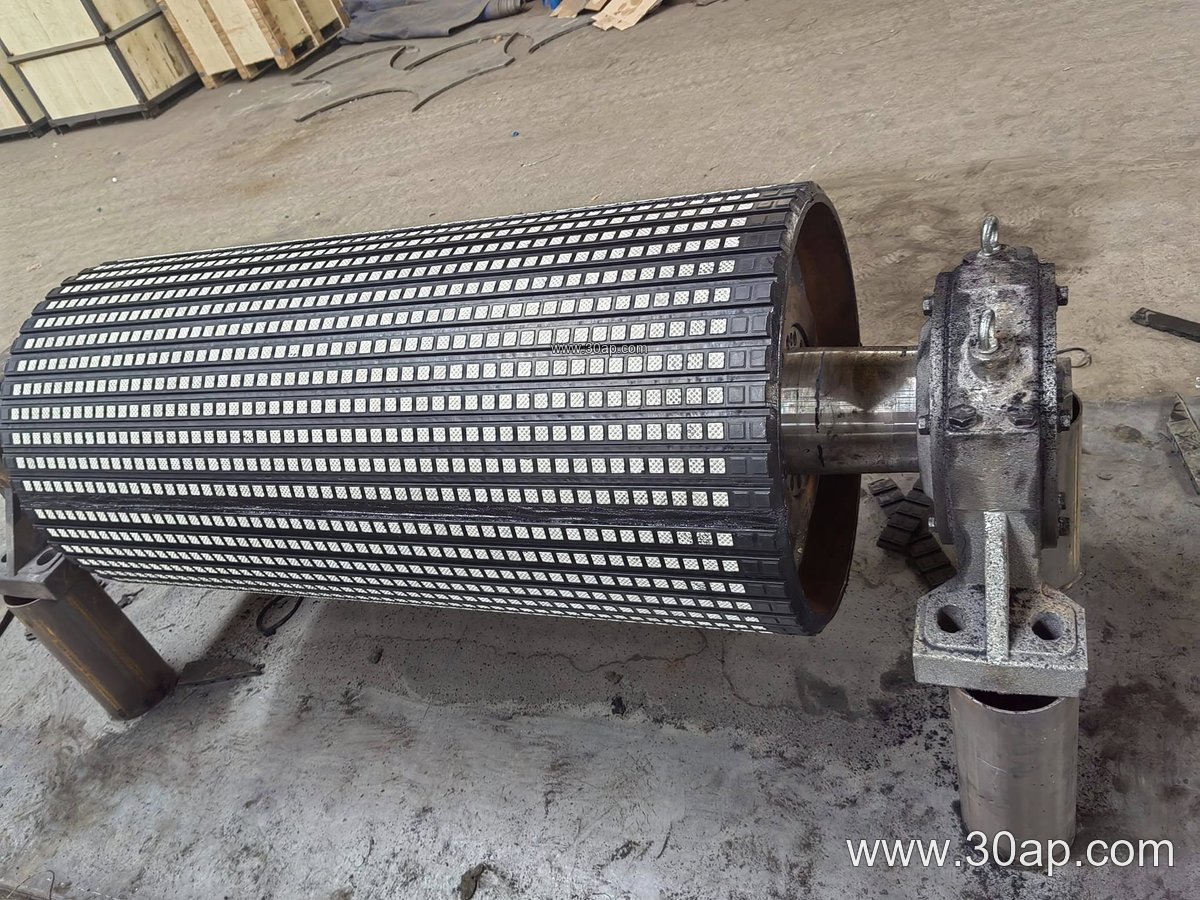
- Lagging: plain, cast rubber, cold-bonded rubber, hot-vulcanized rubber, diamond pattern, herringbone, ceramic, or flat rubber sheet.
- Lagging thickness: commonly 8, 10, 12, 15, or 20 mm depending on grip and wear allowance.
- Bearing assembly: pillow block or flange type, with sealing to suit dust and washdown.
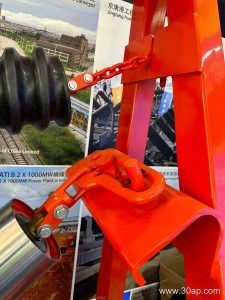
- Frame and bracket: the conveyor bracket ties the pulley to the conveyor structure and must allow alignment.
Belt width and pulley diameter are related through belt tension, wrap angle, and load, not through a single fixed table. A B800 × Ø500 unit and a B1400 × Ø800 unit can both be reasonable in different lines. Face width is usually slightly larger than the belt: about 500 mm for B400, 600 mm for B500, 750 mm for B650, 950 mm for B800, 1150 mm for B1000, 1400 mm for B1200, 1600 mm for B1400, 1800 mm for B1600, and 2000 mm for B1800. Diameters commonly run from Ø200 to Ø1800 mm.
Matching the Pulley to the Belt and the Line
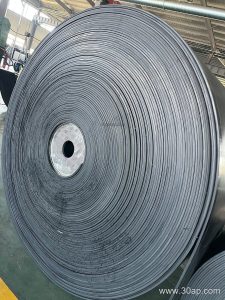
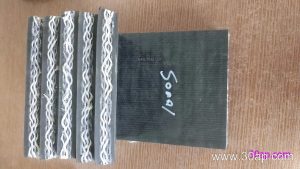
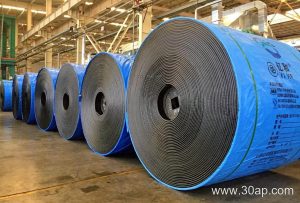
The belt side of the system matters as much as the drum. A heavy-duty mining conveyor belt or an abrasion resistant conveyor belt carries different loads from a heat resistant conveyor belt serving a hot sinter stream. Where the line uses an EP conveyor belt or a steel cord conveyor belt, the pulley lagging and shell thickness should be reviewed against the belt’s tension and stiffness. For underground coal mining conveyor belt duty, a flame retardant conveyor belt and anti-static belt are typical, and the pulley should be selected with that electrical and fire context in mind.
Surface choice follows the duty. Plain face suits light, clean service. Diamond lagging helps in wet or dusty conditions. Ceramic lagging is often used where slip and abrasive wear are both concerns. For a steel plant conveyor pulley on a hot material route, a heat resistant belt and a suitable lagging grade should be reviewed together.
Common Sizes in Steel Plant Service
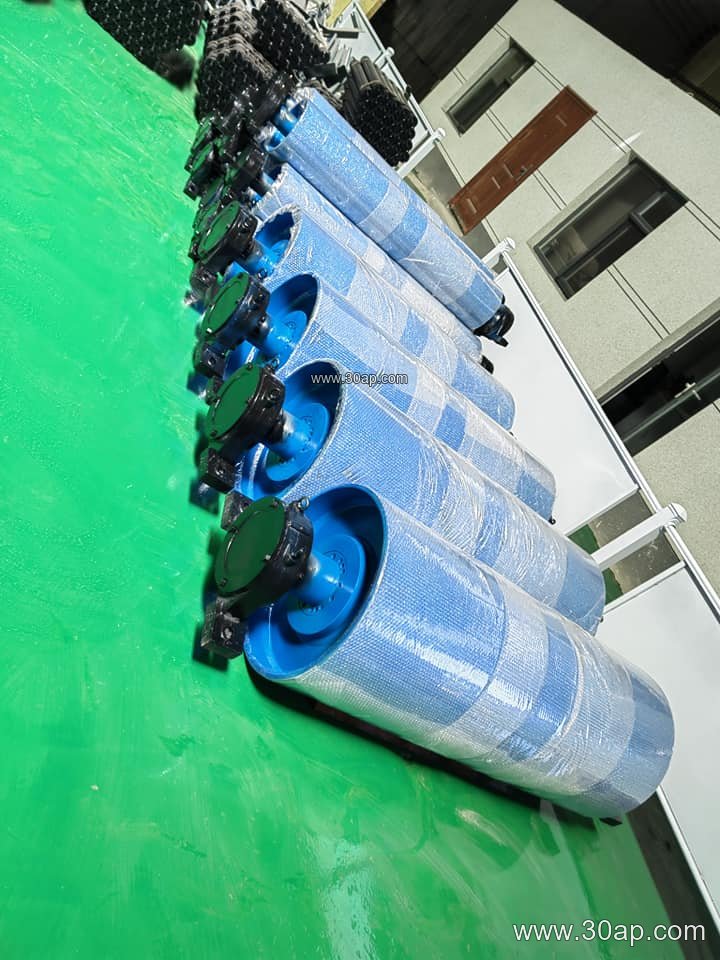
The table below is reference data for discussion, not a fixed supply rule. Actual dimensions follow the conveyor design.
| Belt width | Typical face width | Example diameter range | Common shaft range |
|---|---|---|---|
| B650 | about 750 mm | Ø315 to Ø630 | Ø60 to Ø100 mm |
| B800 | about 950 mm | Ø400 to Ø800 | Ø70 to Ø120 mm |
| B1000 | about 1150 mm | Ø500 to Ø1000 | Ø80 to Ø140 mm |
| B1200 | about 1400 mm | Ø630 to Ø1250 | Ø90 to Ø160 mm |
| B1400 | about 1600 mm | Ø800 to Ø1400 | Ø100 to Ø180 mm |
| B1600 | about 1800 mm | Ø1000 to Ø1600 | Ø120 to Ø200 mm |
When writing a purchase request, state the position, the belt width, the required face width, the diameter, the shaft size, the lagging type and thickness, and the bearing arrangement. Add the belt type, such as an EP conveyor belt or a flame retardant conveyor belt, so the supplier can check wrap and tension. A short note on the conveyor bracket pattern and the take-up travel avoids site fitting problems.
Buyer Checklist and Maintenance Notes
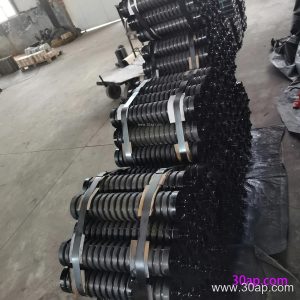
Check that the pulley is balanced for the running speed, that lagging is bonded for the local temperature, and that the shaft key and hub fit match the drive. During operation, watch for belt wander, lagging wear, and bearing temperature rise. Keep the idler roller and conveyor belt alignment within tolerance; a misaligned belt overloads the pulley edge and shortens lagging life. Spare pulleys should be stored on their bearing housings, not on the shaft ends. For a steel plant conveyor pulley, the practical aim is simple: a drum that grips the belt, runs true, and can be maintained without stopping the whole material flow.