What an Anti-Static Conveyor Belt Does
An anti-static conveyor belt is a rubber or PVC/PVG belt built to bleed off static charge instead of letting it build up along the carcass and cover. In a mine, coal preparation plant, cement mill, power station or sand and gravel yard, dry material sliding over a moving belt and turning over idler rollers generates triboelectric charge. If that charge cannot escape, it can arc to nearby metal, disturb instrumentation, or, in a combustible dust atmosphere, become an ignition source. The anti-static conveyor belt, sometimes called a static-dissipative belt or conductive belt, gives the charge a controlled path to earth through the conveyor frame.
It is not the same as a general-purpose belt. The difference sits in the compound and the construction, not in the outward appearance.
How the Belt Is Built
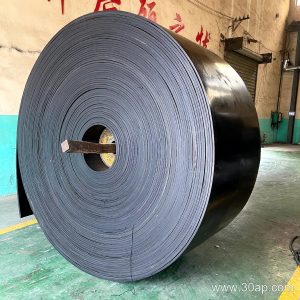
Most static-dissipative belts follow the same layered logic as other fabric-reinforced belts. A tension-carrying carcass, commonly EP or NN nylon fabric, is bonded between top and bottom cover rubber. Conductive carbon black or a compatible antistatic additive is compounded into the covers, and in many designs a conductive pathway runs through the carcass or along the edges to connect the covers to the frame. The finished belt still has to be earthed at the conveyor structure, usually through a grounding brush or a conductive pulley path, otherwise the charge has nowhere to go.
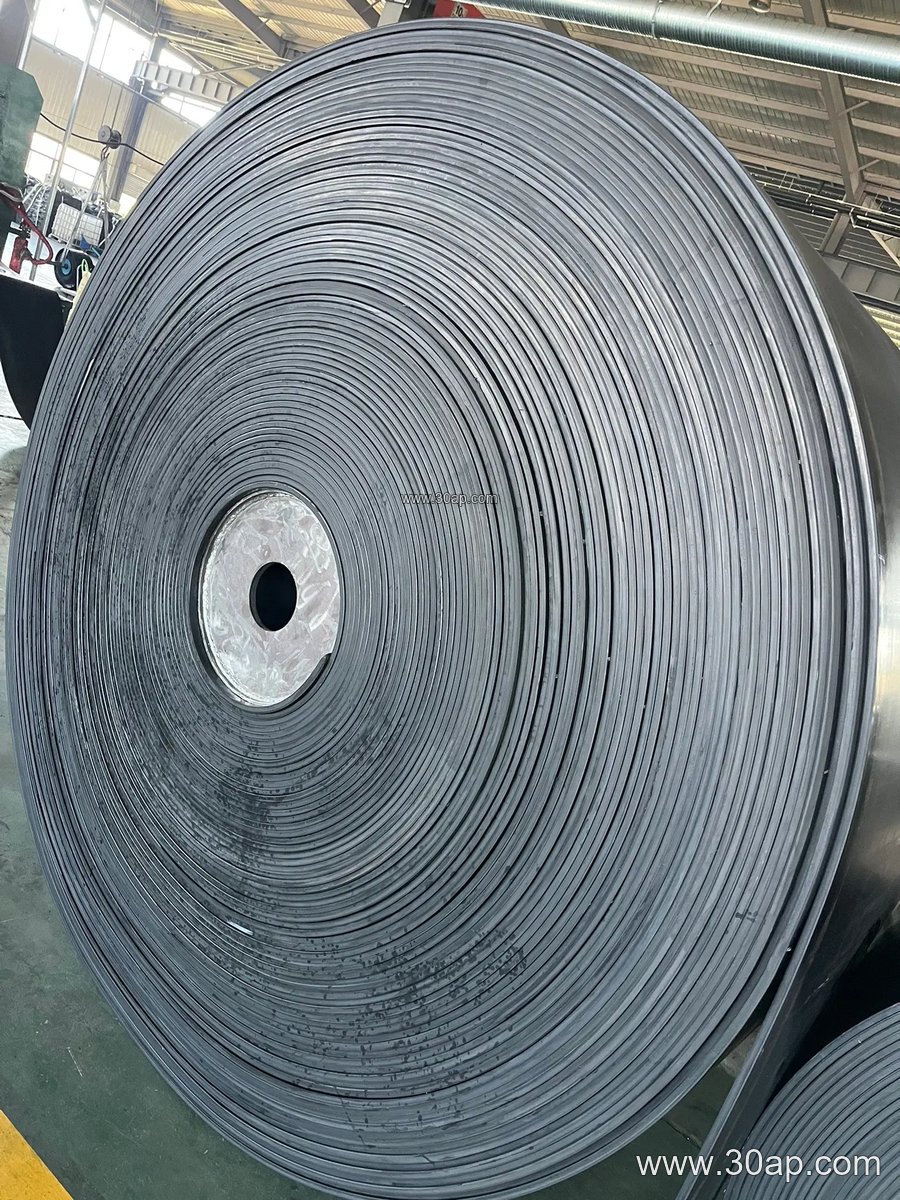
Key construction choices that affect static performance and service life:
- Carcass: EP fabric for general strength, NN nylon where higher flexibility is wanted, steel cord where long centre distances demand it.
- Cover compound: antistatic grade, often combined with flame retardant for coal and dust service.
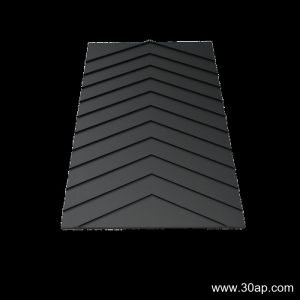
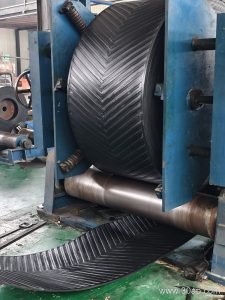
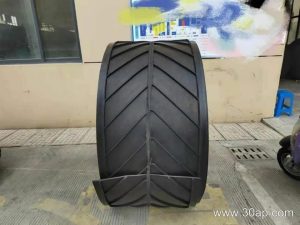
- Surface form: smooth cover for general conveying, patterned or chevron cover where incline grip matters.
- Edge construction: cut edge or moulded edge depending on the pulley and tracking arrangement.
Reference Specifications
The figures below are typical reference ranges, not universal values. Final selection depends on the conveyor design, material carried, pulley diameters and the surrounding atmosphere. Belt width and pulley diameter must be checked together by the conveyor designer; one width does not fix one pulley size.
| Parameter | Common Reference Options |
|---|---|
| Belt type | EP fabric, NN nylon, steel cord, PVC, PVG |
| Strength grade | EP200, EP315, EP400, EP500, EP630, EP800, EP1000, EP1250, EP1600, EP2000 |
| Belt width | B500, B650, B800, B1000, B1200, B1400, B1600, B1800, B2000 |
| Cover thickness (top + bottom) | 3+1.5, 4+2, 5+2, 6+2, 8+3 mm |
| Carcass plies | usually 2 to 6 layers, by design |
| Special grades | antistatic, flame retardant, wear resistant, heat resistant, oil resistant, cold resistant, acid and alkali resistant |
Where It Fits on the Conveyor
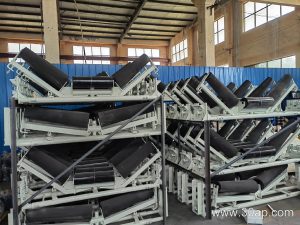
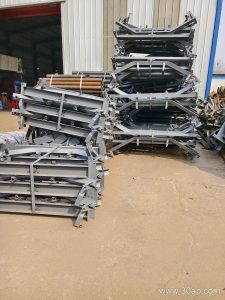
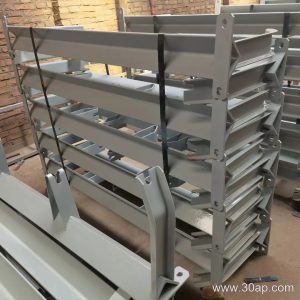
The belt is only one part of the earthing chain. A conveyor pulley at the drive or tail end, the idler roller frames, and the conveyor bracket that ties the structure together all sit in the same electrical path. Paint, rust, dust build-up and worn grounding contacts can break that path. When an anti-static conveyor belt is installed, the structure should be checked for continuity, and the belt surface resistance should be verified after installation and again after splicing, because a splice can interrupt the conductive route.
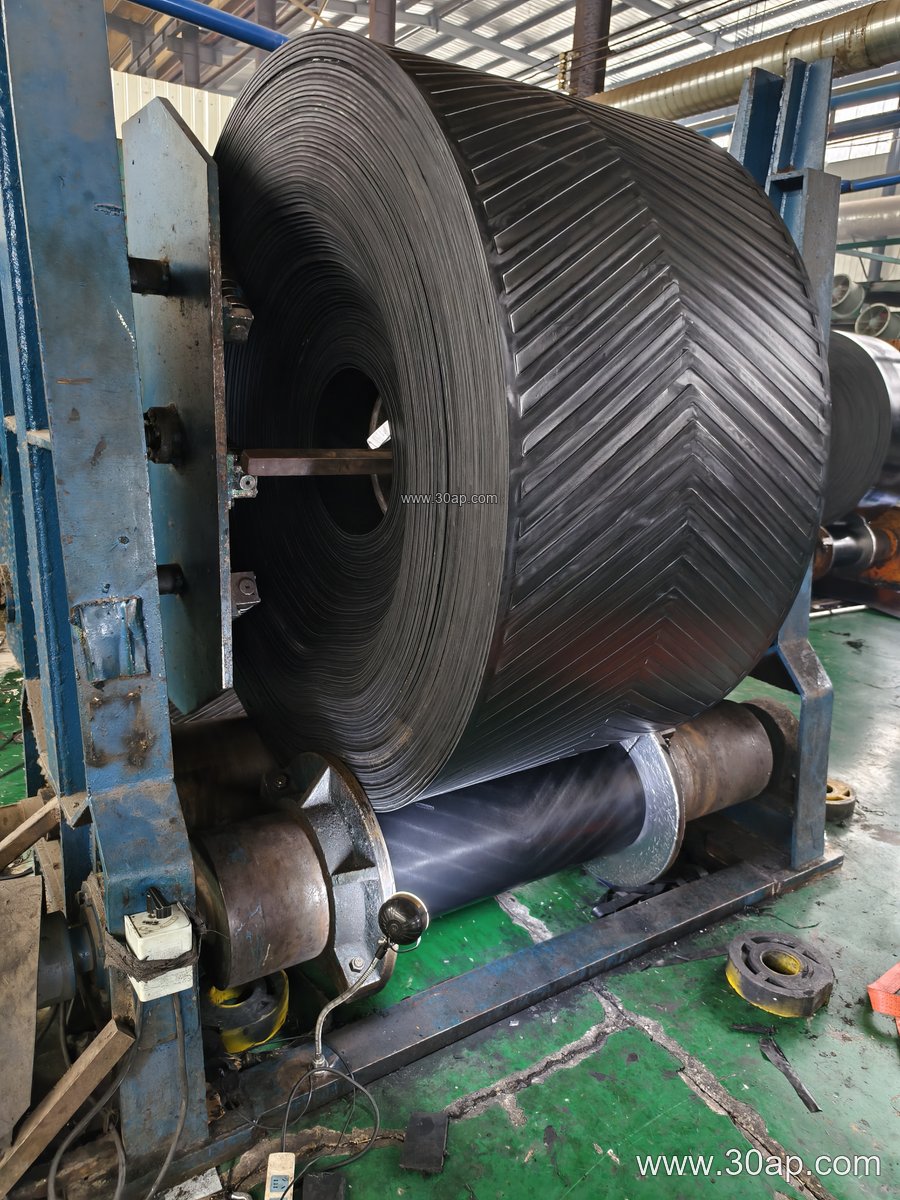
Typical duty points include coal handling and bunker feed lines, cement clinker and raw meal transport, limestone and aggregate conveyors in sand and gravel plants, and fuel or ash handling in power stations. In each case the belt is chosen for the dust or vapour risk, not simply because the site is outdoor or indoor.
Buyer Checklist
Before ordering, confirm the material being carried, the lump size, the incline, the ambient and material temperature, and whether combustible dust is present. Ask for the antistatic grade to be stated together with the strength grade and cover thickness, for example an EP630 antistatic belt at B1200 with 5+2 mm covers, rather than a bare strength figure. Confirm that the splice method preserves the conductive path, and check that the drive pulley, tail pulley and bend pulleys are compatible with the belt thickness and stiffness. Do not assume a wider belt needs a larger pulley or a fixed shaft size; those come from the conveyor calculation.
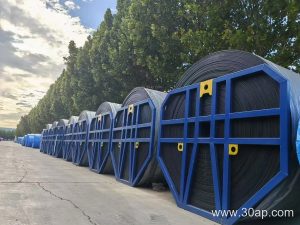
Store anti-static belts away from oil, ozone and direct sunlight, and avoid dragging them across rough ground, since cover damage can expose non-conductive layers. During maintenance, keep idler rollers turning freely and clean dust from the frame so the earth path stays reliable. A correctly matched anti-static conveyor belt, earthed through the structure and maintained with its pulleys and brackets, reduces static risk without sacrificing normal conveying performance.