What a Galvanized Conveyor Bracket Does on a Belt Conveyor
A galvanized conveyor bracket is the steel support that holds the idlers in place along a belt conveyor. It carries the conveyor belt at the correct trough shape, keeps the idler roller spacing consistent, and transfers the load of the material into the conveyor frame. Hot-dip galvanizing gives the bracket a zinc coating that resists rust in wet, dusty, and outdoor conditions, which is why it appears so often in coal preparation plants, power station coal yards, and quarry crushing lines.
The same item is also called a galvanized idler frame or galvanized roller support frame. Different names describe the same product: a galvanized steel bracket that locates and fixes the carrying or return rollers under the belt.
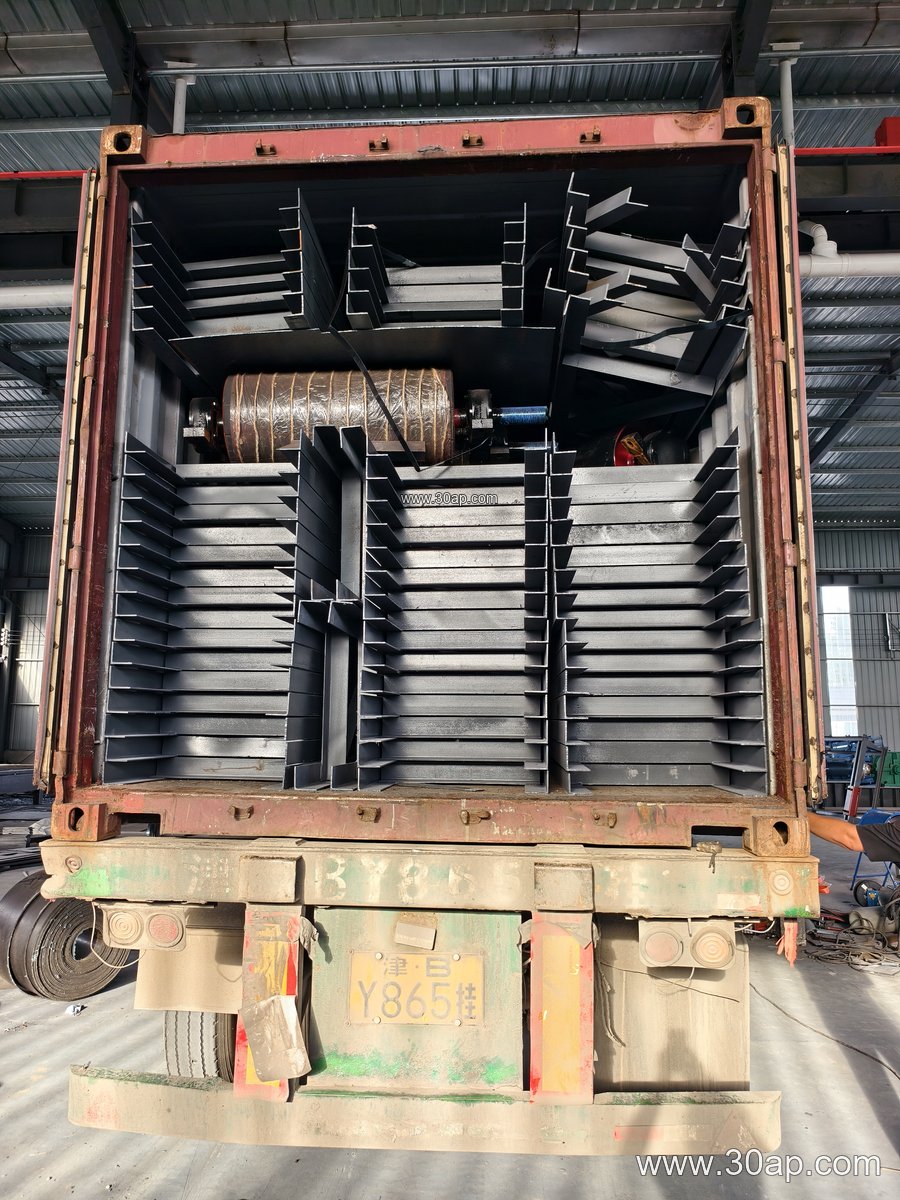
How the Bracket Is Built
Most brackets are fabricated from angle steel, channel steel, or folded steel plate. The frame is cut, drilled, welded, and then hot-dip galvanized. The trough angle is set by the position of the side roller seats, while the mounting holes and cross beam length change with belt width and design.
- Frame material: angle steel, channel steel, or bent plate
- Surface treatment: hot-dip galvanizing for corrosion protection
- Typical trough angles: 20°, 30°, 35°, 45°
- Common roller diameters: Ø89, Ø108, Ø133, Ø159, Ø194
- Typical belt widths: B500, B650, B800, B1000, B1200, B1400, B1600, B1800, B2000
Examples of practical combinations include B800 with 35° and Ø108, B1200 with 45° and Ø133, or B650 with 30° and Ø89. These are reference pairings, not fixed rules; the final choice depends on the conveyor design, belt speed, and material load.
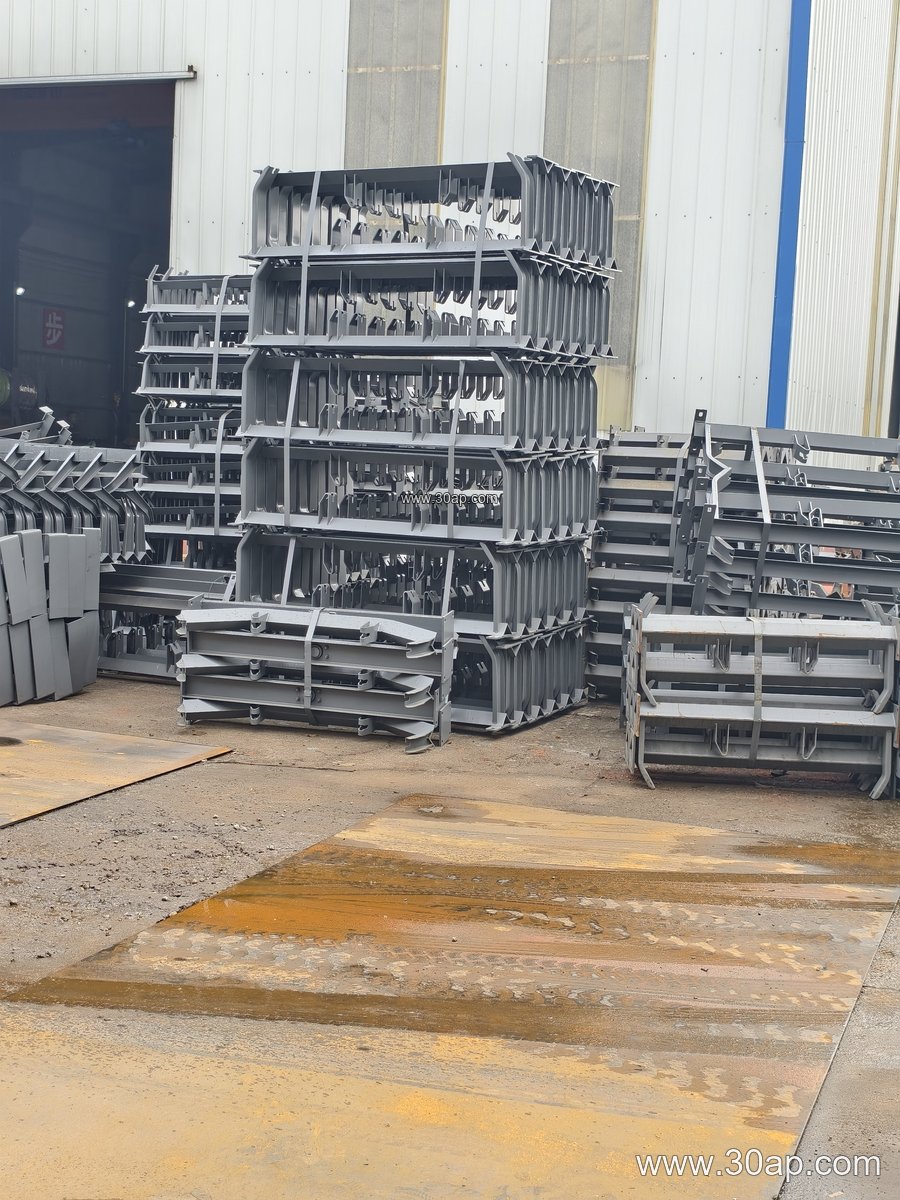
Bracket Types and Where They Sit
The carrying side usually uses a troughing bracket, with a two-roller or three-roller arrangement. On long conveyors, transition brackets help the belt move smoothly from flat to troughed. On the return side, a flat return bracket or a V-return bracket supports the belt after discharge. Impact brackets are used under loading points, and self-aligning brackets help correct belt tracking. Adjustable brackets let maintenance staff set the trough angle between the common 20°, 30°, 35°, and 45° positions. Forward-leaning brackets, usually around 1.5° to 2°, are used to improve belt centering.
These support types should not be confused with pulleys. A drive pulley, tail pulley, and bend pulley each have their own role at the head, tail, and direction changes of the conveyor, and they are not interchangeable with support brackets. A bracket only holds the rollers; the conveyor pulley drives or redirects the belt.
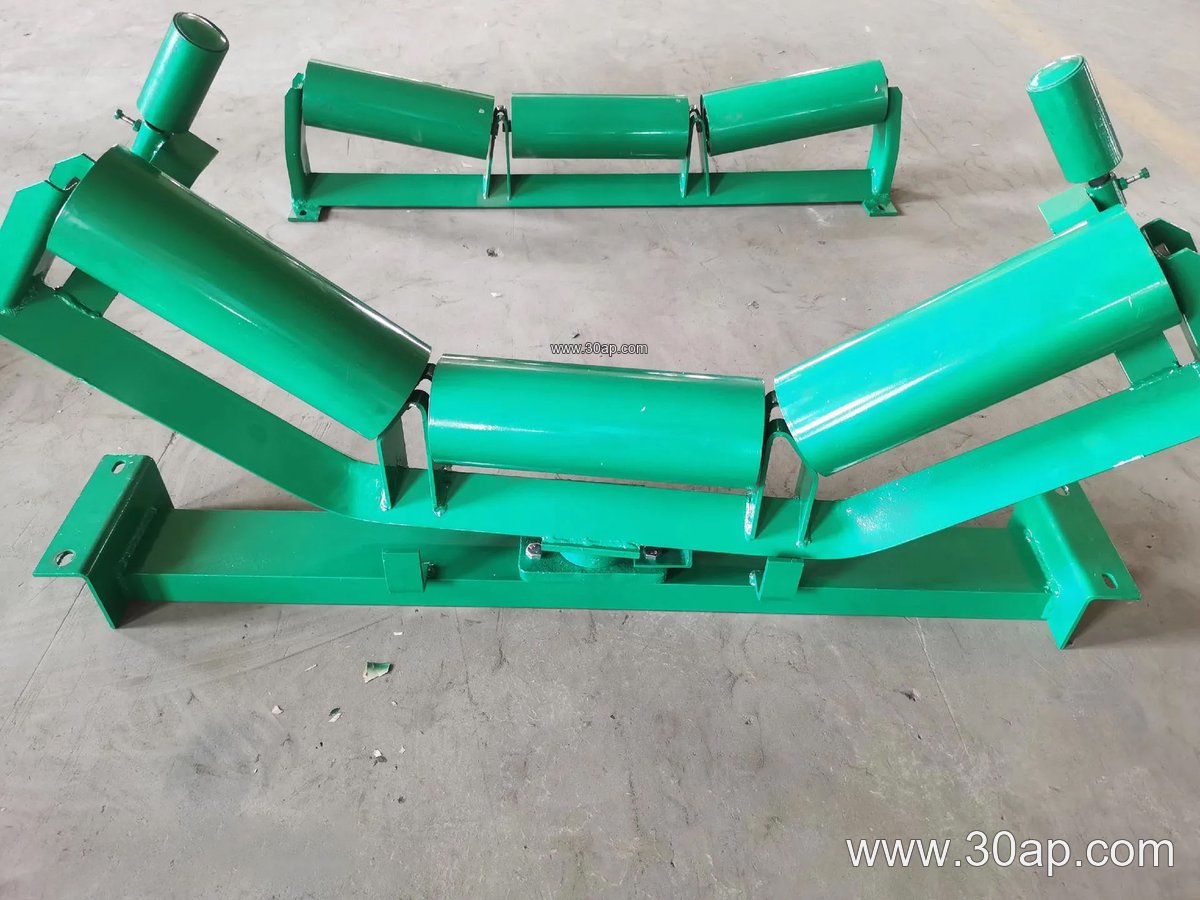
Where Galvanized Brackets Fit in Real Plants
In a coal preparation plant, galvanized brackets keep the carrying idlers aligned along the coal mining conveyor belt, and the zinc layer stands up to wash-down moisture and coal dust. In a quarry or sand and gravel line, the brackets under a crusher conveyor face heavy shock loads, so impact brackets are often used at the transfer point.
The choice of belt also affects bracket planning. A heavy-duty mining conveyor belt, a heat resistant conveyor belt near a cement kiln, or an abrasion resistant conveyor belt on a stone crushing line each brings its own load pattern. The bracket and roller must match the belt width and the expected load, not the other way around.
What Buyers Should Check Before Ordering
- Belt width and trough angle: confirm B width and the required trough angle before fixing hole spacing.
- Roller diameter: match the bracket seat to the idler roller diameter, for example Ø108 or Ø133.
- Mounting dimensions: hole pitch and beam length vary with belt width and trough angle, so they should be confirmed against the conveyor drawing.
- Galvanizing quality: check coating uniformity, especially at weld seams and drilled holes.
- Environment: for corrosive or wet service, confirm the galvanized finish is suitable; for high-temperature zones, check whether a different finish is needed.
A well-matched galvanized conveyor bracket keeps the belt running straight, reduces roller wear, and lowers maintenance work in dusty, damp, or outdoor conveyor systems.