What a Conveyor Belt Pulley Does on a Conveyor
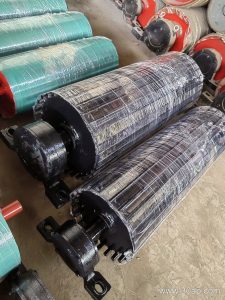
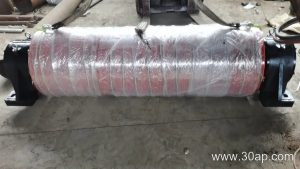
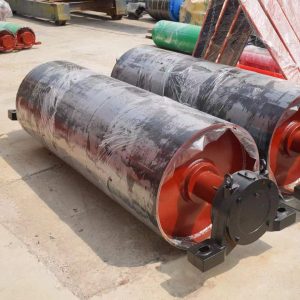
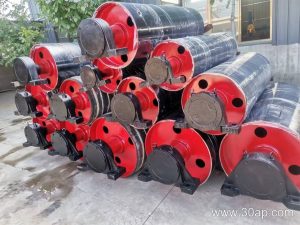
A conveyor belt pulley is the cylindrical rotating component that supports and drives the belt at key points along a conveyor system. It is not a single universal part. Drive pulleys transmit torque from the gearbox to the belt, tail pulleys support the belt at the loading end, and bend pulleys change the belt path around tensioning arrangements. These roles are different, and none of them can simply be swapped for another. A belt that slips on a drive pulley behaves very differently from a belt that misaligns on a tail pulley, so getting the subtype right matters before any dimension is chosen.
Construction and Surface Options
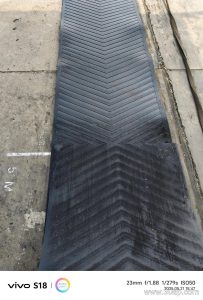
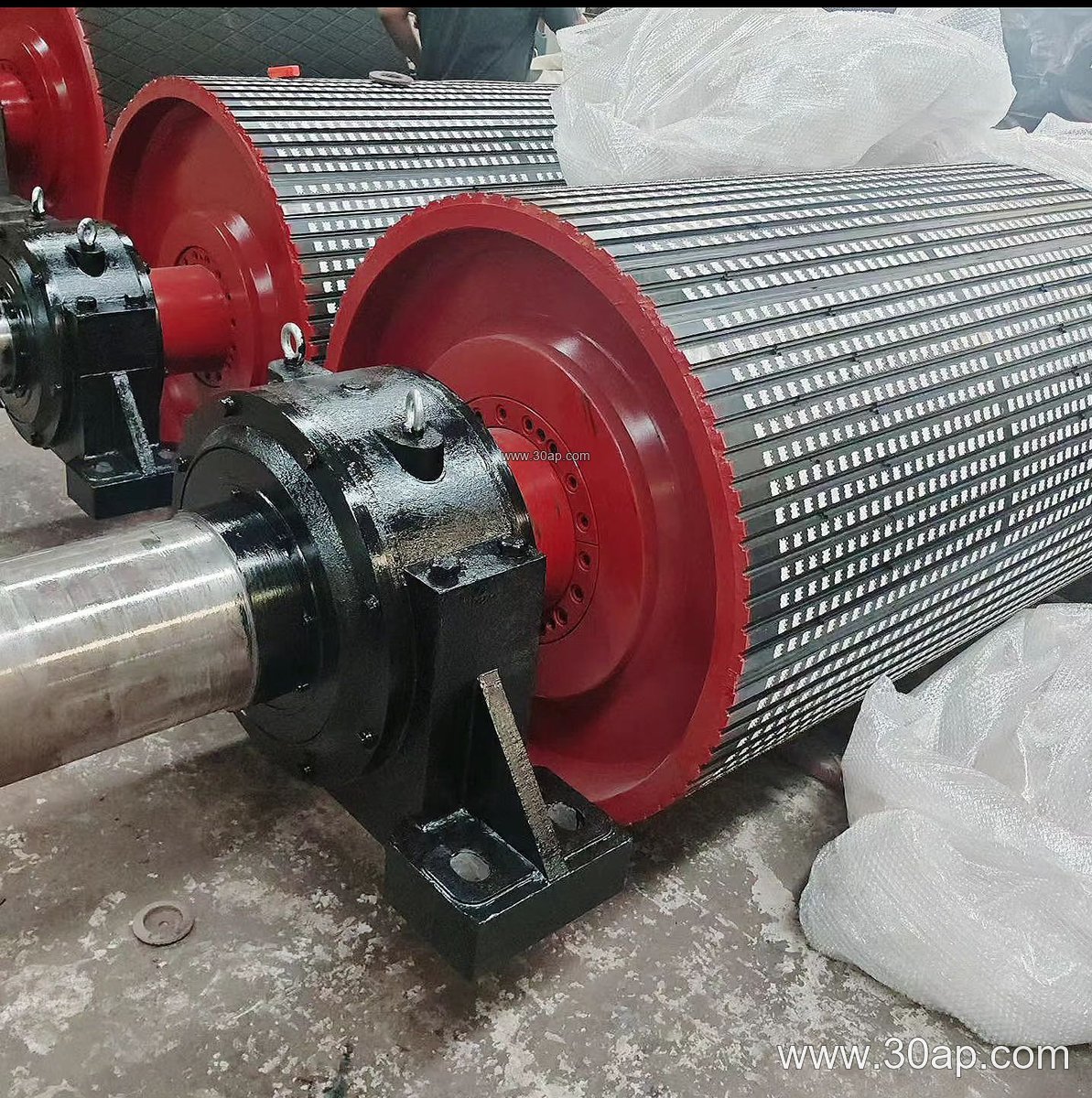
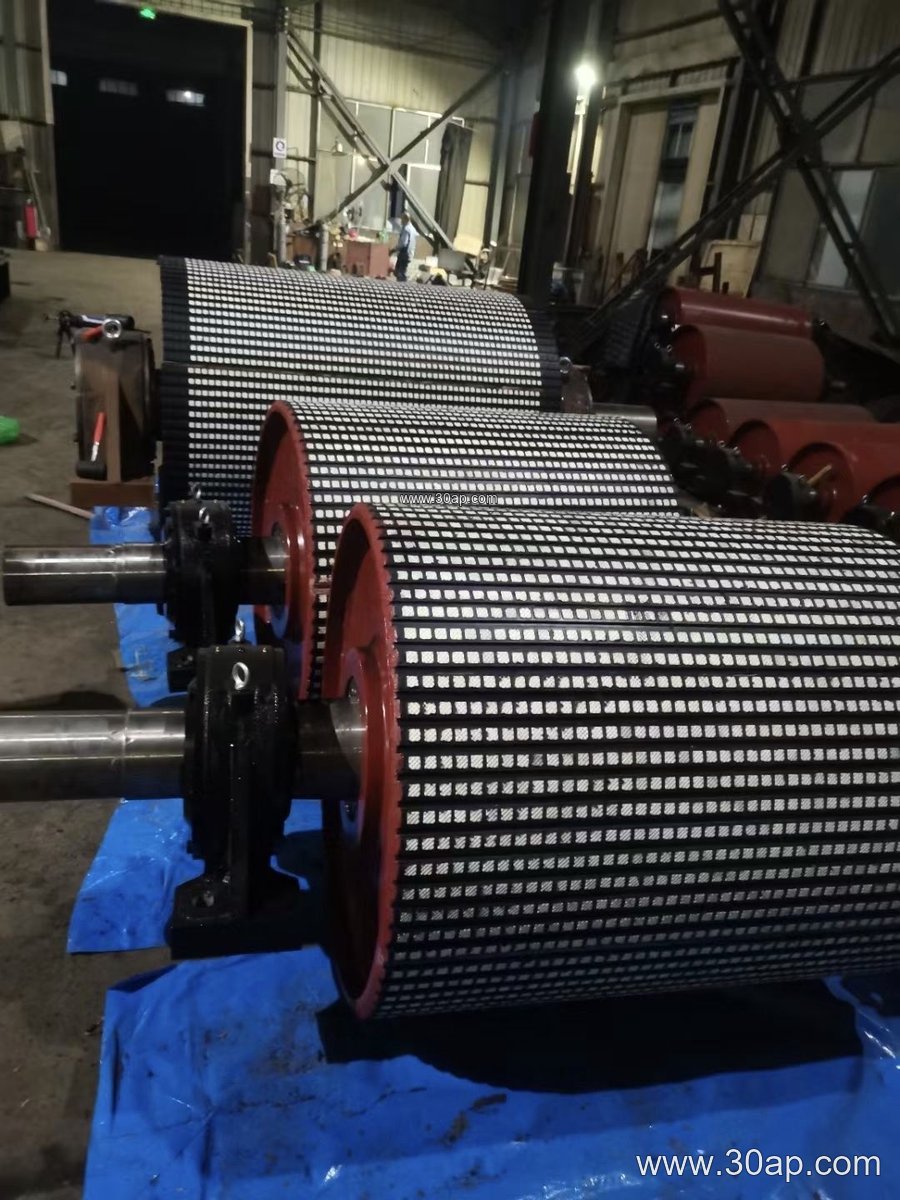
Most pulleys used in bulk handling are built around a steel drum with welded end discs and a shaft. The shell carries the belt, and the lagging on the shell determines grip and wear life. Common surface forms include plain finish, cast rubber, cold-bonded rubber, hot-vulcanized rubber, diamond lagging, herringbone lagging, ceramic lagging, and flat rubber sheet. Lagging thickness is commonly 8, 10, 12, 15, or 20 mm, selected according to the duty.
For a drive position, ceramic or diamond lagging is often chosen where a Abrasion Resistant Conveyor Belt runs at high tension and wet conditions are present. At a tail position, a plain or lightly lagged surface may be enough because the main job is support rather than torque transfer. For a bend pulley, the wrap angle and belt stiffness guide the choice.
Typical Reference Dimensions
The table below shows common reference values, not fixed rules. Face width is usually a little wider than the belt it carries, and shaft diameter is determined by torque and load, not by belt width alone.
| Belt width | Typical face width | Common pulley diameters | Common shaft diameters |
|---|---|---|---|
| B400 | about 500 mm | Ø200, Ø250, Ø315 | Ø50, Ø60, Ø70 |
| B500 | about 600 mm | Ø250, Ø315, Ø400 | Ø60, Ø70, Ø80 |
| B650 | about 750 mm | Ø315, Ø400, Ø500 | Ø70, Ø80, Ø90 |
| B800 | about 950 mm | Ø400, Ø500, Ø630 | Ø80, Ø90, Ø100 |
| B1000 | about 1150 mm | Ø500, Ø630, Ø800 | Ø100, Ø120, Ø140 |
| B1200 | about 1400 mm | Ø630, Ø800, Ø1000 | Ø120, Ø140, Ø160 |
| B1400 | about 1600 mm | Ø800, Ø1000, Ø1250 | Ø140, Ø160, Ø180 |
| B1600 | about 1800 mm | Ø1000, Ø1250, Ø1400 | Ø160, Ø180, Ø200 |
| B1800 | about 2000 mm | Ø1250, Ø1400, Ø1600 | Ø180, Ø200 |
Combinations such as B1200 × Ø1000 or B1400 × Ø800 are common in design drawings, but they are examples, not mandatory pairings. A wider belt does not force one specific diameter, and a shaft size should never be guessed from belt width alone.
Where These Pulleys Are Used
You will find them in quarry and aggregate lines feeding crushers, in cement plants moving clinker and raw meal, and in power plant coal handling. In a sand and gravel plant, a tail pulley at the loading point often works with an EP Conveyor Belt or a Multi-Ply Fabric Core Conveyor Belt, while the head drive pulley handles the main tension. In a coal washing plant, a Flame Retardant Conveyor Belt may run over ceramic-lagged drive pulleys where slip resistance matters. In a port bulk terminal, a Steel Cord Conveyor Belt on a long overland conveyor places high demands on the drive pulley shell and shaft.
Loading points are hard on equipment. A High Abrasion Resistant Conveyor Belt carrying sharp rock may wear the pulley lagging as much as the belt itself, so the lagging grade deserves attention. Where the belt carries hot material such as cement clinker, a Heat Resistant Conveyor Belt works with a pulley that can tolerate heat at the contact zone. In cold climates, a Cold Resistant Conveyor Belt may need lagging that stays flexible.
What Buyers Should Confirm
- Position and duty: state whether the pulley is a drive, tail, or bend unit, and describe the wrap angle and belt speed.
- Belt interface: give belt width, belt type, and tension so the face width and shell thickness can be checked.
- Lagging: choose plain, rubber, diamond, herringbone, or ceramic based on grip and wear, not on habit.
- Shaft and bearing: shaft diameter follows torque and load; ask for the calculation basis.
- Balance and runout: a pulley that is out of balance will shorten bearing life and damage the belt edge.
A conveyor belt pulley is a small part of the total conveyor cost but a large part of its reliability. Matching the subtype to the position, the lagging to the material, and the dimensions to the actual load is the practical way to keep a quarry, cement plant, or coal handling line running.