What a Multi-Ply Fabric Core Conveyor Belt Is
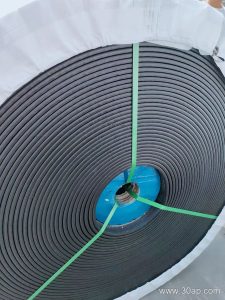
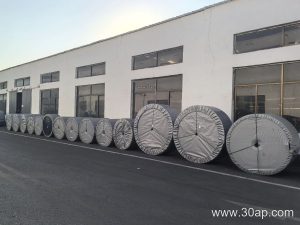
A Multi-Ply Fabric Core Conveyor Belt is a rubber conveyor belt built around two or more layers of woven fabric, usually EP (polyester-cotton) or NN (nylon-nylon) canvas, bonded together with rubber skim and protected by top and bottom cover rubber. The multiple fabric plies give the belt its tensile strength and resistance to impact, while the rubber covers handle abrasion, heat, oil, flame or static depending on the compound chosen. Buyers often refer to this product as an EP Fabric Core Conveyor Belt or simply a Fabric Core Conveyor Belt when the exact polymer is not the focus. It is the workhorse belt of bulk material handling, distinct from a Steel Cord Conveyor Belt, which relies on steel cables rather than fabric plies for tension.
Construction and Ply Arrangement
The carcass is the defining feature. Each ply is a woven fabric layer; typical belts use 2 to 6 plies, and the ply count is selected against the required working tension and the pulley arrangement. The plies are calendered with rubber and pressed into a monolithic core, then covered with top and bottom rubber. Cover thickness is usually written as a pair, for example 4+2 mm or 6+2 mm, meaning top cover plus bottom cover. A thicker top cover suits sharp, abrasive rock; a thinner bottom cover is common where the belt runs over idler rollers and needs flexibility. The finished belt can be supplied as an Endless Conveyor Belt for critical transfer points, or with mechanical or vulcanized splices for longer runs.
Common Strength Grades and Widths
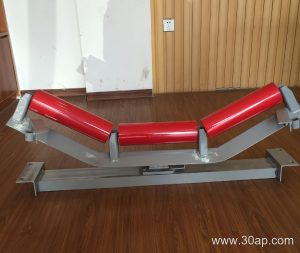
Multi-ply fabric belts are graded by the tensile strength of the carcass. EP grades such as EP200, EP400, EP630, EP800, EP1000 and EP1250 are common reference points, while NN grades follow a similar ladder (NN100 to NN400). These figures are design references, not a promise that every plant stocks every grade. Belt width is matched to the conveyor profile and the tonnage to be moved; B500, B650, B800, B1000, B1200, B1400 and B1600 are frequently seen in mining, cement and aggregate circuits. A wider belt is not automatically better: it must suit the pulley face, the troughing idler roller set and the loading chute. Narrow belts can run on smaller conveyor pulleys, but belt width and pulley diameter are separate design decisions and should not be treated as a fixed one-to-one pairing.
Where It Is Used
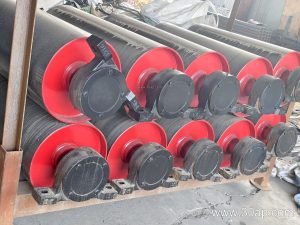
This belt type appears across heavy industry. In a coal mining conveyor belt system, flame retardant and anti-static covers are usually specified for underground mining conveyor belt duty. In a quarry conveyor belt or crusher conveyor belt line, abrasion resistant rubber protects the carcass from sharp stone. Cement plants use heat resistant conveyor belt grades near kilns and clinker coolers, and power plants rely on fire resistant conveyor belt compounds around coal handling. Sand and gravel operations, port ship loading systems and recycling lines also use this belt family. Each circuit has its own conveyor pulley set — drive, tail and bend pulleys — and the belt must be specified for the smallest pulley it will bend around.
Cover Compounds and Special Options
The carcass is only half the specification. Cover rubber can be formulated for:
- High abrasion resistance for ore, rock and aggregate.
- Heat resistance for cement, clinker and sinter.
- Oil resistance for oily scrap or grain handling.
- Flame retardant and anti-static properties for coal and underground work.
- Cold resistance for outdoor winter operation.
- Acid and chemical resistance for fertilizer and mineral processing.
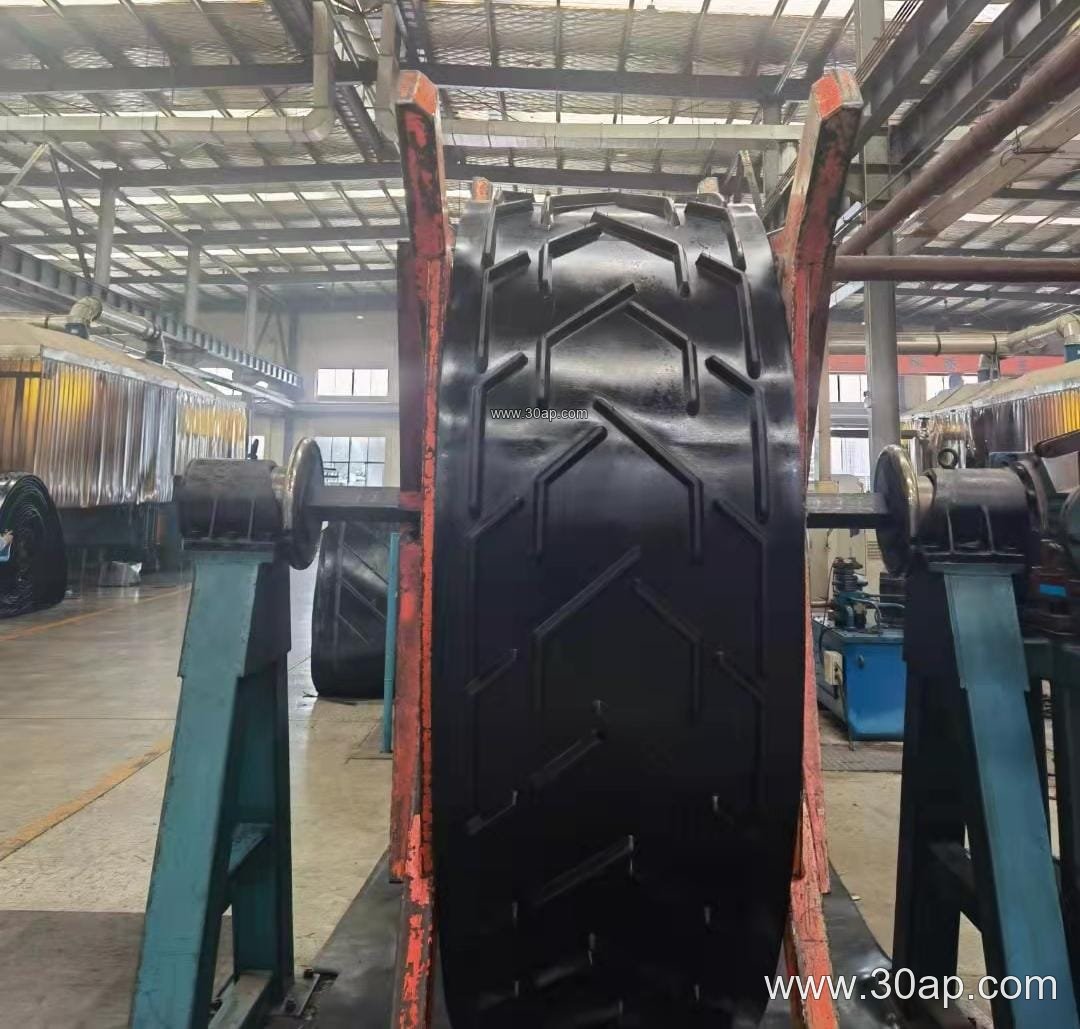
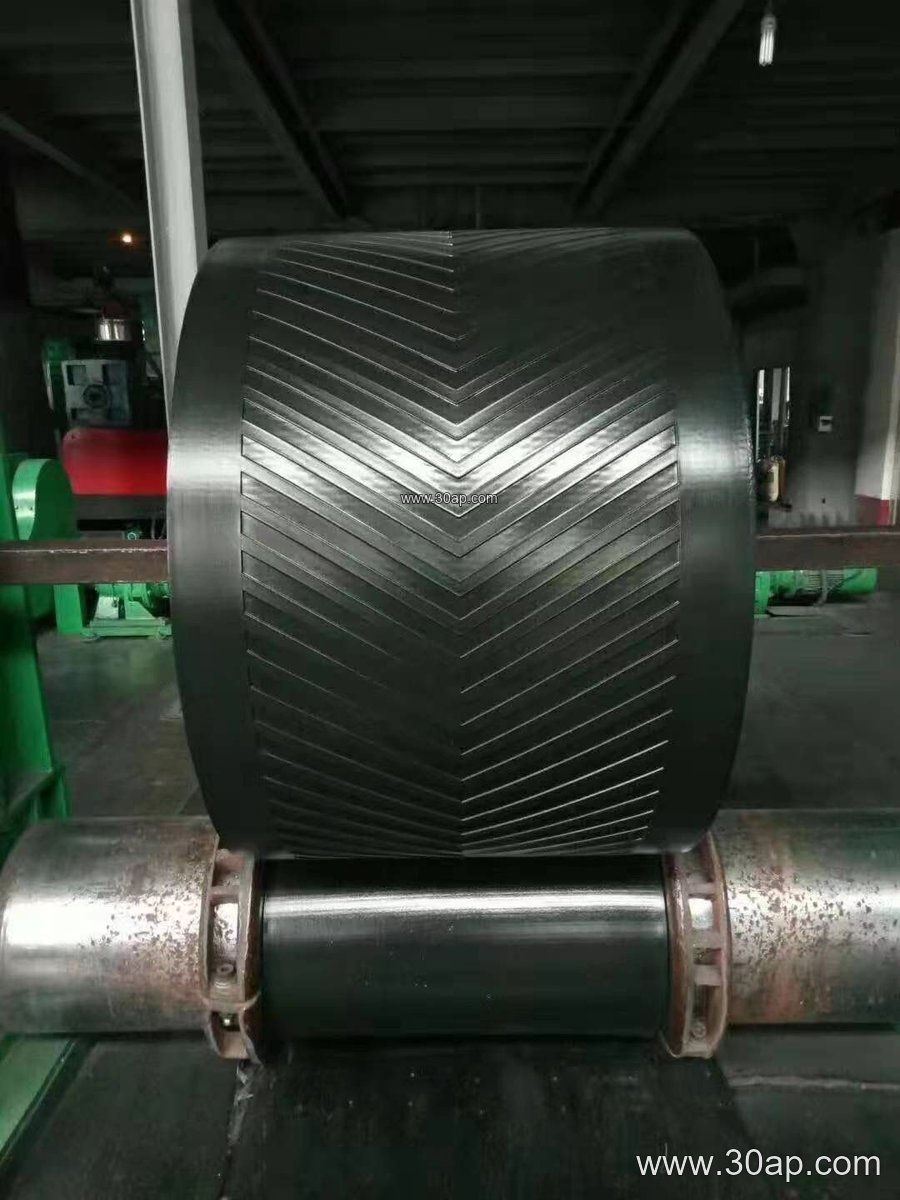
Surface forms are also available. A Chevron Conveyor Belt adds raised ribs for inclined haulage, a Skirted Conveyor Belt or Corrugated Sidewall Conveyor Belt contains material on steep inclines, and a Pipe Conveyor Belt encloses the load for dust control. These are variants of the same fabric-core family, not replacements for the standard flat belt.
Buyer Checklist
Before ordering, confirm the working tension and select the ply count and EP or NN grade accordingly. State the belt width, cover thickness and any special compound. Check the drive pulley, tail pulley and bend pulley diameters against the belt manufacturer’s minimum bend radius for the chosen ply count. Review the conveyor bracket and idler roller spacing to avoid excessive sag. For underground coal work, request flame retardant and anti-static test data. Ask for the splice method and whether an endless belt is needed. Finally, confirm the actual supplied dimensions and grade in writing, because reference tables vary between manufacturers and site conditions change the final choice.