What a Surface Belt Conveyor Idler Does
A surface belt conveyor idler is the rotating element that supports the conveyor belt on the carrying and return sides of a surface conveyor system. You will also see it called a surface conveyor idler roller or simply a surface idler. It is not a drive pulley, tail pulley, or bend pulley; those are separate components that transmit power or change belt direction. The idler’s job is to carry the belt and material load with low rolling resistance, keep the belt aligned, and protect the belt from excessive sag between support points.
In mines, quarries, cement plants, power station coal yards, and aggregate operations, surface idlers operate in dusty, abrasive, and sometimes wet conditions. The right idler selection helps reduce belt wear, downtime, and energy use.
Construction and Main Parts
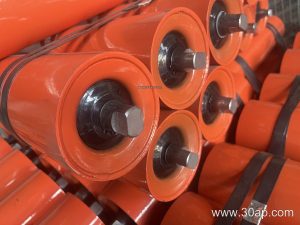
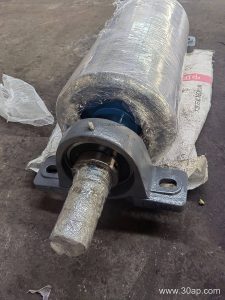
A typical surface conveyor idler roller consists of a steel tube shell, bearing housings, bearings, a shaft, and a sealing system. The shell may be plain steel, nylon-coated, ceramic-covered, or fitted with rubber rings for impact absorption. Common bearing sizes include 6204, 6205, 6305, 6306, 6308, and 6310. These bearings are matched to the idler diameter and load rating by the manufacturer, not by belt width alone.
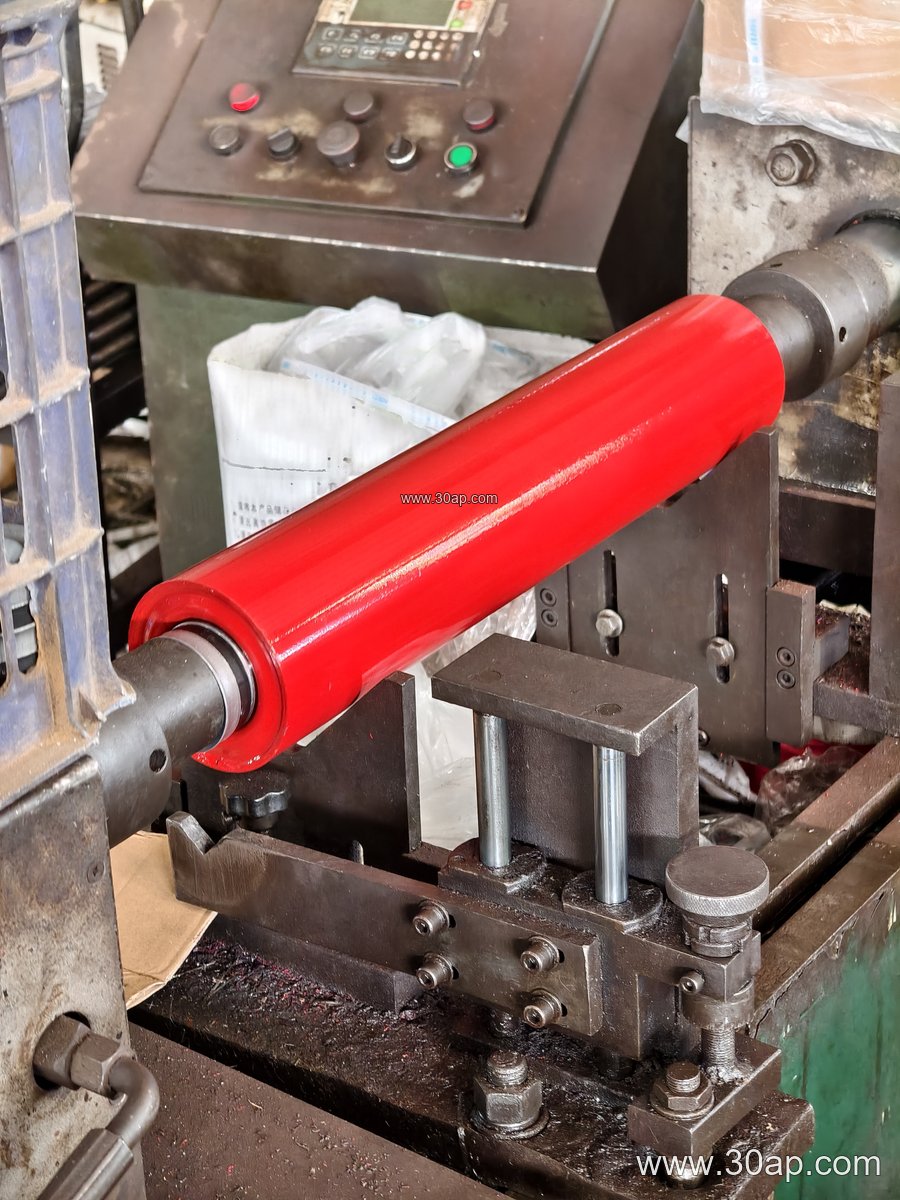
Sealing is critical on surface installations. Labyrinth seals and contact seals are common choices to keep out dust and water. For high-abrasion service, such as a quarry conveyor belt or iron ore conveyor belt, the idler shell and seal design should be reviewed with the belt speed and material characteristics in mind.
Common Types on Surface Conveyors
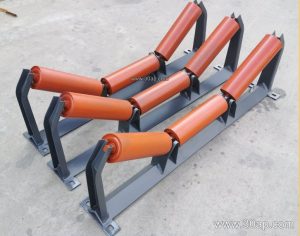
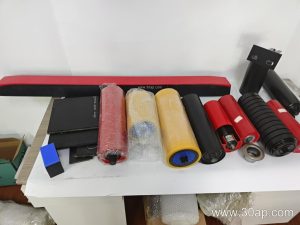
Surface belt conveyor idlers are supplied in several forms. The carrying side usually uses three-roll troughing sets, while the return side may use flat return idlers or V-return idlers. Transition idlers help guide the belt from flat to troughed profile. Impact idlers with rubber rings are placed under loading points. Self-aligning idlers help correct belt tracking. Spiral idlers can be used where sticky material builds up on the return side.
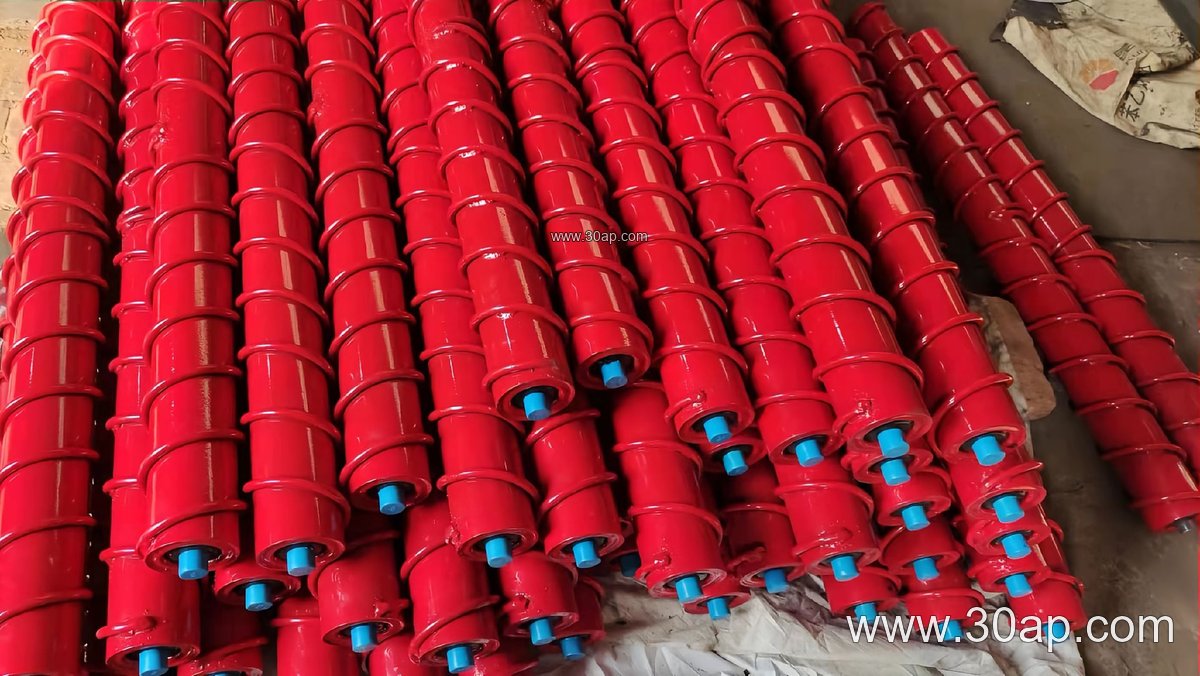
- Troughing idler set: single-roll, two-roll, or three-roll arrangement
- Return idler: flat or V-shaped
- Impact idler: rubber ring or rubber disc surface
- Self-aligning idler: friction or tapered roll design
- Spiral idler: for return-side cleaning
These subtypes are not interchangeable with conveyor pulleys. A drive pulley, tail pulley, or bend pulley has a different function and should be specified separately.
Where Surface Idlers Are Used
Surface belt conveyor idlers appear in many bulk handling routes. In a limestone quarry or aggregate line, troughing idlers support the belt under crushed rock. In a coal yard or power plant coal handling system, flame retardant conveyor belt and anti-static conveyor belt grades are often used together with well-sealed idlers. In a copper ore or gold mining operation, heavy-duty idlers and abrasion resistant conveyor belt help handle sharp, dense material. Cement plants and fertilizer plants also rely on surface idlers to keep belt lines running.
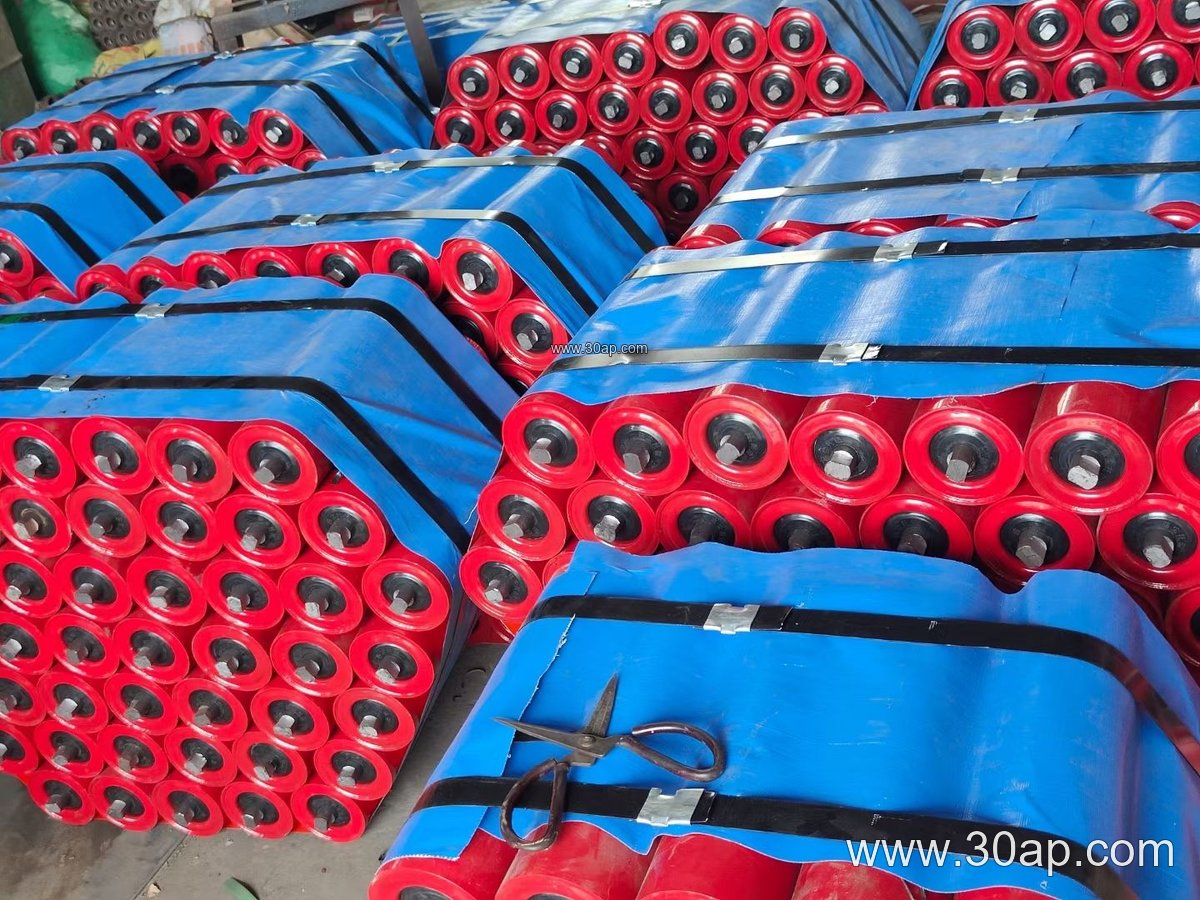
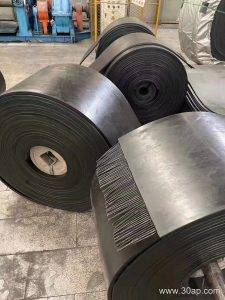
When the conveyor uses an EP conveyor belt, NN conveyor belt, or steel cord conveyor belt, the idler spacing and roll diameter should be checked against the belt’s load support needs. A 1200mm wide conveyor belt or 1800mm wide conveyor belt does not automatically dictate one idler diameter; the design load, belt speed, and trough angle all matter.
Dimensions and Selection Notes
Idler diameter and roll length are selected together with belt width, trough angle, and idler arrangement. The table below gives common reference examples, not fixed rules. Side rolls and center rolls can differ in length, and final dimensions are set by the conveyor designer.
| Belt width | Common three-roll troughing idler roll length (example) | Common idler diameter range (example) |
|---|---|---|
| B500 | about 200 mm | Ø63 to Ø89 |
| B650 | about 250 mm | Ø76 to Ø108 |
| B800 | about 315 mm | Ø89 to Ø127 |
| B1000 | about 380 mm | Ø102 to Ø133 |
| B1200 | about 465 mm | Ø108 to Ø159 |
| B1400 | about 530 mm | Ø127 to Ø178 |
| B1600 | about 600 mm | Ø133 to Ø194 |
| B1800 | about 670 mm | Ø159 to Ø219 |
| B2000 | about 750 mm | Ø178 to Ø219 |
Trough angles of 20, 30, 35, and 45 degrees are common. A forward tilt of about 1.5 to 2 degrees is sometimes used on training idlers. Bearing selection should follow the idler manufacturer’s load and speed ratings. Do not assume a fixed shaft diameter from belt width alone.
What Buyers Should Check
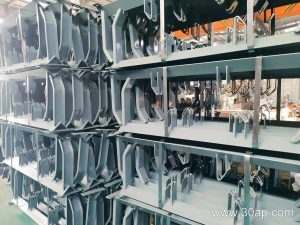
Before ordering surface belt conveyor idlers, confirm the belt width, trough angle, idler type, roll diameter, roll length, bearing size, seal type, and surface form. Ask whether the idler is for carrying, return, impact, or training duty. Check compatibility with the conveyor bracket and frame. For dusty or wet surface conditions, review the sealing and lubrication approach. If the line uses a heat resistant conveyor belt or oil resistant conveyor belt, confirm that the idler components are suitable for the ambient conditions. A clear specification helps avoid mismatches between the idler roller, conveyor belt, and conveyor pulley.