What a Four-Roll Idler Bracket Does on a Conveyor
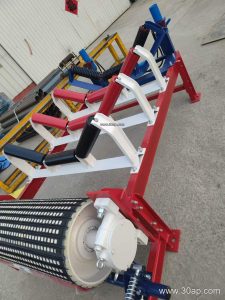
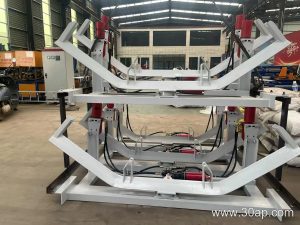
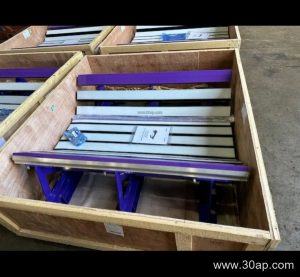
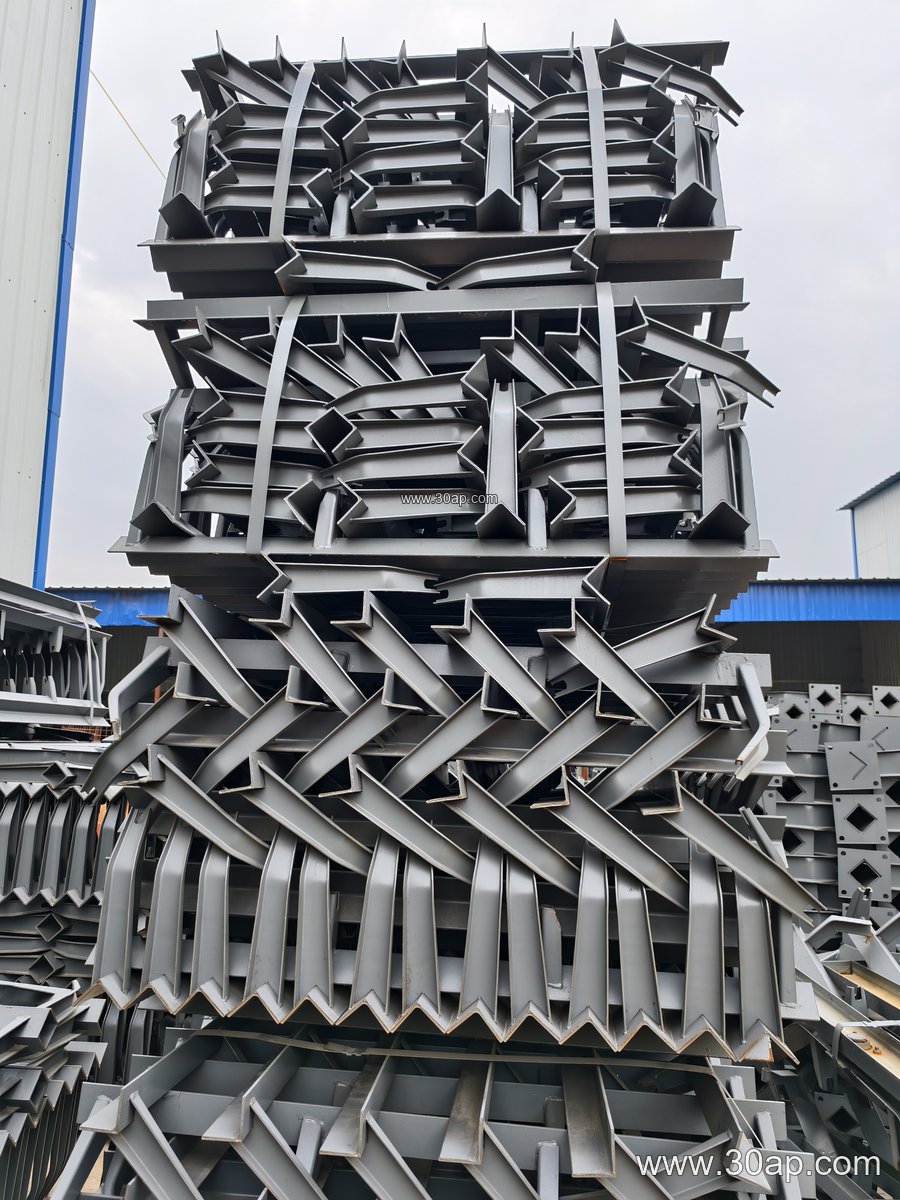
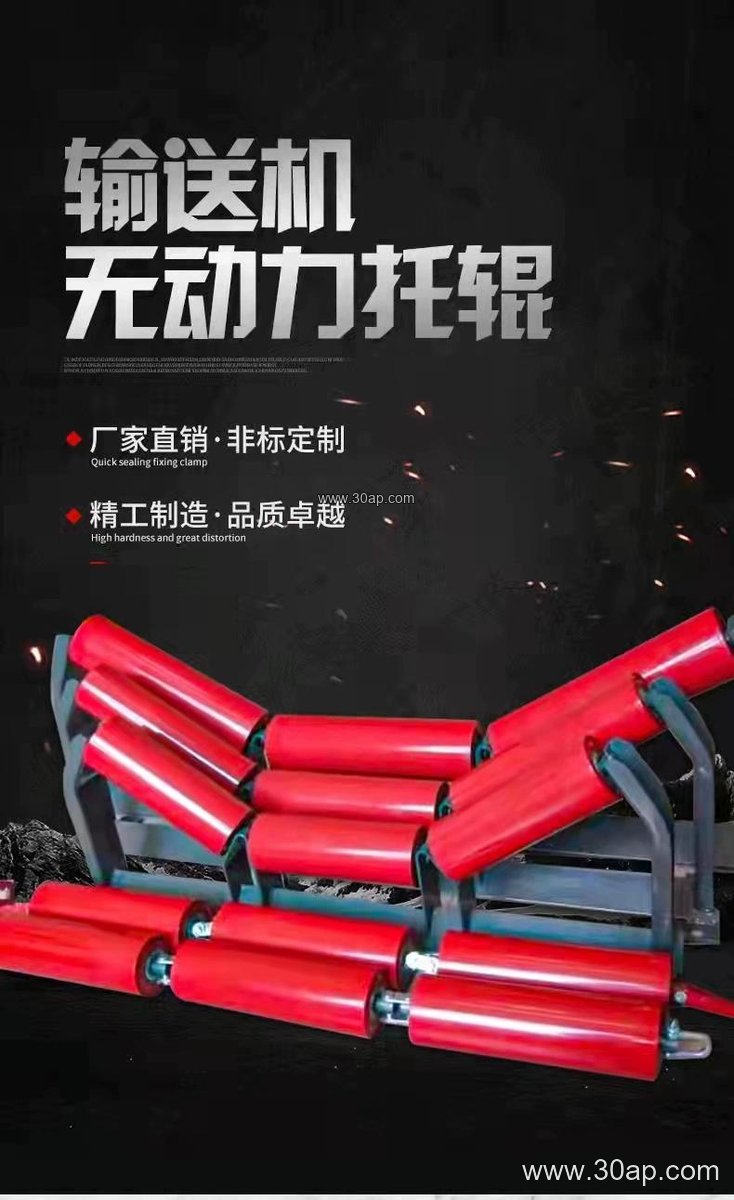
A four-roll idler bracket is a support frame that carries four idler rollers under the loaded side of a conveyor belt. Instead of the usual three-roll trough set, it spreads the belt across four contact points, which gives a wider, smoother trough profile and more support across the belt width. Maintenance teams in a limestone quarry, a coal washing plant, or a cement clinker line often choose this arrangement where belt sag, spillage, or uneven loading has become a problem. The bracket itself is a fabricated steel assembly, not a rotating part, but it decides how well the rollers and the belt work together.
How the Bracket Is Built
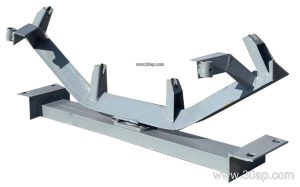
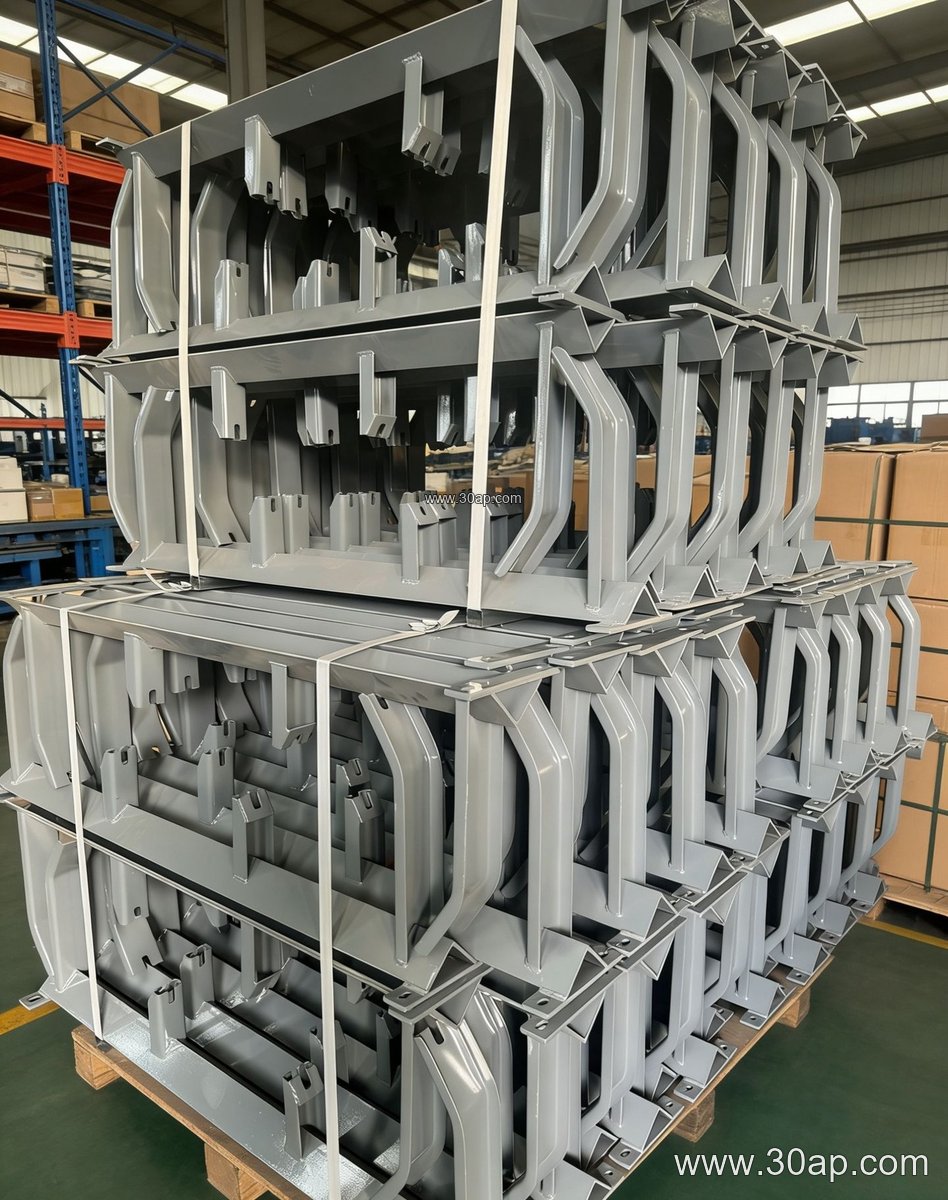
Most four-roll idler brackets are made from angle steel, channel steel, or folded steel plate. The frame usually has two end supports and intermediate mounting positions so that the four rollers sit at controlled angles. The outer rollers are set steeper than the inner pair, creating a deeper trough that keeps bulk material centred. Mounting slots or drilled holes allow the roller shafts to be fixed with standard clamp plates. Surface treatment is normally painted or galvanised, depending on the site conditions. In dusty or wet installations, the bracket should drain freely and avoid pockets where fines can pack.
Typical reference data for bracket selection
The values below are common reference points, not fixed rules. Actual hole spacing and beam length are determined by the conveyor design.
- Belt width range commonly covered: B500, B650, B800, B1000, B1200, B1400, B1600, B1800
- Trough angles: 20 degrees, 30 degrees, 35 degrees, 45 degrees
- Roller diameters often matched: Ø89, Ø108, Ø133, Ø159, Ø194
- Example combinations: B800 with 35 degrees and Ø108; B1200 with 45 degrees and Ø133; B650 with 30 degrees and Ø89
A wider belt does not automatically mean one specific trough angle or one roller diameter. The correct set depends on material, capacity, belt stiffness, and transition length.
Where Four-Roll Support Fits Best
Four-roll brackets are useful on wide belts and on lines that carry lumpy or heavy material. In an iron ore transfer station, the extra roller spreads impact load and reduces the chance of the belt pinching between rollers. At a power plant coal yard, the deeper trough helps contain a fast-moving coal stream on windy days. They are also seen in sand and gravel plants and in crushing and screening circuits where the belt is wide and the feed is not perfectly centred. For comparison, a three-roll troughing set is lighter and simpler and remains the standard choice on many medium-width lines; a four-roll bracket is selected when the wider support pattern is worth the extra hardware.
Matching the Bracket to Rollers and Belt
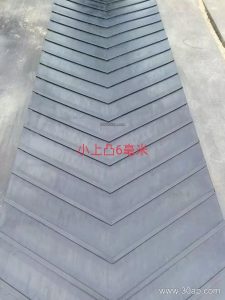
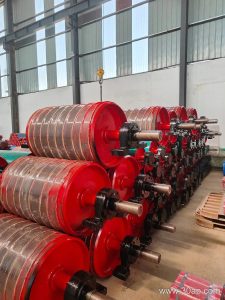
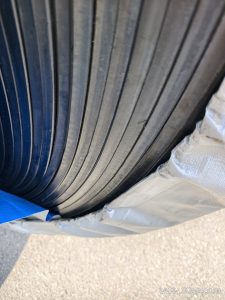
The bracket, the idler roller, and the conveyor belt form a set. If the bracket angle is too steep for a stiff belt, the belt edges may lift or crack. If the rollers are too small for the load, the bearings wear quickly. Buyers should confirm the belt width, the required trough angle, the roller diameter, and the shaft fixing method before ordering. On a line running an EP conveyor belt or a multi-ply fabric core belt, the bracket should allow a gentle transition from the flat pulley to the trough. On heavy-duty mining conveyor belt installations, thicker frames and stronger clamp plates are usually needed.
Buyer Checklist
- Confirm belt width and the number of rolls required.
- State the trough angle and whether adjustment is needed.
- Match roller diameter and shaft ends to the existing idler roller stock.
- Check mounting hole spacing against the conveyor stringer dimensions.
- Specify the material and finish for the site environment.
- Ask for the drawing before production, especially on wide belts.
A four-roll idler bracket is a small part of the conveyor but a large factor in belt life. Getting the geometry right at the start avoids edge damage, spillage, and repeated roller replacement later. For related components such as the conveyor pulley, conveyor bracket, and conveyor belt, the same principle applies: match the parts as a system, not as separate items.