What an Iron Ore Conveyor Pulley Does in the Belt Line
An iron ore conveyor pulley is the cylindrical rotating component that transmits power, maintains belt tension, and guides the conveyor belt at critical points along the system. In a typical iron ore handling circuit, these pulleys work under severe conditions: abrasive dust, heavy loads, and continuous operation. The pulley is not a standalone item; it interacts directly with the conveyor belt, idler roller, and conveyor bracket to keep material moving from the crushing station to the stockyard or ship loader.
While the term often brings to mind the drive unit at the head of the conveyor, an iron ore conveyor pulley also appears as a tail pulley, bend pulley, or take-up pulley. Each position demands a different design focus, and these subtypes are not interchangeable. For example, a drive pulley needs high torque transmission and often a lagged surface, whereas a bend pulley mainly redirects the belt and may use a plain finish.
Construction Details That Matter in Iron Ore Service
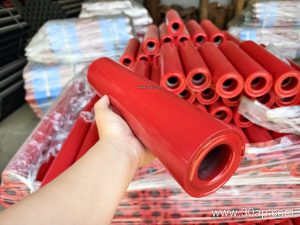
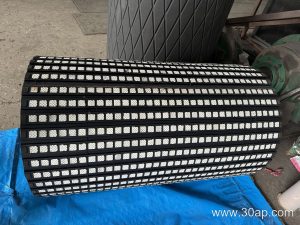
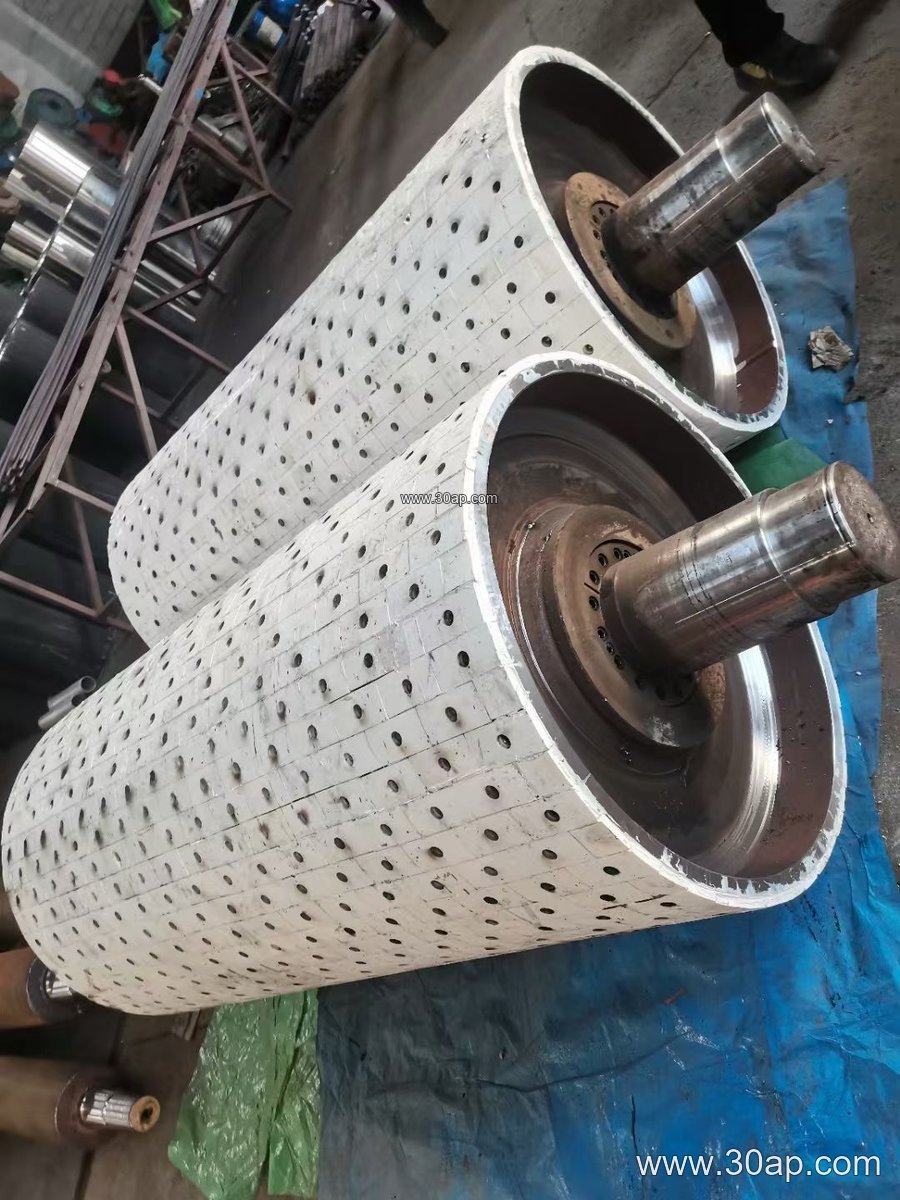
The build of an iron ore conveyor pulley typically includes a steel drum, shaft, hub, and bearing housing. The drum shell is usually rolled from steel plate and welded to end discs. For abrasive iron ore, the pulley surface may be left plain or covered with rubber lagging. Common surface options include smooth, cast rubber, cold-bonded rubber, hot-vulcanized rubber, diamond pattern, herringbone, and ceramic lagging. Lagging thickness commonly ranges from 8 mm to 20 mm, selected according to belt slip risk and wear conditions.
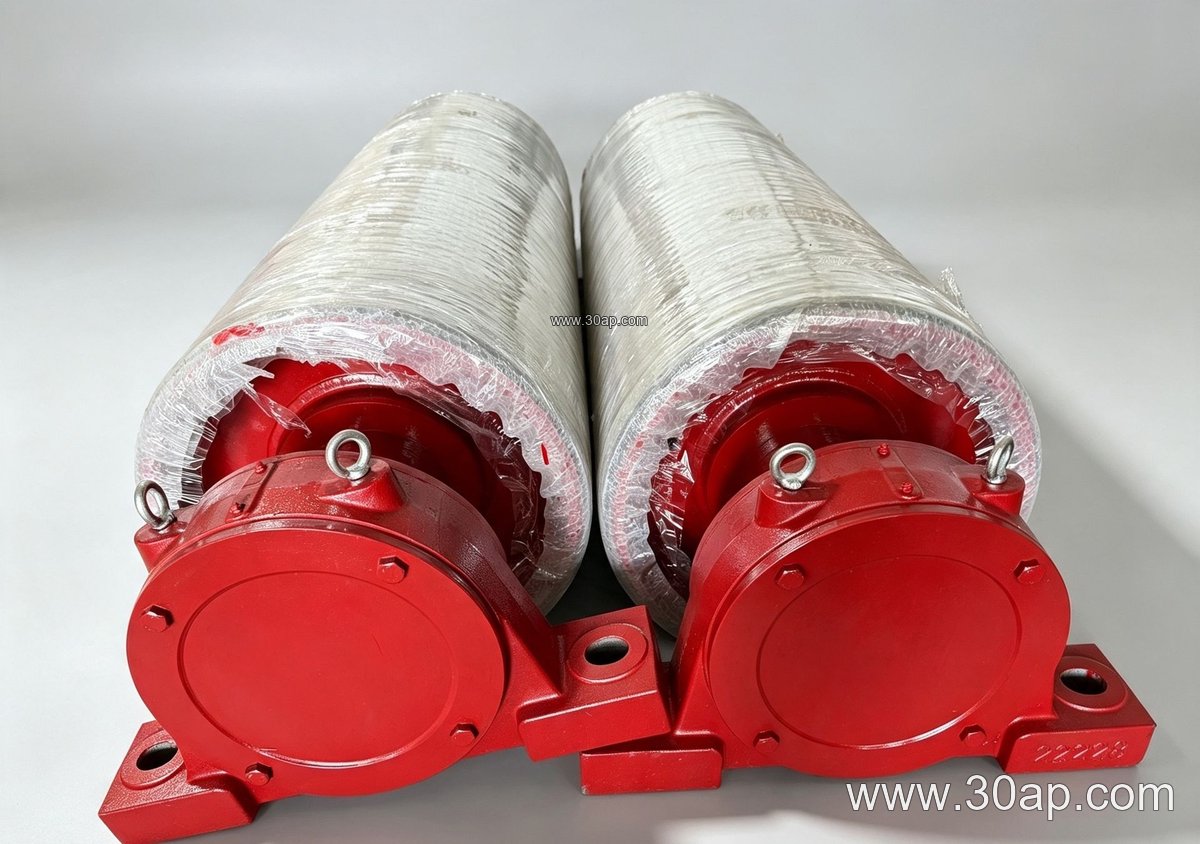
Bearing selection and sealing are critical. Iron ore dust is fine and abrasive, so effective seals help extend bearing life. Shaft diameters are determined by torque and load, not by belt width alone. Typical shaft sizes may include Ø50, Ø60, Ø80, Ø100, Ø120, Ø160, and Ø200, but the final choice depends on the pulley diameter, belt tension, and drive power.
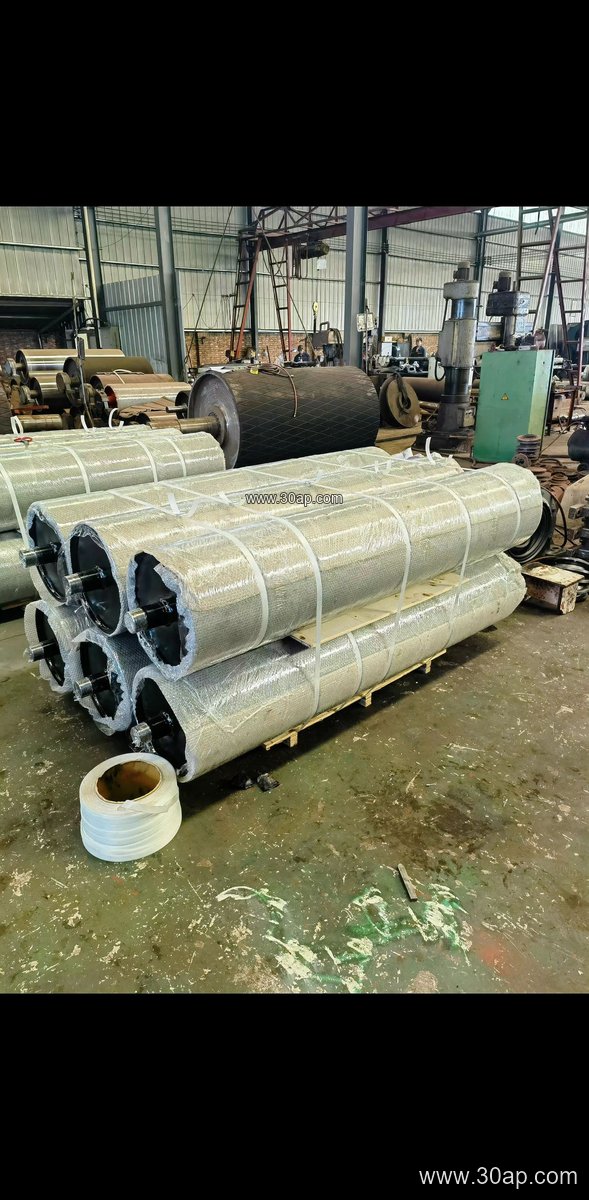
Where It Fits in Iron Ore Handling
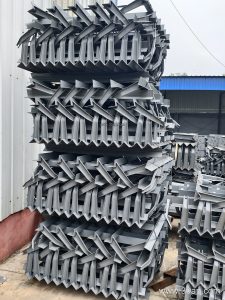
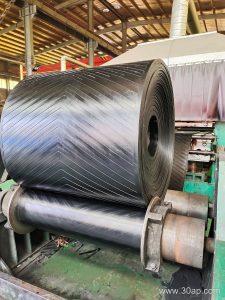
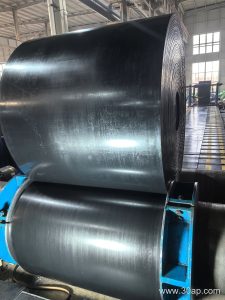
Iron ore conveyor pulleys are found in primary crushing stations, screening plants, stockpile feed lines, and load-out systems. In a concentrator, they may operate alongside a heavy-duty mining conveyor belt that carries lump ore or pellets. The pulley must cope with the belt’s own weight plus the material load, so the entire assembly—pulley, conveyor bracket, and idler roller—must be matched to the duty.
In port bulk terminals, iron ore conveyor pulleys help transfer ore from rail cars to ship loaders. Here, the belt may be a steel cord conveyor belt or a high-strength fabric core type such as EP conveyor belt or NN conveyor belt, depending on tension requirements. The pulley lagging and diameter are chosen to suit the belt’s flexibility and the required wrap angle. Other industries that use similar pulleys include coal mining, cement plants, and power plant coal handling, though the specific demands of iron ore—dense, abrasive, and often wet—call for robust lagging and sealing.
Specification Examples and Selection Notes
When specifying an iron ore conveyor pulley, buyers often work with belt width, pulley diameter, shaft size, and surface type. The table below shows common reference combinations; these are not mandatory pairings, and final dimensions should be confirmed by the conveyor designer.
| Belt Width (B) | Pulley Face Width (approx.) | Common Pulley Diameter | Typical Shaft Diameter Range |
|---|---|---|---|
| B800 | 950 mm | Ø500, Ø630 | Ø80–Ø120 |
| B1000 | 1150 mm | Ø630, Ø800 | Ø100–Ø140 |
| B1200 | 1400 mm | Ø800, Ø1000 | Ø120–Ø160 |
| B1400 | 1600 mm | Ø1000, Ø1250 | Ø140–Ø180 |
| B1600 | 1800 mm | Ø1250, Ø1400 | Ø160–Ø200 |
Note that a B1200 belt does not automatically require a Ø1000 pulley; the diameter depends on belt speed, wrap angle, and the allowable bending stress of the belt. Similarly, shaft diameter is calculated from torque and radial load, not copied from a belt width chart. Buyers should provide the belt tension, drive power, and pulley position to the manufacturer for a proper design check.
Buyer Checklist for Iron Ore Conveyor Pulleys
- Position and duty: Confirm whether the pulley is a drive, tail, bend, or take-up unit. A drive pulley usually needs lagging, while a bend pulley may run plain.
- Belt compatibility: Match the pulley face width to the belt width. For a 1200mm wide conveyor belt, a face width around 1400 mm is common, but confirm with the belt manufacturer.
- Lagging choice: For abrasive iron ore, diamond or ceramic lagging can improve grip and wear life. Hot-vulcanized rubber is often preferred for heavy-duty mining conveyor belts.
- Sealing and bearings: Specify dust-tight seals and suitable bearing types for the environment. In wet or corrosive conditions, consider additional protection.
- Balancing and inspection: Pulleys should be dynamically balanced. Ask for inspection records and run-out tolerances.
Because iron ore handling is unforgiving, the pulley should be selected as part of the whole conveyor system—together with the conveyor belt, idler roller, and conveyor bracket. A pulley that is oversized or undersized for the belt tension can cause belt tracking problems, premature lagging wear, or bearing failure. Buyers should avoid treating any single dimension as a universal rule and instead rely on the conveyor design calculation.
For more information on related components such as conveyor pulleys, conveyor belts, and idler rollers, please visit our website at www.example.com/conveyor-pulley or www.example.com/iron-ore-conveyor-pulley. Our team can help review your application requirements.