What an Anti-Slip Lagged Pulley Does
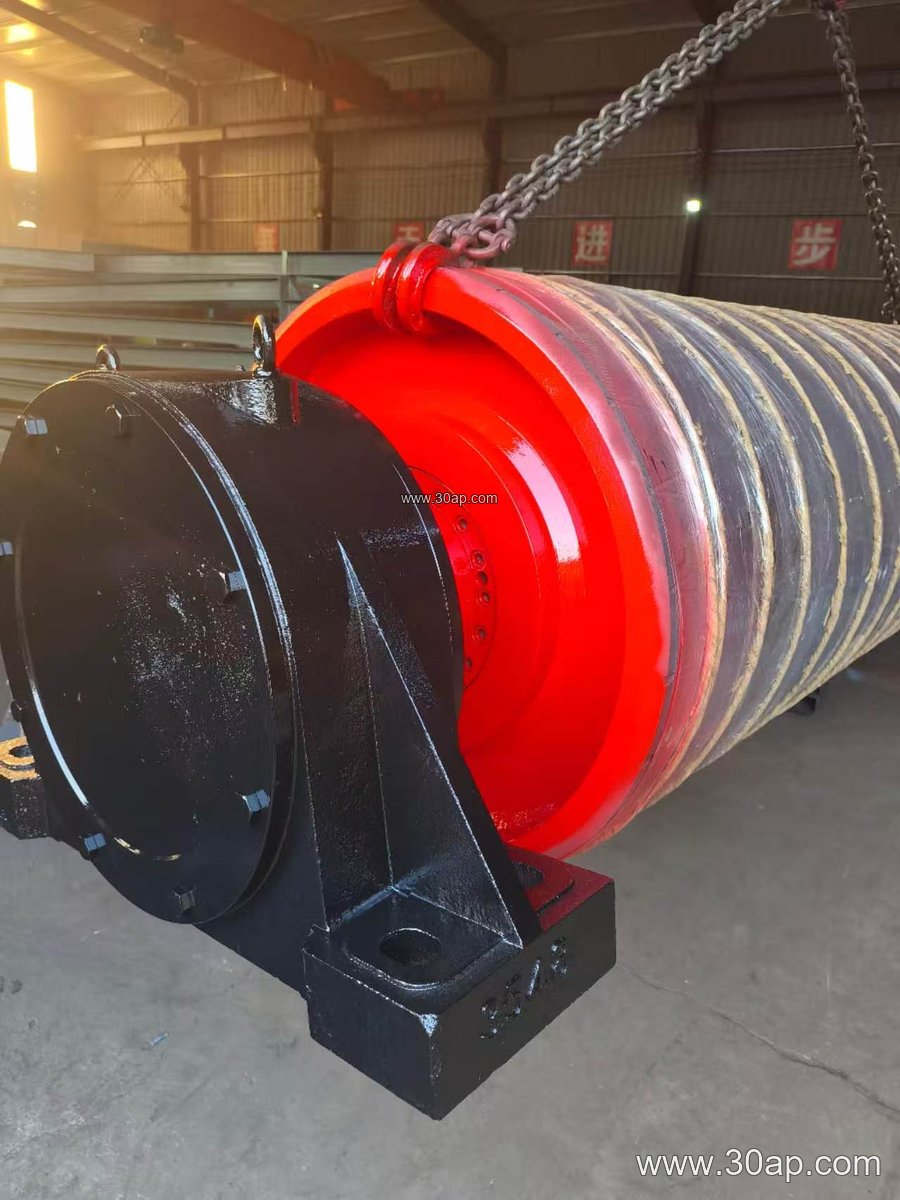
An anti-slip lagged pulley is a conveyor pulley whose shell is covered with a rubber or ceramic lagging layer designed to raise friction between the pulley face and the conveyor belt. On a drive pulley, that extra grip is what converts motor torque into belt movement without visible slip. When a heavy-Duty Mining Conveyor Belt carries ore up an incline, or a Cement Conveyor Belt runs through a dusty transfer tower, the lagged surface keeps the belt tracking the pulley instead of sliding over it. The same product is also called a rubber-lagged drive pulley or a friction-lagged pulley; both names point to the same component.
How the Lagging Is Built
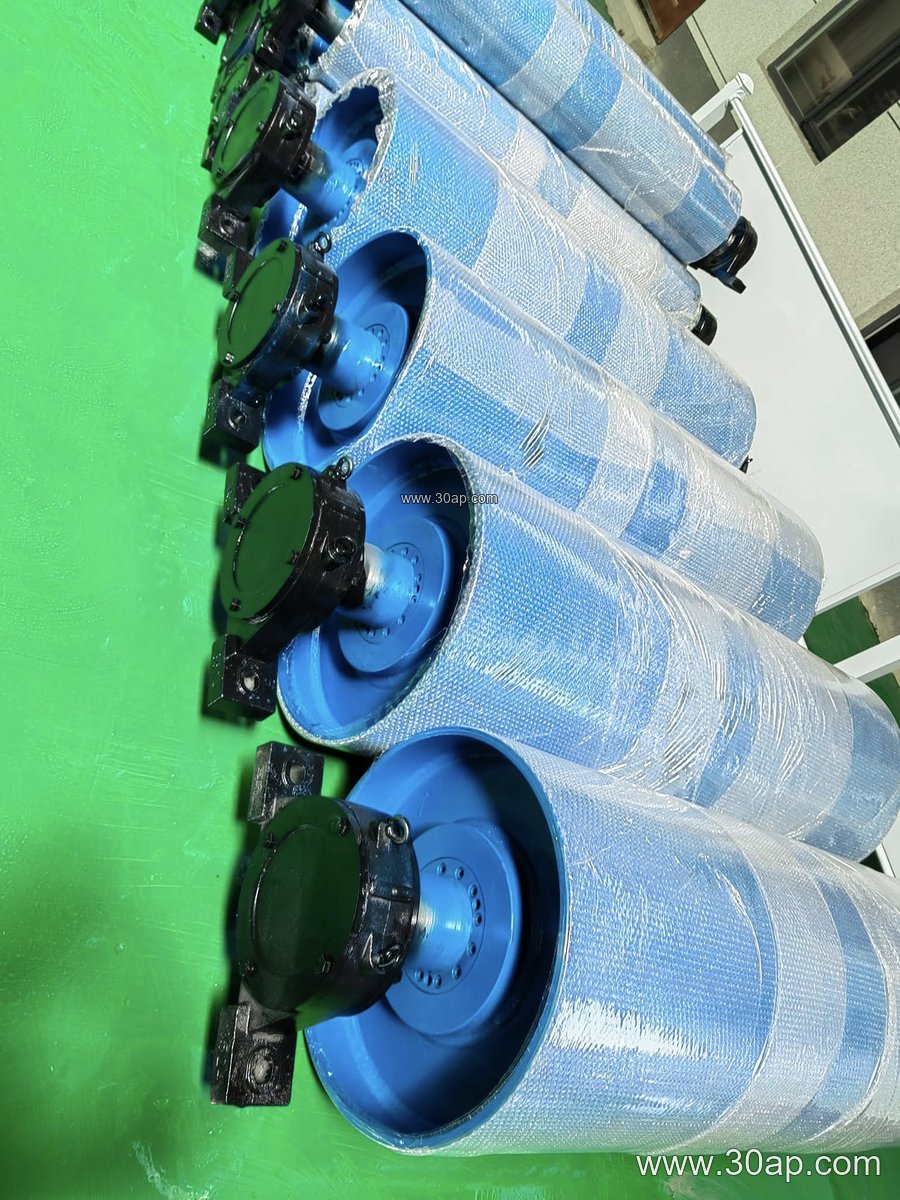
The pulley body is usually a welded steel shell with end discs and a shaft, machined so the lagging sits evenly across the face. Lagging is applied in several ways, and the choice affects grip, service life and how easily the surface can be renewed.
- Hot-vulcanized rubber lagging: bonded under heat and pressure for a strong, seamless cover, common on high-torque drive positions.
- Cold-bonded rubber lagging: glued in place, practical for field replacement when the pulley cannot be removed easily.
- Diamond or herringbone grooving: grooves channel water and fines away, which helps in wet or muddy conditions.
- Ceramic lagging: embedded tiles give very high friction, often selected where the belt is heavily loaded or the drive is steep.
- Plain flat rubber: a simple, cost-effective surface for clean, dry duty.
Lagging thickness is commonly 8, 10, 12, 15 or 20 mm, chosen with the drive duty rather than as a fixed rule. A thicker cover lasts longer but adds weight and may need more clearance around the pulley.
Where It Fits on the Conveyor
The anti-slip lagged pulley is most often the drive or head pulley, because that is where slip is most damaging. In a quarry or aggregate line, a lagged head pulley pulls a loaded Abrasion Resistant Conveyor Belt out of the crusher discharge. In a coal handling plant, a flame-retardant belt may run over a lagged drive pulley at the transfer point. A bend pulley or tail pulley can also be lagged, but its job is different: a tail pulley mainly guides and supports the belt, and a bend pulley changes belt direction. Lagging a bend pulley is usually about reducing wear or improving tracking, not about transmitting drive torque. Drive, tail and bend pulleys are separate positions and should not be treated as interchangeable when specifying a replacement.
Sizing the Pulley and the Belt Together
The pulley face is normally wider than the belt so the belt can run with a small margin on each side. Reference combinations such as B800 × Ø500 or B1200 × Ø1000 appear in project drawings, but they are examples, not a fixed pairing. Diameter follows belt tension, wrap angle and shaft load; shaft diameter follows torque and bearing selection. Common shaft sizes include Ø80, Ø100, Ø120 and Ø140, with larger sizes used on heavy drives. The table below lists typical reference data for orientation only.
| Item | Common reference values |
|---|---|
| Belt width | B500, B650, B800, B1000, B1200, B1400, B1600, B1800 |
| Pulley diameter | Ø250, Ø315, Ø400, Ø500, Ø630, Ø800, Ø1000, Ø1250 |
| Lagging thickness | 8, 10, 12, 15, 20 mm |
| Surface form | Plain, diamond, herringbone, ceramic |
| Face width example | B800 about 950 mm; B1200 about 1400 mm |
These values are reference data; final dimensions are confirmed by the conveyor design, not by belt width alone.
Buyer Checklist Before Ordering
Confirm the pulley position first: drive, tail, bend, take-up or snub. Then record belt width, pulley diameter, face width, shaft diameter and bearing arrangement. State the lagging type and thickness, and whether grooving or ceramic tiles are required. Check the belt construction the pulley will run against, since a Steel Cord Conveyor Belt and a multi-ply fabric belt impose different demands on the lagging surface. For wet or dirty service, specify grooved lagging and confirm the drainage path. Also check that the conveyor bracket and bearing housing match the new shaft, and that there is room for the lagging thickness. Finally, ask for the balancing grade and the inspection record for the bond between lagging and shell.
Maintenance Notes
Inspect lagging for wear, glazing, embedded stone or loose edges during scheduled shutdowns. Worn lagging reduces friction and can lead to belt slip, heat buildup and premature belt damage. Keep the pulley face clean and check that the belt is not misaligned, because edge loading wears lagging unevenly. When slip appears, verify belt tension and load first before assuming the lagging is at fault. A spare lagged pulley kept on site shortens downtime in busy plants such as power station coal yards or limestone crushing circuits.