What a Ceramic Lagged Bend Pulley Does
A ceramic lagged bend pulley is a direction-changing conveyor pulley with a ceramic tile lagging bonded to its shell. It is not a drive pulley or a tail pulley, and it should not be confused with a tension pulley. Its job is to guide the conveyor belt along a return path or redirect it between sections without transmitting drive torque. The ceramic lagging raises friction between the pulley face and the belt, which helps maintain contact and reduces belt slip in wet, dusty, or high-load conditions.
This pulley is commonly found in bulk handling systems where abrasive materials are present, such as a quarry conveyor line, a cement plant clinker circuit, or a coal mining conveyor that uses a flame retardant conveyor belt. It also appears in power plant coal handling and aggregate plants that rely on abrasion resistant conveyor belts.
How the Ceramic Lagging Is Built
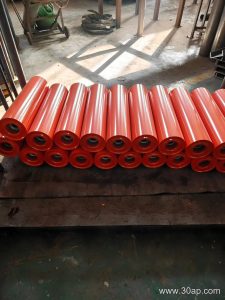
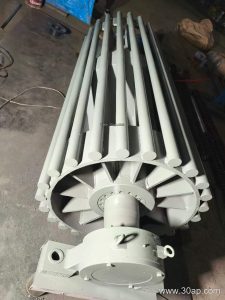
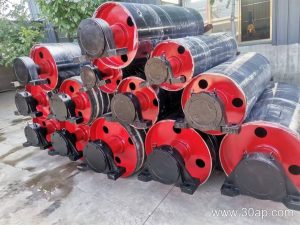
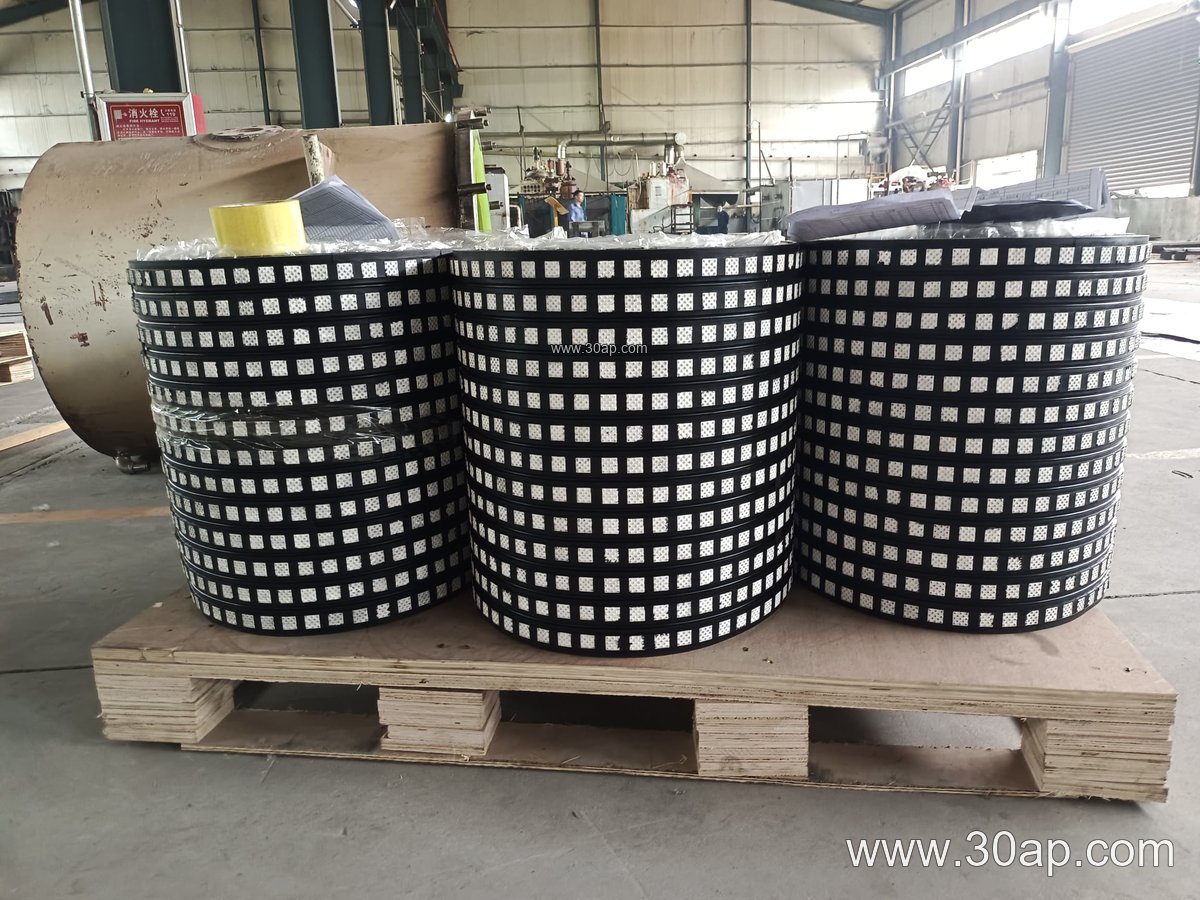
The pulley body is usually a welded steel drum with a shaft, end discs, and a hub assembly. The ceramic lagging consists of small ceramic tiles set in a rubber or polymer matrix. These tiles are arranged in a pattern that provides grip while allowing some flexibility. The lagging is bonded to the pulley shell, and the surface may include raised dimples or grooves for water and debris drainage. Common lagging thicknesses are 8, 10, 12, 15, and 20 mm, selected according to belt tension and environmental conditions.
The ceramic surface is harder than plain rubber, so it resists wear from fine particles that cling to the belt. However, it is not a substitute for a drive pulley’s lagging, which must handle higher torque. A bend pulley with ceramic lagging is typically used on the return side or at a direction change where belt wrap is moderate.
Where It Fits in a Conveyor
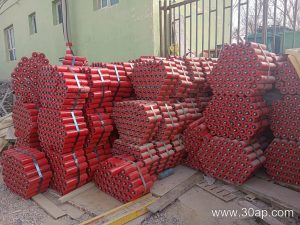
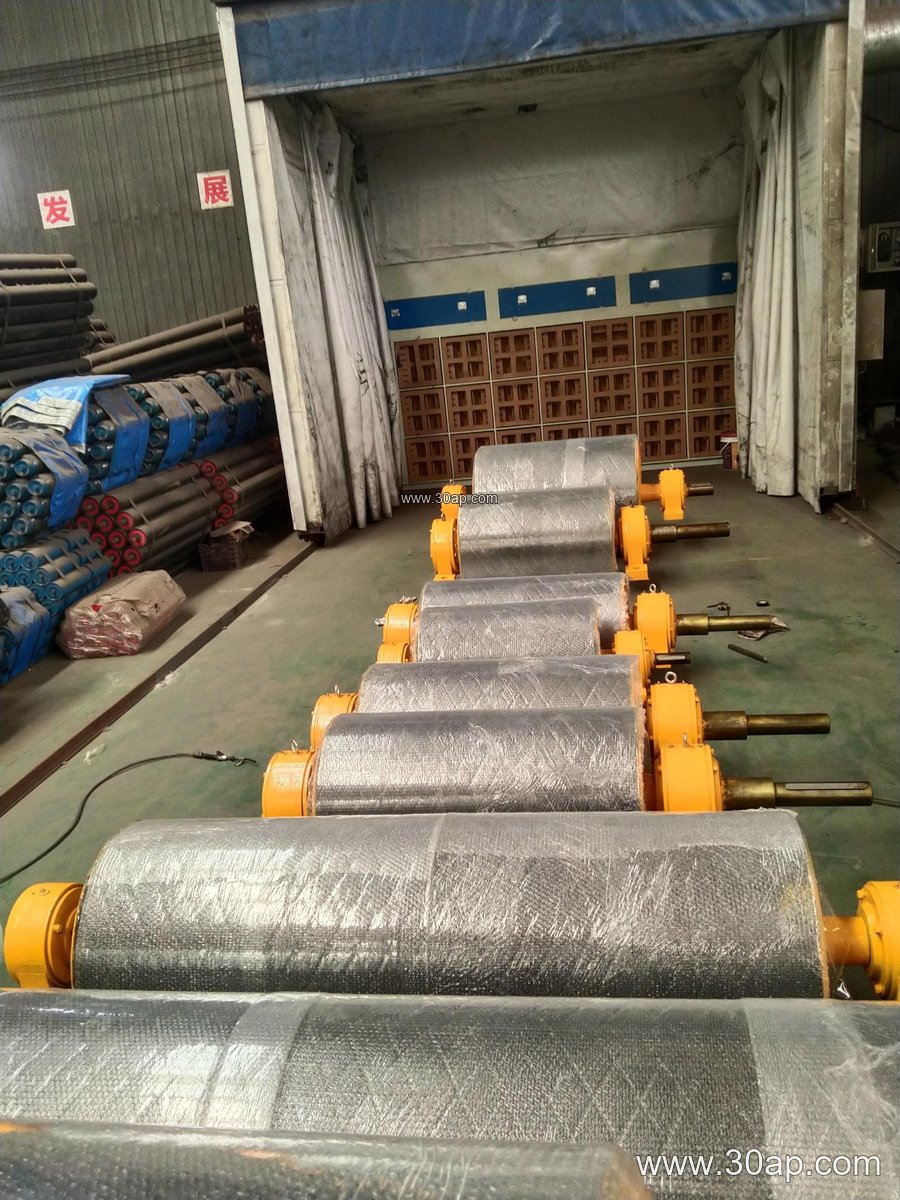
Bend pulleys are placed where the belt needs to change direction without being driven. They are often mounted on a conveyor bracket and work alongside idler rollers that support the belt. In a typical arrangement, a ceramic lagged bend pulley may be used to route the belt around a structure, to increase wrap angle on another pulley, or to guide the belt into a transfer point. It is not interchangeable with a drive pulley, tail pulley, or snub pulley, each of which has a distinct role.
For example, in an underground coal mining conveyor using a PVG conveyor belt, a bend pulley helps keep the belt aligned on the return run. In a sand and gravel plant, it may redirect a heavy-duty mining conveyor belt after a crusher. The ceramic lagging is especially useful when the belt carries moisture or fine dust that would reduce friction on a plain steel surface.
Common Sizes and Configurations
Bend pulleys are available in a range of belt widths and diameters. The table below shows typical reference values; actual sizes are determined by belt width, shaft load, and conveyor design. Note that belt width does not dictate a single pulley diameter, and shaft diameter is calculated from torque and load, not chosen from belt width alone.
| Belt Width (mm) | Typical Pulley Face Width (mm) | Common Diameter Range (mm) |
|---|---|---|
| B400 | ≈500 | Ø200–Ø400 |
| B500 | ≈600 | Ø250–Ø500 |
| B650 | ≈750 | Ø315–Ø630 |
| B800 | ≈950 | Ø400–Ø800 |
| B1000 | ≈1150 | Ø500–Ø1000 |
| B1200 | ≈1400 | Ø630–Ø1250 |
| B1400 | ≈1600 | Ø800–Ø1400 |
| B1600 | ≈1800 | Ø1000–Ø1600 |
Common shaft diameters include Ø50, Ø60, Ø70, Ø80, Ø90, Ø100, Ø120, Ø140, Ø160, Ø180, and Ø200 mm. These are reference values; final shaft size depends on the actual load and bearing selection. The pulley face width is usually slightly wider than the belt to allow for misalignment.
Buying Considerations
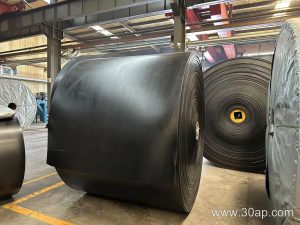
When specifying a ceramic lagged bend pulley, consider the belt type and tension. A steel cord conveyor belt may require a larger pulley diameter to reduce bending stress, while an EP conveyor belt or NN conveyor belt may work with a smaller diameter. The lagging thickness and ceramic tile pattern should match the environment: fine abrasive dust calls for a durable tile matrix, and wet conditions benefit from a grooved or dimpled surface. Check that the pulley is balanced for the intended belt speed and that the bearing assembly matches the shaft load.
Also confirm the mounting arrangement. A bend pulley may be fixed or mounted on a sliding bracket for tension adjustment. It should align with the idler rollers and the belt path. For high-abrasion service, ceramic lagging can extend service life compared with plain rubber, but it must be properly bonded to avoid tile loss. Always request the manufacturer’s dimensional drawings and verify that the pulley diameter and face width suit your conveyor frame.