What a Ceramic Lagged Bend Pulley Does on a Conveyor
A ceramic lagged bend pulley is a direction-changing conveyor pulley whose shell is covered with ceramic tiles set in a rubber or polymer backing. Its job is simple to describe and important to get right: it guides the conveyor belt along the return run, holds the belt in contact with the tensioning arrangement, and keeps the belt path stable without adding drive force of its own. Because it changes belt direction rather than transmitting torque, it sits in a different category from the drive pulley and the tail pulley, and it should not be specified as a substitute for either.
The ceramic surface is the defining feature. Small ceramic tiles, usually embedded in a rubber layer, create a high-friction, wear-tolerant face that grips the belt and resists the polishing and grooving that plain steel shells can develop in dusty service. In a quarry, a coal preparation plant, or a cement clinker line, that grip is what keeps a heavy conveyor belt from drifting sideways on the bend.
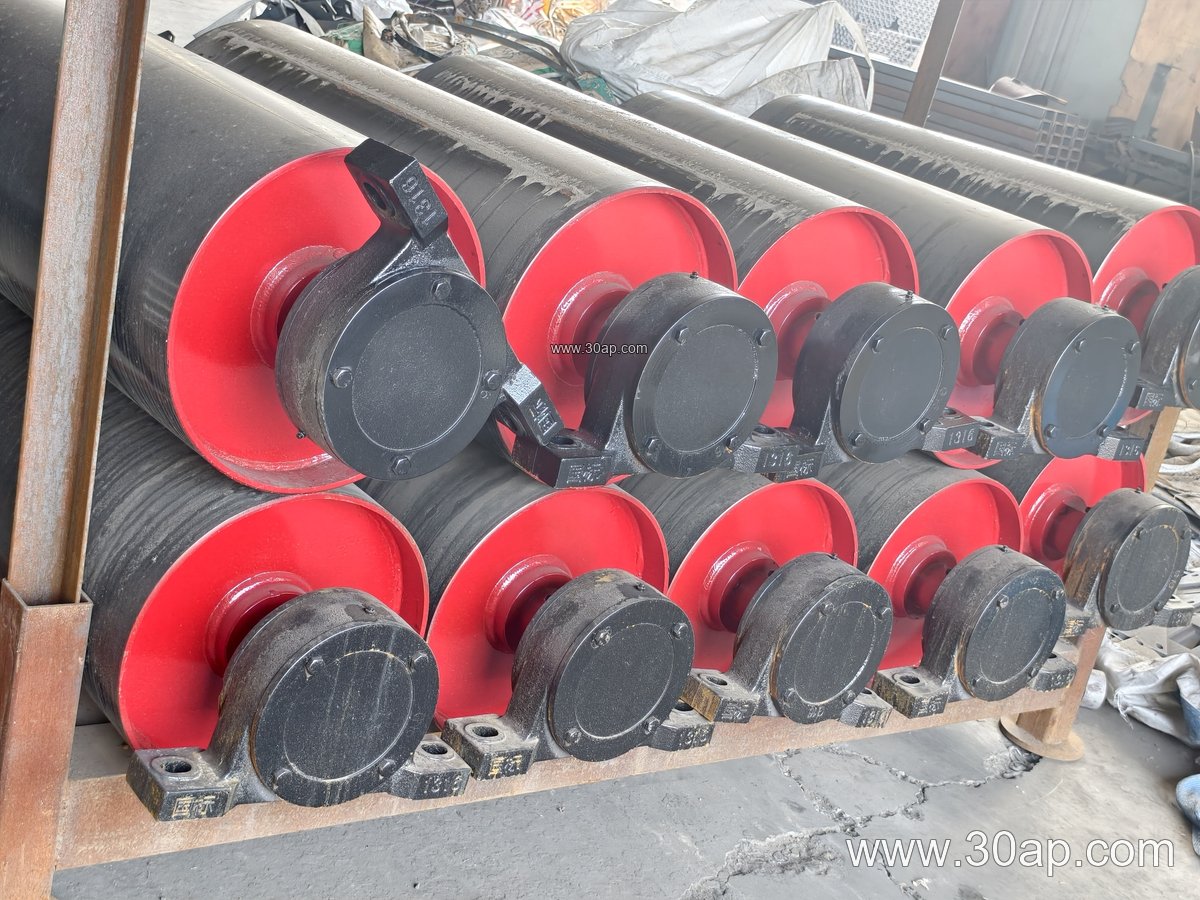
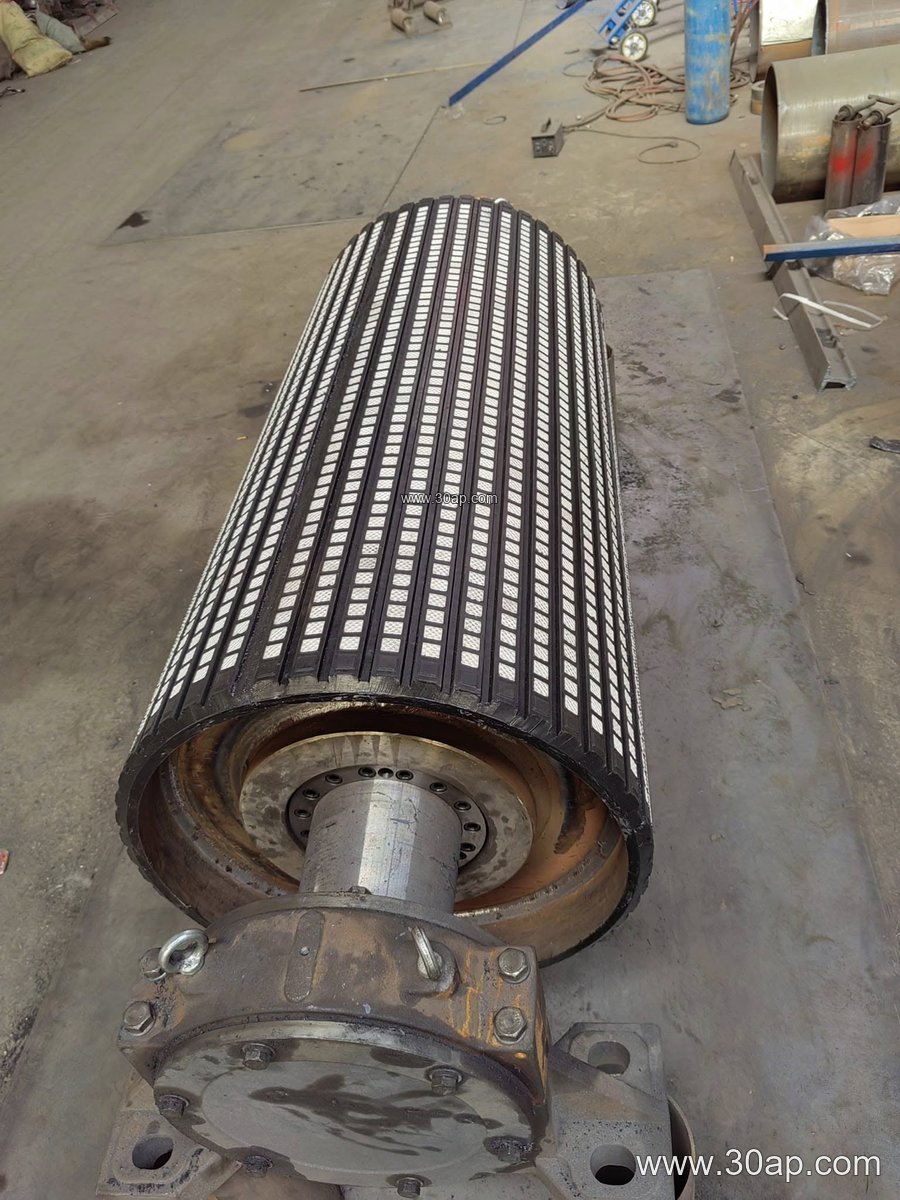
How the Pulley Is Built
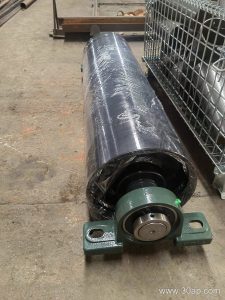
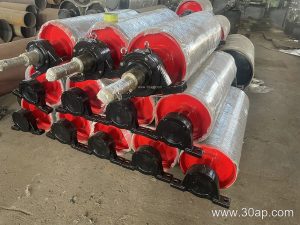
A typical unit combines a welded steel shell, a shaft, bearing housings, and the lagging system. The ceramic lagging is bonded to the shell and finished so the tile faces sit slightly proud of the backing, which improves water and fines shedding. Common lagging thicknesses are 8, 10, 12, 15, and 20 mm, chosen according to belt tension and abrasion severity. Shaft diameters are commonly Ø50 to Ø200 mm, but the correct value follows torque and bearing load calculations rather than belt width alone.
- Shell and shaft: welded steel construction, machined journals
- Lagging: ceramic tiles in rubber or polymer matrix, bonded and cured
- Bearings: housed in cast or fabricated bearing blocks
- Mounting: fixed to the conveyor bracket or take-up frame
Typical Sizes and Combinations
The table below shows reference values that appear in general conveyor practice. They are starting points for discussion, not fixed rules, and a pulley diameter should always be checked against belt construction and minimum bend radius.
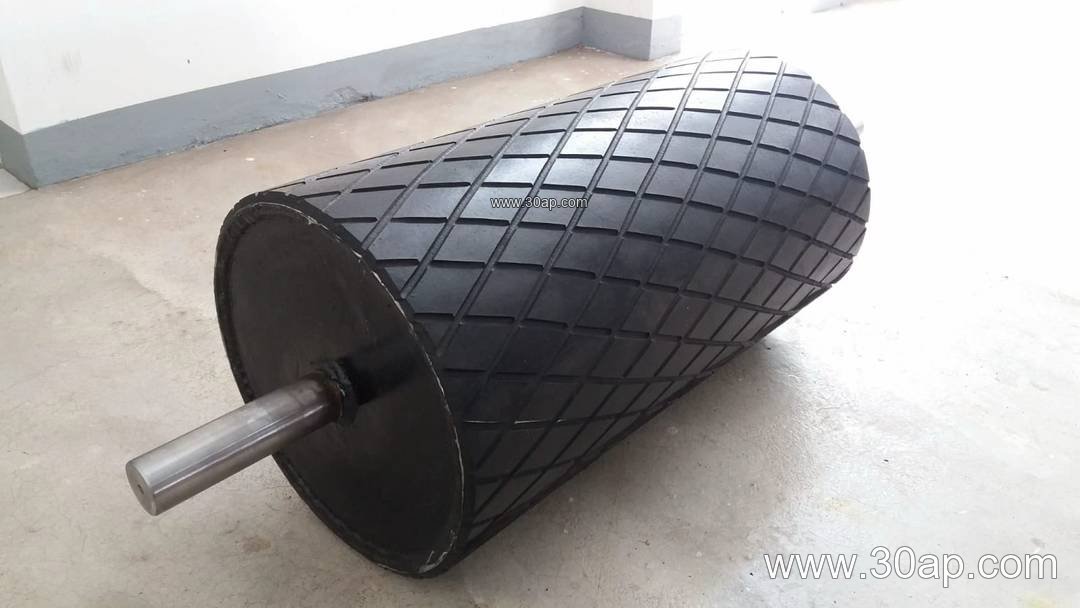
| Belt width | Approximate face width | Possible pulley diameters | Shaft diameter range |
|---|---|---|---|
| B650 | about 750 mm | Ø315, Ø400, Ø500 | Ø60 to Ø100 |
| B800 | about 950 mm | Ø400, Ø500, Ø630 | Ø70 to Ø120 |
| B1000 | about 1150 mm | Ø500, Ø630, Ø800 | Ø80 to Ø140 |
| B1200 | about 1400 mm | Ø630, Ø800, Ø1000 | Ø90 to Ø160 |
| B1400 | about 1600 mm | Ø800, Ø1000, Ø1250 | Ø100 to Ø180 |
Combinations such as B800 x Ø500 or B1200 x Ø1000 are common in layout drawings, but a single belt width can accept several diameters, and the final choice depends on belt type, tension, and the space available around the conveyor bracket.
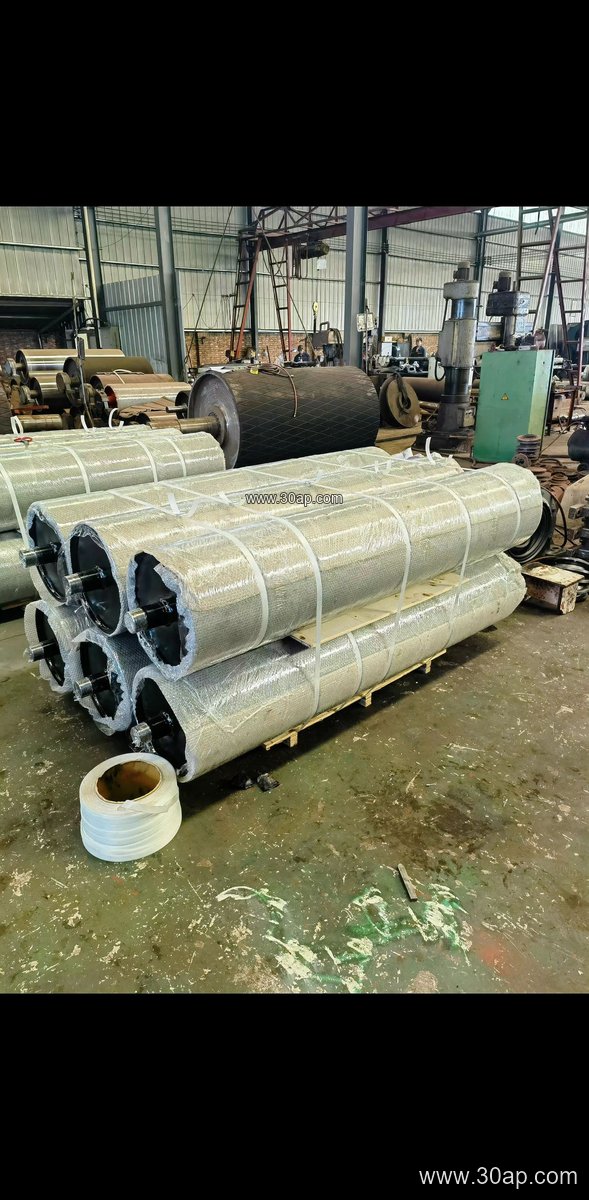
Where It Fits in the Belt Line
Bend pulleys appear at take-up stations, in vertical curves, and wherever the return strand must be redirected before entering a tension pulley or a gravity take-up. In an iron ore or copper ore concentrator, a ceramic lagged unit is often paired with an abrasion resistant conveyor belt and supported by heavy-duty idler roller sets. In a power plant coal handling system, the same pulley may run behind a flame retardant conveyor belt where fines and moisture are present. The ceramic face is most valuable when the belt is wet, dusty, or oily, because those conditions reduce friction on smooth shells.
Buyer Checklist
Before ordering, confirm the belt width, the required face width, the shaft diameter from the torque calculation, the lagging thickness, and the bearing type. Ask how the ceramic tiles are bonded and whether the lagging is grooved or plain. Check that the pulley will fit the existing conveyor bracket and take-up travel. Confirm the belt construction, since an EP conveyor belt, an NN conveyor belt, or a steel cord conveyor belt each has its own minimum bend radius. For high-abrasion service, discuss ceramic lagging against rubber lagging and note that a drive pulley and a bend pulley are selected on different criteria.
Finally, plan maintenance. Inspect tile edges for chipping, check lagging adhesion, and verify that the pulley rotates freely. A ceramic lagged bend pulley that is correctly sized and properly maintained will keep the belt centered and extend the service life of the whole conveyor line.