What a Stone Conveyor Pulley Does
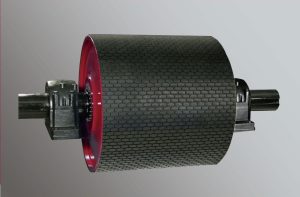
A stone conveyor pulley is the rotating drum that carries and drives the belt on a bulk material conveyor. On a quarry or crushing line, it is the part that transfers motor torque into belt movement and keeps the belt tracking around the head and tail ends. In day-to-day plant language, operators often call it a conveyor pulley or a drum pulley; the two terms describe the same component. It is not the same as an idler roller, which supports the belt along the carrying run, and it is not a conveyor bracket, which holds those rollers in place.
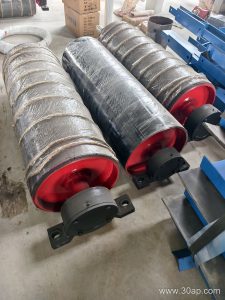
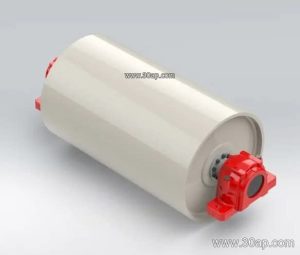
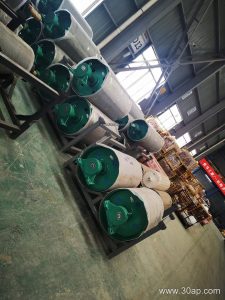
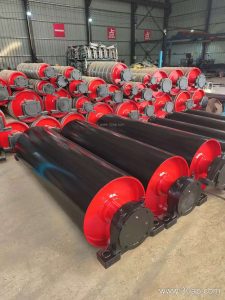
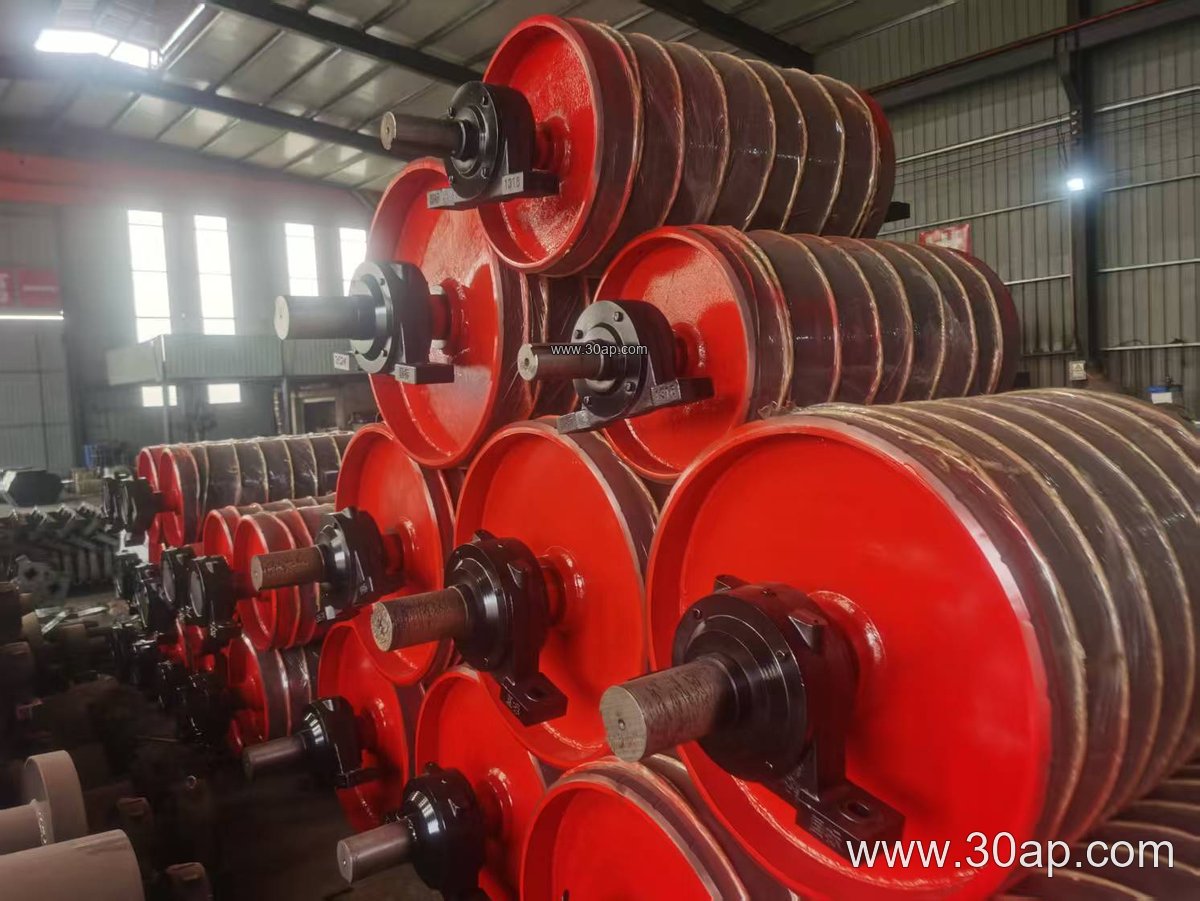
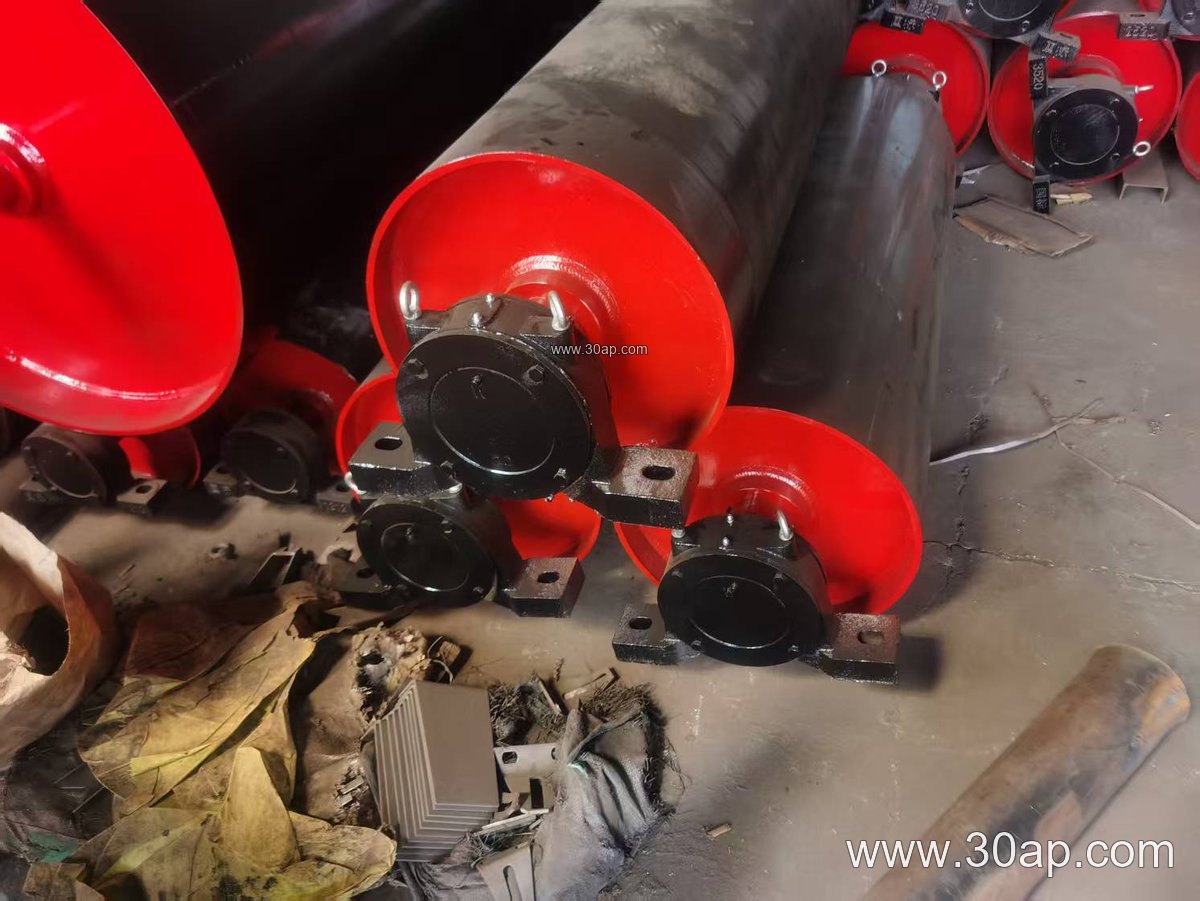
Because stone is heavy and abrasive, the pulley has to be built for load rather than for light duty. A typical unit combines a steel shell, end discs, a shaft, bearing housings, and a lagging surface. The shell is usually machined to keep the belt centred, and the shaft is sized by torque and bearing load rather than by belt width alone.
Construction and Surface Options
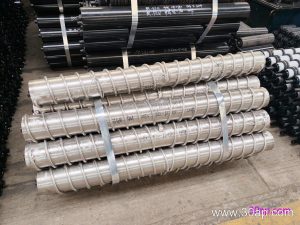
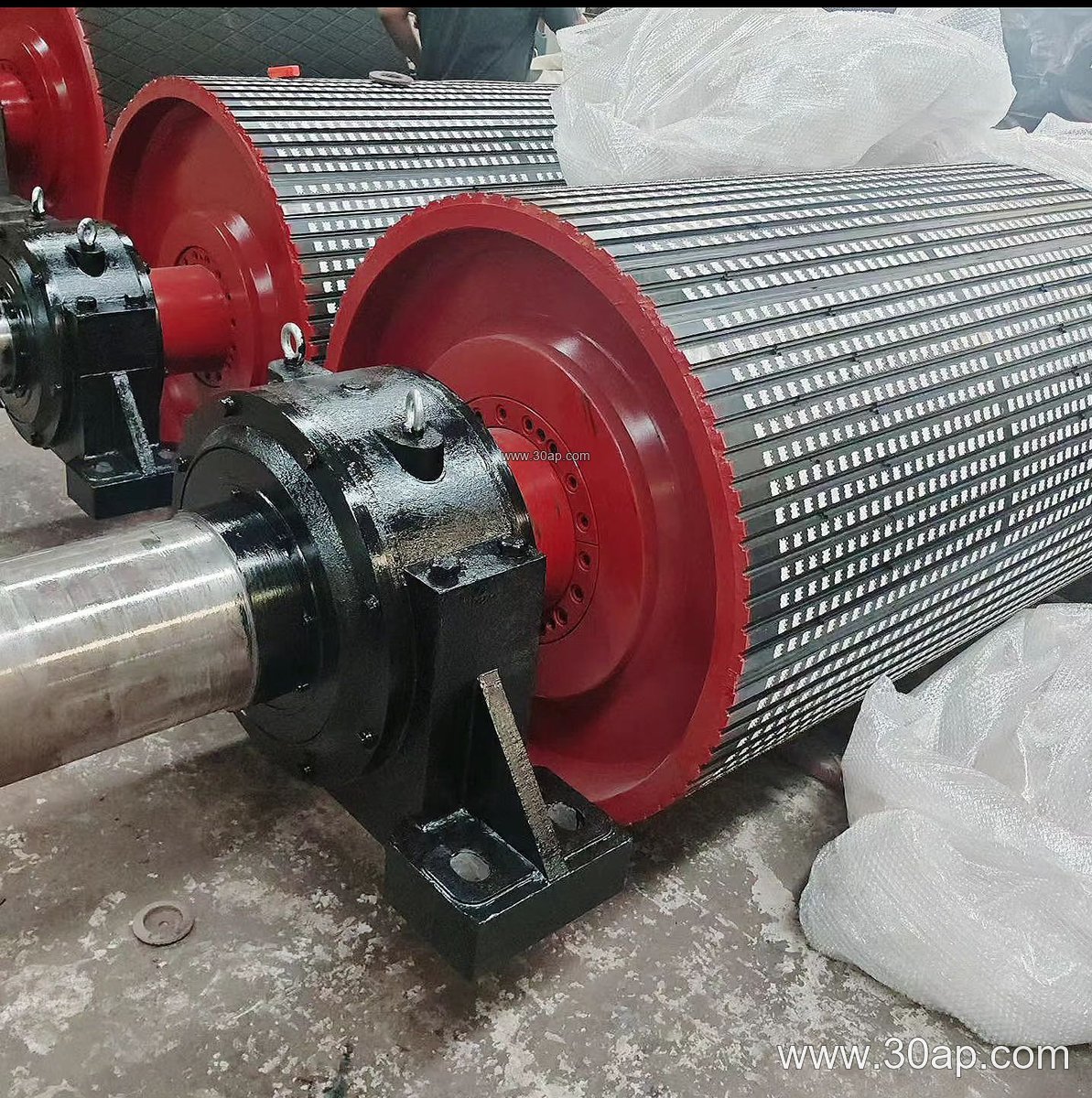
The core structure is a welded steel drum, with the shaft keyed or shrink-fitted to the end discs. Bearing selection and housing design follow the conveyor’s tension and speed. The outer surface can be supplied plain, or covered with rubber lagging to improve grip. Common surface forms include plain, cold-bonded rubber, hot-vulcanised rubber, diamond grooving, chevron grooving, and ceramic lagging. Lagging thickness is often 8, 10, 12, 15, or 20 mm depending on the duty.
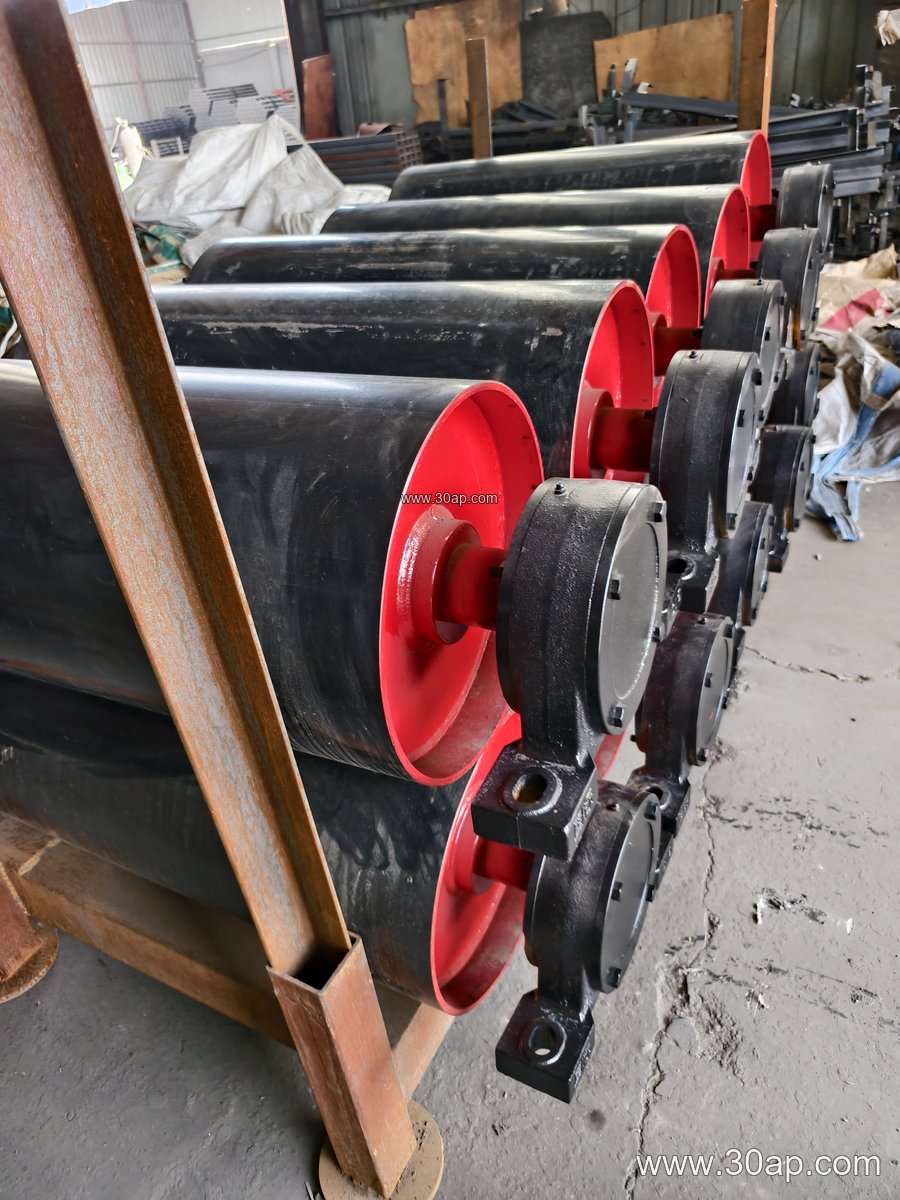
Grip matters most at the drive position. A drive pulley needs enough friction to transmit power without slip, while a tail pulley mainly needs to guide the belt and survive impact from falling stone. A bend pulley, by contrast, changes belt direction and is not interchangeable with either of them. When specifying, buyers should state the position, the belt width, the expected tension, and the material being carried.
Where It Fits in the Plant
You will see this drum in stone crushing and screening circuits, aggregate yards, cement plants handling clinker, and power station coal handling. It also appears in iron ore and copper ore lines, where a heavy-duty conveyor pulley has to cope with sharp, dense material. On a typical stone line, the drive pulley sits at the discharge end, the tail pulley at the loading end, and a bend pulley may be used to route the belt around a transfer point.
The belt itself is part of the same system. A rubber conveyor belt, an EP conveyor belt, or a steel cord conveyor belt each behaves differently under tension, so the pulley lagging and diameter should be matched to the belt’s flexibility and splice type. In dusty stone yards, an abrasion resistant conveyor belt is common, and the pulley surface should resist wear from fines that work under the belt.
Common Size References
Sizes are always a design choice, not a fixed rule. The table below shows typical reference values that help buyers frame a request; final dimensions should be confirmed against the conveyor layout and load calculation.
| Reference item | Common values |
|---|---|
| Belt width (B) | B400, B500, B650, B800, B1000, B1200, B1400, B1600, B1800, B2000 |
| Pulley diameter | Ø200, Ø250, Ø315, Ø400, Ø500, Ø630, Ø800, Ø1000, Ø1250, Ø1400 |
| Face width | Usually wider than the belt, e.g. B800 about 950 mm, B1200 about 1400 mm, B1600 about 1800 mm |
| Shaft diameter | Ø50, Ø60, Ø70, Ø80, Ø90, Ø100, Ø120, Ø140, Ø160, Ø180, Ø200 |
| Lagging thickness | 8, 10, 12, 15, 20 mm |
Combinations such as B800 × Ø500 or B1200 × Ø1000 are common reference points, but one belt width does not lock the pulley to a single diameter. Shaft diameter should be calculated from torque and bearing load, never assumed from belt width alone.
Buyer Checklist
- State the pulley position: drive, tail, bend, take-up, or snub, since these are different duties.
- Give the belt width, belt type, and whether the belt is a multi-ply fabric core or steel cord construction.
- Confirm lagging form and thickness, especially on drive pulleys where slip is a risk.
- Provide the required shaft diameter from the conveyor design, plus bearing and housing details.
- Check that the pulley face width suits the belt and that the conveyor bracket and idler roller layout will not cause misalignment.
For plant operators working with a stone conveyor pulley supplier, the most useful habit is to describe the whole conveyor rather than the drum alone. That way the pulley, the belt, the idler roller set, and the conveyor bracket are treated as one system, and the drum is sized for the job it actually performs.