What a Diamond Grooved Lagged Pulley Does
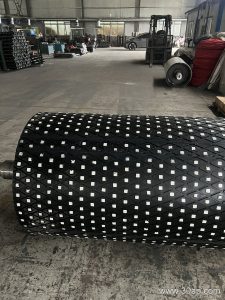
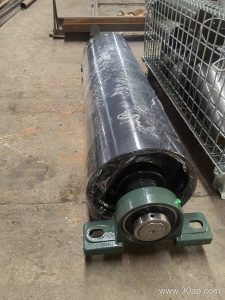
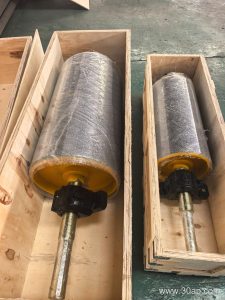
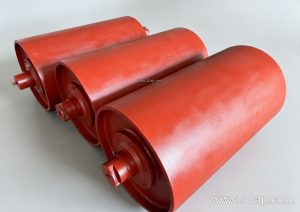
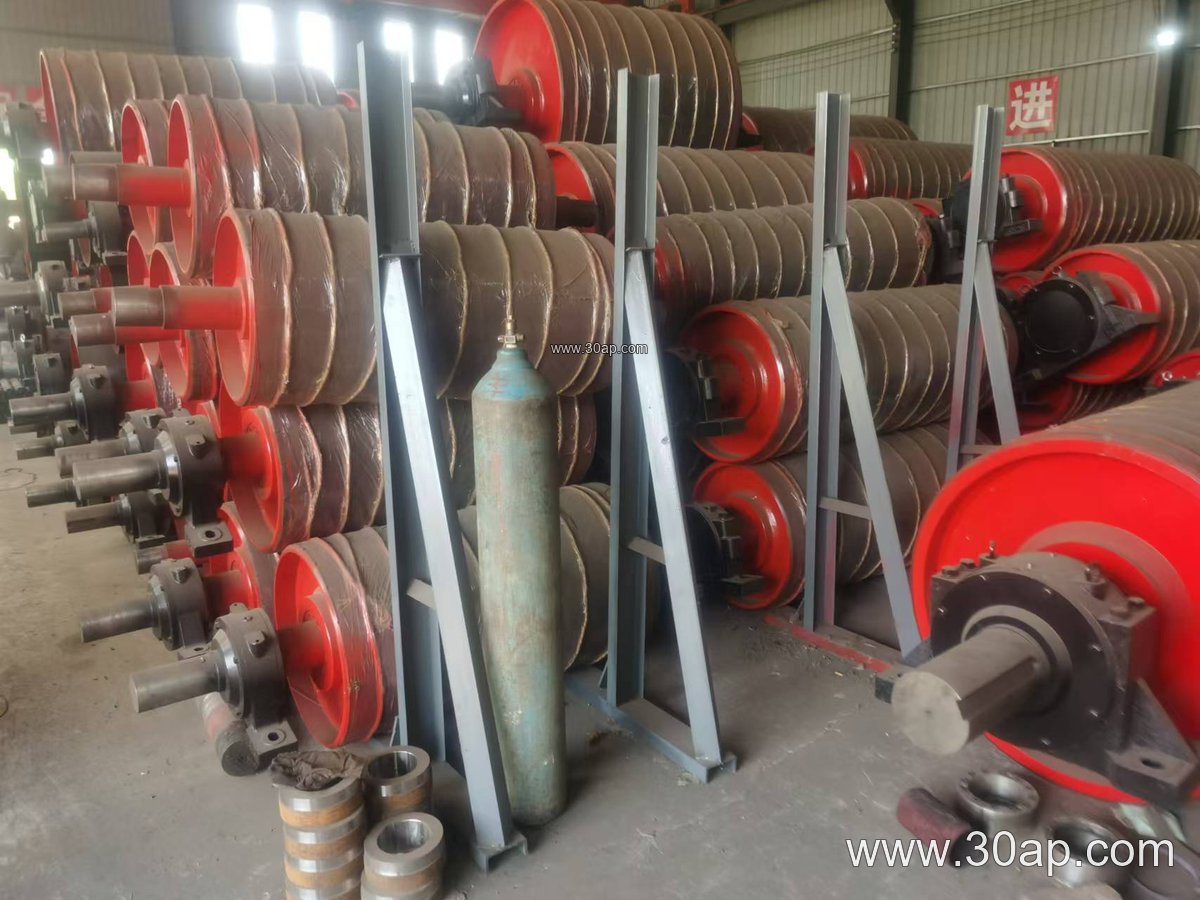
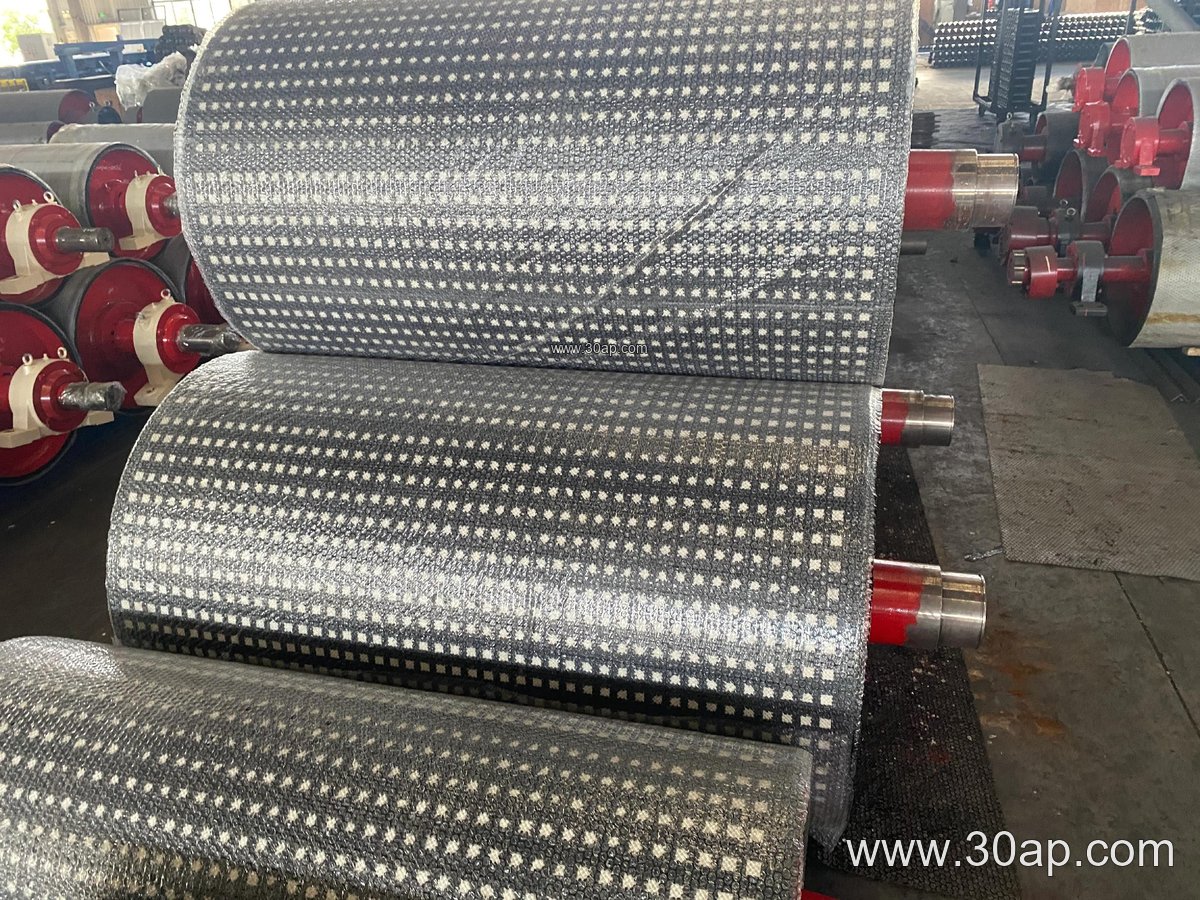
A diamond grooved lagged pulley is a conveyor pulley whose shell is covered with rubber lagging that has a diamond pattern cut or molded into its surface. This pattern is also called diamond herringbone or simply diamond groove lagging. The pulley serves as a drive pulley, tail pulley, or bend pulley depending on its position in the conveyor system, but the diamond groove lagging is most often specified for drive pulleys where extra grip is needed. The diamond pattern helps channel water and fine debris away from the contact zone, which improves friction between the pulley and the conveyor belt. In industries such as mining, cement, and power generation, this type of lagged pulley is a common choice for keeping the belt from slipping under load.
How the Diamond Groove Lagging Is Built
The lagging is usually applied to the pulley shell in one of two ways: hot vulcanized rubber or cold bonded rubber. Both methods produce a durable rubber surface, but hot vulcanization typically offers a stronger bond for heavy-duty applications. The diamond grooves are either molded into the rubber during vulcanization or cut into the surface after bonding. Common lagging thicknesses are 8 mm, 10 mm, 12 mm, 15 mm, and 20 mm, with thicker lagging used for higher torque or larger pulley diameters. The pulley shell itself is made from steel pipe or rolled plate, and the shaft is sized according to the torque and load, not simply by belt width. For example, a B800 pulley might use a Ø500 shell with a Ø80 shaft, but the final shaft diameter depends on the drive design.
Where Diamond Grooved Lagged Pulleys Are Used
These pulleys are found in quarry conveyor systems, coal mining operations, cement plants, and power plant coal handling. In a quarry, a diamond grooved lagged drive pulley helps maintain traction on a conveyor belt carrying crushed stone, especially when the belt is exposed to dust and moisture. In underground coal mining, flame retardant conveyor belts are common, and the lagged pulley must be compatible with the belt cover. The diamond pattern is also useful on bend pulleys where the belt wraps at a shallow angle, as it reduces the chance of material buildup that could cause tracking problems. While a tail pulley may use a plain or grooved lagging, the diamond groove is more frequently specified for the drive pulley because that is where slip is most critical.
Key Parameters to Consider
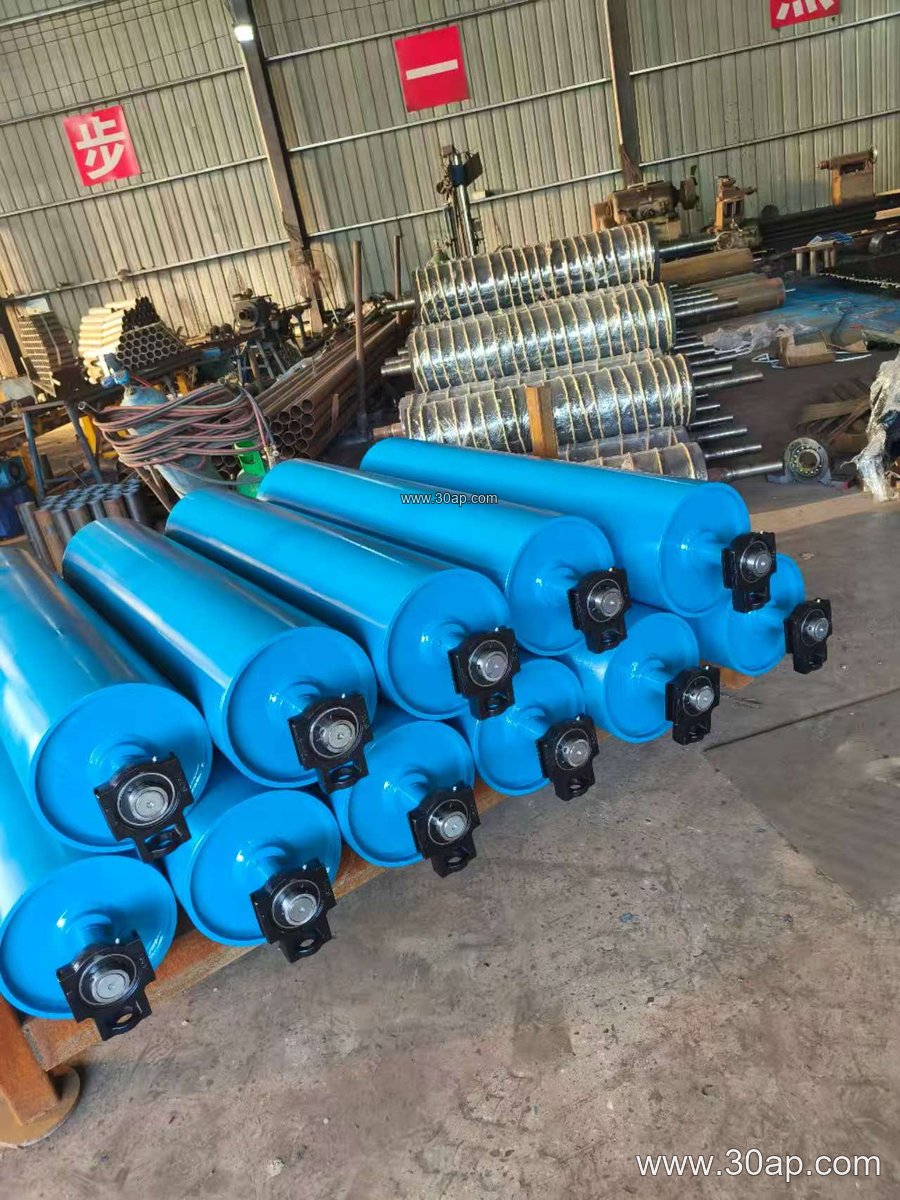
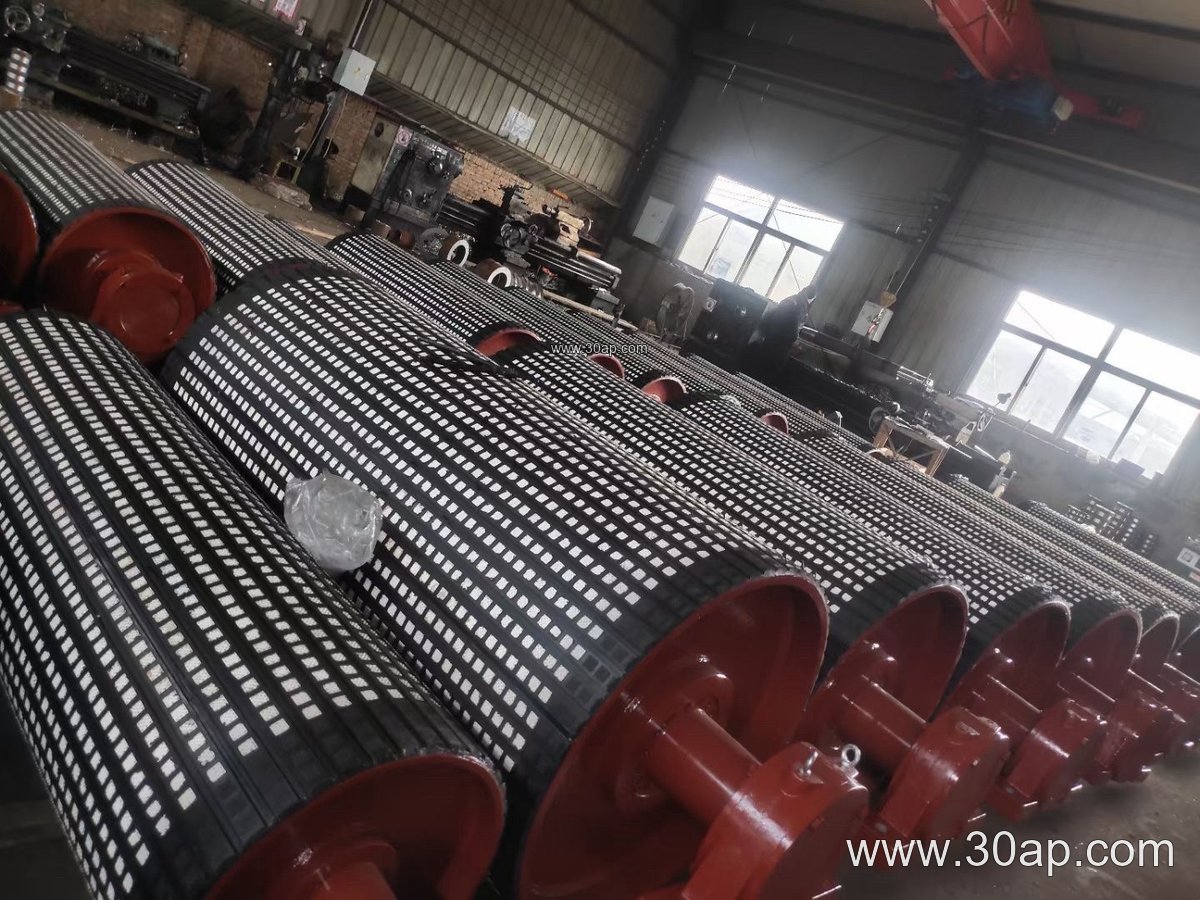
When selecting a diamond grooved lagged pulley, buyers should look at belt width, pulley diameter, lagging thickness, and shaft diameter as a set of related variables. The table below shows common reference combinations, but these are not fixed rules. A B1200 conveyor belt can be paired with a Ø1000 pulley in one system and a Ø800 pulley in another, depending on the conveyor tension and wrap angle.
| Belt Width (mm) | Typical Pulley Face Width (mm) | Common Pulley Diameter (mm) | Lagging Thickness (mm) |
|---|---|---|---|
| B500 | 600 | Ø250, Ø315, Ø400 | 8, 10 |
| B650 | 750 | Ø315, Ø400, Ø500 | 10, 12 |
| B800 | 950 | Ø400, Ø500, Ø630 | 10, 12, 15 |
| B1000 | 1150 | Ø500, Ø630, Ø800 | 12, 15 |
| B1200 | 1400 | Ø630, Ø800, Ø1000 | 15, 20 |
| B1400 | 1600 | Ø800, Ø1000, Ø1250 | 15, 20 |
| B1600 | 1800 | Ø1000, Ø1250, Ø1400 | 20 |
Shaft diameters commonly range from Ø50 to Ø200 mm, but the exact size must be calculated from the torque and radial load. The pulley face width is usually slightly wider than the belt to allow for belt tracking. For instance, a B1000 belt often uses a pulley face of about 1150 mm. The lagging thickness should be chosen to match the expected wear and the required friction coefficient. A thicker lagging does not always mean better performance; it must be compatible with the pulley diameter and the belt stiffness.
Buyer Checklist for Diamond Grooved Lagged Pulleys
- Confirm the pulley position: drive, tail, or bend. The diamond groove lagging is most critical on the drive pulley.
- Specify the belt width and the pulley face width separately. Do not assume they are the same.
- Provide the conveyor belt type, such as EP conveyor belt, steel cord conveyor belt, or flame retardant conveyor belt, so the lagging can be matched to the belt cover.
- State the required lagging thickness and whether hot vulcanized or cold bonded application is preferred.
- Check the shaft diameter against the actual torque and load, not just the belt width.
- Consider the environment: in a cement plant or coal mining site, dust and moisture resistance are important.
For more information on related conveyor components such as conveyor pulleys, idler rollers, and conveyor brackets, or to discuss your specific diamond grooved lagged pulley requirements, please contact our engineering team.