What a Custom Conveyor Pulley Really Is
A custom conveyor pulley is a drum assembly built to the geometry, load profile and environment of a specific belt line rather than picked from a stock list. It is the rotating component that carries the conveyor belt, sets its path and, in the drive position, transmits torque from the gearbox to the belt. Because belt widths, tension levels and material conditions vary so widely, a made-to-order drum is often the practical choice for aggregate plants, cement works and bulk handling terminals.
In practice the same item appears under several accurate names, including conveyor drum, belt pulley and conveyor roller pulley. These terms describe the same assembly; they are not separate product families. A drive pulley, a tail pulley and a bend pulley, however, are distinct roles and should never be treated as interchangeable.
How the Assembly Is Built
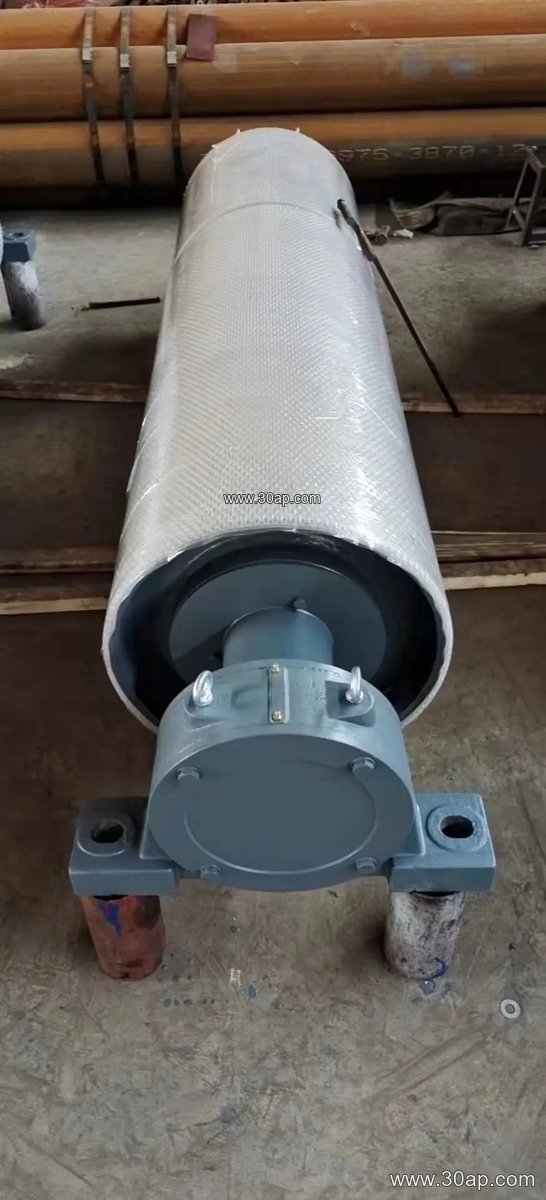
A typical unit combines a cylindrical shell, end discs, a shaft, bearing housings and a lagging surface. The shell is usually rolled from steel plate and machined or balanced before the shaft is fitted. Bearing selection follows the radial load and the belt tension, and the shaft diameter is determined by torque and bending load rather than by belt width alone.
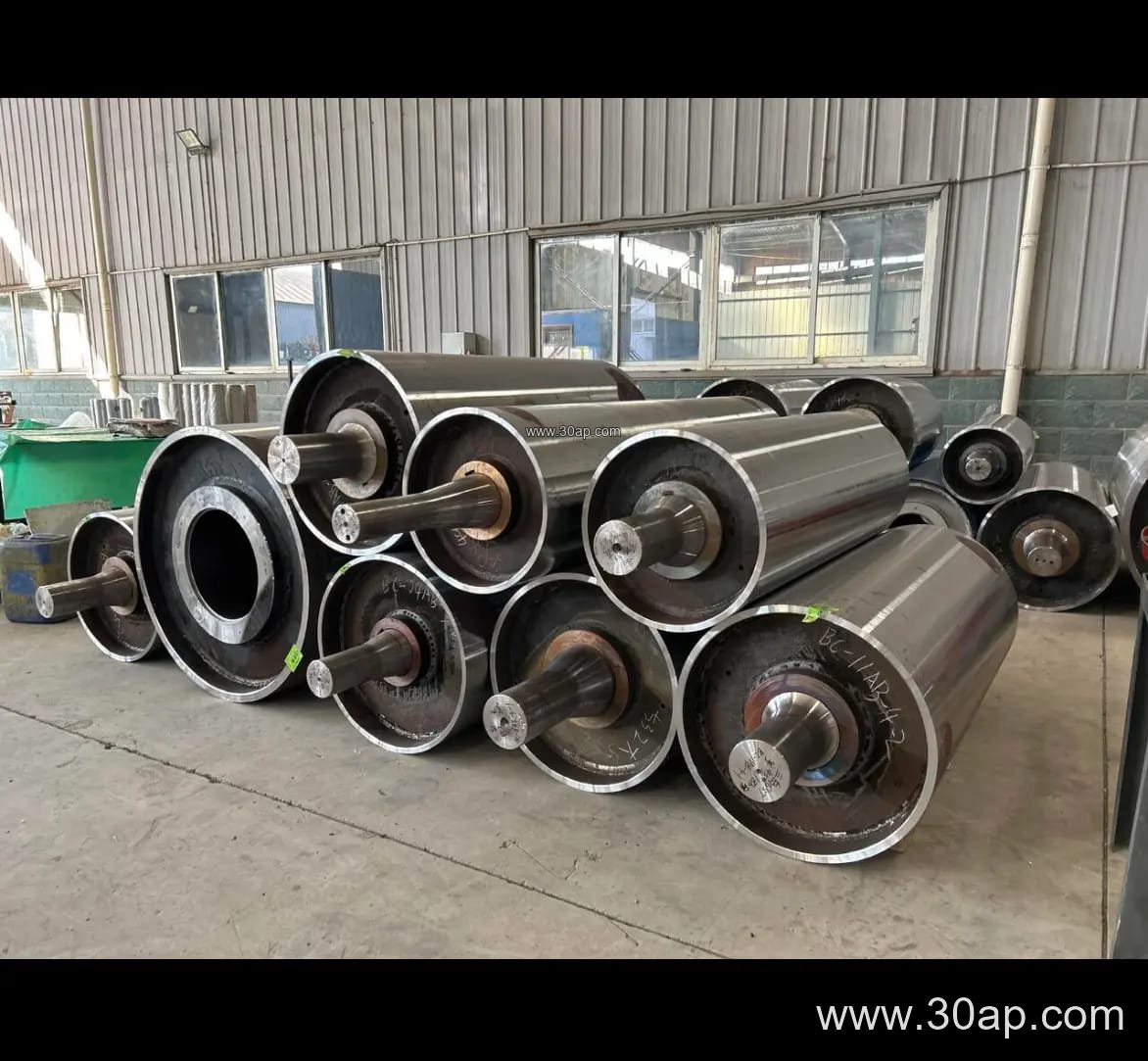
- Shell: rolled and welded steel, machined for concentricity.
- Shaft: sized from torque and load, commonly Ø50 to Ø200 mm depending on duty.
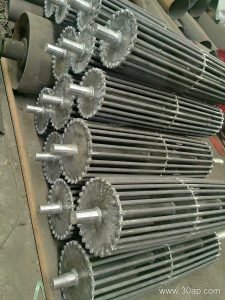
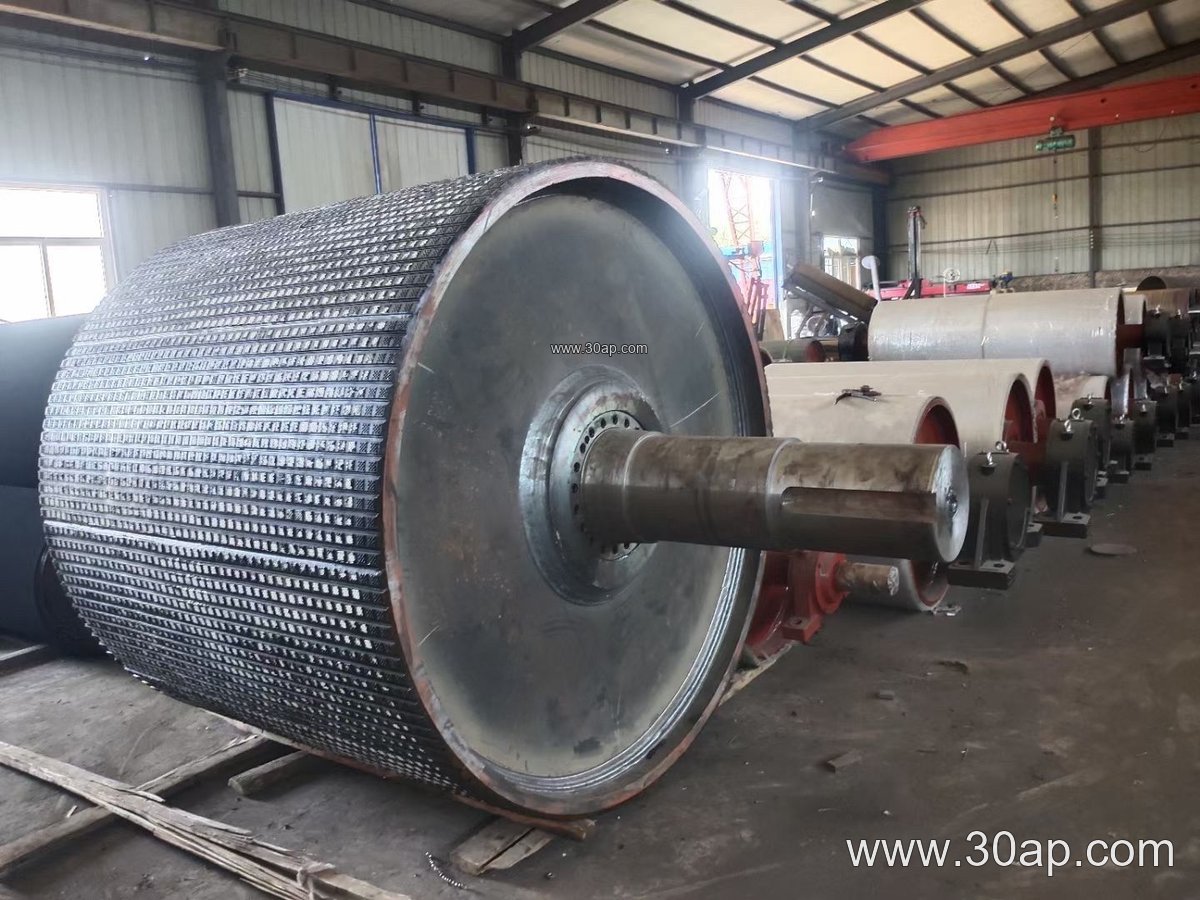
- Lagging: plain, rubber lagged, diamond grooved, chevron grooved or ceramic tiled.
- Bearings and housings: matched to the duty cycle and the mounting arrangement.
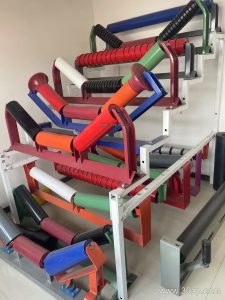
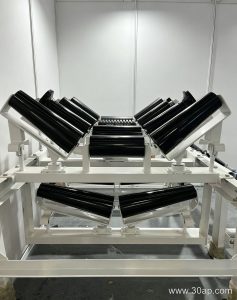
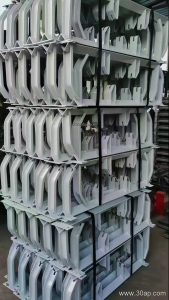
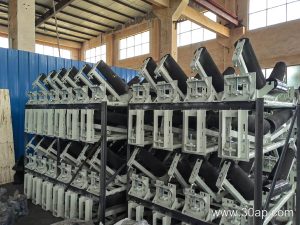
Lagging thickness is often 8, 10, 12, 15 or 20 mm. Rubber lagging improves grip on the drive drum, while ceramic tiles suit abrasive and wet conditions. A conveyor bracket and the supporting frame complete the installation, and alignment between the drum, the idler roller sets and the structure has a direct effect on belt tracking.
Where It Fits in the Belt Line
Position determines function. The head or discharge drum supports the belt at the unloading point. The tail drum returns the belt and may also act as a tension point. Bend or snub drums change the belt direction around a drive station, and take-up drums maintain tension as the belt stretches. Electric drums combine the motor and gearbox inside the shell for compact layouts.
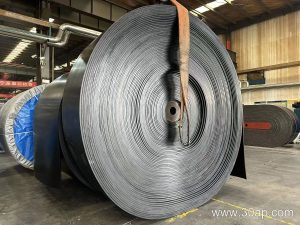
Applications are broad. A quarry or limestone mine may use a heavy-duty drum behind a high abrasion resistant conveyor belt on a primary crusher discharge. A coal handling plant or power station coal yard often specifies a flame retardant conveyor belt and matching fire resistant conveyor belt grades, with drums built for dusty, enclosed conditions. Cement plants, iron ore concentrators and port bulk terminals each bring their own load and maintenance requirements.
See related belt and component options at conveyor pulley and conveyor belt pages for reference.
Matching Diameter to Belt Width and Duty
There is no fixed rule that ties one belt width to one drum diameter. A B800 line may run a Ø500 drum in a light transfer and a larger diameter where belt wrap and tension demand it. Common combinations include B800 × Ø500, B1200 × Ø1000 and B1400 × Ø800, but these are reference points, not mandatory pairings. The shell face width is normally a little wider than the belt, for example about 500 mm face for B400 and about 1150 mm for B1000.
| Belt width | Typical face width | Reference diameter |
|---|---|---|
| B500 | about 600 mm | Ø250 to Ø400 |
| B650 | about 750 mm | Ø315 to Ø500 |
| B800 | about 950 mm | Ø400 to Ø630 |
| B1000 | about 1150 mm | Ø500 to Ø800 |
| B1200 | about 1400 mm | Ø630 to Ø1000 |
| B1400 | about 1600 mm | Ø800 to Ø1250 |
The table is guidance only. Final sizing depends on belt tension, wrap angle, torque and the belt construction in use, whether that is an EP conveyor belt, an NN conveyor belt, a steel cord conveyor belt or a multi-ply fabric core belt.
Buyer Checklist Before Ordering
- Confirm the drum role: drive, tail, bend, take-up or snub.
- State belt width, belt type and the expected tension range.
- Specify lagging form and thickness, for example 10 mm diamond rubber.
- Provide shaft diameter, bearing type and mounting centres.
- Describe the environment: dust, moisture, heat, oil or corrosive atmosphere.
- Check that the face width and drum diameter suit the available space.
A well-specified drum keeps the belt centred, protects the splice and reduces downtime. Whether the line handles ore, clinker or coal, the goal is the same: a pulley matched to the belt, the structure and the working conditions.