What a Trough Idler Bracket Does on a Conveyor
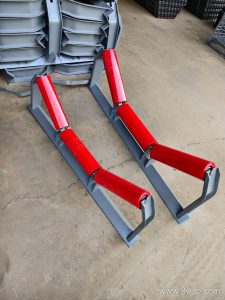
A trough idler bracket is the support frame that holds the three idler rolls forming the trough shape on the carrying side of a belt conveyor. The two outer rolls sit at an angle while the center roll stays roughly horizontal, so the conveyor belt curves into a shallow channel that keeps bulk material centered during travel. In a quarry, a cement plant, or a power plant coal yard, this bracket is one of the most repeated steel parts along the line, and its alignment directly affects how evenly the belt wears.
Also called a troughing idler frame or carrying idler bracket, the part is not a pulley and should not be confused with a drive pulley, tail pulley, or bend pulley. Those components transmit power and change belt direction; the trough idler bracket only supports and shapes the load-carrying run.
Construction and Typical Materials
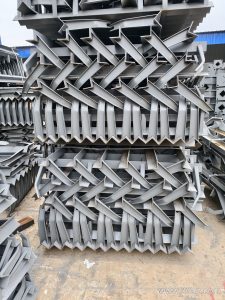
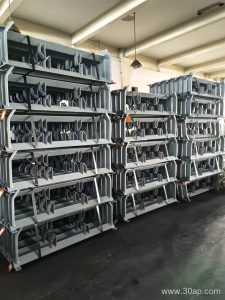
Most brackets are fabricated from angle steel, channel steel, or folded steel plate, then drilled or punched for mounting holes and welded with gussets for stiffness. A common assembly includes a cross beam, two angled side arms, and slotted or bolted seats that accept the idler shafts. Some designs use a single-piece pressed frame; others use bolted sections so worn arms can be replaced without cutting the whole beam.
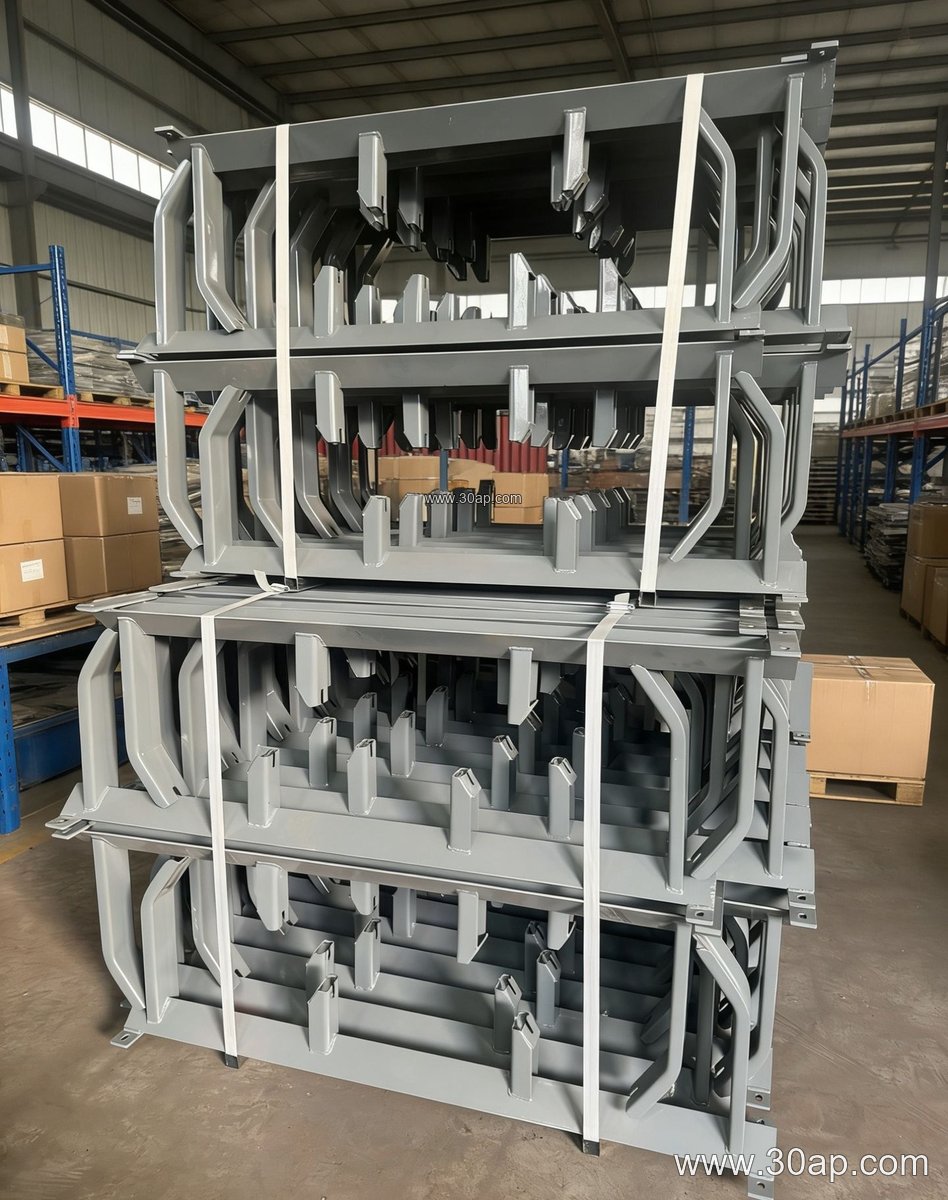
- Frame material: angle, channel, or bent plate, usually painted or galvanized
- Roll seats: fixed, slotted for adjustment, or pivoting for self-aligning versions
- Mounting: bolted to the conveyor stringer or welded to a cross member
- Options: rubber or polymer cushions behind impact brackets, and tilt of about 1.5 to 2 degrees on forward-leaning types
Matching Belt Width, Trough Angle, and Roll Diameter
Buyers usually specify the bracket by belt width, trough angle, and roll diameter together. These values are related but not locked to one another; a B800 belt may run at 30 or 35 degrees with Ø89 or Ø108 rolls depending on capacity and material. Installation hole spacing and beam length change with belt width and trough angle, so they should be confirmed from the drawing rather than assumed.
| Belt width (common) | Trough angle options | Roll diameter options |
|---|---|---|
| B500, B650 | 20, 30, 35 degrees | Ø89, Ø108 |
| B800, B1000 | 30, 35, 45 degrees | Ø89, Ø108, Ø133 |
| B1200, B1400 | 30, 35, 45 degrees | Ø108, Ø133, Ø159 |
| B1600, B1800 | 35, 45 degrees | Ø133, Ø159, Ø194 |
| B2000, B2200 | 35, 45 degrees | Ø159, Ø194 |
These are reference ranges, not fixed pairings. The final choice should follow the conveyor design, belt tension, and material lump size.
Where Trough Idler Brackets Are Used
In a stone crushing and screening line, trough brackets carry the conveyor belt loaded with aggregate between the crusher and the screen deck. In a coal handling system at a power plant, the same brackets support a flame retardant conveyor belt or a PVG800S belt on the incline toward the bunker. Similar frames appear in iron ore handling, fertilizer granulation lines, and grain silos, where dust and fines demand stable roll seating.
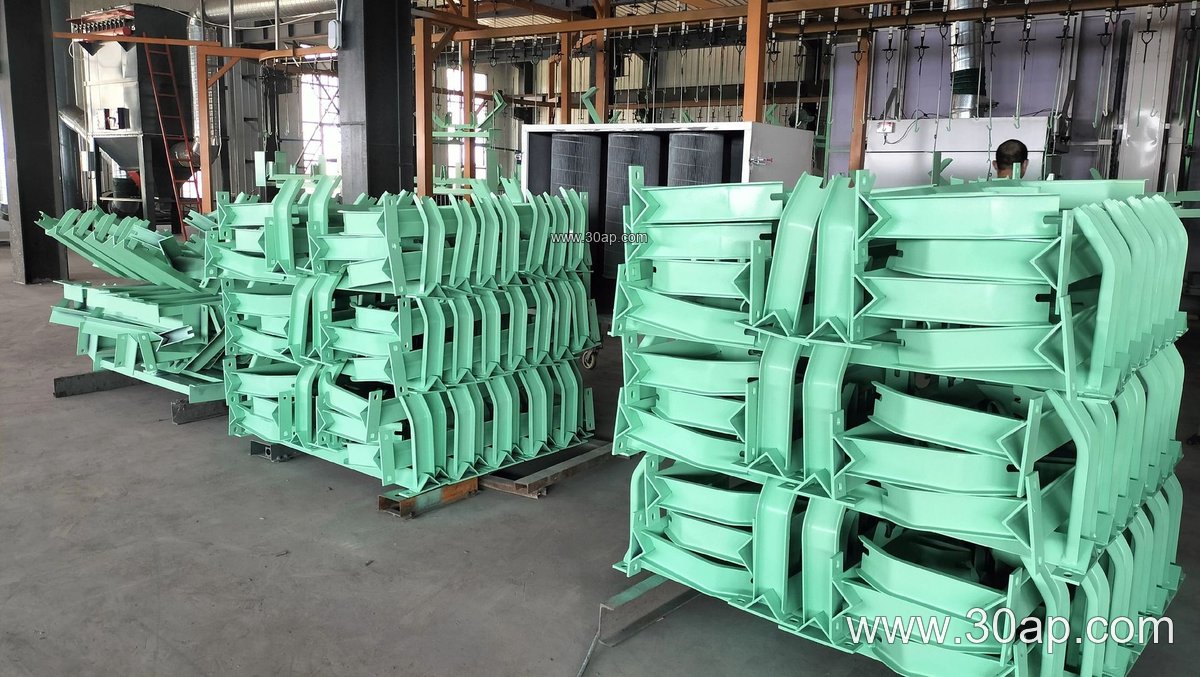
Transition brackets are used near the tail or head where the belt changes from flat to troughed. Return brackets and V-return brackets support the empty side and are a different subtype, not a replacement for the carrying trough frame. Self-aligning and forward-leaning brackets are variants of the same family, chosen when belt tracking or training is a concern.
Selection and Maintenance Notes for Buyers
Check the bracket drawing against the actual stringer spacing and the idler shaft ends before ordering. Confirm whether the frame is fixed or adjustable, since an adjustable bracket lets the maintenance team tune the trough angle between 20 and 45 degrees without replacing the beam. Ask for the material thickness and coating, because a heavy-duty mining conveyor belt line will wear a thin frame faster than a light aggregate duty.
During service, inspect for bent arms, loose bolts, and worn roll seats. A misaligned frame can cause the belt to rub and shorten the life of both the belt and the idler roller. Keep spare brackets for the most common widths on site, and record the trough angle and roll diameter so replacements match the existing line. For related components, such as a conveyor pulley or an idler roller, order from the same dimensional reference to keep the whole conveyor consistent.