What a Belt Conveyor Bend Pulley Does
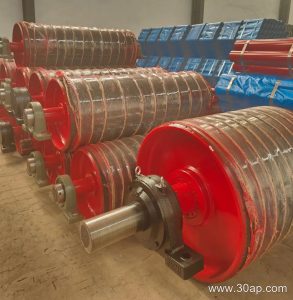
A belt conveyor bend pulley is the drum that changes the direction of the belt without driving it and without being the terminal point of the line. It is a type of conveyor pulley, but it is not a drive pulley and not a tail pulley. Those three are separate positions with separate duties, and swapping the names leads to wrong specifications. The bend pulley usually sits where the belt must turn back into the return run, where wrap angle has to be increased, or where a take-up arrangement needs a redirect. In a quarry, a cement plant or a coal handling system, one or two of these drums often quietly decide how well the whole conveyor tracks.
Because it does no power transmission, the design focus is different from a drive drum. Radial load from belt tension, shell stiffness, bearing life and surface protection matter most. A bend pulley that is undersized for tension will deflect, and the belt will misalign around it.
Construction and Common Surface Forms
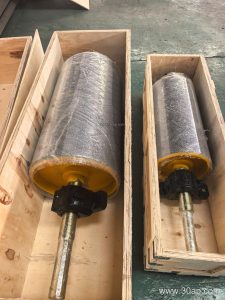
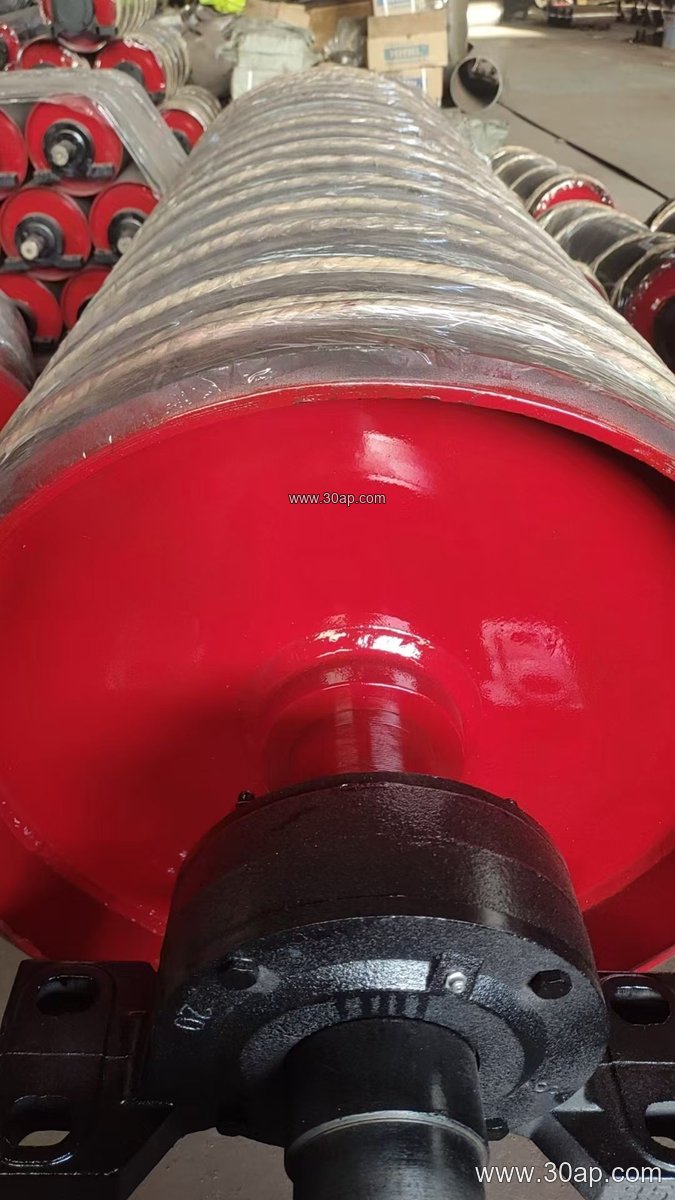
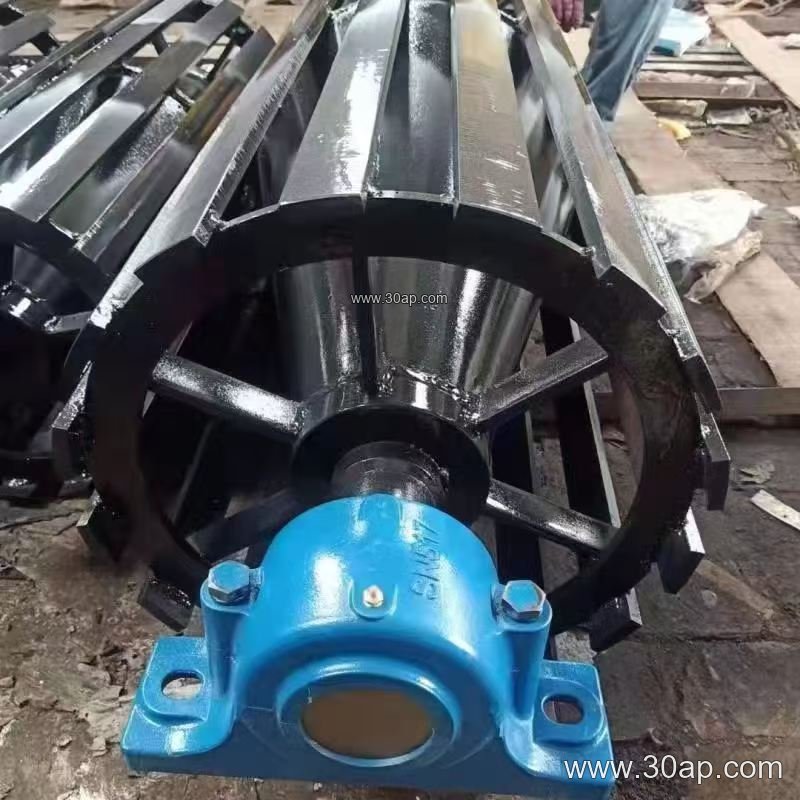
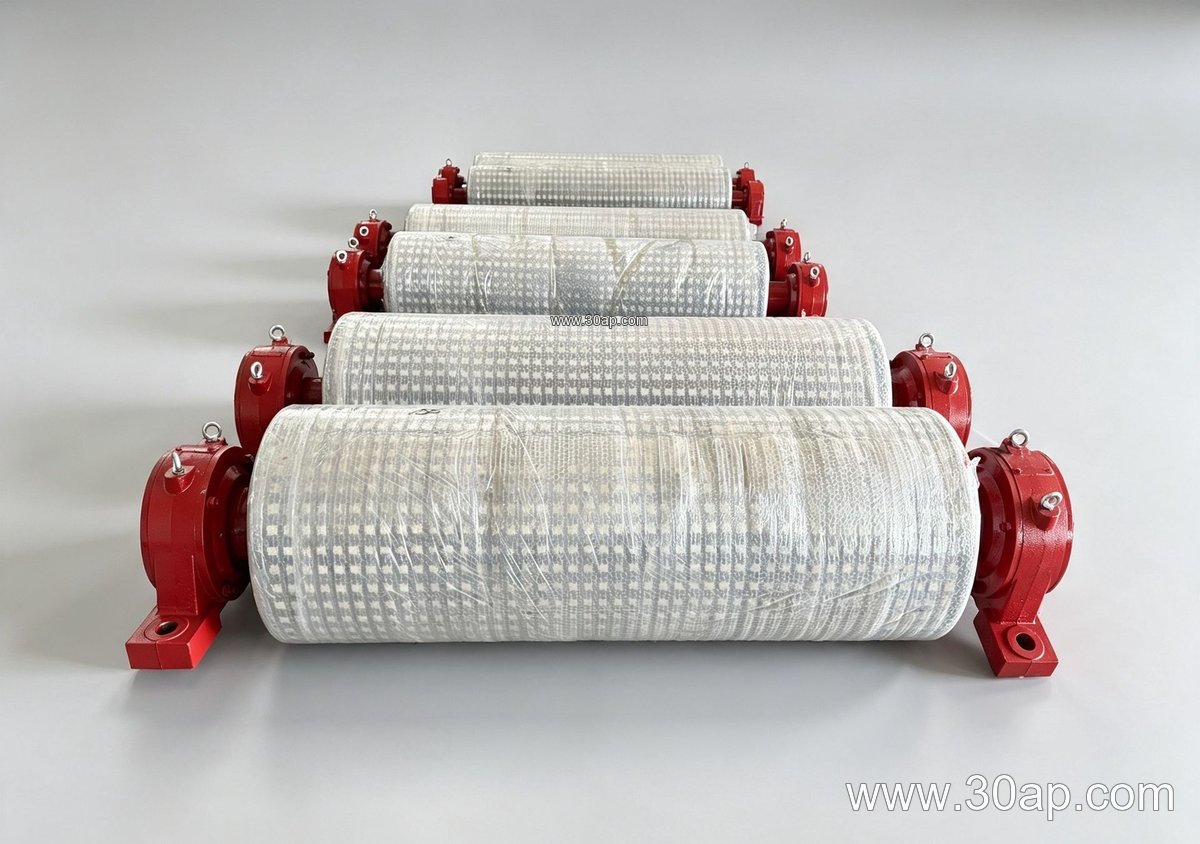
The drum is normally a welded steel shell with machined end plates and a shaft pressed or keyed into the hubs. Bearings are carried in bearing housings fixed to the conveyor bracket or to a tensioning frame. The shell surface may be plain, or it may be covered to protect the belt and improve grip on the return side.
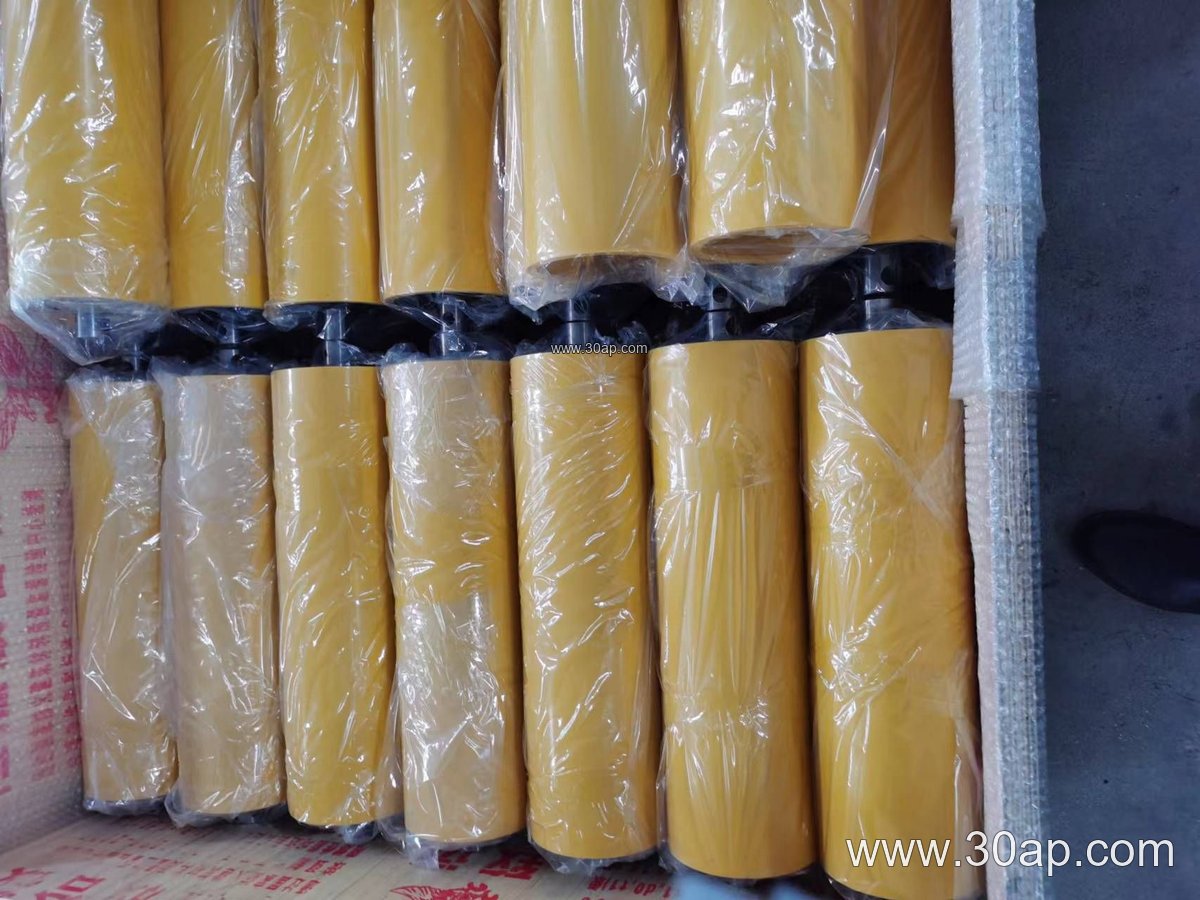
Common surface options include plain finish, hot vulcanized rubber, cold bonded rubber, diamond grooving and ceramic lagging. Rubber cover thickness is often 8, 10, 12, 15 or 20 mm depending on duty. For a bend pulley, heavy lagging is not always necessary; a smooth or lightly rubberized face can be enough where the belt simply changes direction, while a lagged face helps where moisture or fines cause slip.
| Item | Typical reference values |
|---|---|
| Belt width B | B400, B500, B650, B800, B1000, B1200, B1400, B1600, B1800, B2000 |
| Pulley diameter | Ø200, Ø250, Ø315, Ø400, Ø500, Ø630, Ø800, Ø1000, Ø1250 |
| Face width | Usually wider than the belt, for example B800 with about 950 mm face |
| Shaft diameter | Ø50, Ø60, Ø70, Ø80, Ø90, Ø100, Ø120, Ø140, Ø160 |
| Lagging thickness | 8, 10, 12, 15, 20 mm |
These are reference ranges, not fixed matches. A B1200 belt may run on Ø800 or Ø1000 depending on tension and space, and shaft size follows torque and load rather than belt width alone.
Where It Fits in the Line
In a limestone mine or a sand and aggregate plant, a bend pulley is often placed near the tension take-up to guide the return belt into the counterweight. In a power plant coal handling gallery, it may be used to increase wrap on a drive pulley located in a tight space. In a cement plant clinker line, it keeps the return strand clear of structure and chute work.
It should not be confused with a snub pulley, which mainly increases wrap angle at the drive, or with a take-up pulley, which moves on a carriage. A bend pulley is generally fixed in position. Getting this distinction right matters when a maintenance team orders a spare.
Matching the Drum to the Belt
The conveyor belt itself influences the choice. A heavy-duty mining conveyor belt with high tension needs a larger shaft and stronger bearings. An abrasion resistant conveyor belt carrying sharp rock may justify a protected shell face. A flame retardant conveyor belt used underground brings additional attention to lagging material selection and static control.
Where the line handles sticky or wet material, a self-cleaning face or a slightly crowned profile can help. On a pipe conveyor belt or a corrugated sidewall belt, the bend pulley geometry must respect the belt’s cross-section and cannot be treated as a simple flat-belt drum.
Operators also check that the pulley face is wide enough for belt wander, that the idler roller alignment upstream is correct, and that the conveyor bracket supports allow bearing replacement without cutting the frame.
Buyer Checklist
- Confirm the position: bend, snub, take-up or tail. Ask for a drawing review.
- State belt width, belt type and maximum working tension.
- Give the required diameter and the available space around the drum.
- Specify surface: plain, rubber lagged, diamond or ceramic.
- Confirm shaft diameter from the calculated load, not from a table alone.
- Check bearing type, sealing and lubrication access.
- Ask how the pulley balances and how the lagging is bonded.
A bend pulley is a small part of the total conveyor cost but a large part of its reliability. Clear specification at the buying stage avoids the common problem of a drum that fits the frame but not the belt tension.